Home Visit
 Upload






Preventive Healthcare
Collar Bone: Structure, Function, and Common Injuries
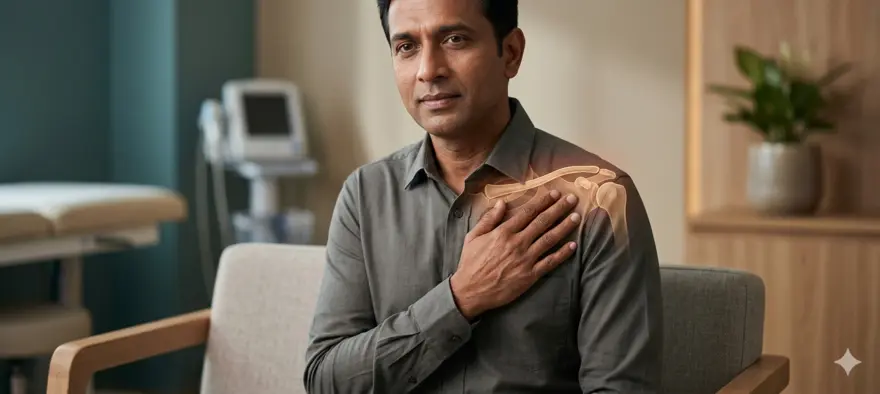
Table of Contents
- What Is the Collar Bone?
- Is the Collar Bone and Clavicle the Same?
- Where Is the Collar Bone Located?
- Anatomy of the Collar Bone (Clavicle)
- Functions of the Collar Bone
- What Is Collar Bone Pain?
- Causes of Collar Bone Fracture
- Symptoms of a Collar Bone Fracture
- How Is a Collar Bone Fracture Diagnosed?
- Treatment for Clavicle Injuries
- How to Protect the Clavicle?
- When to See a Doctor
- Conclusion
- FAQs
- References
What Is the Collar Bone?
The collar bone is a long, slightly curved bone that connects your arm to the rest of your body. It sits at the base of your neck and runs horizontally across the top of your chest. You have one on each side, and together they play a central role in supporting your shoulders and upper body.
The collar bone is one of the most commonly fractured bones in the human body. It is vulnerable to injury during falls, contact sports, and accidents. Despite this, it is a remarkably functional bone, and most people recover well with appropriate care.
Is the Collar Bone and Clavicle the Same?
Yes, the collar bone and the clavicle are exactly the same bone. The term "clavicle" comes from the Latin word "clavicula," meaning "little key," a nod to the bone's slightly S-shaped form and the way it rotates when you lift your arm, much like a key turning in a lock. In everyday language, people often call it the collar bone because it sits near the collar of a shirt. Both terms are correct and used interchangeably.
Where Is the Collar Bone Located?
The collar bone runs horizontally at the front of your shoulder, sitting just beneath the surface of your skin. This is why you can often feel and even see it clearly. In an adult, each collar bone measures roughly 15 centimetres in length. It connects the breastbone (sternum) in the centre of your chest to the shoulder blade (scapula) at the outer edge of your shoulder.
Anatomy of the Collar Bone (Clavicle)
The collar bone has a distinctive shape and a well-defined structure that makes it uniquely suited to its role in the body.
Parts of the Collar Bone
- Sternal end: The medial end of the collar bone, which connects to the breastbone at the sternoclavicular joint.
- Shaft: The long, curved body of the bone. The inner portion curves forward, while the outer portion curves backward, giving it a gentle S-shape.
- Acromial end: The lateral end of the collar bone, which connects to the acromion (a bony projection of the shoulder blade) at the acromioclavicular joint.
The outer shell of the bone is made of dense, hard cortical bone, with an inner layer of spongy cancellous bone tissue.
Joints Connected to the Collar Bone
- Sternoclavicular (SC) joint: Where the collar bone meets the sternum. This is the only bony joint connecting the arm and shoulder to the main skeleton.
- Acromioclavicular (AC) joint: Where the collar bone meets the shoulder blade. This joint is particularly vulnerable to injury in contact sports and falls.
Functions of the Collar Bone
The collar bone may look slender, but it carries out several important functions:
- It acts as a structural strut, keeping the shoulder positioned correctly so that the arm can move freely.
- It transmits forces from the arm and shoulder to the central skeleton.
- It supports a wide range of arm movements, from reaching overhead to rotating the shoulder.
- It protects the underlying nerves and blood vessels that supply the arm.
- It provides an attachment point for important muscles of the chest, neck, and shoulder.
Role in Shoulder Movement
When you lift your arm, your collar bone rotates along its long axis to allow the full range of shoulder movement. Without this rotation, raising your arm above shoulder height would be significantly restricted. This is why a collar bone fracture can make even simple movements like reaching or lifting extremely uncomfortable.
The collar bone works closely with the shoulder joint to give your arm its remarkable range of motion. Any injury or condition affecting the collar bone can therefore have a direct impact on shoulder function.
Role in Protecting Nerves and Blood Vessels
Beneath the collar bone runs a network of important nerves and blood vessels, including the brachial plexus and the subclavian artery and vein. The collar bone acts as a natural shield, protecting these structures from external trauma. In severe fractures, particularly those involving significant displacement of bone fragments, there is a risk of injury to these underlying structures, which is one reason prompt medical attention matters.
What Is Collar Bone Pain?
Collar bone pain refers to any discomfort felt along or around the clavicle. It can range from a dull ache to sharp, intense pain, depending on the underlying cause. Pain may be localised to a specific part of the bone or may radiate into the shoulder, neck, or arm. It can also worsen with certain movements, particularly lifting the arm or carrying weight.
Common Causes of Collar Bone Pain
- Fractures from falls, sports injuries, or direct impact
- Shoulder separation (acromioclavicular joint injury)
- Osteoarthritis affecting the joints connected to the collar bone
- Osteomyelitis (bone infection)
- Thoracic outlet syndrome, where nerves or blood vessels near the collar bone are compressed
- Bone tumours (less common)
- Muscle strain in the surrounding area
- Birth-related injury in newborns
Causes of Collar Bone Fracture
A collar bone fracture is the most common type of collar bone injury. It can happen in the following situations:
- Falling on an outstretched hand, where the force travels up the arm to the collar bone
- A direct blow to the shoulder or collar bone, common in contact sports
- Road traffic accidents
- Sports such as cycling, rugby, football, and hockey, where falls and collisions are frequent
- Birth trauma, where the collar bone may fracture during a difficult delivery
Symptoms of a Collar Bone Fracture
If you have fractured your collar bone, you may notice:
- Sudden, sharp pain at the site of the fracture
- Swelling, bruising, or discolouration over the collar bone
- A visible bump or deformity along the bone
- Inability to lift the arm without significant pain
- A grinding or crackling sensation when you try to move the shoulder
- The shoulder drooping or appearing lower than usual
- Difficulty carrying or grasping objects
If you experience these symptoms after a fall or injury, seek medical attention promptly.
How Is a Collar Bone Fracture Diagnosed?
A healthcare provider will follow a structured approach to diagnose a collar bone fracture:
- Taking a full medical history, including the circumstances of the injury
- Carrying out a physical examination of the shoulder and collar bone area
- Assessing the range of motion in the shoulder
- Checking for signs of nerve or blood vessel involvement
- Ordering imaging tests to confirm the diagnosis and assess the extent of the injury
Tests to Check for Clavicle Conditions
- X-ray: The first and most common investigation. It clearly shows the location and type of fracture.
- CT scan (computed tomography): Provides more detailed images, particularly useful for complex or comminuted fractures (where the bone has broken into multiple pieces).
- MRI (magnetic resonance imaging): Used when there is concern about soft tissue injuries, nerve damage, or joint involvement.
Treatment for Clavicle Injuries
Treatment depends on the severity and type of injury:
- Sling or arm support: For most collar bone fractures, wearing a sling to immobilise the arm and allow the bone to heal is the first line of treatment.
- Rest: Avoiding activities that strain the shoulder is essential during the healing period.
- Ice packs: Applying ice wrapped in a cloth for 15 to 20 minutes at a time helps reduce swelling and pain in the early days after injury.
- Pain relief: Over-the-counter pain relievers such as paracetamol or ibuprofen help manage discomfort. Always follow dosage guidance.
- Physiotherapy: Once the bone begins to heal, guided exercises help restore strength, flexibility, and range of motion.
- Surgery: Required when the bone ends are significantly displaced, when the fracture is complex, or when conservative treatment is not sufficient. Surgery involves stabilising the bone with plates, screws, or pins.
Recovery typically takes four to six weeks in children and eight to twelve weeks or longer in adults, depending on the severity of the fracture.
How to Protect the Clavicle?
You can reduce the risk of collar bone injuries and support long-term bone health with these steps:
- Wear appropriate protective gear during contact sports, such as shoulder pads and helmets.
- Maintain a diet rich in calcium and vitamin D to support strong, resilient bones.
- Do regular weight-bearing exercises such as walking, jogging, or resistance training to build bone density.
- Take precautions to prevent falls at home, particularly on stairs and slippery surfaces.
- Avoid smoking and limit alcohol consumption, both of which weaken bone over time.
- Work on balance and core strength, which can help prevent falls as you age.
When to See a Doctor
Seek medical attention if:
- You experience sudden pain in the collar bone area after a fall or impact.
- You notice visible swelling, bruising, or deformity along the collar bone.
- You cannot lift your arm or move your shoulder without significant pain.
- You feel numbness, tingling, or weakness in the arm after a collar bone injury.
- Pain in the collar bone area appears without an obvious cause or does not improve with rest.
- A child complains of persistent shoulder or collar bone pain after any activity or minor fall.
- You are recovering from a fracture and your symptoms worsen rather than improve.
Conclusion
The collar bone is a small but essential part of your body's framework, supporting shoulder movement, protecting vital structures, and connecting your arm to your skeleton. Because it sits just under the skin and absorbs a great deal of physical force, it is vulnerable to fractures and injury. The good news is that with timely care and the right treatment, most people recover fully and regain normal function.
Looking after your bone health is a lifelong commitment. At Metropolis Healthcare, we believe that proactive health monitoring is the best foundation for long-term wellbeing. Whether you are interested in checking your calcium levels, vitamin D status, or getting a comprehensive full body checkup, Metropolis offers over 4,000 tests with accurate results and a quick turnaround. With home sample collection available across 10,000 touchpoints and easy booking through the website, app, call, or WhatsApp, staying on top of your health has never been more convenient.
FAQs
What Is the Main Function of the Clavicle?
The clavicle acts as a structural strut between the sternum and the shoulder blade, keeping the shoulder in the correct position and enabling the arm to move freely. It also protects the nerves and blood vessels that run beneath it and transmits physical forces from the arm to the central skeleton.
At What Level Is the Clavicle Located?
The clavicle is located at the base of the neck, running horizontally at the top of the chest. It sits just below the surface of the skin, which is why it is often visible, especially in people with a lean build.
Can a Collar Bone Heal Improperly?
Yes. If a collar bone fracture is not treated correctly, or if the bone ends are significantly displaced and not properly aligned, the bone may heal in an abnormal position. This is sometimes called a malunion. It can result in a visible bump, reduced shoulder strength, or restricted movement. In some cases, surgery may be needed to correct an improperly healed fracture.
What Are Clavicles Made Of?
Like all bones, the clavicle is composed of cells and proteins. It has a hard outer layer of cortical bone and an inner layer of spongy cancellous bone. This combination gives it both strength and a degree of flexibility to absorb impact.
Can You Live Without a Clavicle Bone?
There are rare congenital conditions in which a person is born with underdeveloped or absent clavicles. These individuals can often function but typically experience reduced shoulder stability and altered posture. In general, the clavicle is an important structural bone, and its absence or significant damage can impact shoulder function and quality of life.
References
- Postacchini F, Gumina S, De Santis P, Albo F. Epidemiology of clavicle fractures. J Shoulder Elbow Surg. 2002;11(5):452-456. PMID: 12378163.
- Zlowodzki M, Zelle BA, Cole PA, Jeray K, McKee MD. Treatment of acute midshaft clavicle fractures: systematic review of 2144 fractures. J Orthop Trauma. 2005;19(7):504-507. PMID: 16056089.
- Neer CS 2nd. Fractures of the clavicle. In: Rockwood CA, Green DP, eds. Fractures in Adults. 2nd ed. Lippincott; 1984:707-713.
- Physiopedia contributors. Clavicle fracture. Physiopedia. Accessed 2024.
- Chou PP, Levine WN. Acromioclavicular and sternoclavicular joint injuries. J Am Acad Orthop Surg. 2021;29(5):e208-e218. PMID: 33394830.