Home Visit
 Upload






Preventive Healthcare
Hantavirus: Symptoms, Causes, Treatment And Precautions
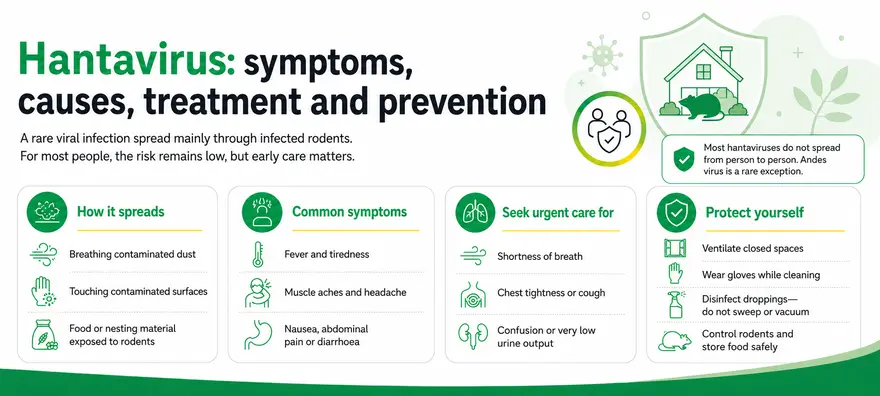
Table of Contents
- What Is Hantavirus?
- Why Is Hantavirus In The News?
- How Does Hantavirus Spread?
- Can Hantavirus Spread From Person To Person?
- Hantavirus Symptoms
- Symptoms Of Hantavirus Cardiopulmonary Syndrome
- Symptoms Of Haemorrhagic Fever With Renal Syndrome
- When Should You Seek Medical Help?
- How Is Hantavirus Diagnosed?
- Hantavirus Treatment
- How To Prevent Hantavirus
- Should People In India Be Worried?
- Conclusion
Hantavirus is a rare viral infection that spreads mainly through infected rodents. It can cause serious illness in some people, especially when it affects the lungs, heart, kidneys or blood vessels.
Recent reports of hantavirus cases linked to cruise ship travel have made many people concerned. The good news is that hantavirus does not spread like common cold, flu or COVID. For most people, the risk remains low. The best protection is awareness, safe cleaning, rodent control and timely medical care if symptoms appear after possible exposure.
What Is Hantavirus?
Hantaviruses are a group of viruses carried by rodents such as rats and mice. These rodents may carry the virus without looking sick.
Humans can get infected when they come in contact with rodent urine, droppings, saliva or nesting material. This often happens while cleaning a closed space, shed, store room, farm area, cabin or poorly ventilated place where rodents have been active.
Hantavirus can cause two main forms of illness:
- Hantavirus Cardiopulmonary Syndrome: This mainly affects the lungs and heart. It is seen mostly in the Americas.
- Haemorrhagic Fever With Renal Syndrome: This mainly affects the kidneys and blood vessels. It is seen more often in Europe and Asia.
Both forms can start with fever and body ache, which is why early symptoms may be mistaken for flu, dengue, leptospirosis, viral fever or other infections.
Why Is Hantavirus In The News?
In May 2026, the World Health Organization reported a cluster of hantavirus cases linked to the MV Hondius cruise ship. The virus identified in the cluster was Andes virus, a type of hantavirus found in South America.
This raised concern because Andes virus is the only known hantavirus that has documented limited person to person spread. Even then, spread is uncommon and usually linked to close, prolonged contact with an infected person.
The WHO assessed the public health risk from this event as low. This is reassuring, but it also reminds us why early diagnosis, contact monitoring and good hygiene matter.
How Does Hantavirus Spread?
Hantavirus usually spreads from rodents to humans. You may be exposed when infected rodent waste dries, gets disturbed and releases tiny contaminated particles into the air.
Common routes of spread include:
- Breathing in dust contaminated with rodent urine, droppings or saliva
- Touching contaminated surfaces and then touching your mouth, nose or eyes
- Handling rodent nesting material
- Eating food contaminated by rodents
- Being bitten or scratched by an infected rodent, though this is rare
You are more likely to be exposed in places with poor ventilation and rodent infestation, such as closed storage rooms, barns, garages, old houses, farms, forest cabins and campsites.
Can Hantavirus Spread From Person To Person?
Most hantaviruses do not spread from person to person.
The important exception is Andes virus, which has been linked to limited person to person spread. This usually needs close and prolonged contact, such as living in the same household or sharing confined spaces with an infected person.
Casual contact, brief interaction or passing someone in a public place is not considered the usual way hantavirus spreads.
Hantavirus Symptoms
Hantavirus symptoms usually appear 1 to 8 weeks after exposure. In many cases, symptoms begin around 2 to 4 weeks after contact with infected rodents.
Early symptoms may include:
- Fever
- Tiredness
- Severe muscle aches, especially in the thighs, hips, back and shoulders
- Headache
- Chills
- Dizziness
- Nausea or vomiting
- Abdominal pain
- Diarrhoea
As the illness progresses, symptoms depend on the type of hantavirus infection.
Symptoms Of Hantavirus Cardiopulmonary Syndrome
This form mainly affects the lungs and heart. After the early flu like stage, symptoms can worsen quickly.
You may notice:
- Cough
- Shortness of breath
- Chest tightness
- Fast breathing
- Low blood pressure
- Severe weakness
- Fluid build up in the lungs
This stage needs urgent medical attention. Early supportive care in an intensive care setting can improve the chances of recovery.
Symptoms Of Haemorrhagic Fever With Renal Syndrome
This form mainly affects the kidneys and blood vessels.
Symptoms may include:
- Sudden fever
- Severe headache
- Back pain
- Abdominal pain
- Nausea
- Blurred vision
- Redness of the eyes
- Low blood pressure
- Reduced urine output
- Kidney failure in severe cases
Recovery can take weeks to months, depending on the severity of illness and the person’s overall health.
When Should You Seek Medical Help?
You should speak to a doctor promptly if you develop fever, severe body ache, breathing difficulty or unusual weakness after possible rodent exposure.
Seek urgent medical care if you have:
- Shortness of breath
- Persistent cough after fever
- Chest tightness
- Dizziness or fainting
- Very low urine output
- Confusion
- Signs of bleeding
- Severe abdominal or back pain
Tell your doctor if you recently cleaned a rodent infested area, stayed in a closed building, camped outdoors, worked on a farm, travelled to a known risk area or had close contact with someone diagnosed with Andes virus infection.
This history helps your doctor consider hantavirus early.
How Is Hantavirus Diagnosed?
Hantavirus can be hard to diagnose in the early stage because symptoms can look like many other infections.
Doctors usually consider:
- Your symptoms
- Your rodent exposure history
- Your travel history
- Any known contact with a confirmed case
- Your oxygen levels and blood pressure
- Blood tests and other investigations
Specific diagnosis may involve tests that detect hantavirus antibodies or viral genetic material. Doctors may also order blood counts, kidney function tests, liver function tests, electrolytes, chest imaging and other tests to assess how the infection is affecting your body.
Hantavirus Treatment
There is no specific approved cure for hantavirus infection. There is also no widely available licensed vaccine.
Treatment focuses on supportive care. This means doctors manage the body systems affected by the infection while the immune system fights the virus.
Treatment may include:
- Oxygen support
- Careful fluid and electrolyte management
- Blood pressure support
- Mechanical ventilation if breathing becomes difficult
- Dialysis if kidney failure or severe fluid overload develops
- Intensive care monitoring in severe cases
In some cases of haemorrhagic fever with renal syndrome, ribavirin may be considered early. However, it has not shown clear benefit for hantavirus cardiopulmonary syndrome.
Do not self medicate if you suspect hantavirus. Early medical evaluation is important.
How To Prevent Hantavirus
Prevention mainly means reducing contact with rodents and their waste.
You can lower your risk by following these steps:
- Seal holes, cracks and gaps where rodents can enter your home.
- Store food, grains and pet food in closed containers.
- Keep kitchens, storage areas and waste bins clean.
- Remove clutter where rodents can nest.
- Avoid sleeping on the floor in rodent prone areas.
- Keep outdoor garbage covered.
- Use safe pest control when you see signs of infestation.
- Avoid touching rodent droppings, urine, nests or dead rodents with bare hands.
Safe Cleaning After Rodents
Do not sweep or vacuum rodent droppings. This can push contaminated dust into the air.
Use safer cleaning methods:
- Open doors and windows for ventilation before cleaning.
- Wear rubber or plastic gloves.
- Spray droppings, urine or nesting material with disinfectant or bleach solution.
- Let it soak for at least 5 minutes, or as directed on the disinfectant label.
- Wipe with paper towels.
- Throw waste into a covered bin.
- Mop or clean hard surfaces with disinfectant.
- Wash gloved hands before removing gloves.
- Wash your hands again with soap and water.
For heavy infestation, do not try to manage it alone. Professional cleaning and pest control support may be safer.
Should People In India Be Worried?
There is no need to panic. Hantavirus is uncommon, and it does not spread easily through casual contact.
However, awareness is useful because rodent exposure can happen in homes, farms, warehouses, campsites and travel settings. If you have fever or breathing symptoms after possible rodent exposure, it is wise to seek medical advice early.
For most people, practical prevention is enough. Keep your surroundings clean, avoid unsafe cleaning of rodent waste and share your exposure history with your doctor if you fall ill.
Conclusion
Hantavirus is rare, but it can become serious in some people. The key is to reduce rodent exposure, clean contaminated spaces safely and seek medical care early if symptoms develop after possible exposure.
Your everyday health also benefits from proactive monitoring. Regular health checkups can help you understand important markers such as blood counts, kidney function, liver function, blood sugar and overall wellness status.
Metropolis Healthcare supports preventive healthcare with 4,000+ tests, full body checkups, specialty testing, expert pathologists, accurate reports and quick turnaround time. With home sample collection, a strong network of 10,000 touchpoints and easy booking through the website, app, call and WhatsApp, Metropolis makes it simpler for you to stay informed about your health.
References
- World Health Organization. Hantavirus. Fact sheet. 6 May 2026.
- World Health Organization. Hantavirus cluster linked to cruise ship travel, Multi-country. Disease Outbreak News. 4 May 2026.
- World Health Organization. WHO’s response to hantavirus cases linked to a cruise ship. Note for media. 7 May 2026.
- Centers for Disease Control and Prevention. About Hantavirus. 13 May 2024.
- Centers for Disease Control and Prevention. Hantavirus Prevention. 13 May 2024.
- Centers for Disease Control and Prevention. How to Clean Up After Rodents. 8 April 2024.
- Centers for Disease Control and Prevention. Clinician Brief: Hantavirus Pulmonary Syndrome. 23 May 2024.
- Centers for Disease Control and Prevention. Clinician Brief: Hemorrhagic Fever With Renal Syndrome. 20 May 2024.
- European Centre for Disease Prevention and Control. Hantavirus infection. Accessed 8 May 2026.