Home Visit
 Upload






Preventive Healthcare
MRI Scan Explained: Uses, Benefits, And Procedure Details
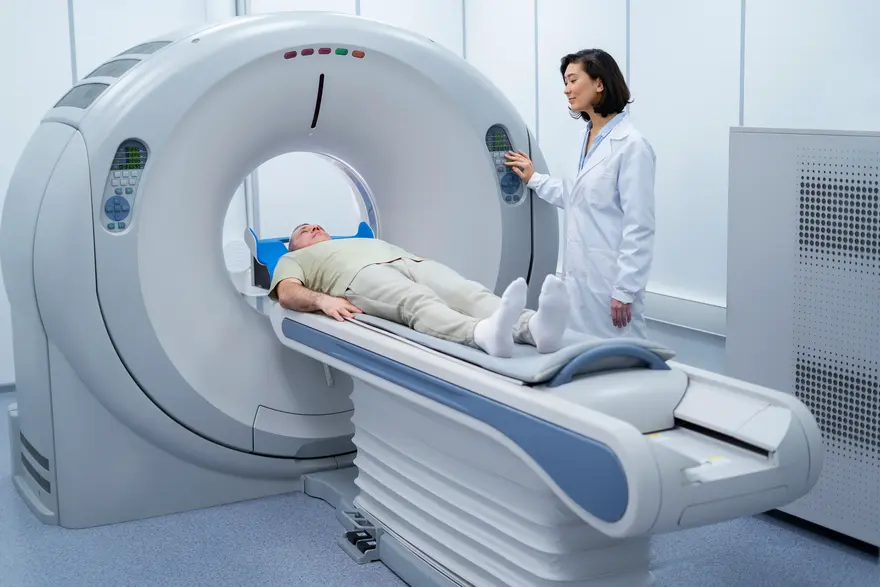
Table of Contents
- What Is an MRI (Magnetic Resonance Imaging) Scan?
- What Is an Open MRI Scan?
- What Is an MRI Scan With Contrast?
- What Does an MRI Scan Show?
- Why It's Done
- Risks
- Who Shouldn't Get an MRI Scan?
- How You Prepare
- What You Can Expect
- What Are the Side Effects of MRI Scan Contrast?
- Who Performs an MRI Scan?
- How Does an MRI Scan Work?
- How Long Does an MRI Scan Take?
- When Should I Know the Results of My MRI Scan?
- FAQs
What Is an MRI (Magnetic Resonance Imaging) Scan?
The MRI scan full form is magnetic resonance imaging. An MRI scan is a medical imaging technique that uses a strong magnetic field and radio waves to generate detailed images of the body’s internal structures. The difference between MRI and CT scans is that MRI uses magnetic fields and radio waves to create detailed images of soft tissues, while CT scans use X-rays to produce quick images of bones and internal organs.
MRI does not involve radiation. Instead, magnets temporarily realign water molecules in the body, and radio waves trigger signals that are converted into images. MRI is especially useful for examining the brain, spine, joints, and muscles, offering high-resolution images without exposure to ionising radiation. The MRI scan price is nominal, and the test is conveniently available at well-established diagnostic centres.
What Is an Open MRI Scan?
For individuals who experience claustrophobia or anxiety in enclosed spaces, an open MRI scan may be a more comfortable alternative to traditional MRI machines. Open MRI scanners have a wider opening or open sides, reducing the feeling of confinement. They are also suitable for larger patients or those with mobility issues who may have difficulty fitting into a standard MRI tube. While open MRIs use the same principles as closed MRI machines, they sometimes have lower magnetic field strengths, which can slightly reduce image quality. However, advances in technology have significantly improved the resolution of open MRI scans.
What Is an MRI Scan With Contrast?
In some cases, your doctor may recommend an MRI scan with contrast to enhance the visibility of certain tissues or abnormalities. This involves injecting a special dye, usually containing gadolinium, into a vein before or during the scan. The contrast agent helps highlight blood vessels, inflammation, tumours, and specific organs, making it easier for radiologists to identify and differentiate between normal and abnormal structures. While MRI contrast is generally safe, your healthcare team will screen you for any allergies or kidney problems before administering the dye. Contrast-enhanced MRI is particularly valuable for neurological, vascular, and cancer-related investigations.
What Does an MRI Scan Show?
MRI scans provide exquisitely detailed images of soft tissues, organs, blood vessels, and bones within your body. They can reveal a wide range of abnormalities, such as:
- Tumours or cysts in various organs
- Inflammation or infection in tissues
- Torn ligaments, cartilage, or muscles
- Spinal cord injuries or disc problems
- Brain disorders like multiple sclerosis or stroke damage
- Cardiac issues, including heart muscle damage and coronary artery disease
Some specialised MRI techniques, such as functional MRI (fMRI), can even show real-time brain activity or blood flow, making them invaluable for assessing neurological function and planning surgical procedures.
Why It's Done
Your doctor may order an MRI scan to help diagnose, monitor, or guide treatment for numerous health conditions. Some common reasons for undergoing an MRI include:
MRI Scan of the Brain and Spinal Cord
MRI is the preferred imaging method for examining the brain and spinal cord. It helps diagnose conditions such as:
- Brain tumours, cysts, or swelling
- Aneurysms or stroke damage
- Spinal cord injuries or abnormalities
- Multiple sclerosis
- Eye and inner ear disorders
- Pituitary gland dysfunction
The head MRI scan cost may range from ₹4000 to ₹7000. Functional MRI (fMRI) goes a step further—it measures tiny metabolic changes that take place in active parts of the brain. This allows doctors to pinpoint areas responsible for critical functions like speech or movement, which is essential for planning brain surgery.
MRI Scan of the Heart and Blood Vessels
Cardiac MRI helps evaluate:
- Heart structure and function
- Thickness and movement of heart walls
- Extent of damage after a heart attack
- Inflammation or blockages in blood vessels
MRI Scan of Other Internal Organs
MRI scans can reveal tumours, infections, or structural issues in organs such as the:
- Liver and bile ducts
- Kidneys and bladder
- Pancreas
- Spleen
- Uterus and ovaries
- Prostate gland
MRI Scan of Bones and Joints
Musculoskeletal MRI is used to diagnose:
- Arthritis and joint disorders
- Bone infections or tumours
- Torn ligaments or tendons
- Spinal disc problems
- Neck and back pain
MRI Scan of the Breasts
Breast MRI is sometimes used in conjunction with mammography, especially for screening women at high risk of breast cancer or evaluating the extent of diagnosed cancer. However, it does not replace the need for mammograms or breast ultrasound.
Risks
While MRI scans are very safe and do not use radiation, some risks include:
- Implanted metal objects: Pacemakers, cochlear implants, and certain orthopaedic hardware may be affected by the strong magnetic field.
- Allergic reactions: Though rare, the contrast dye may cause allergic reactions. Most reactions are mild and easily controlled with medication.
- Nephrogenic systemic fibrosis: Rarely, gadolinium-based contrast agents may trigger this serious condition in people with advanced kidney disease.
- Claustrophobia: The enclosed space of a traditional MRI scanner may be uncomfortable for people with severe claustrophobia. Open MRI or sedation can help.
- Loud noises: The machine makes loud thumping noises during the scan. Earplugs or headphones are provided to minimise discomfort.
Who Shouldn't Get an MRI Scan?
Some individuals may not be suitable candidates for an MRI scan, including:
- Those with incompatible metallic implants, such as certain pacemakers, cochlear implants, or older intracranial aneurysm clips
- Anyone with metal shrapnel or foreign bodies in sensitive areas, like the eyes
- People with advanced kidney disease who require contrast for their scan
- Pregnant women, if contrast is needed (unless the benefits outweigh the risks)
Always inform your doctor and the MRI technologist about any medical conditions, implants, or concerns you have before the procedure.
How You Prepare
To prepare for your MRI scan, you may need to:
- Remove all metallic objects, including jewellery, glasses, hairpins, and hearing aids.
- Wear loose, comfortable clothing without metal fasteners.
- Bring any relevant previous scans or X-rays.
- Inform the staff about any implants, allergies, kidney problems, or pregnancy.
- Follow any fasting guidelines if your scan involves contrast injection.
- Discuss claustrophobia or anxiety with your doctor beforehand, as sedation may be an option.
What You Can Expect
During your MRI scan, you will lie on a movable table that slides into the scanner. The procedure itself is painless, but you may hear loud knocking or thumping noises. You will need to stay very still to avoid blurring the images.
During the Test
During a magnetic resonance imaging, you will be positioned on the scanner table, which will move you into the MRI machine tunnel. Earplugs or headphones will be provided to help block the loud noises and allow you to communicate with the technologist. You may be asked to hold your breath for short periods during certain scans.
The technologist will be in another room, but they can see, hear, and speak with you through an intercom system. The entire scan typically takes 30 to 50 minutes, depending on the body area being imaged and whether contrast is used.
After the Test
Once your MRI scan is complete, you can usually resume your normal daily activities immediately. If you received contrast dye, drinking plenty of fluids can help flush it out of your system more quickly. Allergic reactions to contrast are rare, but alert your doctor if you experience symptoms like rash, hives, or difficulty breathing.
A radiologist will analyse your MRI images and send a report to your referring physician, who will discuss the results with you in a follow-up appointment.
What Are the Side Effects of MRI Scan Contrast?
The contrast agents used in MRI scans are generally well-tolerated, but some people may experience side effects such as:
- Headache
- Nausea
- Dizziness
- Rash or itching
- Injection site pain
More severe allergic reactions, like shortness of breath or swelling, are extremely rare but require immediate medical attention. In people with advanced kidney disease, there is also a very small risk of developing a serious condition called nephrogenic systemic fibrosis after exposure to gadolinium contrast. Your doctor will carefully weigh the benefits and risks of using contrast based on your individual health status.
Who Performs an MRI Scan?
A specially trained radiologic technologist, also known as a radiographer, will operate the MRI scanner. The resulting images will be interpreted by a radiologist, a doctor who specialises in medical imaging, who will then provide a report to your referring physician.
How Does an MRI Scan Work?
During an MRI scan, you are placed inside a large magnet that generates a strong magnetic field. This field temporarily realigns the water molecules in your body. Radio waves are then sent through your body, triggering these aligned atoms to produce faint signals, which are detected by the scanner and used to create cross-sectional MRI images.
How Long Does an MRI Scan Take?
MRI scans typically last 30 to 50 minutes, depending on the size of the area being scanned and the number of images needed. If contrast is used, the exam may be longer. Your MRI centre will provide more specific information about the expected duration of your scan.
When Should I Know the Results of My MRI Scan?
Your MRI scan results will typically be available to your referring doctor within a few days of your procedure. Your doctor will review the radiologist's report and discuss the findings with you during a follow-up visit.
For accurate health assessments and expert guidance, consider Metropolis Healthcare, known for its advanced diagnostic services and health management expertise. Our reliable testing services can help you stay on top of your health, providing you with the insights needed for well-being.
FAQs
1. Can children or infants have MRI scans?
Yes, MRI scans are safe for children and infants. However, young children may require sedation to help them stay still during the procedure.
2. What if I'm breastfeeding—is MRI scan contrast safe?
While very little gadolinium passes into breast milk, many doctors recommend waiting 24-48 hours after contrast injection before resuming breastfeeding. Consult your doctor for specific guidance based on your situation.
3. Can I drive after an MRI scan?
If you did not receive sedation, you can drive immediately after your MRI. However, if you took a sedative or anti-anxiety medication, you will need someone to drive you home and should avoid operating machinery for several hours.
4. Can I get an MRI scan if I have metal in my body?
It depends on the type of metal and its location. Many orthopaedic implants, dental fillings, and surgical staples are MRI-safe. However, some aneurysm clips, pacemakers, and cochlear implants may preclude you from having an MRI. Always notify your doctor and MRI technologist about any metal in your body.
5. Is an MRI scan painful or uncomfortable?
MRI scans are painless. However, some people may feel uncomfortable or anxious due to the loud noises or the confined space of the scanner. If you experience claustrophobia, ask your doctor about an open MRI or sedation options.
6. How much is the price of an MRI scan machine?
The MRI scan machine price in India ranges from ₹2 crore to ₹7 crore, depending on its model and features.
7. Which MRI scan is best for the spine?
A lumbar spine MRI is usually the best option for diagnosing lower back pain and sciatica. This scan provides detailed images of the vertebrae, discs, spinal cord, and surrounding nerves and tissues. Your doctor will determine which type of spinal MRI is most appropriate based on your symptoms and medical history.
8. Can MRI scans be read immediately?
While MRI images are available immediately after the scan, they must be carefully analysed and interpreted by a radiologist. This process typically takes a few days, as the radiologist needs to thoroughly examine each image and correlate the findings with your medical history. Once the radiologist's report is ready, your doctor will discuss the results with you.
9. What are the disadvantages of MRI scans?
MRI scans, while safe and effective, have drawbacks including high cost, longer exam times (30–50 minutes), loud noises that can be uncomfortable, and issues with claustrophobia. Additionally, patients with certain metal implants may not be eligible for an MRI.