Home Visit
 Upload






Preventive Healthcare
Rare Disease Day 2026: Raising Awareness, Challenges, And The Importance Of Early Diagnosis
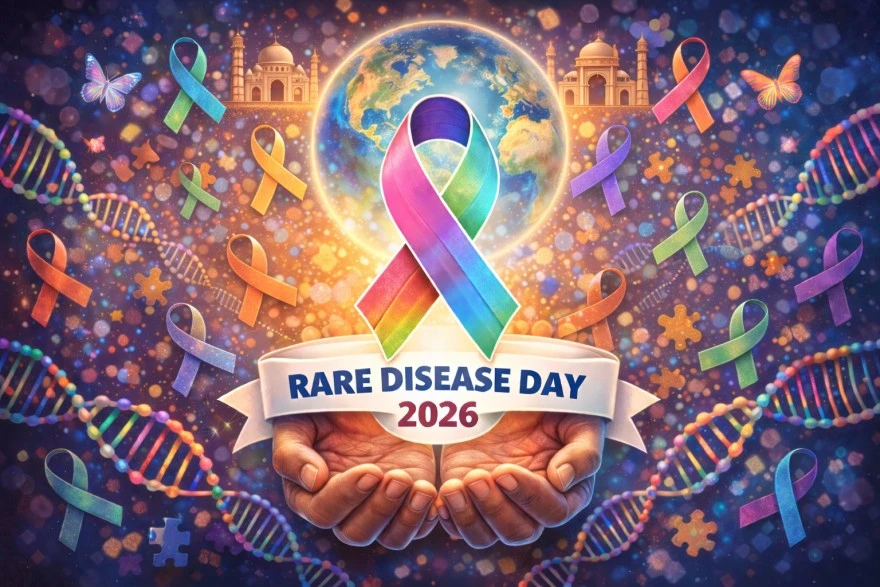
Table of Contents
What Is Rare Disease Day?
Rare Disease Day is a global awareness campaign observed every year on the last day of February (28 February, or 29 February in leap years). It was first held on 29 February 2008 and is now marked in more than 100 countries.
The day aims to raise awareness for over 300 million people worldwide living with rare diseases and to promote equitable access to diagnosis, treatment, research, and social care. In India, the term generally refers to conditions that affect a small proportion of the population and often require specialised diagnosis and care.. There are over 6,000 identified rare diseases, and nearly 72 percent are genetic.
The campaign brings together patients, caregivers, healthcare professionals, researchers, and policymakers. Symbolised by zebra stripes, Rare Disease Day reminds you that while each condition is uncommon, collectively they affect millions and require timely diagnosis and compassionate care.
Rare Disease Day 2026 Theme
The Rare Disease Day 2026 theme is yet to be officially confirmed. Current campaign materials indicate “More Than You Can Imagine,” highlighting the hidden and far-reaching impact of rare diseases worldwide.
- Theme: The official 2026 theme is expected to focus on “More Than You Can Imagine,” highlighting the hidden and far-reaching impact of rare diseases worldwide. (Theme subject to official confirmation.)
- Recognises the physical, emotional, and financial challenges faced by over 300 million people
- Emphasises that 6,000 to 10,000 rare diseases collectively affect millions of families
- Calls for equitable access to timely diagnosis, treatment, and care
- Encourages reducing diagnostic delays and improving specialised services
- Promotes global solidarity through initiatives such as “Light Up For Rare”
- Invites you to raise awareness using the #RareDiseaseDay campaign
The theme reinforces the need for compassion, equity, and collective action to improve lives.
Global Participation In Rare Disease Day
Rare Disease Day unites people worldwide to raise awareness and advocate for better care.
- Observed in over 100 countries
- Awareness events, webinars, and community programmes
- Policy advocacy for equitable diagnosis and treatment
- Social media campaigns sharing stories and rare disease day quotes
- “Light Up For Rare” solidarity initiatives
Together, global participation helps amplify patient voices and promote earlier diagnosis and fair access to care.
How To Observe Rare Disease Day?
Individuals can observe Rare Disease Day by taking simple yet meaningful steps to raise awareness and support those affected.
- Mark 28 February 2026 and participate in awareness activities.
- Wear zebra stripes to show solidarity.
- Share posts, rare disease day quotes, and stories using #RareDiseaseDay.
- Join or organise walks, webinars, or community events.
- Take part in the “Light Up For Rare” initiative.
- Support early diagnosis and advocate for better access to care.
Your involvement can help promote awareness, reduce stigma, and encourage timely diagnosis.
Quotes For Rare Disease Day 2026
You can use meaningful messages and rare disease day quotes to spread awareness and show solidarity.
- “More Than You Can Imagine.”
- “Rare, but not alone.”
- “Alone we are rare, together we are strong.”
- “Early diagnosis changes lives.”
- “Equity in healthcare for every patient.”
- “Every patient matters.”
- “300 million people worldwide are living with a rare disease. Together, their voices are powerful.”
- “Rare diseases are not invisible. Every story deserves to be heard.”
Sharing these messages can help raise visibility, reduce stigma, and promote equity in diagnosis and care.
The Importance Of Rare Disease Awareness
Rare disease awareness plays a vital role in improving early and accurate diagnosis, advancing research, and strengthening patient support. Between 3.5% and 5.9% of the global population (approximately 1 in 17 to 1 in 28 people) may live with a rare disease, yet many face years of misdiagnosis due to overlapping symptoms and limited clinical familiarity. Greater awareness helps reduce diagnostic delays, enables timely intervention to prevent complications, and improves access to genetic counselling and specialised care. It also drives research funding and policy changes, especially since only a small percentage of rare diseases have approved treatments. Most importantly, awareness reduces stigma and isolation, ensuring that patients and families feel seen, supported, and empowered to seek the right diagnostic evaluation.
Rare Disease Day 2026 Events And Activities
Rare Disease Day 2026, observed on 28 February, will feature global and local initiatives aimed at promoting awareness, equity, and early diagnosis.
- Global Awareness Campaigns: Community walks, marathons, virtual runs, and public gatherings supporting rare disease advocacy
- Educational Events: Webinars, expert talks, scientific conferences, and patient-focused discussions
- Policy And Advocacy Meetings: Roundtables encouraging improved access to diagnosis, treatment, and research funding
- Global Chain Of Lights: Landmarks and homes illuminated in campaign colours to show solidarity
- School And College Programmes: Awareness sessions to educate students and young adults
- Patient Story Initiatives: Sharing real-life experiences to reduce stigma and strengthen community support
- Virtual Participation Options: Online events enabling worldwide involvement
These activities aim to build awareness, improve access to care, and foster a more inclusive healthcare environment for people living with rare diseases.
can you combine these options and create a new for the faq -
List Of Rare Diseases
Rare diseases affect a small percentage of the population. In India, they are generally considered conditions that impact a very small proportion of people and often require specialised care. Globally 6,000 to 10,000 rare diseases have been identified, and nearly 90 to 95 percent lack approved targeted treatments, making early diagnosis essential.
They are broadly classified into:
- Metabolic Disorders: Pompe disease, Gaucher disease, Fabry disease, Phenylketonuria
- Neurological And Genetic Disorders: Duchenne muscular dystrophy, Spinal muscular atrophy, Huntington’s disease
- Autoimmune And Blood Disorders: Sickle cell disease, Guillain-Barré syndrome
- Congenital And Structural Conditions: Cystic fibrosis, Osteogenesis imperfecta, Turner syndrome
- Immune Deficiency Disorders: X linked agammaglobulinemia
Because symptoms often resemble common illnesses, timely genetic testing and specialised diagnostic evaluation are crucial for accurate diagnosis and appropriate management.
Local Initiatives For Rare Disease Day
In India, local initiatives for Rare Disease Day focus on raising awareness, promoting early diagnosis, and improving access to specialised care. Activities include “Light Up For Rare” landmark illuminations, community walks and awareness drives, educational programmes in schools and colleges, and social media campaigns such as “Show Your Stripes.” Healthcare institutions may organise webinars, screening camps, and training programmes to help doctors recognise early symptoms. Advocacy efforts also support expanded newborn screening, improved access to genetic testing, multidisciplinary care, and stronger health policies. These initiatives aim to reduce diagnostic delays and ensure timely, appropriate management for people living with rare diseases.
Rare Disease Day 2026: Key Statistics
Rare Disease Day 2026 highlights the scale, challenges, and urgent need for equitable care for people living with rare conditions.
Global Burden
- Over 300million people worldwide are affected
- 3.5 to 5.9 percent of the global population lives with a rare disease
- Between 6,000 and 10,000 rare diseases have been identified
Nature Of Rare Diseases
- Around 72 to 80 percent are genetic in origin
- Nearly 70 percent of genetic rare diseases begin in childhood
- Almost one in five cancers is classified as rare
Diagnostic And Treatment Gaps
- Many patients face five or more years before receiving an accurate diagnosis
- Around 90 to 95 percent of rare diseases lack approved targeted treatments
2026 Focus
- Observed on 28 February 2026
- Theme: “More Than You Can Imagine”
- Marked in over 100 countries to promote equity in diagnosis, treatment, and research
These figures reinforce the importance of awareness, early detection, and improved access to specialised care.
FAQs
How Can I Participate In Rare Disease Day 2026?
You can participate by sharing awareness messages using #RareDiseaseDay, wearing zebra stripes, joining the “Light Up For Rare” initiative, attending events, advocating for early diagnosis and better care, and supporting patient organisations.
Which Diseases Are Considered Rare?
Rare diseases affect a small percentage of the population, in India, rare diseases generally affect a very small percentage of the population and often require specialised care. Most are genetic, chronic, and progressive, including metabolic disorders, neuromuscular diseases, immune deficiencies, autoimmune conditions, rare cancers, and congenital syndromes. Early diagnosis is essential for appropriate care.
Where Are The Rare Disease Day Events Taking Place?
Rare Disease Day events are held worldwide on or around 28 February in hospitals, research centres, schools, universities, and community spaces. Activities include webinars, awareness programmes, advocacy meetings, and landmark illuminations as part of the “Light Up For Rare” initiative.
How Does Rare Disease Day Help People With Rare Diseases?
Rare Disease Day raises awareness, promotes research funding, and advocates for equitable access to diagnosis and treatment. It amplifies patient voices, reduces stigma, and brings together patients, clinicians, and policymakers to improve care and quality of life.
What Are Some Examples Of Rare Diseases?
Rare diseases are often genetic and chronic, with over 6,000 to 10,000 identified worldwide.
Examples Include:
- Neuromuscular Disorders: Duchenne muscular dystrophy, Spinal muscular atrophy
- Lysosomal Storage Disorders: Gaucher disease, Fabry disease, Pompe disease
- Genetic Conditions: Cystic fibrosis, Huntington’s disease, Phenylketonuria
- Autoimmune And Neurological Disorders: Guillain-Barré syndrome, Amyotrophic lateral sclerosis
- Rare Cancers: Mesothelioma, Paediatric medulloblastoma
Early diagnosis and specialised care are important due to limited treatment options.
Why Is Awareness About Rare Diseases Important?
Awareness helps reduce diagnostic delays, improve access to specialised care, drive research funding, strengthen health policies, and reduce stigma, ensuring better support and outcomes for people living with rare diseases.
References
- Nguengang Wakap S, Lambert DM, Olry A, Rodwell C, Gueydan C, Lanneau V, et al. Estimating cumulative point prevalence of rare diseases. Eur J Hum Genet. 2020;28(2):165-173. PMID:31666360.
- Ferreira CR. The burden of rare diseases. Am J Med Genet A. 2019;179(6):885-892. PMID:30825377.
- Boycott KM, Vanstone MR, Bulman DE, MacKenzie AE. Rare-disease genetics in the era of next-generation sequencing. Nat Rev Genet. 2013;14(10):681-691. PMID:23999272.
- Zurynski Y, Frith K, Leonard H, Elliott E. Rare childhood diseases: How should we respond? Arch Dis Child. 2008;93(12):1071-1074. PMID:18838475.
- Taruscio D, Vittozzi L, Stefanov R. National plans and strategies on rare diseases in Europe. Adv Exp Med Biol. 2010;686:475-491. PMID:20824458.