Home Visit
 Upload






Preventive Healthcare
Pregnancy Heartbeat: When It Starts, How It Is Detected, And What’s Normal
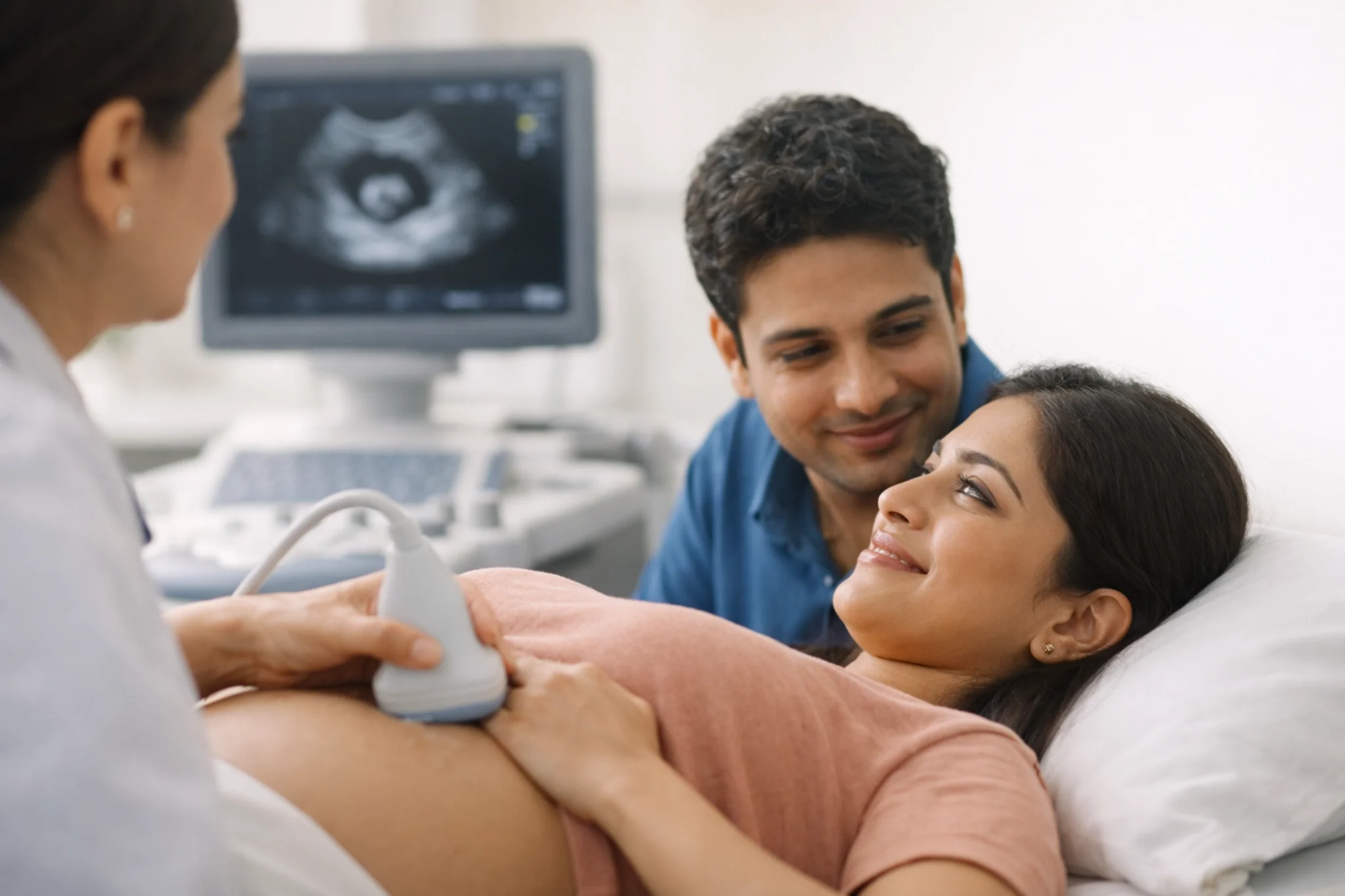
Table of Contents
- What Is A Pregnancy Heartbeat?
- When Does A Baby’s Heartbeat Start During Pregnancy?
- How Early Can A Pregnancy Heartbeat Be Detected?
- What Is Normal For A Pregnancy Heartbeat?
- Factors That Can Affect Fetal Heartbeat
- Can Stress Affect The Fetal Heartbeat?
- What If You Cannot Hear Or Detect A Heartbeat Yet?
- Common Pregnancy Heartbeat Concerns
- When Should You Contact Your Doctor About Heartbeat Issues?
- How Doctors Monitor The Baby’s Heartbeat During Pregnancy
- Is A Home Doppler Reliable?
- Frequently Asked Questions
- The Bottom Line
Hearing about your baby’s heartbeat is often one of the most emotional moments in pregnancy. For many parents, it makes the pregnancy feel more real. It can also bring questions, especially if you are waiting for an early scan or worrying about whether everything is progressing as expected.
The good news is that there is a normal range for when cardiac activity begins and when it can be detected. Still, timing can vary from one pregnancy to another. The method used, the exact pregnancy dates, and your stage of pregnancy can all affect what is seen or heard.
What Is A Pregnancy Heartbeat?
A pregnancy heartbeat refers to the baby’s heartbeat seen on a scan or heard during pregnancy monitoring. In very early pregnancy, what is first detected is early cardiac activity. At that stage, the heart is still developing.
This is why your doctor may explain that a heartbeat can be seen before the heart is fully formed. As the pregnancy grows, the baby’s heart becomes more structured, and the beat becomes easier to detect during routine care.
For most people, the pregnancy heartbeat is one of the key signs doctors use to assess early pregnancy development.
When Does A Baby’s Heartbeat Start During Pregnancy?
If you are wondering baby heartbeat during pregnancy which week, early cardiac activity usually begins around 5.5 to 6 weeks of pregnancy. At this stage, it may appear as a tiny flicker on an ultrasound.
In the earliest weeks, your doctor may still refer to the baby as an embryo rather than a fetus. Even so, this is the stage when the first heartbeat-like activity may be visible.
If you are asking baby heartbeat during pregnancy which week, the short answer is that it often starts around the sixth week, but it may not always be seen immediately. Small differences in dating are common, especially if ovulation happened later than expected.
How Early Can A Pregnancy Heartbeat Be Detected?
A pregnancy heartbeat is not detected the same way at every stage. The timing depends on the test used.
Detection By Transvaginal Ultrasound
A transvaginal ultrasound is usually the earliest way to detect a pregnancy heartbeat. In many cases, it can show cardiac activity around 6 to 7 weeks.
This scan gives a clearer view in early pregnancy because it is done internally. If you have had spotting, pain, or a previous pregnancy concern, your doctor may advise this scan early on.
Detection By Abdominal Ultrasound
An abdominal ultrasound may detect the heartbeat a little later. This can depend on how early the pregnancy is, how clearly the scan shows the uterus, and other individual factors such as body type.
In some pregnancies, an abdominal scan at the same stage may not pick up what a transvaginal scan can detect.
Detection By Doppler
A handheld Doppler is usually able to detect the heartbeat later, often from about 10 to 12 weeks onwards. This is why not hearing the heartbeat very early with a Doppler does not always mean something is wrong.
If you are wondering baby heartbeat during pregnancy which week on a Doppler, it is generally later than ultrasound detection.
What Is Normal For A Pregnancy Heartbeat?
A normal pregnancy heartbeat changes as your baby develops. In the earliest weeks, the rate is slower. It then rises steadily during the first trimester before settling into a more typical range.
Normal Pregnancy Heartbeat By Week
At around 6 weeks, the heartbeat may be about 90 to 110 beats per minute.
By 8 to 10 weeks, it often rises to around 140 to 170 beats per minute.
Later in the first trimester and beyond, a normal Fetal Heart Rate is usually around 110 to 160 beats per minute.
Your doctor looks at the reading in context. One number alone does not tell the full story. The timing of the scan, the baby’s size, and how far along the pregnancy is all matter.
Why The Heartbeat Changes In Early Pregnancy
The heartbeat changes because your baby’s heart is developing rapidly in the early weeks. A slower rate in very early pregnancy may be normal. As the heart matures, the rate usually increases.
This is why a reading at 6 weeks will not be judged the same way as a reading at 10 weeks.
What Your Doctor Looks For
Your doctor does not look only at the heart rate. They also consider:
- Whether the heartbeat matches the stage of pregnancy
- Whether the rhythm appears regular
- Whether the baby’s growth matches the dates
- Whether there are any symptoms such as bleeding or pain
This broader view helps your doctor understand how the pregnancy is progressing.
Factors That Can Affect Fetal Heartbeat
Several factors can affect how the heartbeat is measured or whether it is easy to detect.
These include:
- The exact week of pregnancy
- The type of scan or monitoring used
- The position of the baby
- Maternal body type
- Movement during the scan
- Bleeding, cramping, or other pregnancy concerns
- Multiple pregnancy in some cases
Sometimes people worry about a late heartbeat in pregnancy when it is simply too early to detect clearly. In many cases, the issue is dating rather than a problem with the baby.
Can Stress Affect The Fetal Heartbeat?
Short-term stress does not always cause a harmful change in your baby’s heartbeat. Your body does respond to stress, and emotional strain can make pregnancy feel more overwhelming, but one stressful day does not usually mean something is wrong with your baby.
What matters more is your overall health and regular prenatal care. If you are feeling persistently anxious, unable to cope, or worried about your pregnancy, speaking with your doctor can help. They can check your well-being and reassure you about what is normal.
What If You Cannot Hear Or Detect A Heartbeat Yet?
Not hearing or seeing a heartbeat straight away can be upsetting, but it does not always mean there is a serious problem.
Sometimes it is simply too early. Pregnancy dates may be off by a few days. The scan method may also affect what can be detected.
If the heartbeat is not seen at an early visit, your doctor may advise a repeat scan after about a week. This gives the pregnancy time to progress and often provides a clearer answer.
Common Pregnancy Heartbeat Concerns
A few concerns are especially common in early pregnancy:
- The scan was done very early
- The heartbeat was not detected at the first appointment
- You are worried about a late heartbeat in pregnancy
- You have had spotting or bleeding
- You have had a previous miscarriage or high-risk pregnancy
- You were expecting to hear the heartbeat on a Doppler but could not
These situations can cause understandable anxiety. In many cases, follow-up imaging is the best next step.
If you search for pregnancy heartbeat symptoms, it is important to know that there are no specific symptoms that tell you exactly what the baby’s heartbeat is. Pregnancy symptoms such as nausea, breast tenderness, or tiredness can continue whether or not the heartbeat has been checked. That is why scans and clinical assessment are more reliable than symptoms alone.
When Should You Contact Your Doctor About Heartbeat Issues?
You should contact your doctor if you have:
- Vaginal bleeding
- Moderate to severe abdominal pain
- Strong cramping
- Sudden loss of pregnancy symptoms along with other concerns
- Questions after an early scan result
- A previous history of pregnancy loss and fresh symptoms that worry you
It is always reasonable to ask for clarification if you are confused about scan timing or results.
How Doctors Monitor The Baby’s Heartbeat During Pregnancy
Doctors use different methods to check your baby’s heartbeat as pregnancy progresses.
Monitoring During Routine Prenatal Visits
In early pregnancy, ultrasound is the main way to confirm the heartbeat. Later, during antenatal visits, your doctor may use a Doppler device to listen to it.
This is often when many parents hear the heartbeat for the first time.
Monitoring In Later Pregnancy
As your pregnancy advances, heartbeat monitoring becomes a regular part of care. Your doctor may listen during check-ups and may also assess the pattern of the Fetal Heart Rate if there is any concern about growth, movement, or labour.
During labour, the baby’s heart rate may be checked at intervals or monitored continuously depending on your situation.
Additional Tests If Needed
In some pregnancies, your doctor may suggest extra monitoring or blood tests, such as an FT4 test, if a thyroid disorder is suspected. One such test is a Nonstress Test, which checks how your baby’s heart rate responds to movement. This may be advised if you have a high-risk pregnancy or if your doctor wants closer observation in later pregnancy.
Is A Home Doppler Reliable?
A home Doppler may seem reassuring, but it should not replace your regular prenatal appointments.
These devices can be difficult to use correctly, especially in early pregnancy. Sometimes people mistake other sounds for the baby’s heartbeat. In other cases, they may not find the heartbeat even when the pregnancy is progressing normally, which can create unnecessary worry.
If you are concerned about the heartbeat, it is always better to speak with your doctor rather than rely on home checking.
Frequently Asked Questions
When Does A Fetus Start To Have A Heartbeat?
Early cardiac activity usually begins around 5.5 to 6 weeks of pregnancy. It may first be seen as a flicker on a transvaginal ultrasound.
Can Stress Impact The Baby’s Heartbeat?
Short-term stress does not usually cause a dangerous change in the baby’s heartbeat. Ongoing stress should still be discussed with your doctor so you can get the right support.
Is A Heartbeat Stronger At 12 Weeks?
By 12 weeks, the heartbeat is usually easier to detect than in very early pregnancy. This is mainly because the pregnancy is more developed, not because the heartbeat is necessarily “stronger” in a medical sense.
What’s The Normal Range For A Fetal Heartbeat?
Later in the first trimester and beyond, the normal range is usually around 110 to 160 beats per minute. Earlier in pregnancy, the rate may be lower and then rise gradually.
Why Was The Heartbeat Not Detected At My Early Scan?
The most common reason is that the scan was done too early. Dates may be slightly different from what was expected. In many cases, a repeat scan after a few days or a week gives a clearer result.
Can A Doppler Miss The Heartbeat In Early Pregnancy?
Yes. A Doppler often cannot detect the heartbeat as early as ultrasound can. This is why doctors usually rely on ultrasound in the first weeks.
The Bottom Line
The pregnancy heartbeat is an important milestone, but the exact timing of detection can vary. Early cardiac activity often begins around 5.5 to 6 weeks, may be seen on transvaginal ultrasound around 6 to 7 weeks, and is usually heard on Doppler later, around 10 to 12 weeks.
If you are asking baby heartbeat during pregnancy in which week, remember that the answer depends on both development and the method used to check it. If a heartbeat is not detected early, it may simply mean the pregnancy is too early to assess clearly.
If you have bleeding, pain, or concerns after a scan, speak with your doctor promptly. For broader pregnancy care and doctor-advised health investigations, Metropolis Healthcare offers reliable diagnostic support, expert-led testing, and convenient booking options to help you stay informed throughout your pregnancy journey.