Home Visit
 Upload






Preventive Healthcare
10 Hazelnut Benefits And Easy Ways To Eat Them
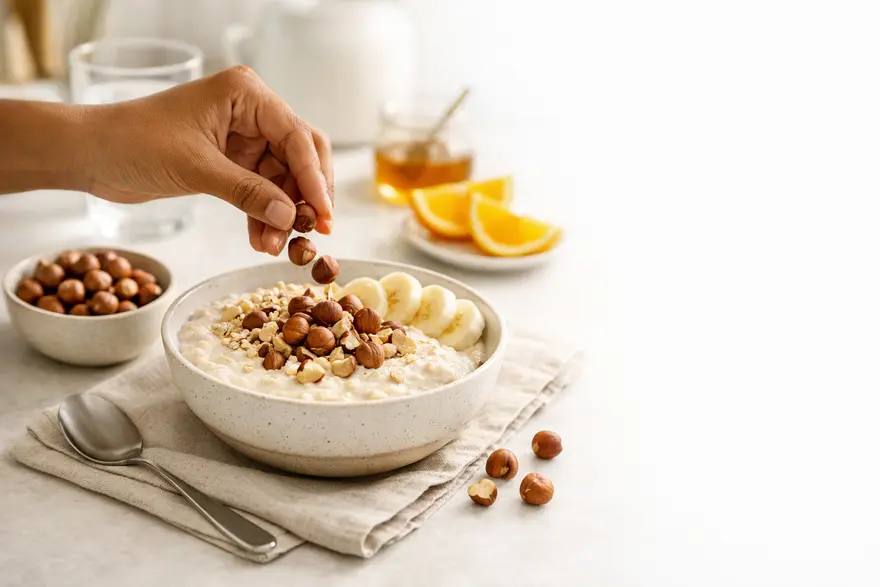
Table of Contents
- What Are Hazelnuts?
- Nutritional Value Of Hazelnuts
- Calories In Hazelnuts
- Are Hazelnuts Healthy?
- 10 Health Benefits Of Hazelnuts
- Hazelnuts And Heart Health
- Can Hazelnuts Help With Weight Management?
- Easy Ways To Eat Hazelnuts
- Best Time To Eat Hazelnuts
- How Many Hazelnuts Can You Eat Per Day?
- Are Hazelnuts Safe For Everyone?
- Possible Side Effects Of Eating Too Many Hazelnuts
- Tips To Choose And Store Hazelnuts
- Raw Vs Roasted Hazelnuts
- Conclusion
- FAQs
- References
Hazelnuts are small, round tree nuts with a rich, buttery flavour and a satisfying crunch. You may know them from chocolates and desserts, but they can also be a very nutritious addition to your everyday meals.
Like other nuts, hazelnuts are calorie-dense, so portion size matters. Still, when you eat them in moderation, they can add healthy fats, fibre, plant protein, and important micronutrients to your diet. If you are looking for a simple way to make your snacks and meals more nourishing, hazelnuts can fit in well.
What Are Hazelnuts?
Hazelnuts are the edible seeds of trees from the Corylus family. They are also called filberts in some regions. You can eat them raw, roasted, chopped, sliced, or ground into spreads and flours.
They are popular in both sweet and savoury dishes. You can add them to porridge, yoghurt, salads, trail mix, bakes, or even vegetable dishes for extra texture and flavour.
Nutritional Value Of Hazelnuts
Hazelnuts are nutrient-dense and provide a useful mix of healthy fats, fibre, plant protein, and micronutrients. They are especially known for vitamin E, manganese, copper, and magnesium.
A practical serving of about 28 grams, which is roughly a small handful, provides around:
- 175 to 180 calories
- 17 grams of fat
- 4 to 4.5 grams of protein
- About 5 grams of carbohydrate
- Around 2.5 to 3 grams of fibre
Hazelnuts are also among the better-known vitamin E rich foods, which is one reason they are often discussed when people look up vitamin E benefits. In terms of tree nuts nutrition, they stand out particularly for vitamin E and manganese.
Calories In Hazelnuts
Hazelnuts are energy-dense, so even a small serving contains a fair number of calories. A small handful of about 28 grams has roughly 175 to 180 calories. That does not make them unhealthy, but it does mean mindful portions are important if you are watching your daily calorie intake.
Are Hazelnuts Healthy?
Yes, hazelnuts can be a healthy food when eaten in sensible amounts. They provide mostly unsaturated fats, along with fibre, antioxidants, and micronutrients. Research suggests that including hazelnuts in your diet may support cholesterol balance and overall cardiometabolic health.
That said, hazelnuts are not a magic food. Their benefits are most meaningful when they are part of a balanced eating pattern rather than added on top of an already excessive diet.
10 Health Benefits Of Hazelnuts
1. Rich In Healthy Fats
Hazelnuts are high in unsaturated fats, especially monounsaturated fat. These fats are generally considered more heart-friendly than diets high in saturated fat.
2. Provide Antioxidants
Hazelnuts contain antioxidant compounds, including phenolics and vitamin E, which help protect cells from oxidative stress.
3. Support Heart Health
Some studies and reviews suggest that hazelnut intake may help improve blood lipid patterns, especially LDL cholesterol, when included in a healthy diet.
4. Add Fibre For Better Satiety
The fibre in hazelnuts can help make snacks and meals more filling. That can help you stay satisfied for longer.
5. Contain Plant Protein
Hazelnuts provide a modest amount of plant protein, which adds to their value as a snack or meal topping.
6. Provide Vitamin E For Cell Protection
Hazelnuts are an excellent source of vitamin E, which acts as an antioxidant and supports cell protection.
7. May Support Better Cholesterol Balance
Systematic reviews suggest hazelnut-enriched diets may reduce LDL cholesterol and total cholesterol, although the size of the effect can vary.
8. May Help With Blood Sugar Control As Part Of A Balanced Diet
Evidence on hazelnuts specifically is limited, but broader research on tree nuts suggests they may support insulin sensitivity when they replace less healthy snack choices.
9. Support Overall Nutrient Intake
Hazelnuts add useful amounts of manganese, copper, magnesium, and fibre. They can strengthen the nutritional quality of your day without much effort.
10. Easy To Include In Everyday Meals
One of the most practical hazelnut benefits is convenience. They are easy to carry, easy to portion, and easy to add to breakfast, snacks, and homemade desserts.
Hazelnuts And Heart Health
Hazelnuts are especially valued for their fat profile. Most of the fat they provide is unsaturated, and they also contain fibre and antioxidant compounds. This combination is one reason hazelnuts are often linked with heart health.
Research suggests hazelnuts may help support healthier LDL cholesterol levels and overall lipid balance when included regularly in a balanced diet. That does not mean you need large amounts. A modest daily serving is usually enough.
Can Hazelnuts Help With Weight Management?
Hazelnuts are high in calories, so they are not a low-calorie food. But that does not mean you need to avoid them if you are trying to manage your weight.
Because they contain fat, fibre, and some protein, they can be more satisfying than highly processed snacks. A portion-controlled serving may help you feel fuller, which can support better food choices through the day. They work best when you replace less nutritious snacks rather than simply adding extra calories.
Easy Ways To Eat Hazelnuts
You can include hazelnuts in simple, everyday ways:
- Eat a small handful as a snack
- Add chopped hazelnuts to porridge or oats
- Mix them into yoghurt
- Add them to homemade trail mix
- Sprinkle them over salads
- Blend them into smoothies
- Use them in homemade nut butter
- Add them to bakes, muffins, or granola
- Pair them with fruit for a balanced snack
They also fit naturally into broader dry fruits nutrition choices when you want variety in your snack routine.
Best Time To Eat Hazelnuts
There is no single best time to eat hazelnuts. What matters more is portion and consistency.
You may find them especially useful:
- With breakfast for added crunch and satiety
- As a mid-morning snack
- As an evening snack instead of processed foods
- As part of a pre-portioned snack box with fruit
How Many Hazelnuts Can You Eat Per Day?
For most adults, a small handful of hazelnuts a day is a sensible amount. This is usually around 25 to 30 grams.
That gives you the nutritional benefits without making it too easy to overdo calories. If you already eat other nuts, seeds, or calorie-dense snacks in the same day, adjust your portion accordingly.
Are Hazelnuts Safe For Everyone?
Hazelnuts are safe for most people, but not for everyone. If you have a tree nut allergy, hazelnuts can trigger reactions that range from mild itching or swelling to severe allergic symptoms.
If you have never eaten hazelnuts before and you already have a history of food allergy, asthma, or other nut allergies, it is best to be cautious and seek medical advice if needed.
Possible Side Effects Of Eating Too Many Hazelnuts
Eating too many hazelnuts can cause a few issues:
- Excess calorie intake
- Digestive discomfort in some people
- Allergy reactions in susceptible individuals
- Extra salt or sugar if you choose coated or flavoured varieties
Plain, unsalted hazelnuts are usually the best choice if you want the health benefits without unnecessary extras.
Tips To Choose And Store Hazelnuts
When buying hazelnuts, look for:
- Plain, unsalted versions where possible
- Fresh nuts without a stale or rancid smell
- Whole nuts with skins on if you want maximum antioxidant value
To store them well:
- Keep them in an airtight container
- Store them in a cool, dry place
- Refrigerate or freeze them if you are keeping them for longer periods
Because nuts contain healthy fats, they can turn rancid if exposed to heat, light, and air for too long.
Raw Vs Roasted Hazelnuts
Both raw and roasted hazelnuts can fit into a healthy diet. Raw hazelnuts may retain more of their natural phenolic compounds, especially when the skin is left on. Roasted hazelnuts, however, are often easier to enjoy because of their stronger flavour and crunch.
So the better option is often the one you will actually eat regularly, provided it is not heavily salted or sugar-coated.
Conclusion
Hazelnuts are a nutrient-dense, versatile food that can add healthy fats, fibre, plant protein, and important micronutrients to your diet. They are especially notable for vitamin E, manganese, and their supportive role in a heart-conscious eating pattern.
The key is moderation. A small handful can go a long way. When you use hazelnuts to replace less nutritious snacks or add them thoughtfully to meals, they can be a very smart addition to your routine.
If you are trying to improve your diet as part of a wider wellness plan, Metropolis Healthcare offers a wide range of health tests and convenient home sample collection, which can help support more informed decisions about your overall health.
FAQs
Are Hazelnuts Good For Heart Health?
They can be. Hazelnuts provide mostly unsaturated fats along with fibre and antioxidants, and research suggests they may support healthier cholesterol patterns as part of a balanced diet.
Can Hazelnuts Help With Weight Loss?
Not directly. They are calorie-dense, but they may support fullness and help you make better snack choices when eaten in controlled portions.
How Many Calories Are In Hazelnuts?
A small handful of about 28 grams contains roughly 175 to 180 calories.
Can Diabetics Eat Hazelnuts?
Many people with diabetes can include hazelnuts in moderation as part of a balanced diet. They are lower in carbohydrate than many snack foods and may support better dietary quality, but portion size still matters.
Is It Better To Eat Hazelnuts Raw Or Roasted?
Both can work. Raw hazelnuts may retain more antioxidants, especially with the skin on, while roasted hazelnuts are often more flavourful. The healthier choice is usually plain hazelnuts without added sugar or excess salt.
References
- U.S. Department of Agriculture, Agricultural Research Service. FoodData Central. Hazelnuts, raw. Accessed March 30, 2026.
- Brown R, Tey SL, Gray AR, Chisholm A, Smith C, Fleming E, Parnell W. Effects of Hazelnut Consumption on Cardiometabolic Risk Factors and Acceptance: A Systematic Review. Int J Environ Res Public Health. 2022;19(5):2880. PMID: 35270573.
- Perna S, Giacosa A, Bonitta G, Bologna C, Isu A, Guido D, Rondanelli M. Effects of Hazelnut Consumption on Blood Lipids and Body Weight: A Systematic Review and Bayesian Meta-Analysis. Nutrients. 2016;8(12):747. PMID: 27897978.
- Tindall AM, Petersen KS, Skulas-Ray AC, Richter CK, Proctor DN, Kris-Etherton PM. The Effect of Nuts on Markers of Glycemic Control: A Systematic Review and Meta-Analysis of Randomized Controlled Trials. Am J Clin Nutr. 2019;109(2):297-314. PMID: 30722007.
- Pelvan E, Alasalvar C, Uzman S, Mogol BA, Oztok B, Gokmen V. Effects of Roasting on the Antioxidant Status and Phenolic Profiles of Commercial Turkish Hazelnut Varieties (Corylus avellana L.). J Agric Food Chem. 2012;60(5):1218-1223. PMID: 22224708.
- Tey SL, Brown RC, Chisholm AW, Delahunty CM, Gray AR, Williams SM. Effects of Different Forms of Hazelnuts on Blood Lipids and α-Tocopherol Concentrations in Mildly Hypercholesterolemic Individuals. Eur J Clin Nutr. 2011;65(10):1176-1182. PMID: 20877394.
- National Health Service. Eating a Balanced Diet. NHS. Updated 2025.
- National Health Service. Food Allergy. NHS. Updated 2025.