Home Visit
 Upload






Preventive Healthcare
Cerebrum: Functions, Lobes And Key Disorders
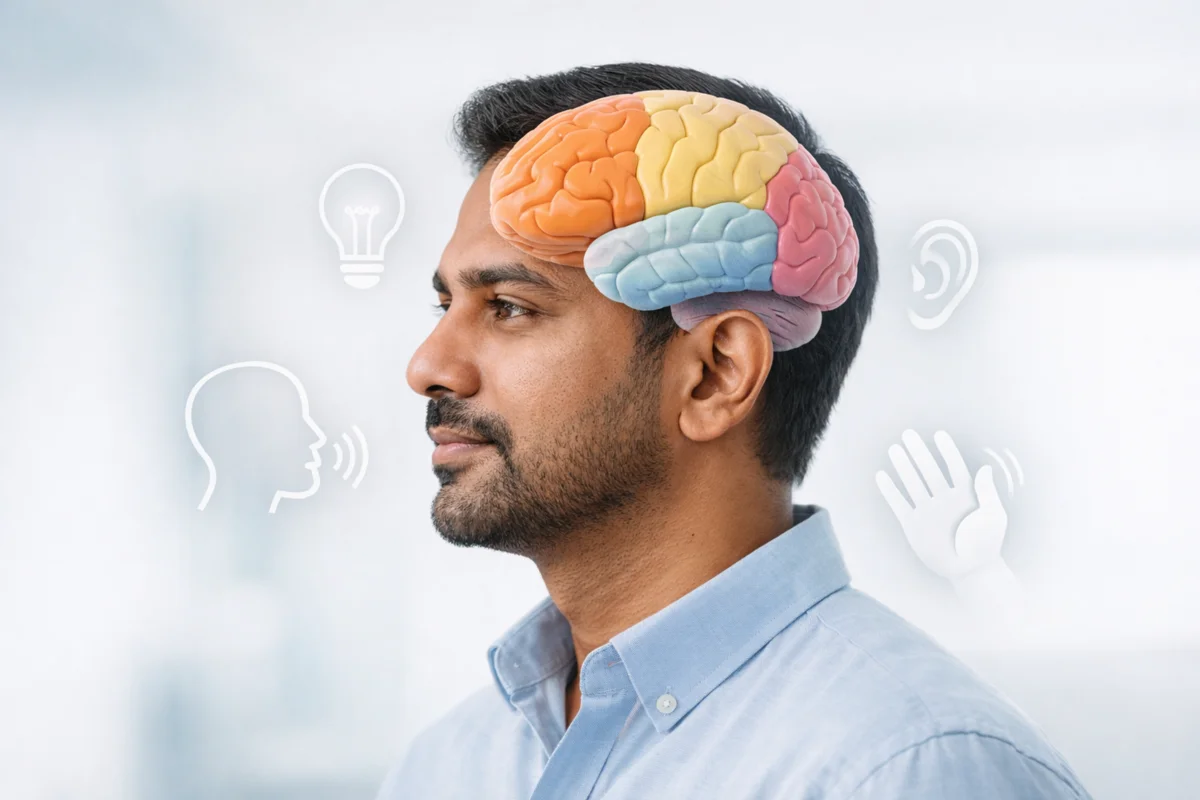
Table of Contents
- What Is The Cerebrum?
- Where Is The Cerebrum Located In The Brain?
- Structure Of The Cerebrum
- Left Vs Right Cerebral Hemisphere
- Functions Of The Cerebrum
- Lobes Of The Cerebrum
- Key Disorders Of The Cerebrum
- Symptoms Of Cerebrum Damage
- How Cerebral Disorders Are Diagnosed
- Common Tests To Check The Cerebrum
- Treatment Options For Cerebrum Disorders
- Role Of Rehabilitation And Cognitive Therapy
- Can Cerebrum Damage Be Reversed?
- When To See A Doctor
- When To Seek Emergency Care
- Conclusion
- FAQs
- References
Your brain does an extraordinary amount of work every second. The cerebrum is the largest part of your brain and is responsible for the skills you rely on most in daily life, such as thinking, learning, memory, speech, sensation, and voluntary movement.
This guide explains what the cerebrum is, what each lobe does, and the most important warning signs that mean you should seek medical care without delay.
What Is The Cerebrum?
The cerebrum is the upper, largest portion of your brain. It helps you stay aware of your surroundings, make decisions, understand language, and control voluntary movements. It also plays a major role in your personality, emotions, and behaviour.
In simple terms, if you are consciously thinking or intentionally doing something, your cerebrum is heavily involved.
Where Is The Cerebrum Located In The Brain?
Your cerebrum sits at the top and front of your skull. It covers deeper brain structures and connects with:
- The brainstem, which controls vital functions like breathing and heart rate
- The cerebellum, which fine-tunes balance, posture, and coordination
Structure Of The Cerebrum
The cerebrum includes several important layers and parts:
- Cerebral Cortex: The outer grey matter, responsible for higher processing and interpretation of information
- White Matter: The inner “wiring” that carries signals between different brain regions
- Gyri And Sulci: The folds and grooves that increase surface area, helping you process more complex information
- Corpus Callosum: A major bridge of nerve fibres that helps the left and right hemispheres communicate
- Thalamus: A relay centre that routes sensory signals (except smell) to the right areas
- Basal Ganglia: A group of structures involved in movement control and habit learning
Left Vs Right Cerebral Hemisphere
Your cerebrum is divided into two hemispheres:
- The left hemisphere mainly controls the right side of your body
- The right hemisphere mainly controls the left side of your body
Some abilities are more “dominant” on one side for many people. For example, language is often left-dominant, while some aspects of spatial attention and visual processing are often right-dominant. Even so, both hemispheres typically work together, and there is natural variation between individuals.
Functions Of The Cerebrum
Role Of The Cerebrum In Thinking And Memory
Your cerebrum supports attention, planning, judgement, problem-solving, and decision-making. The prefrontal cortex is especially important for organising thoughts and controlling behaviour.
Memory is not stored in one single place. Different networks help you store and retrieve experiences, facts, and skills, and they work together depending on what you are trying to remember.
Cerebrum And Voluntary Movements
When you decide to move, signals from the motor areas of your cerebrum travel through nerve pathways to your muscles. This is how you walk, write, lift objects, and speak. Your cerebellum and basal ganglia help refine and coordinate those movements.
Cerebrum And Sensory Processing
Your cerebrum interprets information from your senses, including touch, pain, temperature, sound, and vision. This is how you recognise a familiar voice, feel heat, or notice when something is sharp.
Cerebrum And Speech And Language
Language is supported by a network rather than a single “spot.” Traditionally, the frontal region is linked with speech production and the temporal-parietal region is linked with comprehension. Modern research highlights that language comprehension involves broader connected areas than many people assume.
Lobes Of The Cerebrum
Each hemisphere has major lobes with special roles. Understanding them helps make sense of symptoms when something goes wrong.
Frontal Lobe: Functions And Disorders
What It Helps You Do
- Plan and organise
- Focus attention
- Control impulses and behaviour
- Start voluntary movements
- Produce speech
Common Problems If Affected
- Personality or behaviour changes
- Poor judgement or reduced concentration
- Weakness on one side of the body
- Speech difficulty
Frontal lobe function is strongly linked to executive control networks.
Parietal Lobe: Functions And Disorders
What It Helps You Do
- Process touch, pain, and temperature
- Judge distance and spatial relationships
- Direct attention to what matters
Common Problems If Affected
- Numbness or reduced sensation
- Trouble judging space or navigating
- Difficulty with attention, including neglect in some cases
Temporal Lobe: Functions And Disorders
What It Helps You Do
- Understand spoken language
- Form and retrieve memories
- Recognise faces and objects
- Link emotions with memory
Common Problems If Affected
- Memory issues
- Language comprehension problems
- Seizures (temporal lobe epilepsy is a common form)
Memory systems rely on distributed networks involving temporal lobe structures.
Occipital Lobe: Functions And Disorders
What It Helps You Do
- Process visual information such as movement, shapes, and colour
Common Problems If Affected
- Blurred vision or blind spots
- Difficulty recognising objects
- Visual field loss after stroke or injury
Key Disorders Of The Cerebrum
Stroke Affecting The Cerebrum
A stroke happens when blood flow to part of the brain is interrupted. If the cerebrum is affected, symptoms depend on the region involved. Common signs include facial drooping, arm weakness, speech changes, sudden confusion, or sudden vision problems.
Stroke is time-critical. Early assessment and treatment can reduce disability and improve outcomes.
Traumatic Brain Injury
A traumatic brain injury (TBI) can happen after a fall, road traffic accident, sports injury, or assault. Symptoms can range from headache and confusion to severe weakness, seizures, or loss of consciousness.
Moderate to severe TBI requires urgent medical evaluation and careful monitoring.
Cerebral Tumours
Tumours in the cerebrum may cause headaches, seizures, weakness, speech changes, or personality changes. Some tumours are benign, while others are malignant. Diagnosis usually involves imaging and specialist assessment.
Neurodegenerative Disorders
Conditions such as Alzheimer’s disease affect brain networks over time. Early symptoms often include memory changes, difficulty finding words, and problems managing daily tasks. Diagnosis usually involves clinical assessment and may include cognitive testing and blood tests to rule out other causes.
Symptoms Of Cerebrum Damage
Symptoms vary depending on the affected region, speed of onset, and underlying cause. Common symptoms include:
- Sudden weakness or numbness on one side
- New speech difficulty or trouble understanding speech
- Sudden confusion or reduced alertness
- New seizures
- Persistent or worsening headaches, especially with vomiting
- Memory problems or noticeable personality changes
- Vision problems such as blind spots or loss of part of your visual field
- Difficulty with balance, coordination, or planning tasks
If symptoms start suddenly, treat it as urgent.
How Cerebral Disorders Are Diagnosed
Diagnosis usually combines:
- Medical history and symptom timeline
- Neurological examination
- Imaging such as CT or MRI when needed
- EEG if seizures are suspected
- Cognitive assessment for memory and thinking concerns
- Blood tests to check for treatable contributors (for example thyroid issues, vitamin B12 deficiency, infection, inflammation, or metabolic causes)
Common Tests To Check The Cerebrum
Depending on your symptoms, your doctor may recommend:
- CT scan or MRI brain
- EEG
- Blood tests (glucose, lipids, thyroid function, vitamin B12, infection markers)
- Lumbar puncture in selected cases
- Neuropsychological testing
Treatment Options For Cerebrum Disorders
Treatment depends on the cause and may include:
- Medicines (for example, to control seizures, reduce inflammation, treat infection, or manage risk factors)
- Surgery for certain tumours or bleeding
- Rehabilitation to regain function after stroke or injury
- Lifestyle and risk-factor management such as controlling blood pressure, diabetes, cholesterol, sleep, and weight
Role Of Rehabilitation And Cognitive Therapy
Rehabilitation can make a meaningful difference. Your care plan may involve physiotherapy for movement, occupational therapy for daily skills, speech and language therapy, and cognitive therapy for attention and memory.
Can Cerebrum Damage Be Reversed?
Some causes are reversible or treatable, especially when addressed early. For example, seizures may be controlled, infections can be treated, and certain deficiencies can be corrected. In other cases, such as stroke or neurodegenerative disease, the goal is often to reduce damage, support recovery, and help you function as well as possible.
Even when full reversal is not possible, many people improve with timely treatment and structured rehabilitation.
When To See A Doctor
Seek medical advice if you have:
- Persistent headaches or new neurological symptoms
- Memory changes that affect daily life
- New speech or vision problems
- A first-time seizure
- Behavioural or personality changes noticed by you or your family
When To Seek Emergency Care
Get urgent medical help if you have sudden symptoms such as:
- Face drooping, arm weakness, or difficulty speaking
- Sudden confusion or collapse
- A seizure that is new, prolonged, or followed by slow recovery
- Severe headache with vomiting, fainting, or neck stiffness
- Sudden vision loss
Conclusion
Your cerebrum supports the abilities that make daily life possible, from movement and speech to memory and decision-making. If you notice new or sudden symptoms, timely evaluation can make a real difference. You do not need to manage worrying symptoms alone. Medical teams can identify the cause and guide you with the right next steps.
If your doctor recommends blood tests to check for contributing factors such as diabetes, thyroid imbalance, infection, inflammation, vitamin deficiencies, or cholesterol, Metropolis Healthcare can support you with accurate testing and reliable reports. With 4,000+ tests, full body checkups, and home sample collection supported by a wide network of touchpoints, you can book conveniently via the website, app, call, or WhatsApp and access quality diagnostics as part of your overall brain health plan.
FAQs
What Does The Cerebrum Control?
It controls higher functions such as thinking, memory, language, sensory processing, emotions, personality, and voluntary movement.
How Is The Cerebrum Different From The Cerebellum?
Your cerebrum supports conscious thought and intentional actions, while your cerebellum mainly helps coordinate movement, posture, and balance.
Can Cerebrum Damage Affect Behaviour?
Yes. Changes in behaviour, judgement, impulse control, and personality can occur, especially when the frontal lobe is affected.
Which Lobe Controls Speech?
Speech production is strongly linked with frontal lobe networks, while understanding language involves temporal and broader connected regions.
Is Cerebrum Damage Permanent?
It depends on the cause and how quickly you receive treatment. Some issues are treatable and some effects can improve with rehabilitation, while others may be long-term.
References
- Miller E. K., Cohen J. D. (2001). An Integrative Theory Of Prefrontal Cortex Function. Annual Review of Neuroscience, 24, 167–202. PMID: 11283309
- Squire L. R. (2004). Memory Systems Of The Brain: A Brief History And Current Perspective. Neurobiology of Learning and Memory, 82(3), 171–177. PMID: 15464402
- Binder J. R. (2015). The Wernicke Area: Modern Evidence And A Reinterpretation. Neurology, 85(24), 2170–2175. PMID: 26567270
- Dronkers N. F., Plaisant O., Iba-Zizen M. T., Cabanis E. A. (2007). Paul Broca’s Historic Cases: High Resolution MR Imaging Of The Brains Of Leborgne And Lelong. Brain, 130(5), 1432–1441. PMID: 17405763
- Constantinidis C., Bucci D. J. (2006). Posterior Parietal Cortex: Functional Organization And Role In Cognitive Functions. Reviews in Neuroscience, 17(4), 415–427. PMID: 17139842
- Bloom J. S., Hynd G. W. (2005). The Role Of The Corpus Callosum In Interhemispheric Transfer Of Information: Excitation Or Inhibition? Neuropsychology Review, 15(2), 59–71. PMID: 16211466
- Uddin L. Q., Nomi J. S., Hébert-Seropian B., Ghaziri J., Boucher O. (2017). Structure And Function Of The Human Insula. Journal of Clinical Neurophysiology, 34(4), 300–306. PMID: 28644199
- Graybiel A. M. (2008). Habits, Rituals, And The Evaluative Brain. Annual Review of Neuroscience, 31, 359–387. PMID: 18558860
- Powers W. J., Rabinstein A. A., Ackerson T., et al. (2019). Guidelines For The Early Management Of Patients With Acute Ischemic Stroke: 2019 Update. Stroke, 50(12), e344–e418. PMID: 31662037
- Maas A. I. R., Stocchetti N., Bullock R. (2008). Moderate And Severe Traumatic Brain Injury In Adults. Lancet Neurology, 7(8), 728–741. PMID: 18635021
- Wen P. Y., Kesari S. (2008). Malignant Gliomas In Adults. New England Journal of Medicine, 359(5), 492–507. PMID: 18669428
- McKhann G. M., Knopman D. S., Chertkow H., et al. (2011). The Diagnosis Of Dementia Due To Alzheimer’s Disease. Alzheimer’s & Dementia, 7(3), 263–269. PMID: 21514250
- Fisher R. S., Acevedo C., Arzimanoglou A., et al. (2014). ILAE Official Report: A Practical Clinical Definition Of Epilepsy. Epilepsia, 55(4), 475–482. PMID: 24730690