Home Visit
 Upload






Preventive Healthcare
World Lupus Day 2026: Lupus Diagnosis, ANA Test And Symptoms You Shouldn’t Ignore
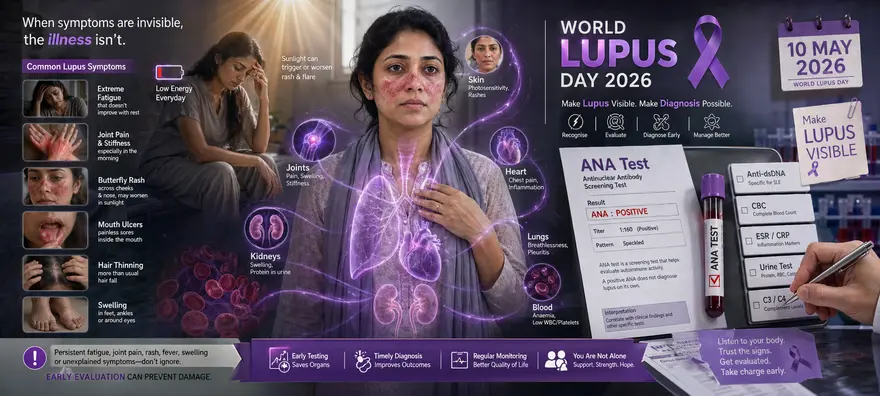
Table of Contents
- What Is World Lupus Day?
- When Is World Lupus Day 2026 Celebrated?
- World Lupus Day Theme 2026
- World Lupus Day History
- Why This Day Is Important
- What Is Lupus?
- Common Lupus Symptoms You Shouldn’t Ignore
- When Should You See A Doctor?
- Which Tests Are Done For Lupus?
- What Does A Positive ANA Test Mean?
- Why Early Detection Of Lupus Matters
- Global Impact Of Lupus
- Common Awareness Messages Shared On World Lupus Day
- How You Can Participate In World Lupus Day
- Role Of Preventive Healthcare In Autoimmune Diseases
- Living With Lupus: Practical Self-Care Tips
- Key Takeaways
- Conclusion
- FAQs About World Lupus Day 2026
World Lupus Day is observed every year to help more people understand lupus, a chronic autoimmune disease that is often difficult to recognise. Lupus can affect the skin, joints, kidneys, lungs, heart, blood cells, brain and other parts of the body. Its symptoms may look like many other health conditions, which is why it is sometimes called “the great imitator”.
World Lupus Day 2026 is an important reminder to learn the early signs, seek timely medical advice and understand the role of diagnostic tests such as the ANA test. While lupus cannot be diagnosed with one test alone, the right combination of clinical evaluation and lab tests can help doctors reach a clearer diagnosis.
What Is World Lupus Day?
World Lupus Day is a global awareness day observed on 10 May every year. It brings attention to lupus, its symptoms, its impact on daily life and the need for timely diagnosis and better care.
The day also helps reduce stigma around autoimmune diseases. Many people living with lupus may look well on the outside but experience fatigue, pain, flare-ups and organ-related complications. Awareness helps families, workplaces and communities become more understanding and supportive.
When Is World Lupus Day 2026 Celebrated?
World Lupus Day 2026 will be observed on Sunday, 10 May 2026.
May is also recognised as Lupus Awareness Month in many parts of the world. During this month, organisations, healthcare experts and communities share information about lupus symptoms awareness, early detection lupus, patient support and ongoing research.
World Lupus Day Theme 2026
The World Lupus Day theme 2026 is Make Lupus Visible.
This theme focuses on making the unseen impact of lupus better understood. Lupus symptoms can come and go. They may not always be obvious to others. The theme encourages people to talk openly about symptoms, support those living with lupus and promote early diagnosis.
The broader world lupus day theme also reminds you that better awareness can lead to earlier medical attention, better monitoring and improved quality of life.
World Lupus Day History
World Lupus Day was established in 2004 to unite lupus organisations across the world and raise awareness about the physical, emotional, social and economic impact of lupus.
Since then, 10 May has become a global day of education and advocacy. People wear purple, share awareness messages, take part in campaigns and support those affected by lupus.
Why This Day Is Important
World Lupus Day matters because it helps:
- Improve public understanding of lupus
- Encourage people to recognise early symptoms
- Reduce delay in diagnosis
- Support people living with chronic autoimmune symptoms
- Highlight the importance of research and better treatment options
- Promote regular health monitoring for people at risk
- Reduce myths, fear and stigma around lupus
What Is Lupus?
Lupus is a chronic autoimmune disease. In autoimmune diseases, your immune system mistakenly attacks your own healthy tissues.
This can cause inflammation, pain and damage in different parts of the body. The most common type is systemic lupus erythematosus, often called SLE. It can affect many organs and body systems.
Lupus can be mild in some people and more serious in others. Symptoms may appear in phases. A period when symptoms worsen is called a flare. A period when symptoms improve is called remission.
Common Lupus Symptoms You Shouldn’t Ignore
Lupus symptoms can vary from person to person. They may develop slowly, appear suddenly or come and go over time.
Common symptoms include:
- Extreme fatigue that does not improve with rest
- Joint pain, swelling or stiffness
- A butterfly-shaped rash across the cheeks and nose
- Skin rashes that worsen after sun exposure
- Unexplained fever
- Hair thinning or patchy hair loss
- Mouth or nose ulcers
- Chest pain while taking a deep breath
- Swelling in the feet, legs or around the eyes
- Fingers or toes turning white, blue or numb in cold or stress
- Headaches, confusion or memory problems
- Unexplained anaemia or low blood cell counts
These symptoms do not always mean you have lupus. However, if they are persistent, recurrent or affecting your daily life, you should speak to a doctor.
When Should You See A Doctor?
You should seek medical advice if you notice:
- Ongoing fatigue with no clear reason
- Repeated joint pain or swelling
- Skin rashes after sunlight exposure
- Unexplained fever
- Swelling around the eyes or legs
- Blood or protein detected in urine
- Frequent mouth ulcers
- Chest pain while breathing deeply
- Symptoms that come in flares
Seek urgent medical care if you have severe chest pain, severe breathlessness, seizures, sudden weakness, confusion or symptoms that feel like a medical emergency.
Which Tests Are Done For Lupus?
There is no single test that confirms lupus on its own. Doctors usually diagnose lupus by combining your symptoms, physical examination, medical history and lab test results.
Common tests include:
- ANA Test: The antinuclear antibody test checks for antibodies that may attack your own cells. Most people with lupus have a positive ANA test, but a positive ANA does not always mean lupus.
- Anti-dsDNA Test: This test looks for antibodies that are more specific to lupus and may also help assess kidney involvement.
- Anti-Sm Antibody Test: This is another specific antibody test that may support a lupus diagnosis.
- Complete Blood Count: This checks for anaemia, low white blood cells or low platelets.
- ESR And CRP: These tests help assess inflammation in the body.
- Urine Routine And Microscopy: This helps detect protein, blood cells or other signs of kidney involvement.
- Kidney Function Tests: These assess how well your kidneys are working.
- Complement Tests: C3 and C4 levels may be checked because they can fall during active lupus.
- Liver Function Tests: These may be done to assess overall health and treatment safety.
- Kidney Biopsy: This may be advised if lupus nephritis is suspected.
If your doctor advises an ANA test, you may also want to understand the ana test price and whether follow-up autoimmune tests may be needed based on your result.
What Does A Positive ANA Test Mean?
A positive ANA test means antinuclear antibodies are present in your blood. These antibodies may be linked with autoimmune activity.
However, a positive ANA test does not confirm lupus by itself. Some healthy people may also have a positive ANA result. ANA can also be positive in other autoimmune diseases, infections or due to certain medicines.
This is why doctors do not rely on ANA alone. They look at your symptoms, examination findings and other specific tests before making a diagnosis.
Why Early Detection Of Lupus Matters
Early detection lupus can help reduce the risk of complications. Lupus can affect important organs such as the kidneys, heart, lungs and brain. When it is recognised early, your doctor can monitor your health closely and start the right treatment plan.
Timely diagnosis can help:
- Reduce flare frequency
- Protect kidney health
- Manage joint and skin symptoms better
- Lower the risk of organ damage
- Improve energy and daily functioning
- Support safer treatment decisions
- Improve quality of life
If you have repeated symptoms that do not have a clear cause, do not ignore them. Early medical evaluation can make a meaningful difference.
Global Impact Of Lupus
Lupus affects people across the world. Its impact can be physical, emotional and social.
Key facts include:
- Lupus is an autoimmune disease, not an infection
- It is not contagious
- It affects women more commonly than men
- Symptoms can vary widely from person to person
- Diagnosis may take time because symptoms can mimic other diseases
- Lupus may affect work, studies, relationships and mental well-being
- With proper care, many people with lupus can manage symptoms and live active lives
Common Awareness Messages Shared On World Lupus Day
On World Lupus Day, awareness campaigns often focus on simple and helpful messages such as:
- Lupus is real, even when symptoms are not visible
- Lupus is not contagious
- Early diagnosis can help prevent complications
- Fatigue in lupus is more than normal tiredness
- Sunlight can trigger symptoms in some people
- Kidney involvement may occur silently
- Regular monitoring is important
- Support and understanding can improve daily life for people with lupus
How You Can Participate In World Lupus Day
You can support World Lupus Day 2026 in simple ways:
- Wear purple on 10 May
- Share reliable lupus awareness posts
- Learn the common symptoms of lupus
- Encourage someone with persistent symptoms to seek medical advice
- Support people living with lupus with patience and empathy
- Avoid spreading myths or unverified health claims
- Join community awareness activities
- Talk about preventive health and regular checkups
- Help make invisible symptoms visible through kind conversations
Role Of Preventive Healthcare In Autoimmune Diseases
Preventive healthcare cannot always prevent autoimmune diseases, but it can help you stay informed about your health. Regular health checks can identify changes in blood counts, inflammation markers, kidney function, liver function, vitamin levels and other important health markers.
For people with symptoms, a timely evaluation helps doctors decide whether autoimmune testing is needed. For people already diagnosed with lupus or another autoimmune condition, regular monitoring helps track disease activity and treatment safety.
A full body checkup can also help you understand your overall health better, especially when combined with medical advice and symptom review.
Living With Lupus: Practical Self-Care Tips
Lupus care is personalised. Your doctor may recommend medicines, lifestyle changes and regular monitoring based on your symptoms and organ involvement.
General self-care tips include:
- Take medicines exactly as prescribed
- Avoid stopping treatment without medical advice
- Protect your skin from harsh sunlight
- Get adequate rest
- Eat balanced meals
- Stay physically active as advised by your doctor
- Track your symptoms and flare triggers
- Attend regular follow-ups
- Manage stress with healthy coping methods
- Report new symptoms early
These habits do not replace medical treatment, but they can support better disease management.
Key Takeaways
- World Lupus Day 2026 will be observed on 10 May 2026.
- The World Lupus Day theme 2026 is Make Lupus Visible.
- Lupus is a chronic autoimmune disease that can affect many organs.
- Common symptoms include fatigue, joint pain, butterfly rash, fever, hair loss, mouth ulcers and swelling.
- The ANA test can support evaluation, but it cannot diagnose lupus alone.
- Doctors use symptoms, examination and multiple lab tests to diagnose lupus.
- Early diagnosis and regular monitoring can help reduce complications.
- Preventive healthcare and routine testing can help you stay aware of your health markers.
Conclusion
World Lupus Day 2026 is a reminder to listen to your body and take persistent symptoms seriously. Lupus can be complex, but timely diagnosis, regular monitoring and the right medical support can help you manage it better.
Metropolis Healthcare supports proactive health management with 4,000 tests, accurate results, expert pathologists, quick turnaround time and convenient home sample collection. You can book tests through the website, app, call or WhatsApp, and access reliable reports to stay informed about your health. Whether you are checking symptoms, monitoring an existing condition or planning preventive health screening, Metropolis can be your trusted diagnostics partner.
FAQs About World Lupus Day 2026
What Country Has The Most Lupus?
Lupus is reported worldwide, but exact numbers vary because diagnosis, reporting systems and access to healthcare differ by country. Some studies show higher lupus burden in certain populations, including women and people of African, Asian, Hispanic and Indigenous ancestry. No single country can be named with certainty as having the most lupus without consistent global data.
When Is Wear Purple Day For Lupus?
People commonly wear purple on 10 May for World Lupus Day. Purple is used as a symbol of lupus awareness and support for people living with the condition.
When Should I Get Tested?
You should speak to a doctor if you have repeated or unexplained symptoms such as extreme fatigue, joint pain, swelling, butterfly rash, sunlight sensitivity, mouth ulcers, fever, hair loss or swelling around the eyes or legs. Your doctor may advise an ANA test and other tests based on your symptoms.
Can Lupus Be Cured?
There is no known cure for lupus at present. However, treatment can help control symptoms, reduce flares and lower the risk of complications. Many people with lupus manage the condition well with medical care and regular monitoring.
Is Lupus Contagious?
No. Lupus is not contagious. You cannot catch it from another person through touch, food, air or close contact.
Is ANA Positive Always Lupus?
No. A positive ANA test does not always mean you have lupus. ANA may be positive in other autoimmune conditions and sometimes in healthy people. Your doctor will interpret the result along with symptoms and other tests.