Home Visit
 Upload






Preventive Healthcare
Types Of Nuts: Nutritional Comparison, Health Benefits, And How To Include Them In Your Diet
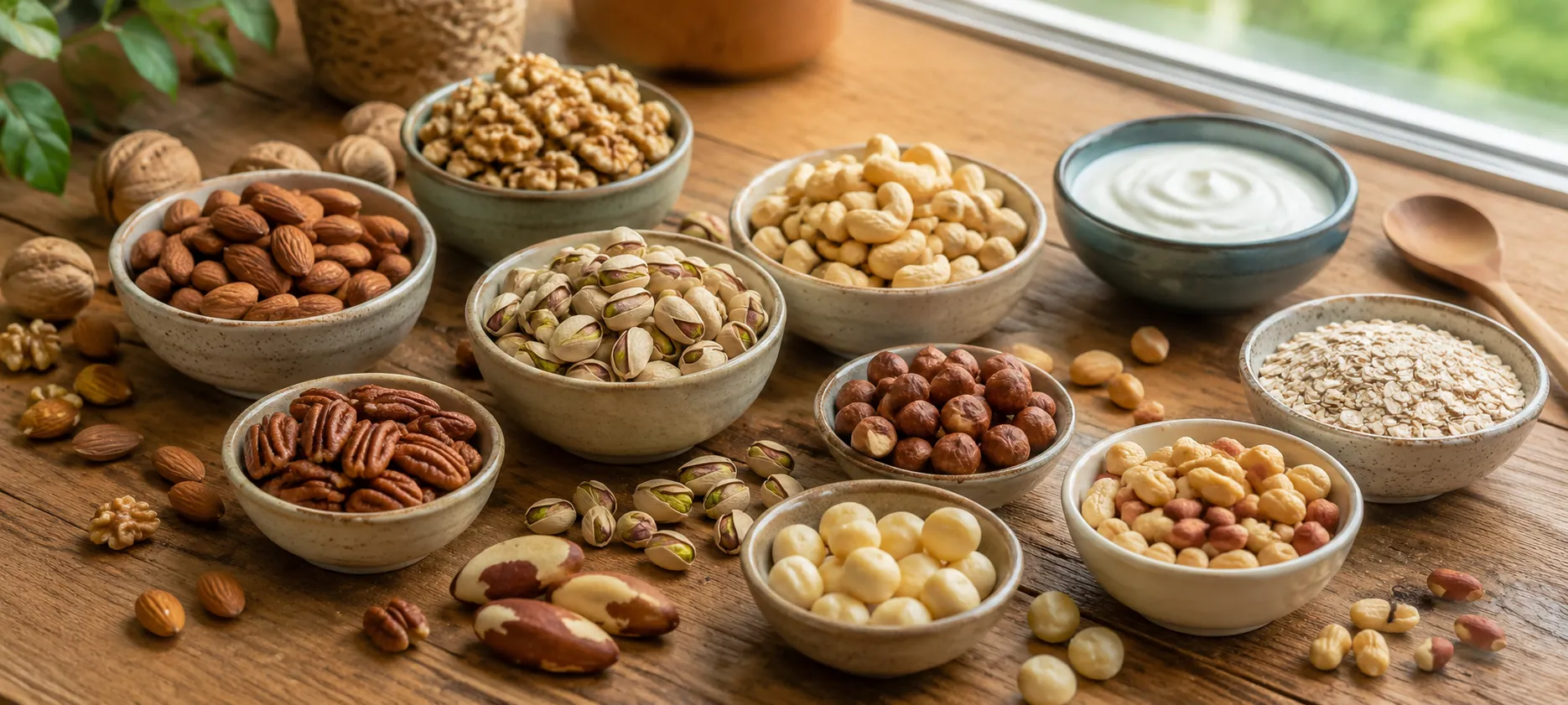
Table of Contents
- Understanding Nut Nutrition: What You Need To Know
- Nutritional Breakdown: Types Of Nuts Calories
- Best Nuts For Your Health: Which Should You Choose?
- Best Nuts For Heart Health
- Best Nuts For Weight Management
- Health Benefits Of Nuts: Why They’re A Superfood
- Different Types Of Nuts And Their Unique Benefits
- How To Include Nuts In Your Diet
- Conclusion
- FAQ
- References
Nuts are small, crunchy, and nutrient-rich foods that can easily fit into your daily diet. They contain healthy fats, protein, fibre, vitamins, minerals, and antioxidants. When eaten in the right portion, nuts can support heart health, weight management, better satiety, and overall wellness.
There are many types of nuts, and each one offers a slightly different nutrition profile. Almonds are known for vitamin E. Walnuts provide plant-based omega-3 fats. Pistachios offer protein and fibre with fewer calories than many other nuts. Cashew gives magnesium and a creamy texture that works well in both sweet and savoury dishes.
The key is moderation. Nuts are healthy, but they are also calorie-dense. A small handful is usually enough for one serving.
Understanding Nut Nutrition: What You Need To Know
Nuts nutrition is mainly built around healthy fats, plant protein, fibre, vitamins, minerals, and protective plant compounds. Most nuts are rich in unsaturated fats, which are considered heart-friendly when they replace less healthy fats in the diet.
Nuts also contain magnesium, potassium, vitamin E, selenium, copper, zinc, and polyphenols. These nutrients help support many body functions, including energy production, immunity, blood vessel health, and cell protection.
However, nuts calories can add up quickly. This does not mean you should avoid nuts. It means you should eat them in sensible portions. Plain, raw, roasted, or dry-roasted nuts are better choices than salted, sugar-coated, chocolate-coated, or deep-fried options.
Nutritional Breakdown: Types Of Nuts Calories
Here is an approximate comparison of common types of nuts per 28 gram serving, which is about one small handful.
|
Type Of Nut |
Calories |
Protein |
Fat |
Carbohydrates |
Fibre |
Key Nutrient |
|
Almonds |
170 kcal |
6 g |
15 g |
6 g |
3 g |
Vitamin E |
|
Pistachios |
159 kcal |
6 g |
13 g |
8 g |
3 g |
Vitamin B6 |
|
Walnuts |
185 kcal |
4 g |
18.5 g |
4 g |
2 g |
Omega-3 fatty acid ALA |
|
Cashews |
157 kcal |
5 g |
12 g |
8.5 g |
1 g |
Magnesium |
|
Pecans |
201 kcal |
2.7 g |
21 g |
3.8 g |
2.6 g |
Zinc and antioxidants |
|
Macadamia Nuts |
204 kcal |
2 g |
21.5 g |
3.9 g |
2.4 g |
Monounsaturated fats |
|
Brazil Nuts |
187 kcal |
4 g |
19 g |
3 g |
2 g |
Selenium |
|
Hazelnuts |
178 kcal |
4 g |
17 g |
4.7 g |
2.7 g |
Vitamin E |
|
Peanuts |
162 kcal |
7 g |
13.5 g |
6 g |
2.4 g |
Folate and niacin |
Peanuts are technically legumes, but they are commonly grouped with nuts because their taste, nutrition, and use are similar.
Best Nuts For Your Health: Which Should You Choose?
There is no single best nut for everyone. The best nuts for you depend on your health goals, taste, allergies, and how you use them in your meals.
- Almonds are a good choice if you want vitamin E, fibre, and a filling snack.
- Walnuts are useful if you want plant-based omega-3 fats.
- Pistachios are a good option if you want protein, fibre, and slightly lower nuts calories.
- Cashews work well if you want magnesium and a creamy texture in gravies, chutneys, and snacks.
- Brazil nuts are rich in selenium, but should be eaten in very small amounts.
- Hazelnuts offer vitamin E and antioxidants.
- Pecans are rich and flavourful, but higher in calories.
- Peanuts are affordable, protein-rich, and easy to add to Indian meals and snacks.
Best Nuts For Heart Health
The best nuts for heart health are usually those rich in unsaturated fats, fibre, magnesium, and antioxidants.
- Walnuts
- Almonds
- Pistachios
- Hazelnuts
- Peanuts
- Pecans
These nuts may support healthy cholesterol levels when eaten as part of a balanced diet. Choose plain nuts and avoid excess salt, sugar, and oil.
Best Nuts For Weight Management
For weight management, choose nuts that offer protein, fibre, and satiety in a controlled portion.
- Pistachios
- Almonds
- Peanuts
- Walnuts
- Cashews in small portions
Nuts do not directly cause weight loss. They help because they make snacks more filling. Replace biscuits, fried snacks, and sweets with a small handful of nuts rather than adding nuts on top of a high-calorie diet.
Health Benefits Of Nuts: Why They’re A Superfood
Nuts are often called a superfood because they give many nutrients in a small serving. Their healthy fats support heart-friendly eating. Their fibre supports digestion and fullness. Their protein helps make snacks more satisfying. Their antioxidants help protect cells from oxidative stress.
Regular nut intake has been linked with better heart health, especially when nuts are part of a balanced diet that includes fruits, vegetables, whole grains, pulses, and regular physical activity. Nuts may also support healthy cholesterol management because they contain unsaturated fats, fibre, plant sterols, and polyphenols.
Nuts can also help you avoid less healthy snacks. For example, a handful of almonds, peanuts, or pistachios is usually a better option than chips, sweets, or sugary bakery foods.
Different Types Of Nuts And Their Unique Benefits
Different types of nuts have unique strengths.
Almonds are rich in vitamin E, magnesium, and fibre. They are easy to add to breakfast, smoothies, and snacks.
Walnuts contain alpha-linolenic acid, a plant-based omega-3 fat. They are useful in salads, oats, and homemade trail mixes.
Pistachios provide protein, fibre, vitamin B6, and antioxidant plant compounds. Their slightly lower calorie value makes them a practical snack option.
Cashews contain magnesium, manganese, and a creamy texture. They can be used in curries, chutneys, desserts, and nut butters. Cashew can also be used in small amounts to add richness without relying on cream.
Pecans contain healthy fats, zinc, manganese, and antioxidants. They are best eaten plain and in small portions.
Macadamia nuts are high in fat and calories, but much of the fat is monounsaturated. They should be eaten in modest amounts.
Brazil nuts are very high in selenium. Selenium supports thyroid function and antioxidant defence, but too much can be harmful. Avoid eating many Brazil nuts daily.
Hazelnuts contain vitamin E, magnesium, manganese, and antioxidant compounds. They pair well with fruit, oats, and yoghurt.
Peanuts are protein-rich, affordable, and versatile. Choose plain roasted peanuts instead of salted or fried versions.
How To Include Nuts In Your Diet
- Eat a small handful of plain nuts as a mid-morning or evening snack.
- Add chopped almonds, walnuts, or pistachios to oats, poha, upma, or porridge.
- Sprinkle nuts over curd, yoghurt, fruit bowls, or smoothie bowls.
- Add peanuts or cashews to vegetable stir-fries in small amounts.
- Use nut butters on wholegrain toast or apple slices.
- Add walnuts or almonds to salads for crunch.
- Use cashew paste in curries instead of excess cream.
- Make homemade trail mix with nuts, seeds, and a few raisins.
- Choose dry-roasted or raw nuts instead of salted or sugar-coated nuts.
- Keep portions small, especially if you are managing weight, diabetes, or cholesterol.
Conclusion
Nuts are nutrient-dense foods that deserve a place in a balanced diet. The different types of nuts offer healthy fats, protein, fibre, vitamins, minerals, and antioxidants. Almonds, walnuts, pistachios, cashews, peanuts, hazelnuts, pecans, macadamia nuts, and Brazil nuts all have unique benefits. The healthiest approach is to eat a variety of plain nuts in small portions.
Good nutrition is one part of proactive health management. Regular health checkups can help you track important markers such as cholesterol, blood sugar, thyroid health, liver function, kidney function, vitamin levels, and heart risk indicators. Metropolis Healthcare offers 4,000 tests, full body checkups, speciality testing, home sample collection, quick turnaround time, and reliable reports. You can book tests through the website, app, call, or WhatsApp, making preventive health monitoring simple and convenient.
FAQ
Are Nuts Good For Weight Loss?
Yes, nuts can support weight loss when eaten in controlled portions. They contain protein, fibre, and healthy fats that help you feel full. However, nuts calories are high, so overeating them can increase your total calorie intake. A small handful is usually enough.
Which Nuts Are Best For High Blood Pressure?
Plain pistachios, almonds, walnuts, and peanuts can be good choices for a heart-friendly diet. They provide magnesium, potassium, fibre, and healthy fats. Avoid salted nuts because excess sodium can raise blood pressure in some people.
Can I Eat Nuts Every Day?
Yes, most people can eat nuts every day in small portions. A serving of about 28 grams is a practical amount. If you have a nut allergy, kidney disease, digestive restrictions, or have been advised to follow a special diet, speak to your doctor or dietitian first.
Are Nuts Good For Cholesterol?
Yes, nuts can support healthy cholesterol levels when they replace fried snacks, processed foods, and unhealthy fats. Almonds, walnuts, pistachios, hazelnuts, peanuts, and pecans are good options. Choose plain nuts and keep portions moderate.
References
- U.S. Department of Agriculture, Agricultural Research Service. FoodData Central. Nuts and nut products nutrient profiles. Accessed 2026.
- Arnesen EK, Thorisdottir B, Bärebring L, Söderlund F, Nwaru BI, Spielau U, et al. Nuts and seeds consumption and risk of cardiovascular disease, type 2 diabetes and their risk factors: A systematic review and meta-analysis. Food Nutr Res. 2023;67. PMID: 36816545.
- Becerra-Tomás N, Paz-Graniel I, Kendall CWC, Kahleova H, Rahelić D, Sievenpiper JL, et al. Nut consumption and incidence of cardiovascular diseases and cardiovascular disease mortality: A systematic review and meta-analysis of prospective cohort studies. Nutr Rev. 2019;77(10):691-709. PMID: 31361320.
- Nishi SK, Viguiliouk E, Kendall CWC, Blanco Mejia S, Bazinet RP, Hanley AJ, et al. Are fatty nuts a weighty concern? A systematic review and meta-analysis and dose-response meta-regression of prospective cohorts and randomized controlled trials. Obes Rev. 2021;22(11):e13330. PMID: 34494363.
- National Institutes of Health, Office of Dietary Supplements. Selenium Fact Sheet for Health Professionals. Accessed 2026.