Home Visit
 Upload






Preventive Healthcare
8 Spinach Benefits: Why This Leafy Green Deserves A Place In Every Diet
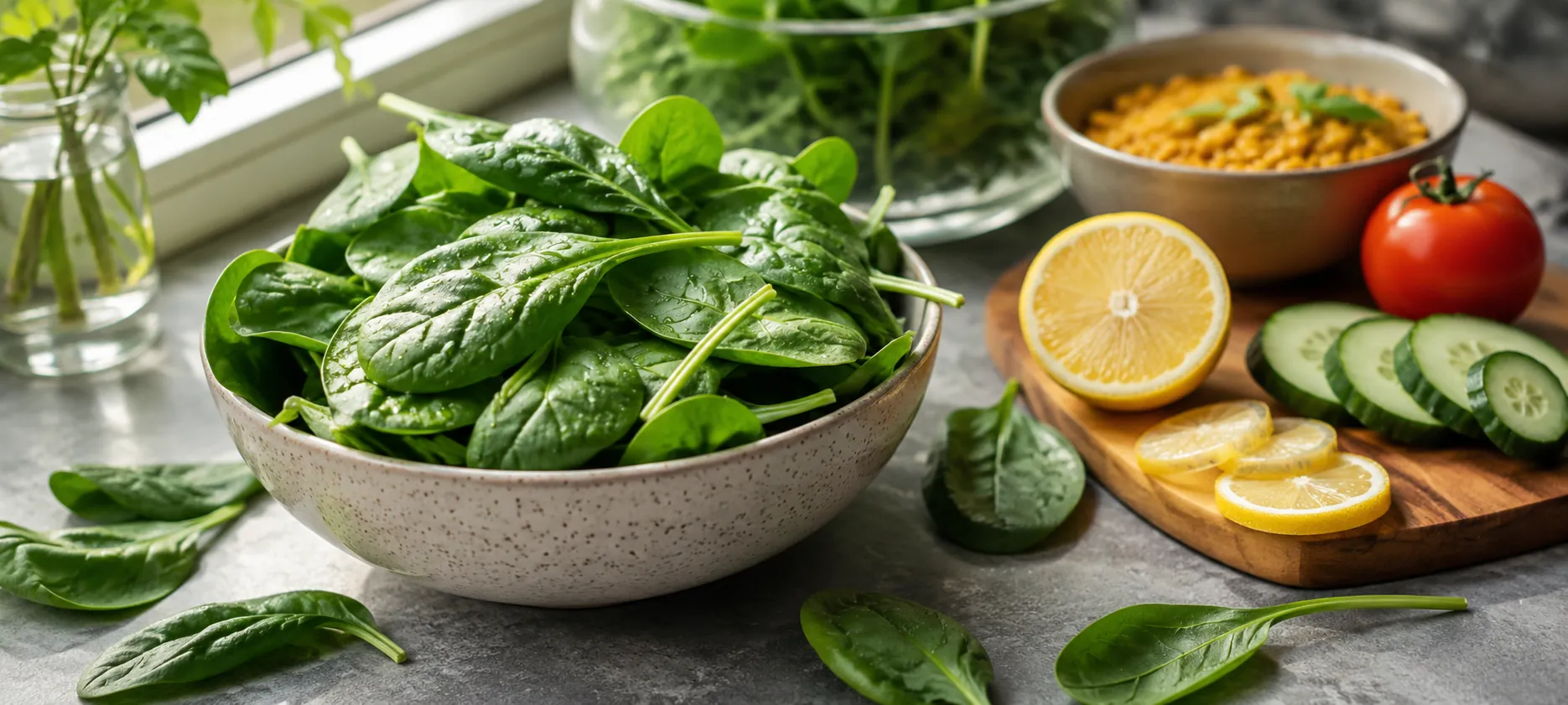
Table of Contents
- What Is Spinach? Understanding This Nutrient-Rich Leafy Green
- Spinach Nutrition: What Makes It A Superfood For Your Health?
- Spinach Protein Per 100g: A Great Source Of Plant-Based Protein
- 8 Health Benefits Of Spinach
- Different Types Of Spinach And Their Unique Health Benefits
- How To Incorporate Spinach Into Your Daily Diet For Maximum Benefits
- Conclusion
- FAQ
- References
Spinach is one of the easiest leafy greens to add to daily food. It is low in calories, mild in taste, and rich in vitamins, minerals, fibre, and antioxidants. You can eat spinach raw in salads, blend it into smoothies, or cook it in dal, sabzi, soup, paratha, pasta, or omelettes.
The best spinach benefits come from eating it regularly as part of a balanced diet. Spinach cannot replace medical care, but it can support your eyes, bones, heart, digestion, and overall wellness.
What Is Spinach? Understanding This Nutrient-Rich Leafy Green
Spinach is a green leafy vegetable from the amaranth family. It has soft leaves and a high water content, which makes it easy to cook and digest for most people.
Spinach is often called a superfood because it gives many nutrients for very few calories. It contains vitamin K, vitamin A, folate, vitamin C, iron, magnesium, potassium, and antioxidant plant compounds. These nutrients explain many spinach benefits.
Spinach Nutrition: What Makes It A Superfood For Your Health?
Here is the approximate spinach nutrition value for 100 grams of raw spinach.
|
Nutrient |
Approximate Amount |
|
Calories |
23 kcal |
|
Water |
91 g |
|
Protein |
2.9 g |
|
Carbohydrates |
3.6 g |
|
Fibre |
2.2 g |
|
Fat |
0.4 g |
|
Iron |
2.7 mg |
|
Potassium |
558 mg |
|
Folate |
194 mcg |
|
Vitamin C |
28 mg |
|
Vitamin K |
483 mcg |
Key spinach nutrition highlights include:
- It is low in spinach calories and adds volume to meals.
- It provides fibre, which supports digestion and fullness.
- It contains vitamin K, which supports normal blood clotting and bone health.
- It gives non-haem iron, which supports haemoglobin formation.
- It contains lutein and zeaxanthin, antioxidants linked with eye health.
Spinach Protein Per 100g: A Great Source Of Plant-Based Protein
Spinach protein per 100g is about 2.9 grams. This is useful, but spinach should not be your main protein source. Combine spinach with dal, chana, rajma, sprouts, paneer, tofu, curd, eggs, fish, or chicken to make meals more filling.
8 Health Benefits Of Spinach
Supports Eye Health
One of the most important spinach benefits is eye support. Spinach contains lutein and zeaxanthin, carotenoid antioxidants found in the retina. They help protect the eyes from oxidative stress and may support long-term vision health.
Strengthens Bones
Spinach is rich in vitamin K, which helps the body use proteins involved in bone health. It also contains magnesium and small amounts of calcium. This is one of the key spinach benefits for bone strength.
Promotes Heart Health
Spinach contains potassium, magnesium, and natural nitrates. These nutrients may help blood vessels relax and support healthy blood pressure. This is one of the practical spinach benefits for heart-friendly eating.
Supports Healthy Blood
Spinach gives plant-based iron. Your body uses iron to make haemoglobin, the protein that carries oxygen in the blood. Add lemon juice, amla, orange, tomato, or capsicum to improve plant iron absorption.
Improves Digestion And Fullness
The fibre in spinach helps support bowel regularity. It also adds fullness to meals, which may help you manage hunger better. This makes digestive support one of the everyday spinach benefits.
Helps With Weight Management
Spinach calories are very low, yet spinach adds volume to meals. This makes it useful in soups, salads, wraps, and cooked dishes. Weight management still depends on your overall lifestyle.
Supports Brain Health
Leafy greens like spinach contain folate, vitamin K, lutein, and other bioactive compounds. Regular intake of green leafy vegetables has been linked with slower age-related cognitive decline in observational research.
Protects Cells From Oxidative Stress
Spinach contains antioxidants such as lutein, zeaxanthin, beta-carotene, kaempferol, and quercetin. These compounds help your body manage oxidative stress, which is linked with ageing and chronic inflammation.
For maximum spinach benefits, focus on simple preparations and avoid adding too much oil, cream, butter, or salt.
Different Types Of Spinach And Their Unique Health Benefits
There are different types of spinach, and all can fit into a healthy diet. Savoy spinach has dark, curly leaves and works well in cooked dishes. Flat-leaf spinach has smooth leaves and is often used in soups, curries, and purees. Baby spinach is tender and mild, so it is useful in salads, sandwiches, and smoothies. Semi-savoy spinach has lightly crinkled leaves and gives a balance of texture and easy cleaning.
In India, local palak varieties are commonly used in dal, saag, paneer dishes, paratha, and sabzi. The main spinach benefits remain similar when spinach is fresh, clean, and cooked safely.
How To Incorporate Spinach Into Your Daily Diet For Maximum Benefits
- Add chopped spinach to dal, khichdi, upma, poha, or oats.
- Use baby spinach in salads with lemon dressing and nuts.
- Blend spinach into smoothies with banana, berries, citrus fruit, or curd.
- Add spinach to omelettes, chillas, wraps, sandwiches, and parathas.
- Stir spinach into soups, pasta sauce, or vegetable stews.
- Saute spinach lightly with garlic and a small amount of oil.
- Pair spinach with vitamin C foods to improve iron absorption.
- Wash spinach well before use to remove soil and impurities.
- Avoid overcooking spinach for long periods.
Conclusion
Spinach is a practical, affordable, and nutrient-rich leafy green. The main spinach benefits include support for eye health, bones, digestion, heart health, healthy blood, brain health, weight management, and antioxidant protection. You can enjoy spinach raw or cooked, as long as it is cleaned well and eaten in the right portion for your health needs.
Good food habits work best when you also stay aware of your health markers. Routine health checkups can help you track blood sugar, cholesterol, haemoglobin, vitamin levels, kidney health, and liver health. Metropolis Healthcare offers 4,000 tests, full body checkups, speciality testing, home sample collection, quick turnaround time, and reliable reports. You can book tests through the website, app, call, or WhatsApp, making preventive health monitoring simpler and more convenient.
FAQ
Can I Eat Spinach Every Day For Better Health?
Yes, most people can eat spinach every day in moderate portions. A small bowl of cooked spinach or a cup of raw spinach can fit into a balanced diet. If you have kidney stones, kidney disease, or take blood thinners, ask your doctor how much spinach is suitable for you because spinach contains oxalates and vitamin K.
How Many Calories Are In Spinach Per Serving?
Spinach calories are low. About 100 grams of raw spinach gives around 23 calories. One cup of raw spinach gives fewer calories because it weighs much less. Cooking reduces the volume, so a cooked serving may contain more spinach leaves in the same bowl.
Does Spinach Help With Iron Deficiency?
Spinach contains iron, but it has non-haem iron, which your body absorbs less efficiently than iron from animal foods. It can support iron intake, especially in vegetarian diets, but it may not be enough to correct iron deficiency on its own. Pair spinach with vitamin C and speak to a doctor if you have fatigue, dizziness, breathlessness, or low haemoglobin.
Is Spinach Good For Heart Health?
Yes, spinach can support heart health as part of a balanced diet. Its potassium, magnesium, fibre, antioxidants, and natural nitrates may support healthy blood pressure and blood vessel function. For best results, combine spinach with regular activity, enough sleep, limited salt, and routine health monitoring.
References
- U.S. Department of Agriculture, Agricultural Research Service. FoodData Central. Spinach, raw. Accessed 2026.
- Eisenhauer B, Natoli S, Liew G, Flood VM. Lutein and zeaxanthin: Food sources, bioavailability and dietary variety in age-related macular degeneration protection. Nutrients. 2017;9(2):120. PMID: 28208784.
- Liu AH, Bondonno CP, Croft KD, Puddey IB, Woodman RJ, Rich L, et al. Effects of a nitrate-rich meal on arterial stiffness and blood pressure in healthy volunteers. Nitric Oxide. 2013;35:123-130. PMID: 24120618.
- Morris MC, Wang Y, Barnes LL, Bennett DA, Dawson-Hughes B, Booth SL. Nutrients and bioactives in green leafy vegetables and cognitive decline: Prospective study. Neurology. 2018;90(3):e214-e222. PMID: 29263222.
- National Institutes of Health, Office of Dietary Supplements. Vitamin K Fact Sheet for Consumers. Accessed 2026.