Home Visit
 Upload






Preventive Healthcare
Bone Broth Benefits: What The Evidence Says About Collagen, Gut Health, And Joints
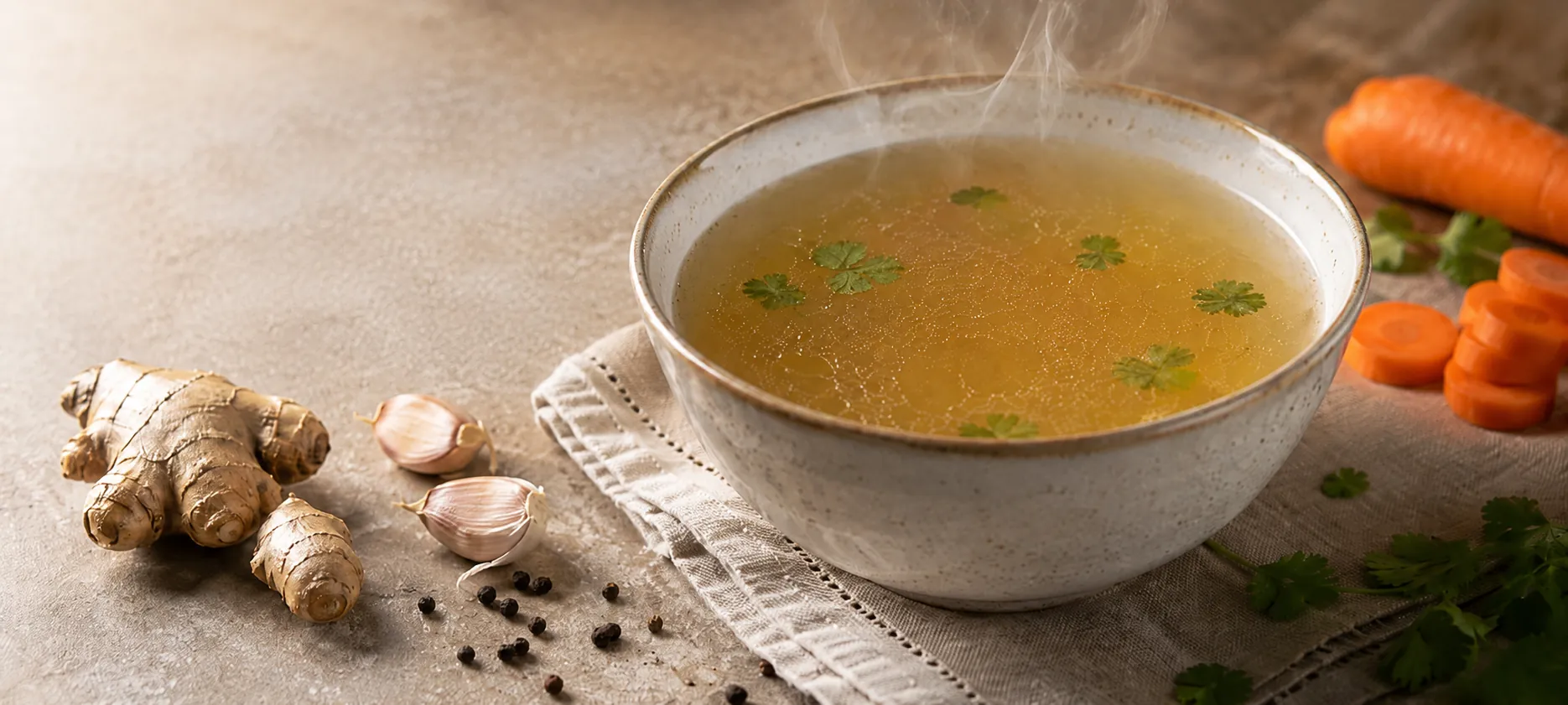
Table of Contents
Bone broth has become popular as a nourishing drink, soup base, and wellness food. It is often linked with collagen, gut health, joint comfort, skin health, and recovery. But it is important to understand what the evidence really says.
Bone broth can be a useful addition to your diet. It provides fluid, protein, amino acids, and small amounts of minerals. However, it is not a cure for gut problems, joint pain, skin ageing, or weight gain. Its nutrient value can vary a lot depending on the bones used, cooking time, water quantity, and salt added.
For Indian homes, bone broth can be made using chicken, fish, or mutton bones, depending on your dietary, cultural, and personal preferences. You can also flavour it with familiar ingredients like ginger, garlic, black pepper, coriander, turmeric, curry leaves, and vegetables.
What Is Bone Broth?
Bone broth is a slow-cooked liquid made by simmering bones and connective tissue in water. It is similar to a stock, but it is usually cooked for longer. This slow cooking helps release gelatin, amino acids, flavour, and some minerals into the liquid.
In simple terms, bone broth is a protein-rich soup base. You can drink it plain, use it in soups and stews, or add it to dals, khichdi, rice dishes, and curries for extra flavour.
Bone broth is often promoted for collagen. Collagen is a structural protein found in bones, skin, cartilage, tendons, and ligaments. When bones are simmered, collagen breaks down into gelatin. Your body then digests this protein into amino acids, which it can use for many functions.
How Is Bone Broth Made?
- Choose The Bones
Use chicken, fish, or mutton bones, based on what you normally eat at home. - Add Water
Place the bones in a large pot and cover them with water. - Add An Acidic Ingredient
Add a small amount of vinegar or lemon juice. This may help draw some minerals into the broth. - Add Vegetables And Spices
You can add onion, garlic, ginger, carrot, celery, coriander stems, black pepper, turmeric, or bay leaf. - Simmer Slowly
Cook on low heat for several hours. Chicken and fish bones usually need less time than larger bones. - Strain The Broth
Strain the liquid and discard the solids. - Cool And Store Safely
Let it cool, then refrigerate or freeze it in small portions.
The Nutritional Value Of Bone Broth
The nutrition in bone broth is not fixed. A homemade broth may differ from a packaged broth. A long-simmered broth may differ from a quick version. The table below gives a general idea.
|
Nutrient Or Component |
What Bone Broth May Provide |
Why It Matters |
|
Protein |
Varies by recipe, often moderate |
Supports muscles, repair, and fullness |
|
Gelatin |
Formed when collagen breaks down |
Gives body and texture to the broth |
|
Amino acids |
May include glycine, proline, glutamine, and arginine |
Support normal tissue and metabolic functions |
|
Minerals |
Small amounts of calcium, magnesium, phosphorus, and potassium |
Support bone, muscle, and nerve function |
|
Sodium |
Can be low or high depending on salt added |
Too much sodium may affect blood pressure |
|
Fluid |
Mostly water |
Supports hydration |
Bone broth is best seen as a supportive food. It should not replace a balanced diet that includes dals, pulses, eggs, dairy, fish, poultry, nuts, seeds, fruits, vegetables, whole grains, and healthy fats, depending on your food choices.
Bone Broth And Protein Content
Bone broth can provide protein, but the amount varies. Some broths provide a useful amount per cup, while others may provide very little. Packaged products may also vary widely.
The protein in bone broth mainly comes from collagen and gelatin. This protein is different from complete protein sources such as eggs, dairy, fish, chicken, dals paired with cereals, or soy foods. Collagen is rich in some amino acids, but it is not a complete protein.
So, bone broth can support your protein intake, but it should not be your main protein source.
Bone Broth Vs Regular Stock: What Is The Difference?
Bone broth and stock are similar, but there are small differences.
Bone broth is usually simmered for a longer time and is often made with bones and connective tissue. It may have more gelatin and a richer texture. Regular stock is often cooked for a shorter time and is mainly used as a flavour base.
In everyday cooking, the difference may not matter much. If you are using it for taste, both can work. If you are using it for collagen or gelatin, a longer-simmered bone broth may offer more of those compounds.
Health Benefits Of Bone Broth
Bone broth benefits are often discussed online, but the evidence is mixed. Some benefits are supported by the nutrients it contains. Others need stronger human studies.
- May Support Hydration: Bone broth is mostly water, so it can help you add fluids to your diet.
- May Support Protein Intake: It can add some protein, especially if made well or chosen carefully.
- May Support Joint Health: It provides gelatin and amino acids that are involved in connective tissue health. However, bone broth may not provide a consistent therapeutic dose of collagen.
- May Support Gut Health: Amino acids such as glutamine are important for the gut lining. Still, most strong evidence is from glutamine studies, not direct bone broth studies.
- May Support Skin Health: Collagen-related amino acids may support your body’s natural collagen production, but drinking bone broth does not directly become collagen in your skin.
- May Help You Feel Full: Warm soups and protein-containing liquids may help with satiety when used as part of a balanced meal plan.
- May Be Gentle During Low Appetite: A warm broth may be easier to consume when you do not feel like eating a heavy meal.
- May Add Flavour Without Heavy Ingredients: You can use it as a base for soup, stew, dal, or khichdi instead of using excess oil or cream.
Bone broth is not a treatment for arthritis, leaky gut, chronic digestive issues, or skin ageing. If you have ongoing symptoms, speak to a doctor.
How To Make It At Home
Here is a simple Indian-style bone broth recipe.
- Take The Bones
Use cleaned chicken, fish, or mutton bones, based on your preference. - Add Water
Add enough water to fully cover the bones. - Add Flavouring Ingredients
Add ginger, garlic, onion, carrot, coriander stems, black pepper, turmeric, and a small amount of vinegar or lemon juice. - Simmer On Low Heat
Let it cook slowly. Fish bones may need a shorter cooking time. Chicken and mutton bones may need longer. - Remove Foam
Skim off any foam that rises to the top. - Strain Well
Strain the liquid through a sieve. - Add Salt Carefully
Add salt only after cooking, and keep it moderate. - Store Safely
Refrigerate and use within a few days, or freeze in small portions for later. - Use It In Meals
Add it to soup, stew, dal, khichdi, pulao, or curry base.
What To Consider
Bone broth can be healthy, but it may not suit everyone. The biggest concerns are sodium, food safety, histamine sensitivity, and unrealistic expectations.
If you buy packaged bone broth, check the label. Some products may be high in salt. If you make it at home, handle and store it safely to reduce the risk of foodborne illness.
If you have kidney disease, high blood pressure, gout, food allergies, digestive disorders, or a medically restricted diet, ask your doctor or dietitian before adding bone broth regularly.
Sodium Levels In Bone Broth
- Packaged bone broth can be high in sodium.
- Too much sodium may be a concern if you have high blood pressure, kidney disease, or fluid retention.
- Choose low-salt or no-added-salt options when buying packaged broth.
- When making it at home, add salt at the end.
- Use spices, herbs, ginger, garlic, and pepper for flavour instead of excess salt.
- Avoid drinking multiple cups daily if it increases your total salt intake too much.
Histamine Sensitivity And Bone Broth
- Some people report headaches, flushing, hives, bloating, or digestive discomfort after high-histamine foods.
- Long-cooked and stored foods may be a concern for people who are sensitive to histamine.
- Histamine intolerance is complex and can look like other health conditions.
- Do not self-diagnose based only on symptoms.
- If you suspect histamine sensitivity, speak to a doctor or dietitian.
- Make smaller batches, cool the broth quickly, and freeze portions if needed.
- Stop using it if it repeatedly worsens your symptoms.
How To Incorporate Bone Broth Into Your Daily Diet
You do not need to drink large amounts. Start with a small serving and see how your body responds.
- Add it to clear soup with vegetables.
- Use it as a base for chicken soup or fish soup.
- Add it to khichdi for a richer taste.
- Use it while cooking rice, millet, or dal.
- Add it to stews and curries.
- Sip a small warm cup between meals.
- Use it after illness when your appetite is low, if your doctor allows.
- Avoid adding too much salt, butter, or cream.
Bone Broth As A Soup Or Stew Base
- Use it instead of plain water for a richer soup.
- Add vegetables like carrot, beans, pumpkin, spinach, or bottle gourd.
- Add protein such as chicken, fish, paneer, tofu, lentils, or eggs, based on your diet.
- Add grains like rice, barley, or millets for a complete meal.
- Keep the spice level mild if your digestion is sensitive.
- Add lemon juice or coriander at the end for freshness.
Drink Bone Broth Straight
- Drink it warm, not boiling hot.
- Start with half a cup if you are new to it.
- Add black pepper, ginger, turmeric, or coriander for flavour.
- Keep salt low.
- Avoid drinking it as a meal replacement unless advised by a healthcare professional.
- Pair it with balanced meals through the day.
Conclusion
Bone broth can be a warm, nourishing, and versatile addition to your diet. It may provide protein, gelatin, amino acids, fluid, and small amounts of minerals. It may support hydration, fullness, and general wellness. However, many claims around collagen, gut healing, skin improvement, and joint repair are stronger than the current evidence allows.
Use bone broth as a supportive food, not as a cure. Keep salt low, store it safely, and choose ingredients that respect your dietary and cultural preferences.
Good health also depends on knowing your body’s internal markers. Regular health checkups can help you monitor concerns such as vitamin deficiencies, inflammation, diabetes risk, kidney health, liver function, lipid levels, and overall wellness. Metropolis Healthcare offers 4,000+ tests, full body checkups, home sample collection, accurate reports, quick turnaround time, and easy booking through the website, app, call, and WhatsApp. With expert pathologists and a strong home collection network, Metropolis Healthcare can support your preventive health journey with reliable diagnostics.
FAQ
Is Bone Broth Good For Weight Loss?
Bone broth may support weight management if it replaces high-calorie snacks or sugary drinks. It can also help you feel full because it contains fluid and some protein. However, it does not burn fat by itself. Weight loss depends on your total diet, activity, sleep, stress, and calorie balance.
How Much Bone Broth Should I Drink Daily?
Many people start with half a cup to one cup a day. You do not need large amounts. If your broth is salty, limit the quantity. If you have high blood pressure, kidney disease, gout, or a restricted diet, ask your doctor before drinking it daily.
Can Bone Broth Improve Skin?
Bone broth provides amino acids that your body can use to make proteins, including collagen. This may support skin health as part of a nutrient-rich diet. However, drinking bone broth does not directly send collagen to your skin. For healthy skin, you also need enough protein, vitamin C, hydration, sleep, sun protection, and overall nutrition.
Is Bone Broth Really Good For Your Joints?
Bone broth contains gelatin and amino acids that are linked with connective tissue health. Some studies on collagen supplements suggest possible joint benefits, but bone broth itself may not provide a reliable therapeutic collagen dose. If you have joint pain, stiffness, swelling, or arthritis, consult a doctor instead of relying only on bone broth.
When Is The Best Time To Drink Bone Broth?
You can drink bone broth at any time that suits your routine. Some people prefer it in the morning. Others use it as an evening drink or soup base at dinner. If it helps you avoid salty snacks or sugary drinks, it may be a useful choice. Avoid drinking it too close to bedtime if it causes reflux or discomfort.
What Will Happen If I Drink Bone Broth Every Day?
If it suits your body and is not too salty, daily bone broth may add fluid, protein, and flavour to your diet. But drinking it every day will not guarantee better skin, stronger joints, or better digestion. Watch your sodium intake and make sure your overall diet remains balanced.
What Are The Side Effects Of Bone Broth?
Possible bone broth side effects include bloating, nausea, reflux, headache, histamine-like symptoms, or excess sodium intake. Poor storage can also increase the risk of foodborne illness. Some people may also react to ingredients used in the broth, such as spices, herbs, or specific proteins.
Is Bone Broth High In B12?
Bone broth may contain some vitamin B12 if it is made from animal-based ingredients, but it is not usually considered a reliable high-B12 food. The amount depends on the ingredients and preparation. If you are worried about vitamin B12 deficiency, speak to your doctor and consider a blood test. Good dietary sources may include fish, eggs, dairy, poultry, and fortified foods, depending on your diet.