Home Visit
 Upload






Preventive Healthcare
Red Eye Or Bloodshot Eyes: What Causes Them And How To Treat Them
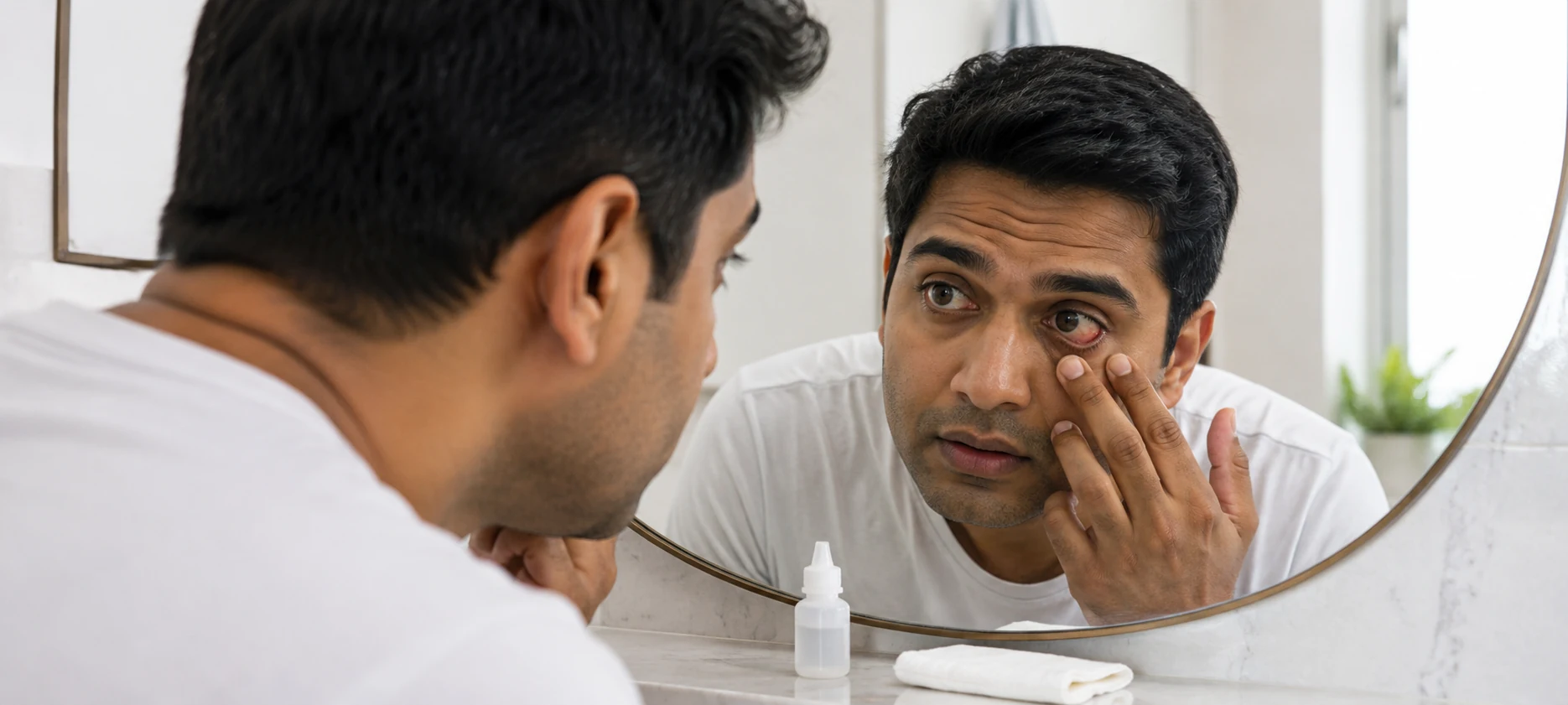
Table of Contents
- What Is Red Eye Or Bloodshot Eyes?
- Common Causes Of Red Eyes
- Bloodshot Eyes Causes
- Is It Dangerous To Have Red Eyes?
- Symptoms Of Red Eyes
- Can Allergies Cause Red Eyes?
- How To Treat Red Eyes
- Eye Drops For Red Eyes: How Do They Help?
- Red Eye Treatment: At-Home Vs. Medical Treatment
- How Long Does Red Eye Last?
- When To Seek Medical Help For Red Eyes
- What Are The Best Eye Drops For Red Eyes?
- Can Red Eyes Be A Sign Of An Infection?
- What Can Red Eyes From Lack Of Sleep Mean?
- What Are The Symptoms Of Red Eyes In Babies?
- Conclusion
- FAQ
Red eye or bloodshot eyes are common. You may notice redness in one eye or both eyes after poor sleep, screen use, allergies, dryness, or irritation. In many cases, red eyes are mild and settle with simple care.
But sometimes, redness can be a sign of infection, injury, glaucoma, uveitis, or another eye condition that needs urgent medical attention. This is why it is important to understand the cause, watch for warning signs, and avoid using eye drops without proper guidance.
This guide explains the common red eyes causes, bloodshot eyes causes, symptoms, treatment options, eye drops for red eyes, and when to seek medical help.
What Is Red Eye Or Bloodshot Eyes?
Red eye means the white part of your eye looks pink, red, or bloodshot. This happens when the tiny blood vessels on the surface of the eye become swollen, widened, or irritated.
The redness may cover the whole white part of the eye or appear as a bright red patch in one area. It may affect one eye or both eyes. You may also have itching, burning, watering, pain, discharge, dryness, blurry vision, or sensitivity to light.
Red eye is not a disease by itself. It is a symptom. The right red eye treatment depends on the cause.
Common Causes Of Red Eyes
Many everyday triggers and medical conditions can cause red eyes. Common causes include:
- Dry Eyes: Your eyes may become red, gritty, tired, or burning when they do not make enough tears or when tears evaporate too quickly.
- Allergies: Dust, pollen, pet dander, mould, or pollution can cause itchy, watery, and red eyes.
- Pink Eye: Also called conjunctivitis, this is inflammation of the thin layer covering the white part of the eye. It may be viral, bacterial, or allergic.
- Digital Eye Strain: Long screen time can reduce blinking and make your eyes dry, tired, and red.
- Contact Lens Irritation: Wearing lenses for too long, sleeping in lenses, or poor lens hygiene can irritate the eye and increase infection risk.
- Environmental Irritants: Smoke, dust, perfume, chemicals, chlorine, and air pollution can make the eyes red.
- Broken Blood Vessel: A subconjunctival haemorrhage can cause a bright red patch after coughing, sneezing, vomiting, heavy lifting, or rubbing the eye.
- Blepharitis: Inflammation of the eyelids can cause redness, irritation, crusting, and burning.
- Eye Injury: A scratch, foreign object, chemical exposure, or trauma can cause redness and pain.
- Glaucoma: Certain forms of glaucoma can cause red eye with severe pain, headache, nausea, halos around lights, or vision changes.
- Uveitis: This is inflammation inside the eye. It may cause redness, pain, light sensitivity, and blurred vision.
- Autoimmune Diseases: Some autoimmune diseases can cause eye inflammation and recurrent redness.
- Hypertension: High blood pressure may increase the chance of small blood vessel problems in the eye, especially in people with other risk factors.
Bloodshot Eyes Causes
Bloodshot eyes usually happen when the small blood vessels on the eye surface become more visible due to irritation, dryness, infection, or inflammation. This can make the eye look red inside the eye or across the white area.
Minor bloodshot eyes may be linked to lack of sleep, long screen hours, alcohol, swimming, smoke, allergies, or dry air. More serious causes include eye infection, corneal injury, glaucoma, uveitis, and inflammation of deeper eye tissues.
A bright red patch without pain is often due to a broken blood vessel. It can look alarming but may be harmless if vision is normal and there is no pain. Still, recurrent episodes should be checked, especially if you have hypertension, diabetes, bleeding problems, or use blood thinners.
Is It Dangerous To Have Red Eyes?
Red eyes are not always dangerous. Many mild cases improve with rest, artificial tears, cold compresses, and avoiding irritants.
However, red eye can be serious if it comes with pain, vision changes, light sensitivity, swelling, thick discharge, injury, chemical exposure, headache, nausea, vomiting, or difficulty keeping the eye open.
Do not ignore red eye that is severe, recurrent, or not improving. Early medical care can protect your vision.
Symptoms Of Red Eyes
Red eye may appear with different symptoms depending on the cause.
- Redness in one or both eyes
- Itching
- Burning sensation
- Watery eyes
- Dryness or gritty feeling
- Eye pain
- Swelling around the eye
- Sticky eyelids
- Yellow, green, or white discharge
- Crusting on eyelashes
- Blurred vision
- Sensitivity to light
- Feeling like something is in the eye
- Headache with eye discomfort
- Halos around lights
If redness is mild and there is no pain or vision change, it may settle with basic care. If symptoms are severe or unusual, seek medical help.
Can Allergies Cause Red Eyes?
Yes, allergies are a common cause of red eyes. Your immune system may react to pollen, dust, mould, pet dander, smoke, or pollution. This can trigger histamine release, causing redness, itching, watering, and swelling.
Allergic red eyes often affect both eyes. You may also have sneezing, runny nose, blocked nose, or throat irritation.
Avoid rubbing your eyes, as this can worsen redness and swelling. Cold compresses and lubricating drops may help. Antihistamine eye drops may be useful for some people, but it is best to use them after medical or pharmacist guidance.
How To Treat Red Eyes
Red eye treatment depends on the cause. Mild redness from dryness, lack of sleep, screen strain, or irritation may improve with rest and self-care.
You can try these simple steps:
- Rest your eyes
- Avoid rubbing your eyes
- Use a clean cold compress
- Use preservative-free artificial tears
- Take breaks from screens
- Remove contact lenses until symptoms settle
- Avoid smoke, dust, and strong fragrances
- Wash your hands often
- Keep towels and eye makeup separate if infection is suspected
If the redness is due to bacterial infection, allergy, dry eye disease, glaucoma, uveitis, or injury, you may need medical treatment. This may include prescription eye drops, antibiotics, anti-inflammatory medicines, glaucoma medicines, or other specialist care.
Eye Drops For Red Eyes: How Do They Help?
Eye drops for red eyes can help, but the type of drop matters. Using the wrong drops may delay treatment or worsen symptoms.
Common types include:
- Artificial Tears: These lubricate the eye and may help with dryness, screen strain, and mild irritation.
- Antihistamine Eye Drops: These may help allergy-related redness, itching, and watering.
- Antibiotic Eye Drops: These may be prescribed for certain bacterial eye infections.
- Anti-Inflammatory Eye Drops: These are used only under medical supervision for specific inflammatory conditions.
- Glaucoma Eye Drops: These reduce eye pressure and must be used exactly as prescribed.
- Redness-Relief Drops: These may temporarily reduce redness by narrowing blood vessels, but frequent use can cause rebound redness and dryness.
Do not use steroid eye drops or leftover antibiotic drops without a doctor’s advice. They can be harmful if used for the wrong condition.
Red Eye Treatment: At-Home Vs. Medical Treatment
At-home care may be enough when redness is mild, painless, and clearly linked to dryness, screen strain, lack of sleep, or a known allergy.
Medical treatment is needed when red eye is painful, linked to discharge, caused by injury, associated with contact lens use, or accompanied by light sensitivity or vision changes. Conditions such as glaucoma, uveitis, keratitis, corneal ulcer, and serious infection need prompt care.
As a rule, if you are unsure about the cause, get your eyes checked rather than self-treating for many days.
How Long Does Red Eye Last?
The duration depends on the cause.
Redness from lack of sleep, mild dryness, or screen strain may improve within a day or two. Allergy-related redness may continue as long as exposure to the allergen continues. Viral pink eye may take one to two weeks to settle. Bacterial conjunctivitis may improve faster with prescribed treatment.
A broken blood vessel may take one to two weeks to clear as the blood is slowly absorbed.
If red eye lasts more than a few days, keeps returning, or comes with pain or vision changes, seek medical advice.
When To Seek Medical Help For Red Eyes
Seek urgent medical care if you have red eye with:
- Sudden vision changes
- Severe eye pain
- Sensitivity to light
- Headache with nausea or vomiting
- Halos around lights
- Eye injury
- Chemical exposure
- Pus-like discharge
- Swelling around the eye
- Fever
- Inability to open the eye
- Contact lens-related pain or redness
- A foreign object that does not come out
- Redness after eye surgery
- Symptoms in a newborn baby
Also see a doctor if redness does not improve, keeps recurring, or affects only one eye repeatedly.
What Are The Best Eye Drops For Red Eyes?
The best eye drops for red eyes depend on the cause. There is no single best eye drop for everyone.
Common options include:
- For Dry Eyes: Lubricating artificial tears, preferably preservative-free if used often.
- For Allergies: Antihistamine or mast cell stabiliser drops after proper guidance.
- For Infection: Antibiotic drops only if prescribed for bacterial infection.
- For Glaucoma: Pressure-lowering drops prescribed by an eye specialist.
- For Inflammation: Steroid or anti-inflammatory drops only under medical supervision.
- For Contact Lens Users: Rewetting drops suitable for contact lenses, if advised.
Avoid frequent use of redness-removal drops. They may give quick cosmetic relief but can worsen redness when overused.
Can Red Eyes Be A Sign Of An Infection?
Yes, red eyes can be a sign of infection. Pink eye, also called conjunctivitis, is one of the most common infections linked to red eye.
Viral conjunctivitis often causes watery discharge and may occur with cold-like symptoms. Bacterial conjunctivitis may cause sticky yellow or green discharge. Both can spread through touch, shared towels, eye makeup, or contaminated hands.
Wash your hands often, avoid touching your eyes, do not share towels, and avoid using contact lenses until cleared by a doctor. If discharge is thick, symptoms worsen, or vision is affected, seek medical care.
What Can Red Eyes From Lack Of Sleep Mean?
Lack of sleep can make your eyes look red, dry, puffy, and tired. When you do not sleep enough, your eyes may not get enough lubrication and recovery time. Screen use late at night can worsen dryness and strain.
Red eyes from poor sleep usually improve with rest, hydration, screen breaks, and lubricating drops. But if redness continues despite good sleep, another cause may be present.
What Are The Symptoms Of Red Eyes In Babies?
Red eyes in babies should be taken seriously, especially in newborns. Babies cannot explain pain, blurred vision, or irritation.
Watch for:
- Redness in one or both eyes
- Swollen eyelids
- Watery eyes
- Yellow or green discharge
- Sticky eyelashes
- Excessive crying or irritability
- Sensitivity to light
- Rubbing the eyes
- Fever
- Poor feeding
- Difficulty opening the eye
Seek medical advice promptly if a baby has red eyes, discharge, swelling, fever, or symptoms soon after birth.
Conclusion
Red eye or bloodshot eyes are often caused by dryness, allergies, lack of sleep, screen strain, mild irritation, or pink eye. Many mild cases improve with rest, cold compresses, artificial tears, and avoiding triggers.
But red eye should not be ignored when it comes with pain, discharge, light sensitivity, injury, swelling, or vision changes. Conditions such as glaucoma, uveitis, keratitis, and serious infections need timely medical care.
Your eyes can also reflect your overall health. Conditions such as hypertension, diabetes, autoimmune diseases, inflammation, and infections may need broader health evaluation. Metropolis Healthcare supports preventive health monitoring with 4,000+ tests, full body checkups, specialty testing, home sample collection, quick turnaround time, and reliable reports. With easy booking through the website, app, call, and WhatsApp, Metropolis Healthcare can help you stay informed about your health markers with convenience and accuracy.
FAQ
Can Bloodshot Eyes Go Away On Their Own?
Yes, mild bloodshot eyes can go away on their own if they are caused by lack of sleep, dryness, mild irritation, or screen strain. Rest, artificial tears, cold compresses, and avoiding irritants may help. If redness lasts more than a few days or comes with pain, discharge, or vision changes, see a doctor.
How Do You Get Rid Of Bloodshot Eyes Fast?
You can try these steps for mild bloodshot eyes:
- Rest your eyes
- Use a clean cold compress
- Use lubricating artificial tears
- Drink enough water
- Avoid rubbing your eyes
- Take screen breaks
- Remove contact lenses
- Avoid smoke, dust, and strong fragrances
- Sleep well
Do not use medicated eye drops without advice. Fast relief should not come at the cost of missing a serious eye problem.
Why Are My Eyes Red In The Morning?
Your eyes may be red in the morning due to dryness, poor sleep, allergies, eye strain, contact lens irritation, or eyelid inflammation. Sleeping in contact lenses can also cause redness and increase infection risk. If morning redness is frequent or painful, get your eyes checked.
What Causes Red Eyes In One Eye Only?
Redness in one eye may be caused by a broken blood vessel, injury, foreign body, contact lens irritation, infection, corneal scratch, stye, or inflammation. One-sided redness with pain, light sensitivity, or vision changes needs prompt medical attention.
What Are The Signs Of A Serious Eye Infection?
Signs of a serious eye infection may include:
- Eye pain
- Thick yellow or green discharge
- Swollen eyelids
- Blurry vision
- Sensitivity to light
- Fever
- Redness that worsens quickly
- Difficulty opening the eye
- Contact lens-related pain
- A white or grey spot on the cornea
Seek medical care quickly if these symptoms occur.