Home Visit
 Upload






Preventive Healthcare
Optic Nerve: Function, Damage Signs And Tests
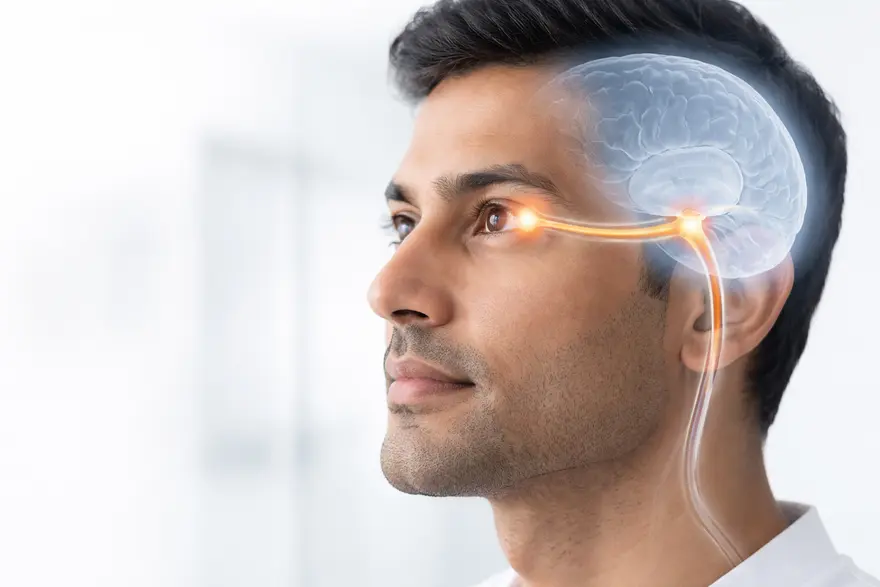
Table of Contents
- What Is The Optic Nerve?
- What Does The Optic Nerve Do?
- Optic Nerve Anatomy And Visual Pathway
- What Can Damage The Optic Nerve?
- Optic Nerve Damage Signs And Symptoms
- Tests For Optic Nerve Problems
- Blood Tests Your Doctor May Recommend
- Treatment Options For Optic Nerve Disorders
- How To Protect Your Optic Nerve And Vision
- When To See A Doctor
- How Metropolis Healthcare Can Support Your Eye Health
- Frequently Asked Questions
Your optic nerve is the main connection between your eye and your brain. It carries the visual signals that let you see shapes, colours, movement, and fine details. Because it is so essential, even mild optic nerve problems can affect your day-to-day life. The reassuring news is that many optic nerve conditions can be detected early with the right tests, and timely treatment often helps protect your vision.
What Is The Optic Nerve?
The optic nerve is a thick bundle of nerve fibres that carries information from the retina (the light sensitive layer at the back of your eye) to your brain. It is also called Cranial Nerve II (CN II). Unlike most other cranial nerves, the optic nerve is closely linked to the central nervous system, which is why doctors take optic nerve symptoms seriously.
You have one optic nerve for each eye. Each contains around a million nerve fibres, carrying electrical signals that your brain turns into the images you recognise.
What Does The Optic Nerve Do?
The optic nerve has three major roles:
- Carries visual signals to the brain: Your retina converts light into electrical signals. Your optic nerve delivers these signals to brain centres that interpret vision.
- Supports key eye reflexes: It helps your pupils respond quickly to bright or dim light. It also supports focusing reflexes when you shift your gaze from far to near objects.
- Helps regulate your sleep wake cycle: Specialised light sensitive retinal cells send signals through pathways linked to the body clock, helping your brain recognise daytime and night time patterns.
Optic Nerve Anatomy And Visual Pathway
Your optic nerve begins at the optic disc, a small circular area on the retina where nerve fibres gather and exit the eye. From there, the nerve travels through the orbit (eye socket), passes through a bony channel in the skull, and reaches the brain.
What Happens At The Optic Chiasm?
The optic nerves from both eyes meet at the optic chiasm, where some nerve fibres cross over to the other side. This crossover is important because it helps your brain combine input from both eyes into one unified visual scene. After the chiasm, the pathways continue deeper into the brain, including through the thalamus, and then to the visual cortex in the occipital lobe, where most visual processing occurs.
What Can Damage The Optic Nerve?
Optic nerve damage can happen for different reasons. Some are gradual, while others need urgent medical attention.
Common causes include:
- Glaucoma: A progressive condition where optic nerve fibres are damaged, often linked to raised eye pressure. It can be silent in early stages.
- Optic neuritis: Inflammation of the optic nerve, often causing pain with eye movement and blurred or reduced vision. It can be linked to immune conditions.
- Ischaemic optic neuropathy: Reduced blood flow to the optic nerve, sometimes causing sudden, painless vision loss.
- Raised pressure around the brain: This can lead to swelling of the optic disc (papilloedema).
- Compression: Tumours or other growths can press on the optic nerve or optic chiasm and affect vision.
- Nutritional deficiency or toxin exposure: Low vitamin B12 and certain toxins can harm the optic nerve in some situations.
- Trauma: Head or orbital injury can damage the optic nerve.
- Inherited optic neuropathies: Some genetic conditions affect optic nerve function.
Optic Nerve Damage Signs And Symptoms
Optic nerve symptoms vary depending on the cause and how quickly it develops. If you notice any of the following, it is worth seeking medical advice:
- Blurred vision in one or both eyes
- Reduced sharpness of vision (reduced visual acuity)
- Loss of colour intensity, especially red appearing dull or washed out
- Blind spots (scotomas)
- Reduced side vision (peripheral vision loss)
- Difficulty seeing in low light
- Flashes of light or visual disturbances in some cases
- Eye pain, especially pain that worsens when you move your eye (common in optic neuritis)
- Headache, nausea, or vomiting if there is raised pressure in or around the brain
Symptoms That Need Urgent Care
Seek urgent medical attention if you have:
- Sudden vision loss in one or both eyes
- A new blind spot or a rapid change in your visual field
- Severe headache with vision changes
- Vision loss with weakness, numbness, speech difficulty, or facial droop
- Eye pain with significant vision reduction
These symptoms do not always mean a permanent problem, but they need prompt assessment.
Tests For Optic Nerve Problems
If you have symptoms that could involve the optic nerve, your doctor or eye specialist may recommend a combination of tests. Each test adds a different piece of information, and the overall pattern helps pinpoint the cause.
Common optic nerve tests include:
- Vision testing (visual acuity): Checks how clearly you see at distance and near.
- Colour vision testing: Colour desaturation can be an early clue to optic nerve dysfunction.
- Pupil reaction tests: The swinging light test can help detect reduced optic nerve signal input from one eye.
- Fundus examination: A doctor examines the optic disc for swelling, pallor, or other changes.
- Eye pressure measurement: Important for evaluating glaucoma risk and monitoring.
- Visual field testing (perimetry): Maps your peripheral vision and identifies blind spots or field defects.
- Optical coherence tomography (OCT): A scan that measures the thickness of the retinal nerve fibre layer and optic nerve head structures. This is widely used in glaucoma assessment and monitoring.
- Brain and orbit imaging: MRI is often used when inflammation, compression, or certain neurological causes are suspected.
- Visual evoked potentials (VEP): Measures how quickly and strongly visual signals travel from the eye to the brain.
Blood Tests Your Doctor May Recommend
Blood tests do not diagnose optic nerve damage on their own, but they can help identify contributing conditions and guide treatment. Depending on your symptoms and examination findings, your doctor may consider tests such as:
- Blood sugar testing, including HbA1c, to assess diabetes risk
- Lipid profile for cholesterol and vascular risk
- Inflammatory markers such as ESR and CRP when inflammation is suspected
- Vitamin B12 and folate levels when nutritional optic neuropathy is a possibility
- Other targeted tests if autoimmune or infectious causes are being considered
The exact test plan should be personalised to your symptoms, age, medical history, and examination results.
Treatment Options For Optic Nerve Disorders
Treatment depends on the cause. Your doctor will focus on protecting remaining optic nerve fibres, treating the underlying trigger, and supporting recovery where possible.
- Glaucoma: Treatment aims to lower eye pressure and slow progression. Damage is usually not reversible, which is why early detection matters.
- Optic neuritis: Vision often improves over time, and steroids may be used in some cases to speed up recovery. Further evaluation may be recommended to assess the risk of associated neurological conditions.
- Ischaemic optic neuropathy: Management focuses on vascular risk factors and urgent evaluation, especially to rule out serious inflammatory causes in certain age groups.
- Compression or raised intracranial pressure: Treatment targets the cause, and urgent referral may be needed.
If you are feeling anxious, it may help to remember that the same symptom can have both mild and serious causes. A structured evaluation is the best way to get clarity and timely care.
How To Protect Your Optic Nerve And Vision
You cannot prevent every optic nerve condition, but you can reduce risk and improve early detection:
- Get regular eye checks, even if you do not wear glasses
- Control blood pressure, blood sugar, and cholesterol
- Avoid smoking and tobacco exposure
- Use protective eyewear for high risk work or sports
- Follow medication advice and do not stop prescribed medicines without guidance
- Seek prompt review for new vision changes, rather than waiting for them to settle
When To See A Doctor
Book an eye or medical review if you notice gradual changes in vision, new blind spots, changes in colour perception, or persistent eye discomfort. Seek urgent care if vision loss is sudden, or if symptoms are paired with severe headache or neurological signs.
How Metropolis Healthcare Can Support Your Eye Health
When optic nerve symptoms are linked to wider health issues, timely diagnostics can make your care pathway clearer. Metropolis Healthcare offers 4,000+ tests and full body check ups, with a strong focus on accuracy and reliable reporting. If your doctor recommends blood tests to evaluate inflammation, metabolic health, vitamin status, or vascular risk factors, you can book conveniently through the website, app, call, or WhatsApp. With home sample collection, quick turnaround, and a large home collection network across 10,000 touchpoints, you can complete essential testing with less disruption to your routine. Metropolis labs are NABL and CAP accredited, supporting high standards of quality in diagnostic testing.
Frequently Asked Questions
Is Optic Nerve Damage Reversible?
It depends on the cause. Some conditions, such as optic neuritis, may improve significantly over time. Others, such as glaucoma related optic nerve damage, are usually permanent, but progression can often be slowed with early treatment.
What Are The First Signs Of Optic Nerve Problems?
Early signs can include blurred vision, reduced colour intensity (especially red), blind spots, and reduced side vision. Some people also notice pain with eye movement, which can occur in optic neuritis.
Which Test Checks The Optic Nerve?
Eye specialists commonly use a combination of optic disc examination, visual field testing, and OCT scanning to assess the optic nerve. Additional tests like MRI or VEP may be used when indicated.
Can Glaucoma Damage The Optic Nerve Without Symptoms?
Yes. Glaucoma can develop quietly, especially in early stages. That is why routine eye examinations are important, particularly if you have risk factors such as family history, diabetes, or increasing age.
Does The Optic Nerve Affect Sleep?
Yes. Special retinal cells send light related signals through pathways linked to the body clock. This helps regulate circadian rhythm, including sleep wake patterns.
References
- Balcer L. J. (2006). Clinical practice. Optic neuritis. N Engl J Med, 354(12), 1273-1280. PMID: 16554529
- Weinreb R. N., Aung T., Medeiros F. A. (2014). The pathophysiology and treatment of glaucoma: a review. JAMA, 311(18), 1901-1911. PMID: 24825645
- Geevarghese A., Wollstein G., Ishikawa H., Schuman J. S. (2021). Optical coherence tomography and glaucoma. Annu Rev Vis Sci, 7, 693-726. PMID: 34242054
- Scuderi G. L., Cesareo M., Perdicchi A., Recupero S. M. (2008). Standard automated perimetry and algorithms for monitoring glaucoma progression. Prog Brain Res, 173, 77-99. PMID: 18929103
- Wilhelm H., Schabet M. (2015). The diagnosis and treatment of optic neuritis. Dtsch Arztebl Int, 112(37), 616-625. PMID: 26396053
- Selhorst J. B., Chen Y. (2009). The optic nerve. Semin Neurol, 29(1), 29-35. PMID: 19214930
- Berson D. M., Dunn F. A., Takao M. (2002). Phototransduction by retinal ganglion cells that set the circadian clock. Science, 295(5557), 1070-1073. PMID: 11834835
- Mathews M. K. (2005). Nonarteritic anterior ischemic optic neuropathy. Curr Opin Ophthalmol, 16(6), 341-345. PMID: 16264343