Home Visit
 Upload






Preventive Healthcare
Bone Scan: Uses, Preparation, Results And Risks
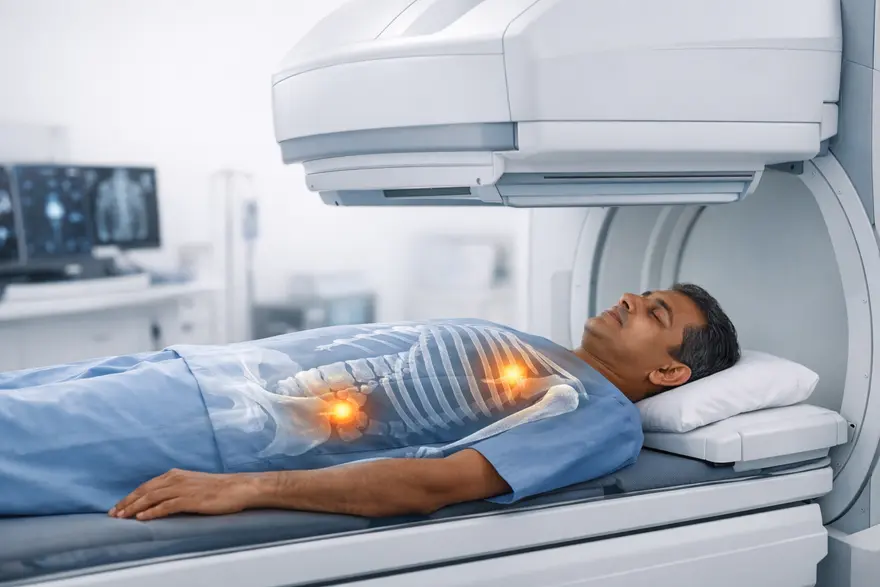
Table of Contents
- Bone Scan At A Glance
- What Is A Bone Scan
- How A Bone Scan Works
- Types Of Bone Scans
- Why A Doctor May Recommend A Bone Scan
- Uses Of A Bone Scan
- Preparation For A Bone Scan
- Bone Scan Procedure Step By Step
- After The Bone Scan: What To Expect
- What Do Bone Scan Results Mean
- Accuracy Of A Bone Scan
- Risks And Side Effects Of A Bone Scan
- How Long Does A Bone Scan Take
- When To See A Doctor After A Bone Scan
- How Metropolis Healthcare Can Support Your Next Steps
- Conclusion
- FAQs
If you have ongoing bone pain, a suspected fracture that has not shown clearly on an X-ray, or a condition that affects your bones, your doctor may suggest a bone scan. A bone scan is a nuclear medicine test that highlights areas of increased or reduced bone activity across your skeleton. It can often detect changes earlier than standard X-rays, which is why it is commonly used when the cause of symptoms is not yet clear.
Bone Scan At A Glance
- What It Is: A scan that shows how actively your bones are changing or repairing.
- What It Helps Detect: Fractures, infection, inflammation, arthritis, some bone disorders, and cancer spread to bone.
- Key Steps: Injection of a radiotracer, a waiting period, then imaging with a special camera.
- Timing: Imaging is commonly done 2 to 4 hours after the injection.
- Results Language: Areas of higher activity can appear as “hot spots”, and areas of lower activity can appear as “cold spots”.
- What It Cannot Do Alone: It may not confirm the exact cause of an abnormal area, so follow-up tests are sometimes needed.
What Is A Bone Scan
A bone scan, also called skeletal scintigraphy, is an imaging test that uses a tiny amount of radiotracer to help identify abnormal bone metabolism. Your bones are living tissue that constantly remodels. When there is injury, infection, inflammation, or tumour-related change, bone turnover can increase or decrease. A bone scan visualises these changes.
Unlike an X-ray, which mainly shows bone structure, a bone scan focuses on bone activity. This is one reason it may detect a problem earlier, even when an X-ray looks normal.
How A Bone Scan Works
Radiotracer And Bone Metabolism
Most bone scans use a technetium-99m labelled diphosphonate tracer that binds to areas of active bone formation. Regions where bone is remodelling more quickly tend to absorb more tracer, making them stand out on the images.
Understanding Hot Spots And Cold Spots
Hot Spots: Areas where the tracer uptake is higher than expected. This can happen with healing fractures, arthritis, infection, Paget’s disease, and bone metastases.
Cold Spots: Areas where uptake is lower than expected. This can be seen in some conditions that reduce blood supply or bone activity.
A key point is that a bone scan is sensitive, but not always specific. More than one condition can produce a similar pattern. That is why your doctor interprets results alongside your symptoms, examination findings, and other tests.
Types Of Bone Scans
Standard Whole-Body Bone Scan
This is the most common approach when your doctor needs a broad overview of bone activity across the skeleton.
Three-Phase Bone Scan
In a three-phase bone scan, images may be taken during injection, shortly after, and again several hours later. This approach can help when infection or inflammation is being considered.
SPECT Or SPECT-CT Imaging
Sometimes, additional imaging called SPECT or SPECT-CT is added to improve localisation and confidence in interpretation, especially in complex areas like the spine or joints. Studies show SPECT-CT can improve diagnostic confidence when differentiating benign from malignant bone lesions in certain settings.
Why A Doctor May Recommend A Bone Scan
Your doctor may recommend a bone scan when they need to:
- Investigate bone pain that remains unexplained after initial tests.
- Look for a stress fracture or other small fracture that is not clear on X-ray.
- Check for bone infection (osteomyelitis) or inflammation.
- Assess cancer spread to bone or monitor response to treatment.
- Evaluate certain bone disorders that affect bone remodelling patterns.
Uses Of A Bone Scan
Bone Scan For Cancer Detection And Spread
A bone scan can help detect bone metastases and map where bone involvement may be present, which can support staging and treatment planning.
Bone Scan For Fractures And Injuries
Bone scans can identify stress fractures and some fractures that are difficult to see on early X-rays, because bone repair activity can show up before structural changes are obvious.
Bone Scan For Bone Infections And Inflammation
Bone infection and inflammatory bone processes can increase tracer uptake. When infection is suspected, your doctor may choose a three-phase scan or add other tests to strengthen the diagnosis.
Bone Scan For Arthritis And Paget’s Disease
Arthritis can cause focal uptake around affected joints. Paget’s disease can produce more extensive uptake patterns related to increased remodelling.
Bone Scan For Unexplained Bone Pain
If you have persistent pain and initial imaging does not explain it, a bone scan can guide the next step by showing where bone activity is abnormal, even if the exact cause still needs clarification.
Preparation For A Bone Scan
What To Do Before A Bone Scan
Tell your doctor and the imaging team if:
- You are pregnant, may be pregnant, or are breastfeeding.
- You have allergies or have reacted to medical injections in the past.
- You have had recent illnesses or ongoing medical conditions.
- You recently had imaging that used contrast, or you have taken certain medicines that may interfere with results.
Medicines And Recent Contrast Tests
Bismuth-containing medicines (such as some indigestion remedies) and recent barium contrast studies can interfere with bone scan results. Your doctor may ask you to avoid or time these appropriately before the scan.
Can You Eat Or Drink Before A Bone Scan
In many cases you can eat as normal. Your team may ask you to limit fluids for a few hours beforehand, then drink extra water after the injection to help flush out tracer that your bones do not absorb.
What To Wear And What To Bring
Wear loose, comfortable clothing and avoid jewellery or metal accessories, as these may interfere with the imaging process.
If you have prior imaging reports, it can help to bring them or ensure your doctor has access to them.
Bone Scan Procedure Step By Step
Injection Of Radioactive Tracer
A small amount of radiotracer is injected into a vein in your hand or arm. You may feel a brief pin-prick and sometimes a cool sensation in the arm.
Waiting Period
It usually takes 2 to 4 hours for the tracer to circulate and bind to your bones. During this time, you are typically asked to drink water and pass urine as advised.
Imaging With A Gamma Camera
You lie on a table while a gamma camera captures images. The scan itself is usually painless, but staying still can be uncomfortable if you already have joint or bone pain.
Additional Imaging If Needed
Sometimes extra images are taken to clarify a finding. This does not automatically mean something serious is present.
After The Bone Scan: What To Expect
Most people return to normal activities afterwards. You may be advised to drink plenty of fluids for the next day to help clear the tracer from your body.
Patient guidance notes that the radiation level is small enough that contact with others is generally not a risk after the test, but always follow the specific instructions you are given, especially if you are around pregnant women or young children.
What Do Bone Scan Results Mean
Normal Bone Scan Results
A normal scan typically shows a relatively even distribution of tracer uptake, without suspicious focal hot spots or cold spots.
Abnormal Bone Scan Results
Abnormal findings often show as:
- Focal hot spots
- More widespread areas of increased uptake
- Cold spots in a defined region
Conditions Linked To Hot Spots
Hot spots are commonly associated with:
- Healing fractures and stress injuries
- Arthritis and joint degeneration
- Infection or inflammation
- Paget’s disease
- Bone metastases
Why Further Tests May Be Needed
A bone scan may not identify the exact cause of abnormal uptake by itself. Your doctor may recommend additional imaging such as X-ray, CT, MRI, or further testing such as blood tests or, less commonly, biopsy, depending on the pattern and your symptoms.
Accuracy Of A Bone Scan
Bone scans are valued because they can detect abnormal bone activity early. However, because different conditions can produce similar uptake patterns, your result is most useful when interpreted alongside your clinical picture and other investigations.
Risks And Side Effects Of A Bone Scan
Radiation Exposure In A Bone Scan
A bone scan involves a low level of radiation exposure. There is always some risk with any radiation, but the dose used is generally considered low in clinical practice, and serious side effects are uncommon.
Injection-Related Side Effects
Allergic reactions to radiotracers are described as extremely rare and usually mild. You may have temporary soreness or redness at the injection site.
Is A Bone Scan Safe During Pregnancy Or Breastfeeding
A developing fetus can be exposed to radiation, and radiotracer can pass into breast milk. If you are pregnant or breastfeeding, your doctor will advise whether the scan should be delayed, modified, or whether special precautions are needed.
Bone Scan In Children And Older Adults
Children may find it harder to stay still for imaging, and the team may use comfort measures and age-appropriate support.
For older adults, the main challenge is often comfort during the waiting period and scan positioning. Tell the team if you have pain or mobility issues so they can help you stay as comfortable as possible.
How Long Does A Bone Scan Take
The full appointment time varies. The scan typically includes:
- A short visit for the injection
- A waiting period (commonly 2 to 4 hours)
- Imaging time that can range from around 30 minutes to longer depending on the protocol and whether extra images are required
When To See A Doctor After A Bone Scan
Contact your doctor promptly if you develop:
- Rash, swelling, or breathing difficulty after the injection
- Worsening pain, fever, or new symptoms while waiting for results
Also follow up if you have not received your report within the timeframe your doctor advised.
How Metropolis Healthcare Can Support Your Next Steps
A bone scan is one part of the diagnostic picture. Your doctor may also want blood tests to understand bone health, inflammation, infection risk, or treatment response. Metropolis Healthcare supports this process with 4,000+ tests, including bone and mineral profiles, inflammatory markers, and other doctor-directed investigations, with accurate results and a quick turnaround time. If you need testing, you can book conveniently through the website, app, call centre, or WhatsApp. Metropolis also offers home sample collection, supported by a strong network of 10,000 touchpoints, which can be especially helpful if you are in pain or have limited mobility.
Conclusion
A bone scan is a widely used test that helps detect abnormal bone activity linked to injuries, infection, inflammation, and some cancers. The process is usually straightforward: an injection, a waiting period, and imaging with a special camera. Most people tolerate it well. If your scan shows an abnormal area, do not assume the worst. Many findings are treatable, and your doctor will guide the right next step based on your symptoms and any additional tests.
FAQs
Is A Bone Scan Painful
The scan itself is usually painless. You may feel a brief pin-prick during the injection, and you may feel uncomfortable if you have pain and need to lie still.
Is A Bone Scan Better Than An MRI
It depends on the clinical question. A bone scan shows bone activity across the skeleton, while MRI provides very detailed images of bone marrow and soft tissues in a specific area. Your doctor chooses the test that best fits your symptoms.
Can A Bone Scan Detect Cancer Early
A bone scan can sometimes detect bone involvement earlier than standard X-rays because it highlights changes in bone turnover. However, it may not identify all cancer types, and abnormal uptake is not always cancer.
What Is The Difference Between A Bone Scan And MRI
A bone scan is a nuclear medicine test that maps bone activity, often across the whole body. MRI uses magnetic fields to give detailed structural images, usually focused on a specific region.
Are Bone Scan Results Always Accurate
Bone scans are sensitive, but they are not always specific. Many conditions can look similar, so additional tests may be needed to confirm the cause of an abnormal finding.
References
- Van den Wyngaert T., Strobel K., Kampen W. U., et al. (2016). The EANM practice guidelines for bone scintigraphy. European Journal of Nuclear Medicine and Molecular Imaging, 43(9), 1723–1738. PMID: 27262701
- Utsunomiya D., Shiraishi S., Imuta M., et al. (2006). Added Value of SPECT/CT Fusion in Assessing Suspected Bone Metastases: Comparison With Scintigraphy Alone And Scintigraphy Plus CT. Radiology, 238(1), 264–271. PMID: 16304081
- Koppula B. R., Morton K. A., Al-Dulaimi R., et al. (2021). SPECT/CT In The Evaluation Of Suspected Skeletal Pathology. Tomography, 7(4), 581–605. PMID: 34698290
- Adams C., Banks K. (2023). Bone Scan. StatPearls Publishing.