Home Visit
 Upload






Preventive Healthcare
Navel: Care, Infections, and When to See a Doctor
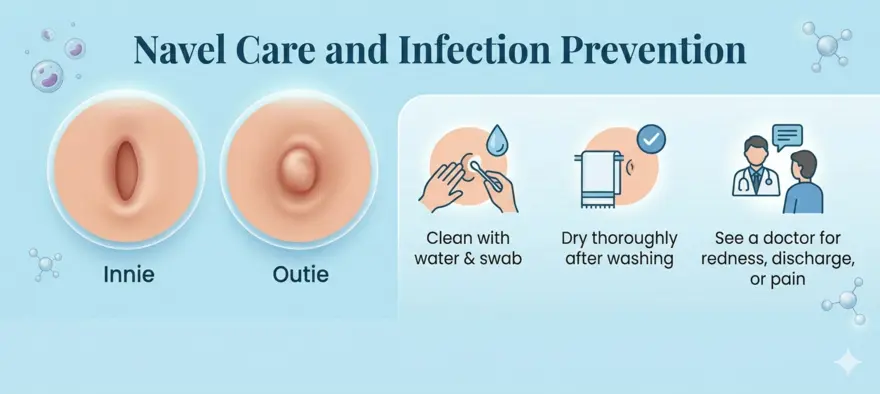
Table of Contents
- What Is the Navel (Belly Button)?
- Types of Belly Buttons (Innie vs Outie)
- Why Navel Hygiene Is Important
- Common Navel Problems
- Causes of Navel Infections
- Symptoms of a Belly Button Infection
- How Navel Infections Are Diagnosed
- Treatment Options for Navel Infections
- Home Care Tips for Maintaining a Clean Navel
- When to See a Doctor
- Key Takeaways
- FAQs About the Navel (Belly Button)
- Your Health Deserves Consistent Attention
- References
Your belly button is easy to overlook. Tucked away on your abdomen, it rarely demands attention until something feels off. But the navel is more than just a mark left over from birth. It can trap bacteria, develop infections, and even signal conditions deeper inside your body. Understanding how to care for it properly can save you from unnecessary discomfort and more serious complications.
What Is the Navel (Belly Button)?
The navel, commonly called the belly button, is a small scar located at the centre of your abdomen. It is what remains after your umbilical cord is cut at birth. Once the cord is severed, the opening inside gradually heals and seals itself shut. The remaining stump dries up and falls off within a few weeks, leaving behind the indentation you now know as your navel.
While the navel has no active function once the umbilical cord is gone, it is far from insignificant. It serves as a useful anatomical landmark for doctors during physical examinations and can sometimes reflect what is happening inside the abdomen. It is also a common site for piercings and, without proper hygiene, a place where infections can develop.
Types of Belly Buttons (Innie vs Outie)
Belly buttons broadly fall into two categories based on appearance: innies and outies.
An innie is a navel that curves inward, forming a small hollow or indentation. This is the more common type. Because of its shape, innies tend to trap moisture, lint, and dead skin cells more easily, which makes hygiene especially important.
An outie is a navel that protrudes slightly outward or has a small, visible bump of skin. Outies are less common and are typically the result of how the umbilical cord healed after birth.
Your belly button type is largely determined by how the cord stump fell off and is not an indication of how the cord was cut. Neither type is medically superior to the other, though innies do require a little more attention during cleaning.
Why Navel Hygiene Is Important
The belly button is one of the most neglected areas during bathing. Its creased, sheltered shape makes it a warm, moist environment where bacteria and fungi can thrive if left uncleaned.
Dead skin cells, body oils, sweat, lint from clothing, and sometimes hair all accumulate in the navel over time. If this build-up is not regularly cleared, it can lead to unpleasant odour, skin irritation, and eventually infection. In some cases, this material hardens into small, stone-like deposits called omphaloliths.
Good belly button hygiene tips are simple and take just a few moments during your regular bath or shower. Consistently following them keeps the area clean, dry, and free of harmful microorganisms.
Common Navel Problems
Several conditions can affect the navel. Some are minor and easily managed at home, while others require medical attention:
- Bacterial infections: Often resulting from trapped moisture and poor hygiene, bacterial infections cause redness, swelling, and discharge.
- Yeast (fungal) infections: Warm, moist conditions in the navel are ideal for fungal growth. These infections often cause itching, a rash, and a white or yellow discharge.
- Omphaloliths: Hardened accumulations of debris inside the navel, sometimes causing discomfort or contributing to infection.
- Umbilical hernia: A soft bulge near the navel caused by tissue pushing through a weak spot in the abdominal muscles. This is common in newborns and can also occur in adults. Umbilical hernia symptoms include a visible or palpable lump near the navel, which may be more pronounced when coughing or straining.
- Piercing-related infections: Navel piercings create an entry point for bacteria if not properly cared for.
- Omphalitis: A serious bacterial infection of the umbilical cord stump in newborns. It is a medical emergency that requires immediate treatment.
- Skin conditions: Contact dermatitis or nickel allergy from jewellery or clothing can cause irritation and redness around the navel.
Causes of Navel Infections
Understanding why navel infections occur helps you prevent them. Common causes include:
- Poor hygiene: Infrequent or insufficient cleaning allows bacteria and fungi to accumulate.
- Excess moisture: Sweat, water retained after bathing, or high humidity creates conditions where germs thrive.
- Navel piercings: Breaks in the skin from piercings introduce bacteria directly into the tissue.
- Obesity: Deeper skin folds around the navel trap more moisture and debris.
- Diabetes: Elevated blood sugar levels impair the immune response and promote fungal overgrowth.
- Weakened immunity: People with compromised immune systems are more susceptible to infection.
- Newborn cord stump exposure: In newborns, the umbilical cord stump can become infected before it fully heals if kept too moist or contaminated.
- Recent surgery: Abdominal surgery near the navel can increase infection risk during recovery.
Symptoms of a Belly Button Infection
Infections in the navel can be bacterial or fungal, and their symptoms often overlap. Watch out for:
- Redness or discolouration around the navel
- Swelling or puffiness in or around the belly button
- Pain or tenderness when touched
- Thick discharge that may be yellow, green, or brown
- Foul-smelling odour that does not improve with cleaning
- Itching or a persistent rash (more common with yeast infections)
- Crusting around the navel opening
- Warmth in the skin surrounding the navel
- Fever or general unwellness (a sign the infection may be spreading)
In newborns, additional symptoms of omphalitis include excessive crying, poor feeding, and a cord stump that is red, swollen, or producing pus. These symptoms require immediate medical attention.
How Navel Infections Are Diagnosed
A healthcare provider will typically begin by examining the navel visually and gently pressing around the area to check for tenderness or swelling. They will ask about your symptoms, how long they have been present, any recent injuries or piercings, and your overall health history.
In many cases, a clinical examination is enough to identify the type and extent of infection. If the infection appears severe or is not responding to initial treatment, your doctor may take a swab from the discharge to identify the specific bacteria or fungus causing the infection. Blood tests may be requested if there are signs that the infection has spread or if a systemic condition like diabetes is suspected. Imaging such as an ultrasound or CT scan may be recommended if an internal cause, such as a hernia or abscess, is under consideration.
Treatment Options for Navel Infections
Treatment depends on the type and severity of infection.
Bacterial Infections
Mild bacterial infections are often treated with topical antibiotic creams applied directly to the affected area. More significant infections, particularly those causing fever or spreading redness, may require a course of oral antibiotics. In severe or deep infections, drainage of the affected area may be necessary.
Yeast (Fungal) Infections
Fungal infections in the navel are typically treated with antifungal creams. Keeping the area clean and thoroughly dry is equally important, as moisture fuels fungal growth. A fungal skin infection in the navel responds well to antifungal treatment when caught early, but allowing it to persist can make treatment more difficult.
Navel Piercing Infections
Mild piercing infections can sometimes be managed at home with saline rinses and careful cleaning. However, if symptoms worsen, if the discharge becomes thick or foul-smelling, or if a fever develops, medical assessment is necessary.
Omphalitis in Newborns
This is treated urgently with intravenous antibiotics in a hospital setting. Because the infection can spread rapidly in newborns, early intervention is critical.
Home Care Tips for Maintaining a Clean Navel
These practical belly button hygiene tips can prevent infections before they start:
- Clean your navel gently with soap and water during every bath or shower, using your fingertip to reach into the fold
- Rinse thoroughly to remove all soap residue, which can itself cause irritation
- Dry the navel completely with a clean towel after washing, as moisture encourages bacterial and fungal growth
- Avoid pushing any object too deep into the navel while cleaning
- Use a cotton bud moistened with saline or warm water to clean stubborn debris, but do so gently and only when needed
- Wear breathable, natural fabrics that reduce sweating around the abdomen
- For new navel piercings, follow aftercare instructions carefully and keep the area clean and dry
- For newborns, keep the cord stump dry and clean, and fold the nappy below it to allow air circulation
When to See a Doctor
Most mild irritation around the navel can be managed with improved hygiene over a few days. However, prompt medical attention is important in these situations:
- Symptoms do not improve after several days of diligent cleaning
- The redness, swelling, or discharge is getting worse
- You develop a fever or feel generally unwell
- There is a new lump, bulge, or hardness near the navel
- The pain is severe or worsening
- You notice bleeding that is not related to a recent piercing or minor injury
For parents of newborns, contact your paediatrician immediately if the cord stump looks red, smells unusual, or produces any discharge. Do not wait to see if it improves on its own. A newborn's infection can escalate quickly.
Key Takeaways
- The navel is a scar left behind after the umbilical cord falls off, and it requires regular hygiene to stay healthy.
- Innies and outies differ in appearance, but innies tend to trap more moisture and need extra care during cleaning.
- The most common navel infections are bacterial and yeast-related, both of which are preventable with good hygiene.
- Symptoms of infection include redness, swelling, discharge, foul odour, and in some cases, fever.
- Bacterial infections are treated with antibiotics; yeast infections with antifungal creams.
- Newborns with infected cord stumps require immediate medical care.
- See a doctor if symptoms persist, worsen, or are accompanied by fever or a new lump.
FAQs About the Navel (Belly Button)
What Is the Medical Term for Navel?
The medical term for the belly button is the navel or umbilicus. The region around it is referred to as the periumbilical area. Conditions affecting the navel often use the prefix "omphalo," derived from the Greek word for navel, such as omphalitis (infection of the navel) or omphalolith (navel stone).
Is It OK to Remove Navel Lint?
Yes, it is perfectly fine to remove navel lint. In fact, doing so is a good habit. Lint from clothing fibres accumulates in the navel and, combined with dead skin cells and oils, can create conditions that encourage bacterial growth. Gently remove lint during your regular cleaning routine. If the lint is deep or difficult to reach, a saline-moistened cotton bud can help dislodge it.
How Should I Clean My Belly Button?
During your regular bath or shower, apply a small amount of gentle soap to your fingertip and clean inside and around your navel. Do not push your finger in uncomfortably deep. Rinse thoroughly with water to remove all soap. After bathing, use a clean towel to pat the area completely dry. If you have a deep innie, a dry cotton bud can help absorb any remaining moisture.
Why Does My Navel Smell Bad?
An unpleasant smell from the belly button is usually caused by a build-up of lint, sweat, dead skin cells, and body oils inside the navel. When these accumulate without regular cleaning, bacteria begin to break them down, producing an odour. Improving your cleaning routine generally resolves the smell within a few days. If the odour persists despite good hygiene, or if it is accompanied by discharge or pain, a healthcare provider should assess you for a possible infection.
Is Discharge from the Belly Button Normal?
A small amount of clear fluid in the navel fold may occasionally occur, particularly in innies, and is generally harmless. However, thick, coloured, or foul-smelling discharge is not normal and usually indicates a bacterial or yeast infection. Any persistent, unusual discharge should be evaluated by a doctor. In newborns, any discharge from the cord stump should be reported to a paediatrician promptly.
Can Fungal Infections Occur in the Navel?
Yes, the navel is a common site for fungal skin infections. The warm, moist, sheltered environment inside an innie is particularly conducive to fungal growth. A yeast infection in the navel often presents with itching, redness, a rash, and a white or yellowish discharge. It is treated with antifungal creams and managed by keeping the area clean and dry. People with diabetes, weakened immunity, or who sweat heavily are at higher risk.
Is It Safe to Use Cotton Buds Inside the Navel?
Cotton buds can be used safely to clean the navel as long as they are used gently and are moistened with warm water or saline. Avoid using dry cotton buds, which can leave fibres behind and cause irritation. Never insert a cotton bud so deep that it causes discomfort. For routine hygiene, your fingertip with soap and water is sufficient. Cotton buds are best reserved for stubborn debris or for carefully drying a deep navel after bathing.
How Long Does a Belly Button Infection Last?
The duration of a navel infection depends on its type and severity. Mild infections treated promptly with appropriate topical treatment, combined with good hygiene and keeping the area dry, can resolve within one to two weeks. More significant bacterial infections requiring oral antibiotics may take two to three weeks to fully clear. Fungal infections can take a similar amount of time, sometimes longer if the underlying moisture issue is not addressed. If your symptoms have not improved after a week of treatment, return to your doctor for reassessment.
Your Health Deserves Consistent Attention
A clean, healthy navel is a small but meaningful part of your overall wellbeing. Beyond daily hygiene, staying proactive about your health means knowing your body and recognising when something is not quite right.
At Metropolis Healthcare, we believe preventive care is the foundation of a healthier life. Whether you are monitoring a known health condition, keeping tabs on your immunity, or simply staying on top of your wellness, our wide range of tests and full body checkups help you stay informed. With over 4,000 tests, NABL and CAP-accredited laboratories, and a home sample collection network spanning 10,000 touchpoints across India, getting tested has never been more convenient. Book easily through the website, app, phone, or WhatsApp, and receive accurate, reliable results you can count on.
References
- Standring S. Gray's Anatomy: The Anatomical Basis of Clinical Practice. 42nd ed. Elsevier; 2021.
- Ameh EA, Nmadu PT. Major complications of omphalitis in neonates and infants. Pediatr Surg Int. 2002;18(5-6):413-416. PMID: 12415378.
- Hayashi AH, Lau HY, Gillis DA. Neonatal omphalitis. Can Med Assoc J. 1989;141(8):789-791. PMID: 2790460.
- Bhupathi V, Venugopal S, Desai A. Omphalitis: a clinical review. Pediatr Rev. 2020;41(10):537-539. PMID: 33004564.
- Dinulos JG. Habif's Clinical Dermatology: A Color Guide to Diagnosis and Therapy. 7th ed. Elsevier; 2021.