Home Visit
 Upload






Preventive Healthcare
Fine Motor Skills: Meaning, Examples, And How To Improve
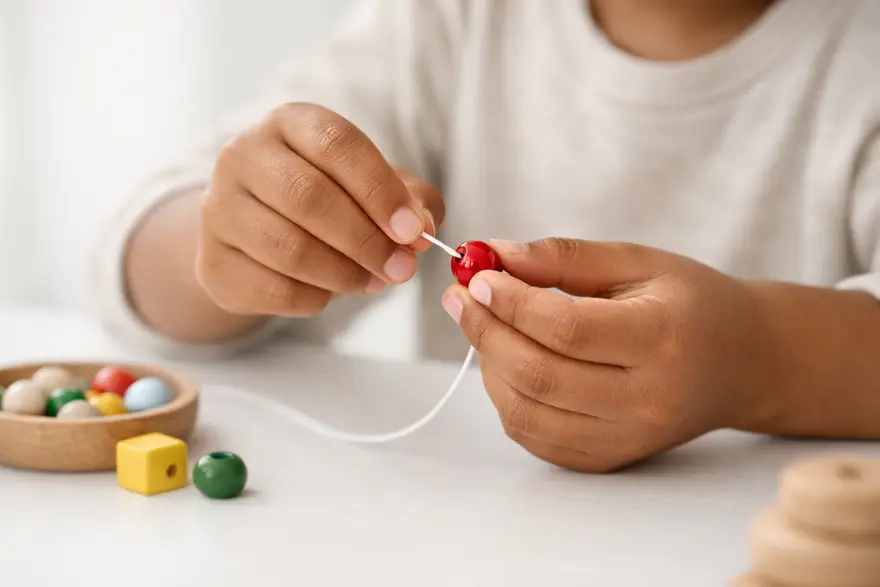
Table of Contents
- What Are Fine Motor Skills?
- Fine Motor Control: What Has To Work Together
- Fine Motor Skills Vs Gross Motor Skills
- Why Are Fine Motor Skills Important?
- Why They Matter At Different Life Stages
- Examples Of Fine Motor Skills In Daily Life
- Fine Motor Skills In Children
- Fine Motor Skills And The Brain
- Causes Of Poor Fine Motor Skills
- Signs You May Need Help For Fine Motor Skills
- How To Improve Fine Motor Skills
- Occupational Therapy For Fine Motor Skills
- Fine Motor Skills And Learning
- When To See A Doctor Or Therapist
- How Metropolis Healthcare Can Support You
- Key Takeaways
- Frequently Asked Questions
Fine motor skills are the small, precise movements you make using the muscles in your hands, fingers, and wrists. These skills help you manage everyday tasks like writing, buttoning clothes, using cutlery, typing, and handling small objects. They rely on coordination between your brain, eyes, nerves, muscles, and joints, so they can feel effortless on a good day and frustrating when something is off.
If you are reading this because you are worried about your child, or because you have noticed changes in your own hands, try to remember this. Fine motor skills can improve at any age with the right practice and support. And when help is needed, there are clear next steps.
What Are Fine Motor Skills?
Fine motor skills are the small, controlled movements that allow you to handle objects with accuracy. They involve the tiny muscles in your hands and fingers, along with the stability of your wrist and forearm. Most people think of handwriting and pencil grip, but fine motor skills also show up in daily self-care, cooking, crafts, phone use, and work tasks.
Fine motor skills depend on three main abilities:
- Control: You can start, stop, and adjust movement smoothly.
- Strength: You have enough grip and pinch strength to hold objects without strain.
- Coordination: Your eyes and hands work together so you can aim and adjust in real time.
Fine Motor Control: What Has To Work Together
Fine motor control is a team effort inside your body. It typically includes:
- Planning and attention from your brain
- Signals travelling through nerves to muscles
- Movement at joints in your fingers, wrist, and hand
- Visual guidance, so you can place and adjust accurately
- Sensation from your fingertips, so you can judge pressure, texture, and position
When one part of this system is not working well, tasks like using buttons or holding a pen can become slower or tiring.
Fine Motor Skills Vs Gross Motor Skills
Gross motor skills use large muscles for bigger movements like sitting, walking, running, climbing, and jumping. Fine motor skills build on that foundation, because you often need a stable body and shoulder position before your hands can move with precision.
Quick Comparison
|
Feature |
Fine Motor Skills |
Gross Motor Skills |
|
Main muscles used |
Small hand and finger muscles |
Large muscles in arms, legs, and trunk |
|
Typical tasks |
Writing, buttoning, using utensils |
Walking, jumping, throwing, climbing |
|
Key focus |
Precision and dexterity |
Strength, balance, and large movement control |
Why Are Fine Motor Skills Important?
Fine motor skills support independence in everyday life. They affect how confidently you can care for yourself, how easily your child can manage school tasks, and how smoothly you can work with tools and technology.
Fine motor skills matter because they support:
- Self care: Dressing, eating, grooming, and basic household tasks
- Learning: Drawing, colouring, writing, cutting, and using classroom tools
- Work and productivity: Typing, tool use, lab work, repairs, and many professional tasks
- Confidence: When tasks feel easier, you are more likely to try new activities
Research suggests that fine motor ability is linked with early academic achievement, especially in the early school years when children are learning to write and manage classroom tasks. Fine motor skills and executive function both contribute to kindergarten achievement.
Why They Matter At Different Life Stages
In children, fine motor skills support school readiness, handwriting, and independence in dressing and eating.
In adults, they support work tasks, parenting, cooking, and daily routines.
In older adults, they can affect independence and safety, such as managing medication packaging or using keys.
Examples Of Fine Motor Skills In Daily Life
Fine motor skills show up in more places than you might expect. Here are common examples.
Self Care Examples
- Buttoning shirts, fastening zips, tying shoelaces
- Brushing teeth and hair
- Washing hands thoroughly and handling toiletries
- Using a spoon and fork without spilling
- Opening small lids and packaging
School And Work Examples
- Holding a pencil and writing or drawing
- Cutting with scissors
- Turning pages and organising stationery
- Typing and using a mouse or trackpad
- Using tools that require accuracy, such as screwdrivers or craft tools
Play, Hobbies, And Technology Examples
- Building with blocks or construction toys
- Threading beads and doing puzzles
- Playing a musical instrument
- Gaming with a controller
- Texting, swiping, and tapping on a phone
Fine Motor Skills In Children
In childhood, fine motor skills develop gradually from simple grasping to more refined movements like using scissors or writing neatly. Healthcare professionals often track these skills because significant delays can sometimes be linked to broader developmental challenges. At the same time, it is normal for children to develop at different speeds, especially when they are learning a new skill.
If you are comparing your child to others, try to focus on progress. A child who is improving, even slowly, is usually moving in the right direction.
Early Development: From Grasp Reflex To Pincer Grip
In early life, fine motor control often follows a pattern like this:
- Newborns show a natural grasp reflex
- Babies begin reaching and grabbing objects as coordination improves
- They learn to pass objects between hands
- Many develop a pincer grasp, using thumb and finger, by around their first birthday
These are general patterns rather than strict rules, so your child’s overall progress and daily function are what matter most.
Development Of Fine Motor Skills By Age
Milestones help you understand what is typical at different ages. Use these as a guide, not a test. If your child is not doing one item yet but is progressing in other ways, that can still be normal.
Fine Motor Skill Milestones In Toddlers
Common skills you may notice include:
- Stacking a few blocks
- Scribbling with a crayon
- Turning thick pages
- Feeding themselves with a spoon, with some mess
- Picking up small objects using thumb and finger
- Trying to pull zips up or down with help
Fine Motor Skill Development In Preschoolers
Preschool years are often a big leap forward. You may see:
- Better pencil control and copying simple shapes
- Cutting with child-safe scissors, starting with straight lines
- More independent dressing, such as pulling on clothes and managing bigger buttons
- More accurate building, puzzles, and crafts
- Early tripod grip for crayons or pencils in some children
School Age Progress
As school demands increase, fine motor skills often become more efficient. You may notice:
- Improved handwriting and spacing
- Better endurance for longer writing tasks
- More precise cutting and craft skills
- Ability to tie shoelaces, depending on the child
- Better control using sports equipment or musical instruments
Fine Motor Skills And The Brain
Fine motor skills feel like they happen in your hands, but the brain is doing the planning, timing, and constant correction. When you reach for a button or write a word, your brain predicts what should happen, receives feedback from your eyes and fingertips, and adjusts pressure and direction in real time.
Role Of The Cerebrum In Fine Motor Skills
The cerebrum supports voluntary movement, planning, attention, and problem solving. This is the part of your brain that helps you decide what you want to do and organise the movement needed to do it.
Role Of The Cerebellum In Precision And Coordination
The cerebellum supports timing and smooth coordination. It helps fine tune movement so actions feel steady rather than shaky or jerky.
Why Touch And Body Awareness Matter
Sensation is a quiet but essential part of fine motor control. When your fingertips can clearly feel texture and pressure, it is easier to grip lightly, adjust force, and move with confidence. If sensation is reduced, you may squeeze too hard, drop objects, or avoid tasks that feel awkward.
Causes Of Poor Fine Motor Skills
Fine motor difficulties can develop at any age. The cause is not always serious, but it is worth paying attention to patterns, associated symptoms, and whether things are getting better or worse.
Common contributing factors include:
- Reduced hand strength or endurance
- Coordination challenges, including visual motor integration difficulties
- Pain or stiffness in the joints of the hand or wrist
- Nerve irritation or compression that affects sensation or grip
- Recovery after injury to the hand, wrist, shoulder, or neck
- Differences in sensory processing or motor planning in some children
- Neurological conditions that affect movement control
Fine Motor Skill Difficulties In Children
Children may struggle with fine motor skills for a range of reasons, including coordination challenges, motor planning difficulties, or differences in attention and sensory processing. In some children, handwriting can be particularly affected when fine motor precision and in-hand manipulation are not well developed.
Causes In Teens And Adults
In teenagers and adults, fine motor issues can be linked to overuse, nerve compression, joint inflammation, or recovery after injury. If you notice numbness, tingling, pain, or weakness, it is sensible to discuss it with a doctor, especially if it is persistent.
If you have a sudden change in hand strength or coordination, or you notice other sudden symptoms such as facial drooping, speech changes, or severe dizziness, seek urgent medical help.
Signs You May Need Help For Fine Motor Skills
You may benefit from extra support if you notice one or more of the following:
- You or your child often drop objects or seem unusually clumsy with hands
- Buttons, zips, cutlery, or handwriting feel much harder than expected for age
- Your child avoids colouring, crafts, or writing due to frustration or fatigue
- You notice persistent hand pain, stiffness, numbness, or tingling
- Tasks take much longer than before, even with practice
- Skills are getting worse rather than gradually improving
How To Improve Fine Motor Skills
Fine motor improvement is usually about consistent, well chosen practice. You get better when tasks are challenging enough to build skill, but not so hard that they create daily battles.
A helpful approach is:
- Practise little and often, rather than doing long sessions
- Build strength and coordination together
- Start with larger objects and easier movements, then progress to smaller and more precise tasks
- Praise effort and progress, not just the final result
Fine Motor Skill Activities For Babies And Toddlers
Choose safe, supervised activities that encourage grasping and release:
- Let your baby hold safe toys with different textures
- Offer larger blocks or stacking cups
- Use posting toys, where your child puts shapes into slots
- Encourage finger feeding with age appropriate foods and supervision
- Use chunky crayons for scribbling as they get older
Fine Motor Skill Activities For Preschool And School Age Children
These activities build hand strength, precision, and coordination:
- Playdough squeezing, rolling, and pinching
- Threading beads or pasta onto a string
- Cutting along thick lines, then moving to thinner lines
- Colouring within simple shapes
- Tweezers games, such as moving small objects between bowls
- Building sets, puzzles, and craft projects
If handwriting is a concern, short daily practice with correct posture and an age-appropriate pencil grip can help. Handwriting support can also be more effective when it is built into play and classroom routines, rather than treated as a daily struggle. Kadar M., Wan Yunus F., Tan E., et al. (2020). A systematic review of occupational therapy intervention for handwriting skills in 4-6 year old children.
Fine Motor Exercises For Adults
If you want to improve control and endurance, focus on functional exercises:
- Practise pinch strength by picking up coins or buttons and placing them into a container
- Do finger isolation drills, such as tapping each finger to your thumb slowly
- Use therapy putty or a soft stress ball for gentle grip work, if it does not cause pain
- Improve dexterity through hobbies like knitting, simple DIY, or musical practice
- Check your workstation setup so your wrists are supported and you take regular breaks
Fine Motor Skills Improvement After Injury
After an injury, it is normal to feel slower and less confident. A gradual return works best:
- Start with gentle movements and light objects
- Increase difficulty slowly, guided by comfort and function
- Avoid pushing through sharp pain or increasing numbness
- Focus on quality of movement rather than speed
If you are recovering from a fracture, tendon injury, or nerve injury, structured rehabilitation guidance is often important.
Everyday Habits That Support Improvement
Small daily habits can make practice more effective:
- Keep posture stable, especially when writing or doing precise tasks
- Take short breaks to avoid fatigue and overuse
- Aim for good sleep, as coordination and learning consolidate with rest
- Maintain a balanced diet and hydration, since muscles and nerves depend on good overall health
Occupational Therapy For Fine Motor Skills
Occupational therapy is one of the most practical supports for fine motor difficulties. An occupational therapist can assess how you or your child uses hands in daily tasks, then create a plan that builds strength, coordination, and confidence.
Support may include:
- Exercises for grip, pinch, and finger control
- Activities to improve hand eye coordination
- Practical strategies for dressing, eating, and school tasks
- Adaptive tools, such as pencil grips or modified cutlery, when appropriate
- A home programme that fits your routine
Occupational therapy is focused on function. The goal is to help you manage everyday life more comfortably and independently.
Fine Motor Skills And Learning
Fine motor skills can influence classroom confidence, especially when tasks involve handwriting, cutting, drawing, or copying from a board. When fine motor control is still developing, your child may know the answer but struggle to show it on paper.
Research suggests fine motor skills are linked with academic outcomes, particularly in early schooling, which is why early support can be helpful when difficulties are persistent.
Simple School And Home Adjustments
These supports can reduce stress while skills improve:
- Use short practice bursts rather than long worksheets
- Offer thicker pencils or pencil grips if holding a pencil is tiring
- Try a slightly slanted writing surface
- Break tasks into smaller steps with clear targets
- Allow alternative ways to show learning when needed, such as verbal answers or typing
When To See A Doctor Or Therapist
You should consider professional advice if:
- Your child’s fine motor skills are not progressing over time
- Daily tasks cause significant frustration, fatigue, or avoidance
- There is regression, meaning a skill that was present has noticeably worsened
- You notice pain, swelling, numbness, tingling, tremor, or weakness
- You have a sudden change in hand function or other sudden neurological symptoms
A doctor can help rule out medical causes and guide the next steps. If therapy is appropriate, earlier support often makes daily life easier.
How Metropolis Healthcare Can Support You
If you are concerned about fine motor difficulties, you are not expected to figure it out alone. Your doctor may sometimes recommend tests to check for conditions that can affect nerves, muscles, or energy levels, such as blood sugar issues, vitamin deficiencies, thyroid imbalance, inflammation, or other underlying factors. Testing is not always needed, but it can be useful when symptoms are persistent, worsening, or accompanied by numbness, tingling, weakness, or fatigue.
Metropolis Healthcare can support your care journey with NABL and CAP accredited labs, expert pathologists, and a wide test menu of 4,000 plus tests, including full body checkups and specialised testing. You can also choose home sample collection with quick turnaround and accurate results, supported by a strong home collection network across 10,000 touchpoints. Booking is convenient through the website, app, call, or WhatsApp, so you can focus on the next step with less stress.
For more guidance, you can explore more health and wellness articles from Metropolis Healthcare and use their diagnostic services as part of your doctor led care plan.
Key Takeaways
- Fine motor skills are the precise movements you do with your hands, fingers, and wrists, and sometimes your toes.
- They support independence, school readiness, work tasks, and hobbies.
- Fine motor skills usually develop after gross motor skills like sitting, crawling, and walking.
- Children develop at different speeds, so patterns and progress matter more than a single milestone.
- Fine motor difficulties can happen for many reasons, including coordination challenges, pain, nerve problems, or recovery after injury.
- With simple home activities and, when needed, occupational therapy, you can strengthen fine motor control over time.
Frequently Asked Questions
What Are Fine Motor Skills In Simple Words?
Fine motor skills are the small, precise movements you do with your hands and fingers, like writing, buttoning clothes, using cutlery, and typing.
How Can I Improve Fine Motor Skills At Home?
You can improve fine motor skills by practising little and often. Try activities like playdough, bead threading, tweezers games, colouring, cutting practice, and everyday tasks like buttoning and using utensils. Choose tasks that are slightly challenging but not overwhelming.
What Causes Poor Fine Motor Skills?
Fine motor difficulties can be caused by low hand strength, coordination challenges, pain or joint stiffness, nerve irritation, sensory changes, or recovery after injury. In children, differences in motor planning or attention can also play a role.
Are Fine Motor Skills Linked To Brain Development?
Yes. Fine motor skills rely on the brain’s ability to plan movement, coordinate timing, and adjust using feedback from your eyes and fingertips. This is why fine motor development and learning can be closely connected in early childhood.
Cameron C. E., Brock L. L., Murrah W. M., et al. (2012). Fine motor skills and executive function both contribute to kindergarten achievement. Child Development, 83(4), 1229–1244. PMID: 22537276
Can Adults Improve Fine Motor Skills?
Yes. Adults can improve fine motor skills with consistent practice, strength building, and functional activities like hobbies, dexterity exercises, and ergonomic adjustments. Improvement is often gradual, so regular practice matters more than intensity.
References
- Cameron C. E., Brock L. L., Murrah W. M., et al. (2012). Fine motor skills and executive function both contribute to kindergarten achievement. Child Development, 83(4), 1229–1244. PMID: 22537276
- Kadar M., Wan Yunus F., Tan E., et al. (2020). A systematic review of occupational therapy intervention for handwriting skills in 4-6 year old children. Australian Occupational Therapy Journal, 67(1), 3–12. PMID: 31799722
- Li Y., Wu X., Ye D., et al. (2025). Research progress on the relationship between fine motor skills and academic ability in children: A systematic review and meta-analysis. Frontiers in Sports and Active Living, 6, 1386967. PMID: 39850871
- Manto M., Bower J. M., Conforto A. B., et al. (2012). Consensus paper: Roles of the cerebellum in motor control. Cerebellum, 11(2), 457–487. PMID: 22161499
- Seo S. M. (2018). The effect of fine motor skills on handwriting legibility in preschool age children. Journal of Physical Therapy Science, 30(2), 324–327. PMID: 29545705