Home Visit
 Upload






Preventive Healthcare
Blastocyst: Early Pregnancy Stage And Its Role In Embryo Development
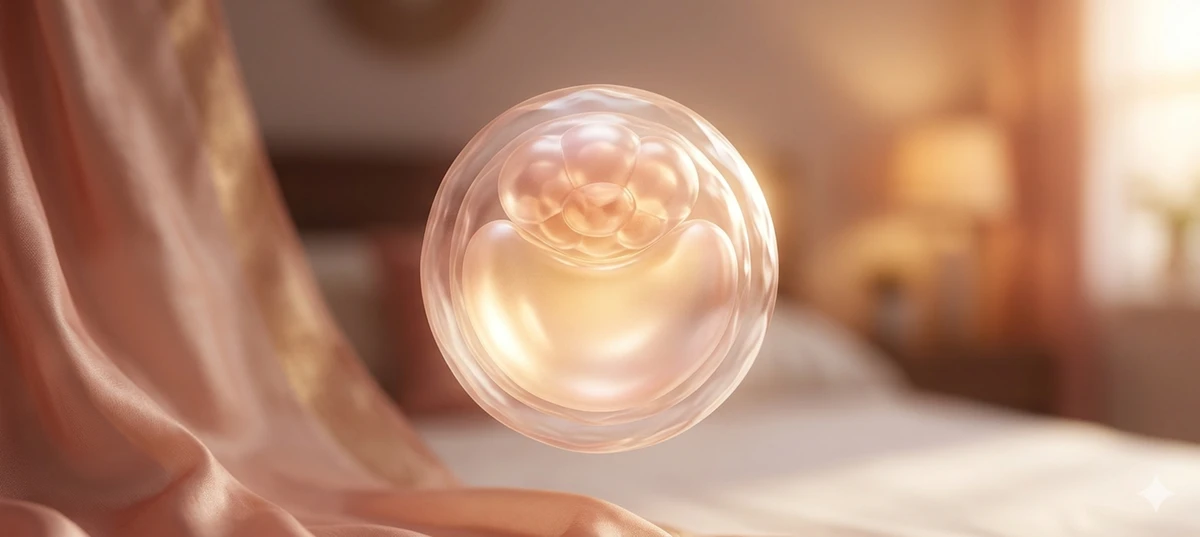
Table of Contents
- What Is A Blastocyst?
- When Does The Blastocyst Form During Pregnancy?
- Structure Of A Blastocyst
- Stages Of Early Embryo Development
- Role Of The Blastocyst In Implantation
- Importance Of Blastocyst In IVF Treatment
- How Blastocyst Quality Is Assessed
- Factors Affecting Blastocyst Development
- Common Issues Related To Blastocyst Development
- Key Takeaways
- FAQs About Blastocysts
- The Bottom Line
- References
What Is A Blastocyst?
A blastocyst is an early stage of an embryo that usually forms about 5 to 6 days after fertilisation. If you are looking for the blastocyst meaning in simple terms, it is a tiny, fluid-filled group of cells that has developed enough to prepare for implantation in the uterus.
This stage is a key part of early embryo development. The blastocyst is no longer just a ball of dividing cells. It has started to organise itself into specialised parts that support future growth.
One group of cells, called the inner cell mass, goes on to form the foetus. The outer layer, called the trophectoderm, helps form the placenta. This is why the blastocyst stage matters so much in natural conception as well as IVF.
When Does The Blastocyst Form During Pregnancy?
Blastocyst formation happens very early, usually around day 5 or day 6 after an egg is fertilised.
During fertilised egg development, the fertilised egg begins as a single cell and then keeps dividing as it travels through the fallopian tube. Over the next few days, it becomes a multicellular embryo. If development continues normally, it reaches the blastocyst stage before implantation.
This stage does not mean pregnancy is firmly established yet. For that to happen, the blastocyst must attach to the uterine lining and begin implantation.
Structure Of A Blastocyst
A blastocyst has a simple but highly important structure:
- Inner Cell Mass: This cluster of cells develops into the foetus.
- Trophectoderm: This outer layer helps form the placenta and supports implantation.
- Blastocoel: This is the fluid-filled cavity inside the blastocyst.
- Zona Pellucida: This is the protective outer shell that surrounds the embryo before it hatches.
As the blastocyst grows, it expands and eventually breaks free from the zona pellucida. This process is called hatching, and it is needed before implantation can begin.
Stages Of Early Embryo Development
Understanding the blastocyst stage is easier when you look at the steps that come before it.
- Zygote: This is the single cell formed when the sperm fertilises the egg.
- Cleavage Stage Embryo: The zygote divides into 2, 4, then more cells without increasing much in overall size.
- Morula: By about day 3 or 4, the embryo becomes a compact cluster of cells.
- Blastocyst: By day 5 or 6, a cavity forms, and the cells separate into the inner cell mass and trophectoderm.
- Implantation: After hatching, the blastocyst attaches to the uterine lining. You can think of this as the implantation stage embryo, because it is now ready to begin embedding into the uterus.
This sequence is a normal part of fertilised egg development and sets the foundation for pregnancy.
Role Of The Blastocyst In Implantation
The blastocyst plays the central role in implantation. Once it reaches the uterus, it must hatch from its outer shell and attach to the endometrium, which is the inner lining of the uterus.
After attachment, cells from the trophectoderm begin interacting closely with the uterine lining. This helps the embryo anchor itself and start the early process of placental development. Without successful implantation, pregnancy cannot continue.
This is also why a pregnancy test does not usually turn positive the moment a blastocyst forms. It becomes positive only after implantation begins and the body starts producing enough hCG to be detected.
Some people may notice mild spotting or light cramps around this time, but many notice nothing at all.
Importance Of Blastocyst In IVF Treatment
The blastocyst stage is especially important in IVF. In blastocyst IVF, embryos are often cultured in the lab until day 5 or day 6 before transfer.
This gives the fertility team more time to observe embryo development. It may help identify which embryos are continuing to grow well and which are not. In selected IVF cycles, blastocyst transfer can also improve the timing between the embryo and the uterine lining.
Another advantage is that it can support single embryo transfer. That matters because transferring one well-developing blastocyst may reduce the risk of multiple pregnancy.
That said, blastocyst transfer is not the right choice for every person. If only a small number of embryos are available, your doctor may decide that an earlier transfer is more appropriate. The best approach depends on your age, fertility history, embryo number, lab conditions, and overall treatment plan.
How Blastocyst Quality Is Assessed
Embryologists assess blastocyst quality by looking at three main features:
- How expanded the blastocyst is
- The appearance of the inner cell mass
- The appearance of the trophectoderm
A common grading approach scores expansion from 1 to 6 and then separately evaluates the quality of the inner cell mass and outer cell layer. A more expanded embryo with a clearly visible inner cell mass and a healthy-looking trophectoderm is generally considered more promising.
Still, grading has limits. A good-looking blastocyst is not a guarantee of pregnancy, and a lower-graded blastocyst can still lead to a healthy baby. Morphology helps guide selection, but it does not reveal everything about the embryo’s genetic health.
Factors Affecting Blastocyst Development
Several factors can influence whether an embryo reaches the blastocyst stage:
- Egg quality
- Sperm quality
- Maternal age
- Chromosomal normality of the embryo
- Hormonal environment
- Laboratory culture conditions in IVF
- Timing and quality of embryo cell division
- Endometrial receptivity at the time of implantation
These factors do not act in isolation. Blastocyst development depends on both embryo health and the environment supporting it.
Common Issues Related To Blastocyst Development
Some common concerns linked to blastocyst development include:
- Failure To Reach The Blastocyst Stage: Not every embryo continues developing to day 5 or day 6.
- Poor Morphology: Some blastocysts form, but their inner cell mass or trophectoderm may appear weaker.
- Failed Implantation: Even a good-quality blastocyst may not implant.
- Chromosomal Problems: Some embryos stop developing or fail to implant because of chromosomal abnormalities.
- Chemical Pregnancy: This can happen when implantation begins but the pregnancy stops developing very early.
If you are going through IVF, these issues can feel emotionally heavy. It helps to remember that embryo development is biologically complex, and one outcome does not tell the full story about your future chances.
Key Takeaways
- A blastocyst is an early embryo stage that usually forms around day 5 or 6 after fertilisation.
- It contains an inner cell mass, a trophectoderm, and a fluid-filled cavity.
- The blastocyst stage is essential because this is the stage that prepares for implantation.
- In IVF, blastocyst culture can help with embryo selection and support single embryo transfer in suitable cases.
- Blastocyst grading looks at expansion, inner cell mass quality, and trophectoderm quality.
- Not every embryo reaches the blastocyst stage, and not every blastocyst implants.
- Blastocyst quality is helpful, but it does not predict everything on its own.
FAQs About Blastocysts
Is Blastocyst Good For IVF?
A blastocyst can be beneficial in IVF because it allows more time to observe embryo development before transfer. In selected cases, this helps identify embryos with stronger developmental potential and may support single embryo transfer. However, it is not automatically the best option for everyone.
Is A Blastocyst Considered A Baby?
No. A blastocyst is a very early stage of an embryo, not a baby. It is an important developmental stage that comes before implantation and much earlier than foetal development.
On Which Day Does The Blastocyst Form?
A blastocyst usually forms around day 5 or day 6 after fertilisation. In IVF, this timing is counted from the day the egg is fertilised in the lab.
What Happens During The Blastocyst Stage?
During the blastocyst stage, the embryo forms a fluid-filled cavity and separates into distinct cell groups. One group will form the foetus, while the other helps form the placenta. The embryo also prepares to hatch and implant.
What Is The Role Of A Blastocyst In Implantation?
The blastocyst must hatch from its outer shell and attach to the uterine lining. This is the beginning of implantation. Once attached, the outer cells start the early work of forming the placenta and supporting pregnancy.
What Is The Difference Between A Blastocyst And An Embryo?
A blastocyst is a type of embryo. In other words, it is one specific stage within embryonic development. All blastocysts are embryos, but not all embryos are blastocysts.
Is A Blastocyst Normal?
Yes. The blastocyst stage is a normal and expected part of human development. However, not every embryo reaches this stage, and that can happen for several biological reasons.
How Is Blastocyst Quality Graded?
Blastocyst quality is usually graded by looking at how expanded it is and how the inner cell mass and trophectoderm appear under the microscope. These features help embryologists estimate developmental potential, but they do not guarantee implantation or pregnancy.
What Factors Affect Blastocyst Development?
Blastocyst development can be affected by embryo genetics, egg and sperm quality, age, hormone levels, uterine readiness, and IVF lab conditions. It is the result of many interacting factors rather than one single cause.
Can A Blastocyst Fail To Implant?
Yes. A blastocyst can fail to implant even when it looks healthy. Implantation depends on embryo quality, chromosomal health, uterine receptivity, and timing.
How Long Does The Blastocyst Stage Last?
The blastocyst stage is brief. It usually begins around day 5 and continues over the next few days as the embryo expands, hatches, and starts implantation. In natural conception, this transition is short and often goes unnoticed.
The Bottom Line
If you are trying to understand the blastocyst stage, the most important thing to know is that it is a vital checkpoint in very early pregnancy. It is the stage where the embryo becomes organised, prepares for implantation, and begins the next phase of development.
If you are planning a pregnancy, going through fertility treatment, or simply staying proactive about your health, regular wellness monitoring can help you make more informed decisions. Metropolis Healthcare supports this journey with 4,000+ tests, speciality testing, full body checkups, expert pathologists, and reliable reports. With NABL and CAP-accredited labs, quick turnaround time, and home sample collection across 10,000 touchpoints, Metropolis makes it easier to stay on top of your health. You can book conveniently through the website, app, call, or WhatsApp.
References
- Practice Committee of the American Society for Reproductive Medicine, Practice Committee of the Society for Assisted Reproductive Technology. Blastocyst culture and transfer in clinically assisted reproduction: a committee opinion. Fertil Steril. 2018;110(7):1246-1252. doi:10.1016/j.fertnstert.2018.09.011.
- Adjaye J, Huntriss J, Herwig R, BenKahla A, Brink TC, Wierling C, Hultschig C, Groth D, Yaspo ML, Picton HM, Gosden RG, Lehrach H. Primary Differentiation in the Human Blastocyst: Comparative Molecular Portraits of Inner Cell Mass and Trophectoderm Cells. Stem Cells. 2005;23(10):1514-1525. doi:10.1634/stemcells.2005-0113.
- Gardner DK, Lane M, Stevens J, Schlenker T, Schoolcraft WB. Blastocyst score affects implantation and pregnancy outcome: towards a single blastocyst transfer. Fertil Steril. 2000;73:1155-1158. PMID: 10856474.
- Norwitz ER, Schust DJ, Fisher SJ. Implantation and the Survival of Early Pregnancy. N Engl J Med. 2001;345(19):1400-1408. PMID: 11794174.
- Muter J, Lynch VJ, McCoy RC, Brosens JJ. Human embryo implantation. Development. 2023;150(10):dev201507. PMID: 37254877.