Home Visit
 Upload






Preventive Healthcare
World Asthma Day 2026: Asthma Diagnosis, Spirometry Test And Early Detection Guide
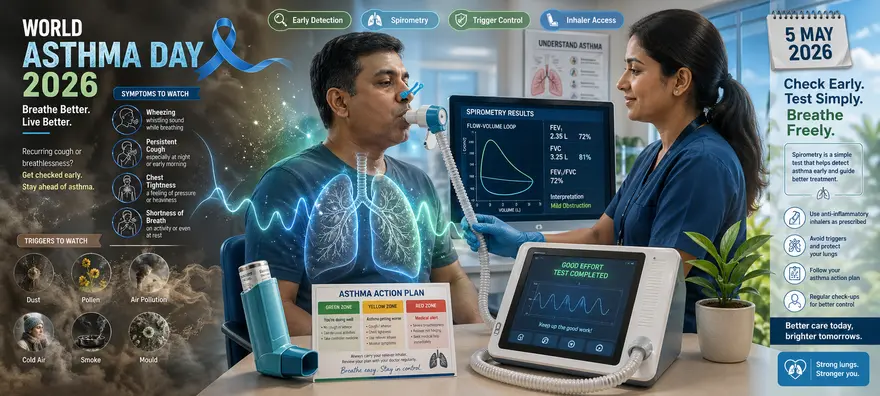
Table of Contents
- What Is World Asthma Day?
- When Is World Asthma Day 2026 Celebrated?
- World Asthma Day 2026 Theme
- World Asthma Day History
- Why World Asthma Day Is Important
- Global Impact Of Asthma
- Common Symptoms Of Asthma To Watch For
- What Triggers Asthma Symptoms?
- Which Tests Are Done For Asthma?
- What Is A Spirometry Test?
- How To Prepare For A Spirometry Test
- Best Practices For Asthma Management
- How You Can Participate In World Asthma Day
- Role Of Preventive Healthcare In Asthma Awareness
- Stay Ahead With Metropolis Healthcare
- Key Takeaways
What Is World Asthma Day?
World Asthma Day is a global awareness day dedicated to improving understanding of asthma, its symptoms, diagnosis, treatment and long-term management.
It is led by the Global Initiative for Asthma, also called GINA. The day encourages people, families, schools, workplaces and healthcare providers to talk openly about asthma care.
Asthma is a long-term condition that affects the airways. It can cause coughing, wheezing, chest tightness and breathlessness. With timely diagnosis, the right inhaler use, trigger control and regular follow-up, most people with asthma can live active and fulfilling lives.
When Is World Asthma Day 2026 Celebrated?
World Asthma Day 2026 will be observed on Tuesday, 5 May 2026.
It is marked every year on the first Tuesday of May. The day is an opportunity to support early detection, reduce myths about inhalers, and help people understand when breathing symptoms need medical attention.
World Asthma Day 2026 Theme
The world asthma day 2026 theme is “Access to anti-inflammatory inhalers for everyone with asthma, still an urgent need.”
This theme highlights a simple but important message. Asthma is often driven by inflammation in the airways. Reliever medicines may ease symptoms quickly, but anti-inflammatory inhalers help control the underlying inflammation and reduce the risk of attacks.
GINA emphasises that people with asthma should have access to inhaled corticosteroid-containing treatment, as advised by their doctor. This is especially important because many asthma-related deaths are preventable with the right care, timely treatment and better access to essential medicines.
World Asthma Day History
World Asthma Day was first observed in 1998.
It was started by the Global Initiative for Asthma to improve asthma awareness worldwide.
The first event was linked with the first World Asthma Meeting held in Barcelona, Spain.
Since then, the day has grown into a major global awareness event.
Each year, GINA announces a world asthma day theme to focus attention on an important gap in asthma care.
Why World Asthma Day Is Important
Asthma is common, but many people still miss the early signs. Some people think frequent coughing is normal. Others depend only on quick relief inhalers without understanding airway inflammation.
World Asthma Day is important because it helps you:
- Recognise symptoms early
- Understand asthma triggers
- Seek timely medical advice
- Learn the importance of correct inhaler use
- Reduce stigma around inhalers
- Support people living with asthma
- Understand why controller medicines matter
- Encourage better access to diagnosis and treatment
It also reminds families that asthma symptoms management is not only about handling attacks. It is about preventing flare-ups, tracking symptoms and following a personalised care plan.
Global Impact Of Asthma
Asthma affects people of all ages, including children and adults. Its burden is high across the world and in India.
Key facts include:
- Asthma affects over 260 million people globally.
- It can cause missed school days, missed work days, poor sleep and reduced quality of life.
- Many asthma-related deaths occur due to under-diagnosis, under-treatment or poor access to essential inhalers.
- India carries a high asthma burden, with studies estimating over 34 million people affected.
- Air pollution, dust, pollen, smoke, respiratory infections and changing weather can worsen symptoms.
The good news is that asthma can be managed well. Early detection and the right medical plan can make everyday life much easier.
Common Symptoms Of Asthma To Watch For
Asthma symptoms can come and go. They may be mild at first and may worsen at night, early morning, during exercise or after exposure to triggers.
Common symptoms include:
- Wheezing or a whistling sound while breathing
- Persistent cough, especially at night or early morning
- Shortness of breath
- Chest tightness or pressure
- Coughing after exercise
- Breathlessness during routine activities
- Needing a reliever inhaler more often than usual
- Repeated chest infections or slow recovery after a cold
You should seek urgent medical help if you have severe breathlessness, difficulty speaking in full sentences, bluish lips or face, extreme drowsiness, confusion, or symptoms that do not improve after using your prescribed reliever inhaler.
What Triggers Asthma Symptoms?
Triggers differ from person to person. Identifying your triggers is one of the most useful asthma prevention tips.
Common triggers include:
- Outdoor air pollution
- Dust and dust mites
- Pollen
- Mould
- Pet dander
- Cigarette smoke
- Strong perfumes or chemical fumes
- Cold air
- Sudden weather changes
- Viral infections such as cold or flu
- Intense exercise without proper guidance
- Stress or strong emotions
A symptom diary can help you notice patterns. Record when symptoms occur, where you were, what you were exposed to, and what helped you feel better.
Which Tests Are Done For Asthma?
There is no single test that fits every person. Your doctor will usually combine your medical history, symptoms, physical examination and lung function tests.
Common tests used for asthma diagnosis include:
- Spirometry: Measures how much air you can breathe out and how quickly.
- Bronchodilator reversibility test: Spirometry is repeated after an inhaled medicine to see whether airflow improves.
- Peak flow monitoring: Measures how fast you can blow air out. It may be used at home over several days.
- FeNO test: Measures nitric oxide in your breath, which may suggest airway inflammation.
- Allergy testing: Helps identify allergic triggers such as pollen, dust mites, mould or pet dander.
- Blood tests: May help assess allergy markers or eosinophil levels in selected cases.
- Chest X-ray or other tests: May be advised to rule out other causes of breathing symptoms.
A doctor may advise an asthma test such as spirometry if you have repeated cough, wheezing, breathlessness or chest tightness.
What Is A Spirometry Test?
A spirometry test is a common lung function test used to support asthma diagnosis and monitor breathing health.
It mainly measures:
- FVC, which is the total amount of air you can forcefully breathe out after taking a deep breath
- FEV1, which is the amount of air you can breathe out in the first second
During the test, you take a deep breath and blow out as hard and fast as possible into a tube connected to a machine. You may need to repeat this a few times to get reliable readings.
In some cases, your doctor may give you a bronchodilator inhaler and repeat the test after a short gap. If your breathing improves significantly after the medicine, it may support an asthma diagnosis.
How To Prepare For A Spirometry Test
Your doctor or testing centre will guide you based on your health condition and medicines.
General preparation may include:
- Wear loose, comfortable clothes.
- Avoid a heavy meal before the test.
- Avoid smoking before the test.
- Tell your doctor about all inhalers and medicines you use.
- Do not stop any inhaler unless your doctor specifically advises it.
- Inform the technician if you feel dizzy, unwell or short of breath during the test.
The test is usually simple and non-invasive. You may feel slightly tired after repeated forceful breathing, but this usually settles quickly.
Best Practices For Asthma Management
Asthma care works best when it is consistent. Your plan should be personalised by your doctor.
Helpful practices include:
- Use inhalers exactly as prescribed.
- Learn the correct inhaler technique.
- Keep a written asthma action plan.
- Track symptoms and reliever inhaler use.
- Avoid known triggers where possible.
- Keep your home well ventilated and dust controlled.
- Avoid smoking and second-hand smoke.
- Stay updated with flu and pneumonia vaccines if advised.
- Warm up before exercise.
- Review your asthma plan regularly with your doctor.
Good asthma symptoms management can reduce flare-ups, improve sleep and help you stay active with more confidence.
How You Can Participate In World Asthma Day
You do not need a large event to make a difference. Small actions can improve awareness.
You can participate by:
- Sharing reliable asthma information with your family and friends
- Encouraging someone with symptoms to speak to a doctor
- Learning how to support a person during an asthma flare-up
- Checking whether your home has dust, mould or smoke exposure
- Helping children understand that inhalers are not something to fear
- Promoting clean air habits in your community
- Reviewing your own asthma action plan if you already have asthma
- Attending awareness camps, webinars or health talks where available
If you have asthma, this day is also a reminder to check whether your symptoms are well controlled.
Role Of Preventive Healthcare In Asthma Awareness
Preventive healthcare helps you stay informed before symptoms become harder to manage. For asthma, early evaluation of cough, wheezing and breathlessness can help you get the right diagnosis and treatment plan sooner.
Routine health monitoring also matters because asthma may co-exist with allergies, obesity, respiratory infections, reflux or other health concerns. A full body checkup does not diagnose asthma directly, but it can give you a broader picture of your health markers and help you take more informed steps with your doctor.
Stay Ahead With Metropolis Healthcare
Breathing well is central to your quality of life. On World Asthma Day 2026, take a moment to listen to your body, recognise recurring symptoms and support those around you who may be living with asthma.
Metropolis Healthcare helps you stay proactive about your health with over 4,000 tests, speciality diagnostics, full body checkups and reliable reports backed by NABL and CAP-accredited laboratories. With expert pathologists, quick turnaround times and convenient home sample collection across 10,000 touchpoints, you can monitor your health with ease.
You can book tests through the Metropolis website, app, call or WhatsApp. Staying well is not only about acting when symptoms appear. It is also about understanding your health better and taking timely steps with confidence.
Key Takeaways
- World Asthma Day 2026 will be observed on Tuesday, 5 May 2026.
- The world asthma day 2026 theme focuses on access to anti-inflammatory inhalers for everyone with asthma.
- Asthma symptoms include cough, wheezing, chest tightness and shortness of breath.
- Early detection can help prevent severe attacks and improve daily life.
- Spirometry is one of the key tests used to assess lung function.
- Inhaler technique, trigger control and a written action plan are important parts of asthma care.
- Preventive health monitoring helps you stay informed and proactive.