Home Visit
 Upload






Preventive Healthcare
Benefits of Almonds: Heart, Brain, and Skin
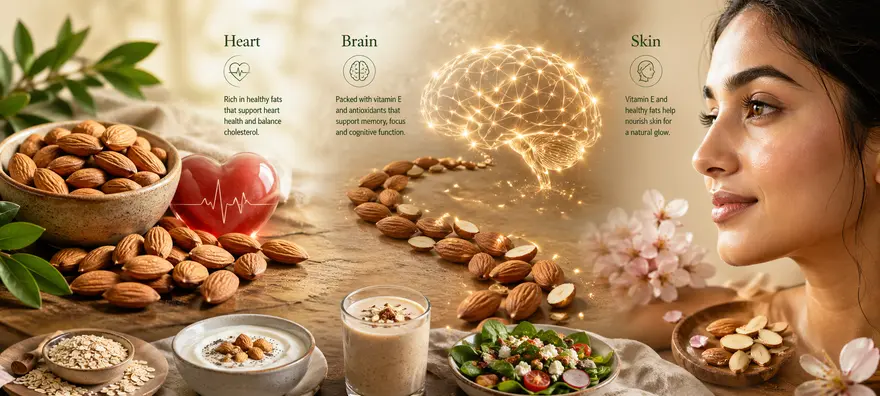
Table of Contents
- What Are Almonds?
- Nutritional Profile of Almonds
- How Almonds Support Heart Health
- Can Almonds Help Your Brain?
- How Almonds Benefit Your Skin
- Other Health Benefits of Almonds
- Are There Extra Benefits of Soaked Almonds?
- How to Add Almonds to Your Diet
- Are Almonds Safe to Eat Every Day?
- FAQs
- A Simple Daily Habit for Better Health
- References
Almonds are one of the simplest foods you can add to your daily routine, but they offer far more than just crunch and taste. The benefits of eating almonds come from their rich mix of healthy fats, fibre, protein, vitamin E, and important minerals.
If you are looking for easy ways to support your heart, nourish your skin, and make smarter snack choices, almonds can be a valuable part of a balanced diet. At the same time, it helps to know what almonds genuinely do well and where claims can be exaggerated. That way, you can enjoy the health benefits of almonds with realistic expectations.
What Are Almonds?
Almonds are edible seeds from the almond tree. They are commonly eaten raw, roasted, soaked, or added to dishes such as porridge, yoghurt, salads, and smoothies.
Although many people call them nuts, almonds are technically seeds. In everyday nutrition advice, though, they are grouped with tree nuts because they offer a similar nutritional profile.
Nutritional Profile of Almonds
A small handful of almonds gives you a strong mix of nutrients, including:
- Healthy unsaturated fats
- Plant protein
- Dietary fibre
- Vitamin E
- Magnesium
- Manganese
- Riboflavin
- Phosphorus
- Natural antioxidant compounds
This combination is one reason almonds are often seen as a smart snack. They support satiety, provide steady energy, and fit well into many eating patterns.
How Almonds Support Heart Health
One of the best-known benefits of almonds is their role in heart health.
Almonds are rich in monounsaturated fats, the kind of fat linked with better heart health when they replace foods high in saturated fat. They also provide fibre and plant compounds that support a healthier lipid profile.
Research suggests that regular almond intake may help lower LDL cholesterol, which is often called bad cholesterol. Some studies also suggest modest benefits for blood pressure and abdominal fat when almonds replace less healthy snacks.
This does not mean almonds can cancel out an unhealthy diet. But if you swap fried snacks, biscuits, or sugary foods for a small serving of plain almonds, that can be a meaningful step for your heart.
For the best effect, choose unsalted almonds and keep your portion sensible.
Can Almonds Help Your Brain?
Almonds are often associated with memory and focus, and there is a reason they have earned that reputation. They contain vitamin E, healthy fats, and other nutrients that support normal cell function, including in the brain.
Vitamin E acts as an antioxidant. It helps protect cells from oxidative stress, which is one of the processes linked with ageing. Some research connects higher vitamin E intake from food with better cognitive ageing. However, it is important to stay balanced here. Almonds are not a memory booster in the way social media claims often suggest, and they are not a treatment for dementia or other neurological conditions.
A better way to think about it is this: almonds can support long-term brain health as part of an overall healthy lifestyle that includes good sleep, exercise, stress control, and a nutrient-rich diet.
How Almonds Benefit Your Skin
When people talk about glowing skin foods, almonds usually make the list. That is mainly because they are rich in vitamin E and other antioxidants.
These nutrients help protect your cells from oxidative stress. Over time, this may support healthier skin. Some clinical research has also suggested that regular almond intake may help improve wrinkle severity and skin pigmentation in certain groups of women.
Even so, almonds are not a quick fix for skin problems. They work best as one part of a bigger skin health routine that includes sun protection, hydration, a balanced diet, and good sleep.
If you are curious about the benefits of almond oil for hair, that is a slightly different topic. Almond oil is usually used topically for softness and shine, while whole almonds support your nutrition from within.
Other Health Benefits of Almonds
The benefits of almonds go beyond the heart, brain, and skin.
Better Fullness and Appetite Control
Almonds contain both protein and fibre, which can help you feel fuller for longer. This may reduce mindless snacking and help you make steadier food choices through the day.
Support for Blood Sugar Balance
Almonds are relatively low in carbohydrate and provide magnesium, a mineral involved in glucose metabolism. When eaten as part of a balanced meal or snack, they may help support healthier blood sugar control.
Help With Weight Management
Almonds are energy-dense, so portion size still matters. But despite this, they can fit well into a weight management plan because they are filling and nutritious. If you eat them in place of less nourishing snacks, they may help support better appetite control and body composition over time.
Are There Extra Benefits of Soaked Almonds?
Many people in India grow up hearing about the benefits of soaked almonds. Soaked almonds can absolutely be part of a healthy diet, but they are not automatically superior to regular almonds.
Soaking mainly changes the texture. It can make almonds softer and easier to chew for some people. Some people also prefer the taste of soaked almonds, especially in the morning.
However, there is one practical point to remember. Much of the antioxidant value of almonds is linked to the skin. If you peel soaked almonds and throw the skin away, you may lose some of those compounds.
So, the benefits of soaked almonds are mostly about preference, texture, and ease of eating, rather than a dramatic nutritional upgrade.
How to Add Almonds to Your Diet
You do not need complicated recipes to enjoy almonds. Here are simple ways to include them in your routine:
- Eat a small handful of plain almonds as a mid-morning or evening snack.
- Add chopped almonds to oats, poha, yoghurt, or curd.
- Sprinkle sliced almonds over fruit bowls or salads.
- Blend almonds into smoothies for extra richness.
- Use crushed almonds in homemade trail mix with seeds and fruit.
- Add them to homemade breakfast bowls instead of sugary toppings.
If you enjoy traditional options, you may also come across badam milk benefits or Badam Pisin in wellness conversations, but whole almonds usually give you the most balanced mix of protein, fibre, and healthy fats.
Are Almonds Safe to Eat Every Day?
For most people, yes. Almonds are safe to eat daily in moderate amounts.
A small handful a day is usually enough. Eating very large amounts can add excess calories and may cause bloating or digestive discomfort in some people.
You should also avoid almonds if you have a tree nut allergy. If you have any medical condition that affects your diet, such as a restrictive renal diet, it is best to ask your doctor or dietitian how much is right for you.
Also watch the form in which you eat them. Salted, sugar-coated, or chocolate-covered almonds do not offer the same overall advantage as plain or lightly roasted almonds.
FAQs
Can Almonds Help Lower Cholesterol?
They can help as part of a heart-friendly diet. Almonds may lower LDL cholesterol when they replace foods high in saturated fat or refined carbohydrates. They are not a substitute for medical care, but they can be a smart dietary addition.
What Are the Side Effects of Eating Almonds?
The most common issues are overeating, digestive discomfort, and allergies. Some people may notice bloating if they eat too many at once. Anyone with a nut allergy should avoid almonds completely.
How Many Almonds Should You Eat a Day?
A small handful per day is a practical amount for most adults. This is often around 20 almonds, though your ideal portion depends on your overall diet and energy needs.
Do Almonds Help With Skin Wrinkles?
There is some early research suggesting almonds may support skin health and may help improve wrinkle appearance in certain people. Still, they should be seen as supportive nutrition, not a standalone beauty treatment.
Can Almonds Help With Weight Loss?
They can support weight management because they are filling and nutrient-dense. But they still contain calories, so portion control matters. Almonds help most when they replace less healthy snacks.
Are Almonds Good for Brain Function?
They can support brain health because they provide vitamin E, healthy fats, and other nutrients. Still, almonds are not a cure or guaranteed memory enhancer. Think of them as part of a healthy overall lifestyle.
A Simple Daily Habit for Better Health
Almonds are a small food with big nutritional value. They can support heart health, offer antioxidant support for your skin, and fit well into a balanced routine for long-term wellness. Their real strength lies in consistency, not in hype.
Along with healthy eating habits, it also helps to stay informed about what is happening inside your body. Routine blood tests, lipid checks, blood sugar monitoring, and full body checkups can help you track important health markers early, even when you feel well.
Metropolis Healthcare supports preventive healthcare with over 4,000 tests, full body checkups, speciality testing, and accurate reports backed by expert pathologists. With home sample collection, quick turnaround time, and easy booking through the website, app, call, and WhatsApp, Metropolis makes proactive health monitoring simple and convenient. With a strong network of 10,000 touchpoints, you can make regular wellness tracking part of your routine, just like making better food choices each day.
References
- ICMR-National Institute of Nutrition. Dietary Guidelines for Indians. 2024 edition.
- U.S. Department of Agriculture, Agricultural Research Service. FoodData Central. Accessed April 24, 2026.
- Morvaridzadeh M, Qorbani M, Shokati Eshkiki Z, et al. The Effect of Almond Intake on Cardiometabolic Risk Factors, Inflammatory Markers, and Liver Enzymes: A Systematic Review and Meta-Analysis. Phytother Res. 2022;36(12):4325-4344. PMID: 36331011.
- Chahibakhsh N, Rafieipour N, Rahimi H, et al. Almond Supplementation on Appetite Measures, Body Weight, and Body Composition in Adults: A Systematic Review and Dose-Response Meta-Analysis of 37 Randomized Controlled Trials. Obes Rev. 2024;25(5):e13711. PMID: 38351580.
- Ojo O, Wang XH, Ojo OO, Adegboye ARA. The Effects of Almonds on Gut Microbiota, Glycometabolism, and Inflammatory Markers in Patients with Type 2 Diabetes: A Systematic Review and Meta-Analysis of Randomised Controlled Trials. Nutrients. 2021;13(10):3377. PMID: 34684378.
- Rybak I, Carrington AE, Dhaliwal S, et al. Prospective Randomized Controlled Trial on the Effects of Almonds on Facial Wrinkles and Pigmentation. Nutrients. 2021;13(3):785. PMID: 33673587.
- La Fata G, Weber P, Mohajeri MH. Effects of Vitamin E on Cognitive Performance during Ageing and in Alzheimer’s Disease. Nutrients. 2014;6(12):5453-5472. PMID: 25460513.
- Office of Dietary Supplements, National Institutes of Health. Vitamin E Fact Sheet for Health Professionals. Accessed April 24, 2026.