Home Visit
 Upload






Preventive Healthcare
What is a Spleen? Function, Purpose & Health Facts
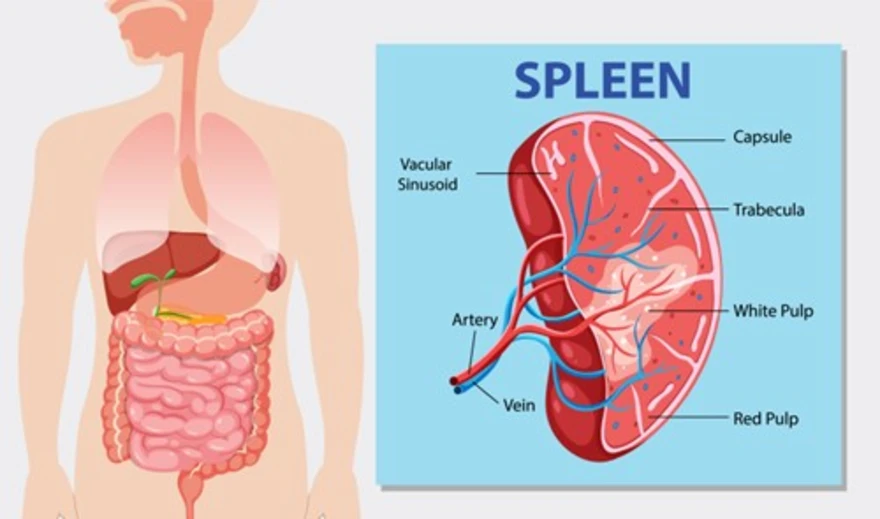
Table of Contents
The Anatomy of the Spleen
The spleen is a compact, highly specialised lymphoid organ located in the upper left quadrant of the abdomen. Located in the upper left abdomen, just under the rib cage between the stomach and diaphragm, the spleen’s position helps explain why pain in this area can be spleen-related.
- Average size: 10–12 cm in length and 150–200 g in weight — roughly the size of a clenched fist
- Structure: Surrounded by a fibrous capsule, supplied by the splenic artery, and drained by the splenic vein into the portal system
- Red pulp: Filters blood, removes aged or damaged red blood cells, and recycles iron
- White pulp: Lymphoid tissue that produces and activates lymphocytes for immune defense
As per StatPearls (NIH), the spleen serves as a key blood reservoir, normally storing about 25–30% of the body’s red blood cells and roughly 25% of circulating platelets.
What Is the Function of the Spleen?
Your spleen performs several vital functions that help maintain overall health. It works as a sophisticated blood filter, removing worn-out red blood cells and recycling their iron so your body can produce healthy new cells, keeping your oxygen-carrying capacity optimal.
The spleen also serves as a dynamic blood reservoir that contracts to release red cells and platelets during hypovolemia or stress, storing approximately 250 mL of blood that can be released during emergencies like severe bleeding or physical stress to help maintain blood pressure and circulation.
In addition, the spleen produces and stores platelets, which are essential for blood clotting. When you get a cut or injury, these platelets help form clots to stop excessive bleeding. By releasing extra platelets and blood when needed, the spleen quietly supports your body’s natural repair and recovery processes.
How Does the Spleen Support the Immune System?
Your spleen function extends beyond blood filtration to serve as a crucial immune organ. The white pulp contains B and T lymphocytes that detect pathogens and initiate immune responses, which patrol your bloodstream searching for harmful bacteria, viruses, and other pathogens.
When these immune cells detect threats, they trigger antibody production and coordinate defensive responses. The spleen functions as an immune checkpoint, filtering blood-borne pathogens and coordinating systemic immune responses, screening blood for dangerous microorganisms and launching targeted attacks against infections. This immune surveillance helps prevent serious illnesses and maintains your body's disease resistance.
The spleen also removes damaged or abnormal cells from circulation, including bacteria-infected red blood cells and cellular debris that could trigger inflammatory responses.
Common Spleen Disorders
Several conditions can affect spleen health, with symptoms often developing gradually. Recognising these disorders helps you seek timely medical attention and prevent complications.
• Splenomegaly (enlarged spleen): Most common spleen disorder
• Splenic rupture: Usually caused by traumatic injury
• Blood cancers: Such as lymphoma and leukemia, which can infiltrate splenic tissue and cause enlargement
• Genetic disorders: Such as Gaucher's disease, impacting spleen function
• Infections: Viral, bacterial, or parasitic infections causing inflammation
Enlarged Spleen (Splenomegaly)
An enlarged spleen means the organ has grown beyond its normal size, usually due to infections, liver disease, blood disorders, autoimmune conditions, or cancers. It can cause upper left abdominal pain, early fullness after small meals, and fatigue as the swollen spleen presses on nearby organs and traps blood cells.
Common causes include mononucleosis, liver cirrhosis, rheumatoid arthritis, and blood cancers, and diagnosis typically relies on physical examination and imaging to find and treat the underlying problem.
Gaucher's Disease and the Spleen
Gaucher’s disease is a lysosomal storage disorder in which glucocerebroside accumulates in spleen and bone marrow cells, leading to progressive enlargement and cytopenias, leading to progressive enlargement and dysfunction. This severe splenomegaly can cause abdominal pain, fatigue, anaemia, low platelets, and a higher infection risk as the spleen traps healthy blood cells. Treatment usually involves enzyme replacement therapy and regular monitoring to improve spleen function and track disease progression.
Polycythemia Vera and Spleen Function
In polycythemia vera, excessive red blood cell production increases blood viscosity, overloading the spleen’s filtration system and causing splenomegaly and cellular production. This blood disorder causes your bone marrow to produce excess red blood cells, placing additional strain on your spleen's filtering capacity.
The overworked spleen often becomes enlarged as it struggles to process the increased cellular load. Patients may experience spleen pain, fatigue, and complications related to thickened blood, including blood clots and circulation problems.
Diagnostic and Imaging Methods for Detecting Spleen Conditions
Healthcare providers use various methods to evaluate spleen health and diagnose disorders affecting this vital organ.
• Physical examination: The clinician palpates and percusses the abdomen to assess spleen size, tenderness, and consistency
• Blood tests: Complete blood count reveals changes in blood cell levels
• Ultrasound imaging: Non-invasive method to measure spleen dimensions
• CT scans: Provide detailed cross-sectional images for evaluating spleen size, vascular injury, or associated abdominal pathology
• MRI scans: Offer superior soft-tissue contrast and are useful for characterising focal spleen lesions or vascular anomalies
• Bone marrow biopsy: Occasionally required to evaluate hematologic diseases contributing to splenomegaly
Spleen Health and Nutrition
Maintaining optimal spleen health involves lifestyle choices supporting overall immune function and blood health.
• Balanced diet: Include iron-rich foods (like spinach and lentils), vitamin C sources, and antioxidant-rich fruits to support red blood cell health
• Adequate hydration: Supports proper blood circulation and filtration
• Regular exercise: Promotes healthy blood flow and immune function
• Infection prevention: Practice good hygiene and stay current with vaccinations
• Moderate alcohol use: Chronic excess can indirectly harm the spleen via liver damage and portal hypertension
• Trauma prevention: Wear protective gear during contact sports
Can You Live Without a Spleen?
You can live without a spleen (asplenia), but your immune defenses weaken, particularly against encapsulated bacteria such as Streptococcus pneumoniae, Neisseria meningitidis, and Haemophilus influenzae. Other organs like the liver and lymph nodes take over some blood-filtering functions, yet your risk of serious infections—especially from bacteria like pneumococcus and meningococcus—increases. Therefore, asplenic patients require vaccinations against encapsulated organisms and prompt antibiotic therapy for any febrile illness and must seek prompt medical care for any fever or signs of infection.
How to Treat Spleen Disorders?
Treatment approaches vary depending on the specific condition affecting your spleen:
- Address underlying causes: Treat infections, blood disorders, or autoimmune conditions
- Medication management: Antibiotics for infections, chemotherapy for cancers
- Supportive care: Pain management, nutritional support, monitoring
- Lifestyle modifications: Dietary changes, activity restrictions, infection prevention
- Surgical intervention: Splenectomy when conservative treatments fail
Spleen Removal (Splenectomy)
Splenectomy — the surgical removal of the spleen — may be performed laparoscopically or through open surgery for trauma, hematologic malignancies, or massive splenomegaly when other treatments fail. It is often performed laparoscopically, and while recovery takes a few weeks, patients need special vaccinations and lifelong infection precautions, seeking immediate medical care for any signs of illness.
Conclusion
The spleen plays a quiet but critical role in immunity, blood filtration, and overall health. Disorders like an enlarged spleen, Gaucher’s Disease, and Polycythemia Vera need timely diagnosis and regular monitoring to prevent complications, making reliable testing an essential part of preventive care.
Metropolis Healthcare supports your health journey with 4000+ tests, speciality testing, and comprehensive full-body checkups, all backed by accurate results and quick turnaround times. With 10,000+ home collection touchpoints and a strong home sample collection network, you can book tests easily via website, app, phone call, or WhatsApp, and get trusted reports from the comfort of your home.
FAQs
What Is the Spleen?
The spleen is a vital organ located in your upper left abdomen that filters blood, removes old red blood cells, stores platelets, and supports immune function through lymphocyte production and pathogen detection.
What Causes an Enlarged Spleen?
Common causes include viral infections like mononucleosis, liver diseases, blood cancers, autoimmune disorders, and genetic conditions affecting cellular metabolism and spleen function.
How Does Gaucher's Disease Affect the Spleen?
Gaucher's disease causes fatty substances to accumulate in spleen cells, leading to progressive enlargement, pain, and dysfunction that can severely impact blood cell counts and immune function.
Can Polycythemia Vera Cause an Enlarged Spleen?
Yes, polycythemia vera often causes splenomegaly as the organ works harder to filter excess red blood cells, leading to enlargement, pain, and potential complications requiring medical management.