Home Visit
 Upload






Preventive Healthcare
PET Scan: Purpose, Procedure, and What the Results Mean
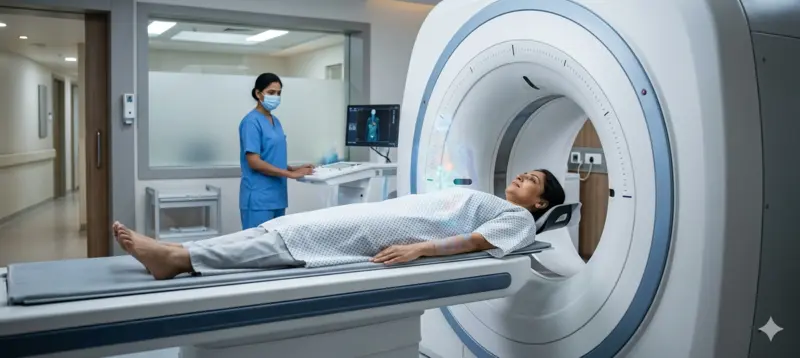
Table of Contents
- What Is a PET Scan?
- How Does a PET Scan Work?
- What Is the Difference Between a PET Scan and a PET-CT Scan?
- The PET Scan Procedure: What to Expect
- Preparing for a PET Scan: Tips and Guidelines
- Diseases and Conditions Detected by PET Scans
- When Is a PET Scan Recommended?
- Advantages of PET Scans
- Potential Risks of a PET Scan
- Understanding Your PET Scan Results
- How Accurate Is a PET Scan?
- Take Charge of Your Diagnostic Health
- Frequently Asked Questions (FAQs)
If your doctor has recommended a PET scan, it is natural to have questions. What does the scan involve? Will it be uncomfortable? What will the results tell you? Understanding the process can make a real difference to how you feel going into it.
This guide walks you through everything you need to know about PET scans, from how they work to what your results mean.
What Is a PET Scan?
A PET scan, which stands for Positron Emission Tomography, is a type of medical imaging test that shows how your organs and tissues are functioning at a cellular level. Unlike an X-ray or MRI, which capture the structure of your body, a PET scan captures activity. It reveals which areas of the body are working normally and which are not.
The scan uses a small amount of a radioactive substance called a radiotracer, which is injected into your bloodstream. Because diseased cells, particularly cancer cells, tend to absorb glucose at a much higher rate than healthy cells, the tracer concentrates in these areas. The PET scanner then detects the signals emitted by the tracer and converts them into detailed images.
This ability to detect abnormal metabolic activity makes PET scans particularly valuable in identifying disease at an early stage, often before structural changes are visible on other imaging tests.
How Does a PET Scan Work?
The science behind a PET scan centres on the way diseased cells use energy differently from healthy ones.
The radiotracer used in most PET scans is called fluorodeoxyglucose, or FDG. It is a glucose-based compound. When injected into the body, it travels through the bloodstream and is absorbed by cells. Areas of high metabolic activity, such as tumours, absorb more FDG than surrounding healthy tissue.
As the radiotracer breaks down, it releases tiny particles called positrons. When positrons collide with electrons in the body, they produce gamma rays. The PET scanner detects these gamma rays and uses them to build a three-dimensional map of activity across your body. Areas with unusually high uptake appear as bright spots, sometimes called hot spots, on the scan.
The radiation involved is safe and short-lived. It leaves the body within a few hours, primarily through urine.
What Is the Difference Between a PET Scan and a PET-CT Scan?
A standard PET scan shows how tissues are functioning but does not give detailed information about their precise size or location. A CT scan, on the other hand, uses X-rays to produce highly detailed images of the body's structure, showing organs, bones, and tissues with great clarity.
A PET-CT scan combines both technologies in a single procedure. It produces images that overlay the functional information from the PET scan onto the structural detail of the CT scan. This gives your doctor a far more complete and accurate picture.
Because PET-CT provides both location and activity data simultaneously, it is now the standard approach in most diagnostic and oncology settings. It improves the accuracy of tumour detection, staging, and treatment planning considerably.
Some advanced medical centres also offer PET-MRI scans. These combine PET imaging with MRI's superior soft tissue contrast, making them particularly useful for cancers of the brain, head and neck, liver, and pelvis.
The PET Scan Procedure: What to Expect
A PET scan is an outpatient procedure, which means you return home the same day. The entire process typically takes around two to three hours.
- Arrival and registration: You will check in and a healthcare professional will review your medical history, current medications, and any allergies.
- Radiotracer injection: A small amount of the radiotracer is injected into a vein, usually in the crook of your elbow. You will not feel the tracer working.
- Absorption period: You will need to sit quietly for approximately 45 to 60 minutes while the tracer is absorbed by your body. Physical activity during this time can redirect the tracer to muscles rather than the area being examined, so it is important to stay still and relaxed.
- The scan: You will lie on a narrow, padded table that slowly moves through a large, doughnut-shaped scanner. The scanner is open on both ends, so it does not feel enclosed. You will hear soft buzzing or clicking sounds during the scan. The scanning itself usually takes between 15 and 30 minutes.
- Image review: Before you leave, the technician will check the images to ensure they are clear. If a PET-CT has been performed, the contrast dye from the CT component will be reviewed as well.
- Discharge: You will be encouraged to drink plenty of water after the scan to help flush the radiotracer from your system more quickly.
Preparing for a PET Scan: Tips and Guidelines
Preparing correctly ensures the scan produces the most accurate images possible. Your doctor will give you specific instructions, but the following general guidelines apply in most cases.
- Do not eat anything for four to six hours before the scan. You may drink plain water.
- Avoid caffeine for 24 hours beforehand if your scan is related to a heart condition.
- Do not engage in strenuous exercise for 24 hours before the scan.
- Inform your doctor of all medications, supplements, and vitamins you are currently taking.
- If you have diabetes, speak with your doctor before the scan. Your medications or insulin may need to be adjusted, as they can affect how your body absorbs the tracer.
- Let your team know if you are pregnant, breastfeeding, or think you may be pregnant. PET scans are generally not recommended during pregnancy.
- If enclosed spaces make you anxious, mention this in advance. A mild sedative can be arranged.
- Wear comfortable, loose-fitting clothing. Remove jewellery, glasses, and metal accessories before the scan.
Diseases and Conditions Detected by PET Scans
PET scans are used across a wide range of medical specialities because of their ability to detect abnormal metabolic activity before it causes visible structural changes.
- Cancer: PET scans are one of the most important tools in oncology. They are used to detect tumours, determine how far cancer has spread (staging), assess the response to chemotherapy or radiotherapy, and check for recurrence after treatment. They are commonly used for lung cancer, breast cancer, lymphoma, colorectal cancer, and many others.
- Heart disease: PET scans help assess blood flow to the heart muscle, identify areas damaged by a heart attack, and determine which parts of the heart might benefit from procedures such as angioplasty or bypass surgery. They are particularly useful in evaluating coronary artery disease.
- Brain disorders: PET scans can detect areas of abnormal brain activity associated with tumours, epilepsy, dementia, and Alzheimer's disease. In Alzheimer's disease, for instance, a PET scan can reveal reduced glucose uptake in specific brain regions, helping with early diagnosis.
- Epilepsy: For patients whose seizures are not controlled by medication, a PET scan can help locate the precise area of the brain responsible for seizures, which is essential before considering surgery.
- Lymphoma: PET scans play a central role in diagnosing and staging lymphoma, as well as evaluating how well treatment is working.
- Bone disorders: PET scans can detect bone metastases, infections in bone, and other abnormalities that may not be visible on X-rays or MRI.
- Infections and inflammation: In complex cases, PET scans can help identify the source of an unexplained infection or inflammatory condition.
When Is a PET Scan Recommended?
Your doctor may recommend a PET scan in a number of situations.
- When cancer is suspected and other tests have not provided a clear diagnosis
- To determine whether cancer has spread to lymph nodes or other organs
- To evaluate how a patient is responding to cancer treatment
- To check whether cancer has returned after treatment
- When heart disease is suspected and more detailed functional information is needed than a CT or echocardiogram can provide
- When neurological symptoms such as memory loss, seizures, or unexplained cognitive decline require further investigation
- To identify the origin of an unknown primary cancer
Advantages of PET Scans
- Detects disease earlier: Because PET scans measure metabolic activity rather than structural change, they can identify problems before they are visible on CT or MRI scans.
- Whole-body assessment: A single PET scan can image the entire body, making it efficient for cancer staging.
- Functional information: PET scans reveal how tissues are working, not just what they look like, providing insights no other standard imaging test can match.
- Guides treatment decisions: By showing exactly where disease is active and how it is responding to treatment, PET scans help doctors make more precise and informed decisions.
- Non-invasive: Apart from the small injection, the procedure involves no surgery or instrumentation.
- Combined with CT: The PET-CT combination provides both functional and structural data in one sitting, reducing the need for multiple separate tests.
Potential Risks of a PET Scan
PET scans are considered very safe. However, as with any medical procedure, there are a few considerations to be aware of.
- Radiation exposure: The radiotracer does expose your body to a small amount of radiation, comparable to that of a standard CT scan. The tracer is short-lived and leaves the body within two to ten hours. For most patients, the diagnostic benefit far outweighs this minor exposure.
- Not suitable during pregnancy: Radiation from the tracer can potentially affect a developing foetus. PET scans are avoided during pregnancy unless absolutely necessary.
- Breastfeeding precautions: If you are breastfeeding, you may need to pause and discard breast milk for a period after the scan. Your healthcare team will advise you on the recommended duration.
- Allergic reactions: Reactions to the radiotracer are extremely rare but can occur. Your medical team will be prepared to manage any response promptly.
- Diabetes: Blood sugar levels can interfere with how the tracer is absorbed, potentially affecting scan accuracy. Your doctor will advise you on how to manage this before the test.
- Claustrophobia: The scanner is open on both sides, which most patients find manageable. If you have significant anxiety about enclosed spaces, discuss this with your team beforehand.
Understanding Your PET Scan Results
After your scan, the images are reviewed by a radiologist who specialises in nuclear medicine imaging. They prepare a detailed report, which is typically sent to your referring doctor within 24 hours.
The radiologist looks at how the radiotracer has been distributed throughout your body. Areas of unusually high uptake appear as bright or hot spots. In a cancer context, these often represent tumours. However, not all bright spots indicate cancer. Inflammation, infection, and certain benign conditions can also cause elevated tracer uptake. Equally, some slow-growing or low-grade tumours may not show up clearly on a PET scan.
PET scan results are rarely interpreted in isolation. Your doctor will consider them alongside your symptoms, medical history, blood test results, and any other imaging you have had. In some cases, a tissue biopsy may still be needed to confirm a diagnosis.
If your results are normal, it means no areas of abnormal metabolic activity were detected. If results are abnormal, your doctor will discuss what this means in your specific context and what the next steps are. Try not to draw conclusions from the images alone. Your doctor is best placed to explain what the findings mean for you.
How Accurate Is a PET Scan?
PET scans are among the most sensitive diagnostic tools available. They can detect metabolic changes in cells before any visible mass or structural abnormality appears, giving them an advantage in early detection.
However, no imaging test is perfect. PET scans can occasionally produce false positive results, where an area of normal but high metabolic activity, such as the brain or bladder, may appear similar to a diseased area. They can also produce false negatives in cases where a tumour has very low metabolic activity, such as certain types of well-differentiated or slow-growing cancers.
This is why PET-CT is now preferred in most settings. By combining functional and structural imaging, it reduces the likelihood of misinterpretation and improves diagnostic precision.
Take Charge of Your Diagnostic Health
A PET scan is a sophisticated and valuable diagnostic tool. It can provide information that helps your doctor catch disease earlier, plan your treatment more precisely, and monitor how well your body is responding. If your doctor has recommended one, it is because they believe it will give the clearest possible picture of what is happening inside your body.
Knowing your health means staying proactive, and diagnostics are a key part of that. Metropolis Healthcare offers advanced diagnostic imaging and a wide range of speciality tests across more than 4,000 investigations. With NABL and CAP-accredited labs, expert pathologists, and the convenience of easy booking through the Metropolis website, app, call, or WhatsApp, getting reliable answers to your health questions has never been simpler. Home sample collection is available across more than 10,000 touchpoints, so you can take the first step towards clarity from the comfort of your home.
Frequently Asked Questions (FAQs)
How Much Does a PET Scan Cost in India?
The cost of a PET scan in India varies depending on the city, the facility, the type of scan, and the area of the body being examined. A PET-CT scan typically ranges from approximately Rs 8,000 to Rs 25,000. Some facilities may charge more for specialised protocols or hybrid PET-MRI scans. It is advisable to check with your diagnostic centre for accurate pricing. Many health insurance plans cover PET scans when they are medically necessary, so check with your insurer before the procedure.
Where Can I Get a PET Scan?
PET scans are available at specialised diagnostic centres, tertiary care hospitals, and cancer institutes equipped with nuclear medicine departments. It is important to choose a facility with qualified nuclear medicine specialists and properly maintained imaging equipment. Look for centres that are accredited by recognised bodies to ensure quality and safety standards are met.
Is a PET Scan Painful?
A PET scan is not painful. The only discomfort you may feel is a brief sting when the radiotracer is injected into your vein. After that, the scan itself is entirely painless. You simply lie still on a padded table while the scanner takes images. If the table feels hard or cold, you can ask for a blanket or pillow. There is no recovery period, and most people return to their normal routine immediately after.
Can a PET Scan Detect Early-Stage Cancer?
Yes. One of the key advantages of PET scanning is its ability to detect cancer at an early stage, often before a tumour is large enough to be seen on a CT or MRI scan. Because cancer cells consume glucose at a much higher rate than normal cells, they absorb more of the radiotracer and appear as bright spots on the scan. This early detection capability is particularly valuable in improving treatment outcomes, as cancer is generally more treatable when identified early.
Can I Eat or Drink Before a PET Scan?
In most cases, you will be asked not to eat for four to six hours before your PET scan. This is because eating raises blood sugar levels, which can affect how the radiotracer is absorbed and reduce the accuracy of the results. You may drink plain water. Avoid all other beverages, including tea, coffee, and juice. If you have diabetes, your doctor will give you specific instructions regarding your food, medications, or insulin on the day of the scan.
What Do Abnormal PET Scan Results Mean?
An abnormal PET scan result indicates that one or more areas of your body have unusually high or low metabolic activity. High uptake areas, or hot spots, can suggest the presence of cancer, infection, or inflammation. Low uptake areas can indicate reduced blood flow or tissue damage, as may occur after a heart attack or in certain neurological conditions.
An abnormal result does not automatically mean cancer or any other specific diagnosis. Your doctor will interpret the findings alongside your full clinical picture before reaching any conclusions. Further tests, such as a biopsy, may be recommended to confirm what the abnormal area represents.
References
- Delbeke D, Coleman RE, Guiberteau MJ, et al. Procedure guideline for tumour imaging with 18F-FDG PET/CT 1.0. J Nucl Med. 2006;47(5):885-895.
- Townsend DW. Multimodality imaging of structure and function. Phys Med Biol. 2008;53(4):R1-R39.
- Gambhir SS. Molecular imaging of cancer with positron emission tomography. Nat Rev Cancer. 2002;2(9):683-693.
- Glaudemans AWJM, Israel O, Slart RHJA. Vascular PET/CT and SPECT/CT. In: Sidawy AN, Perler BA, eds. Rutherford's Vascular Surgery and Endovascular Therapy. 10th ed. Philadelphia, PA: Elsevier; 2023.
- Herholz K, Teipel S, Hellwig S, et al. Functional and molecular neuroimaging. In: Jankovic J, Mazziotta JC, Pomeroy SL, Newman NJ, eds. Bradley and Daroff's Neurology in Clinical Practice. 8th ed. Philadelphia, PA: Elsevier; 2022.
- Nair A, Barnett JL, Semple TR. Current status of thoracic imaging. In: Adam A, Dixon AK, Gillard JH, Schaefer-Prokop CM, eds. Grainger and Allison's Diagnostic Radiology. 7th ed. Philadelphia, PA: Elsevier; 2021.
- Deroose CM, Dooms C. Positron emission tomography. In: Broaddus VC, Ernst JD, King TE, et al, eds. Murray and Nadel's Textbook of Respiratory Medicine. 7th ed. Philadelphia, PA: Elsevier; 2022.