Home Visit
 Upload






Preventive Healthcare
What are Metacarpals? Structure, Functions, and Common Injuries
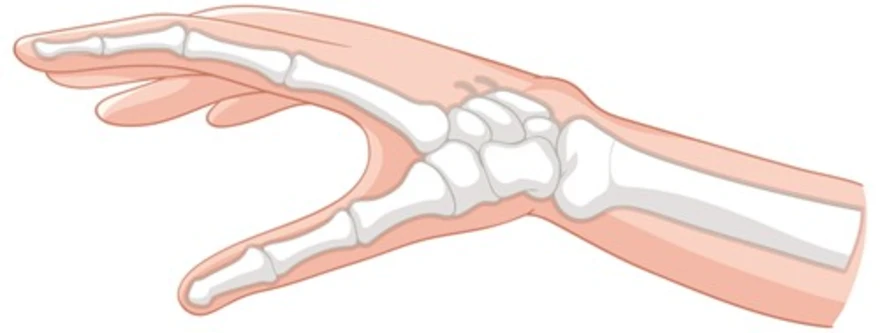
Table of Contents
What are Metacarpals?
The metacarpals are five long bones in your palm that connect the wrist bones (carpals) to the finger bones (phalanges). These metacarpal bones form the structural foundation of your hand, forming the palm’s arch and enabling a wide range of hand movements. Each metacarpal corresponds to one digit—from your thumb (first metacarpal) to your little finger (fifth metacarpal).
According to an article published by StatPearls in 2023, metacarpal fractures are the third most common fracture and the second most common hand fracture. They account for nearly 40% of all hand injuries, especially in young adults involved in sports or manual work, highlighting how essential these bones are to everyday function—and how even minor injury can disrupt hand mechanics.
Structure of the Metacarpals
Each metacarpal bone has a base (near the wrist), shaft, and head (near the fingers). The metacarpal bones' names correspond to the digits—first metacarpal for the thumb and fifth for the little finger. Their slight curvature creates the palm’s natural cupping shape, essential for grasping and fine motor function.
Functions of the Metacarpals
The metacarpal bones serve as crucial levers for hand muscles, enabling flexion, extension, and rotation movements. They transmit force from the fingers to the wrist and forearm, allowing you to perform both delicate tasks like writing and powerful actions like lifting heavy objects.
Metacarpals in Hand Movements
- Flexion and extension: Metacarpals enable bending and straightening of the fingers through joint articulation.
- Grip formation: The bones create the palm's cupped shape for holding objects.
- Force transmission: They transfer power from finger muscles to the wrist and forearm.
- Thumb opposition: The first metacarpal allows thumb-to-finger contact for precision tasks.
Diseases Related to the Metacarpals
- Arthritis: Inflammatory conditions that affect the metacarpophalangeal or carpometacarpal joints, often evaluated through an Arthritis Profile test.
- Osteomalacia: Bone softening that can weaken metacarpals.
- Bone diseases: Various conditions affecting bone metabolism and strength.
- Bone tumors: Rare but serious primary or metastatic lesions that can involve the metacarpals.
- Bone metastasis: Cancer spreads from other parts of the body to the bones of the hand.
Diagnostic Tests to Identify a Metacarpal Fracture
- X-ray of hand and wrist – primary test to confirm fracture, angulation, and joint involvement.
- CT/MRI – for complex, intra-articular, or hidden fractures and soft-tissue injury.
- Bone health tests – Bone Profile/Bone Screening Profile, Calcium Profile, and Vitamin D Plus Profile to assess bone strength and conditions like osteomalacia.
- Bone turnover panels – Such as the Osteomon Profile or Bone Resorption Marker Profile (including markers like Osteocalcin, P1NP, and Beta-2 Crosslaps)—help monitor bone formation and healing.
- Infection/arthritis workup – Arthritis Profile if there is persistent pain, swelling, or suspicion of infection or inflammatory bone disease.
How Metacarpals Support Grip
- Arch formation: Creates the palm's curved structure for object conformity.
- Stability provision: Central metacarpals offer a rigid base for precision work.
- Flexibility allowance: Outer metacarpals enable adaptive gripping.
- Force distribution: Spreads pressure across the entire hand surface.
Common Injuries to the Metacarpals
Metacarpal injuries often occur during sports, falls, or direct blows to the hand. A metacarpal fracture is among the most common hand injuries, most commonly involving the fifth metacarpal—commonly called a boxer’s fracture. These injuries can significantly impact hand function and require prompt medical attention.
Metacarpal Fractures and Treatment
Metacarpal fracture treatment varies depending on the fracture's location and severity. Simple fractures usually heal with splinting, while displaced or complex fractures may require surgical fixation. Recovery typically involves physiotherapy to restore strength and mobility. Early diagnosis through proper bone and joint tests ensures optimal healing outcomes.
Metacarpal Dislocations and Healing
- Joint separation: Occurs when metacarpal heads dislocate from the adjacent phalanges or carpal bones.
- Soft tissue damage: Often accompanies bone displacement.
- Reduction procedures: Medical realignment of displaced bones.
- Rehabilitation requirements: Structured recovery programmes for function restoration.
Symptoms of Metacarpal Injuries
- Severe pain in the palm or knuckle area
- Visible swelling and bruising around the injury site
- Difficulty moving fingers or making a fist
- Deformity or unusual hand appearance
- Numbness or tingling in the affected fingers
How to Prevent Metacarpal Injuries
- Wear protective gear during contact sports and manual labour.
- Practice proper techniques in sports and physical activities.
- Maintain bone health through adequate calcium and vitamin D intake.
- Monitor overall bone health through regular medical checkups and preventive screenings.
Conclusion
Metacarpals are central to your grip and daily hand movements, so pain, swelling, or deformity should be evaluated early to prevent long-term stiffness or weakness.
Metropolis Healthcare supports this journey with 4,000+ tests, full-body checkups, specialty bone and joint panels, and strong home sample collection across over 10,000 touchpoints. You also get quick, accurate reports and easy booking via website, app, WhatsApp, or phone call, so you can focus on healing while we handle your diagnostics.
FAQs
What are Metacarpals?
They are the five long bones in your palm that connect the wrist to the fingers and support grip and hand movements.
What are common metacarpal injuries?
- Fractures
- Dislocations
- Impact-related bruising
- Stress injuries
How do metacarpals help with hand movement?
They act as stable levers that coordinate with muscles and joints to allow gripping, lifting, writing, and fine motor actions.
How long does it take for a metacarpal fracture to heal?
Most fractures heal in 6–8 weeks, but severe ones may take longer depending on bone health and treatment.
How do I prevent metacarpal injuries while exercising?
- Warm up properly
- Use proper technique
- Wear supportive gloves
- Strengthen hand muscles