Home Visit
 Upload






Preventive Healthcare
Lazy Eye: How It Develops and Can It Be Corrected?
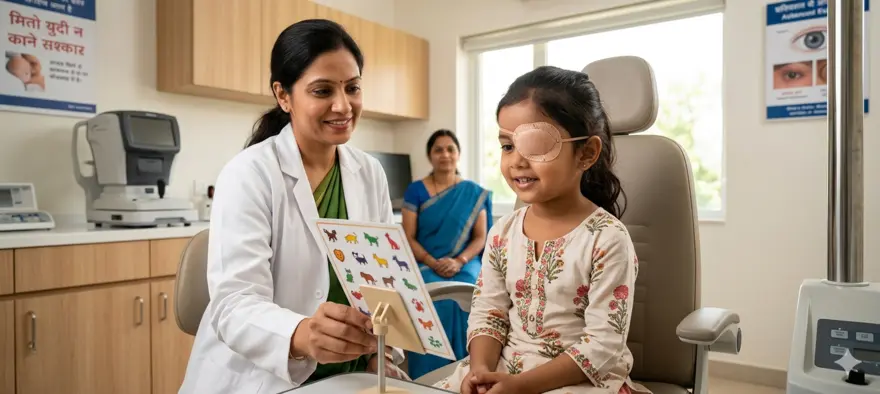
Table of Contents
- What Is Lazy Eye (Amblyopia)?
- Why Is It Called "Lazy Eye"?
- How Does Vision Develop in Childhood?
- Types of Lazy Eye
- Causes of Lazy Eye
- Symptoms of Lazy Eye
- How Is Lazy Eye Diagnosed?
- Best Age to Treat Lazy Eye
- Lazy Eye Treatment in Children
- Lazy Eye Treatment in Adults
- Can Lazy Eye Be Cured Completely?
- How Long Does Lazy Eye Treatment Take?
- Recovery and Follow-Up Care
- What Happens If Lazy Eye Is Not Treated?
- Can Lazy Eye Come Back After Treatment?
- Prevention and Early Detection of Lazy Eye
- When to See an Eye Doctor
- Conclusion
- FAQs
- References
What Is Lazy Eye (Amblyopia)?
Lazy eye, known medically as amblyopia, is a condition in which one eye does not develop normal vision during childhood. It is the most common cause of vision loss in children, affecting around 2 to 5% of children under the age of 15.
Amblyopia occurs when the brain and one eye fail to work together properly. As the brain begins to prefer the stronger eye, it gradually suppresses or ignores signals from the weaker one. Over time, without treatment, the affected eye's vision continues to decline simply because the brain stops relying on it.
It is important to know that amblyopia is not a problem with the eye itself in most cases. The eye may look completely normal. The difficulty lies in the connection between the eye and the brain, and this is precisely what treatment aims to repair.
Why Is It Called "Lazy Eye"?
The term "lazy eye" is a common but somewhat misleading label. It implies that the eye or the child is not trying hard enough, which is not the case at all. A child with amblyopia is not choosing to see poorly, and there is nothing lazy about their behaviour or effort.
The name comes from the way the eye appears to underperform compared to the other. Because the brain stops using it actively, the eye may drift or seem out of alignment, giving the impression of inactivity. Medically, the correct term is amblyopia, from the Greek words for blunt or dull vision.
It helps to think of it this way. When the brain consistently ignores input from one eye, that eye simply does not get the practice it needs to develop properly. The goal of treatment is to change that pattern and encourage the brain to use both eyes again.
How Does Vision Develop in Childhood?
Vision is not fully formed at birth. It develops progressively over the first several years of life as the eyes and brain learn to work together. This period, sometimes called the critical window of vision development, spans from infancy through approximately the age of 7 to 9.
During this time, the brain is highly adaptable. It is learning to process visual information from both eyes simultaneously, building depth perception, and establishing clear, coordinated sight. For this to happen correctly, both eyes must send equally clear and aligned images to the brain.
If something disrupts this process, such as a refractive imbalance, eye misalignment, or a structural problem in one eye, the brain may begin to favour the better-performing eye. Once this preference is established, the weaker eye falls further behind. This is how amblyopia develops.
Because the brain is most adaptable during early childhood, this is also the window during which treatment is most effective. The earlier amblyopia is identified and addressed, the better the chances of full or near-full visual recovery.
Types of Lazy Eye
Amblyopia is classified based on its underlying cause. There are three main types.
- Strabismic amblyopia: This is the most common form. It occurs when the eyes are misaligned, a condition known as strabismus, or squint. When one eye turns inward, outward, upward, or downward, the brain receives two conflicting images. To avoid confusion, the brain suppresses the image from the misaligned eye, leading to amblyopia in that eye.
- Refractive amblyopia: This type develops when there is a significant difference in prescription between the two eyes. One eye may be considerably more short-sighted, long-sighted, or astigmatic than the other. The brain consistently favours the eye that sees more clearly, and the weaker eye's vision diminishes as a result.
- Deprivation amblyopia: This is the least common but often the most severe type. It occurs when something physically obstructs vision in one eye during a critical period of development. Congenital cataracts, a drooping eyelid (ptosis) that covers the pupil, or other structural obstructions can all deprive the eye of the visual stimulation it needs to develop normally.
Causes of Lazy Eye
The underlying causes of amblyopia are closely linked to its three types. They include:
- Strabismus (eye misalignment): When the two eyes do not point in the same direction, the brain suppresses one image to prevent double vision. The suppressed eye develops amblyopia over time.
- Unequal refractive errors: A significant difference in vision between the two eyes, even without any visible misalignment, can cause the brain to rely more heavily on the clearer eye.
- Congenital cataracts: Clouding of the lens present at birth or early infancy blocks light from reaching the retina, preventing normal visual development.
- Droopy eyelid (ptosis): A lid that droops over the pupil can obstruct vision in one eye during the critical developmental period.
- Corneal abnormalities: Conditions that affect the clarity of the cornea in one eye can interfere with the brain receiving a clear visual signal.
- Genetics and family history: A family history of amblyopia, strabismus, or significant refractive errors increases a child's risk.
- Premature birth and low birth weight: Babies born early or with a low birth weight are at a higher risk of developing amblyopia and other visual difficulties.
- Developmental delays: Children with certain developmental conditions may be more prone to visual development problems.
Symptoms of Lazy Eye
One of the challenges with amblyopia is that children often do not realise their vision in one eye is poor. They adapt to seeing primarily through their stronger eye and may not report any difficulty. This is why routine eye screening is so important.
Symptoms in Children
As a parent, you may notice the following in your child:
- Consistently closing or covering one eye to see better
- Squinting or tilting the head to one side when focusing on objects
- Bumping into things, particularly on one side
- Eyes that appear misaligned or do not move together
- Drooping of one eyelid
- Poor depth perception or difficulty with spatial awareness
- Favouring one side of the body more than the other during play or movement
- Difficulty watching television or reading from a normal distance
Symptoms in Adults
Adults with undiagnosed or untreated amblyopia may experience:
- Noticeably blurred vision in one eye
- Difficulty with depth perception and judging distances
- One eye that appears to drift or sit slightly out of alignment
- Eye strain or headaches when engaging in close visual work
- Difficulty with tasks that require good binocular vision, such as driving or reading
It is worth noting that many adults first discover they have amblyopia during a routine eye test. If you have never had your eyes examined and notice differences in the clarity of vision between your two eyes, it is worth speaking to a doctor.
How Is Lazy Eye Diagnosed?
Amblyopia is usually detected through a routine eye examination. Your child's eyes should be checked regularly from infancy through school age, even if no problems are apparent.
1. Visual Acuity Test
The eye specialist measures how clearly each eye can see, typically using letter or picture charts. A significant difference in sharpness between the two eyes is a key indicator of amblyopia.
2. Eye Alignment Assessment
The specialist checks whether both eyes are properly aligned and move in coordination. Misalignment may suggest strabismus as an underlying cause.
3. Refraction Test
This determines the prescription in each eye. A large difference in prescription between the two eyes, even without strabismus, can confirm refractive amblyopia.
4. Examination of Eye Structures
The specialist examines the interior and exterior of each eye for structural problems such as cataracts, corneal abnormalities, or drooping eyelids that could be obstructing vision.
5. Cover Test
One eye is covered while the child focuses on an object. The way the uncovered eye responds reveals whether there is any underlying misalignment or suppression of one eye.
Screening for amblyopia begins during early well-child visits. If your child is old enough to cooperate with an eye chart, a more detailed examination is possible. For younger infants, specialists use other methods to assess visual function. Early detection, before the child starts school, gives the best chance of successful treatment.
Best Age to Treat Lazy Eye
The earlier amblyopia is treated, the better the outcome. The brain is at its most adaptable during the first years of life, and treatment works by taking advantage of this adaptability to rebuild the connection between the brain and the weaker eye.
Treatment is most effective when started before the age of 7, ideally between 2 and 5 years of age. During this window, the brain can still be guided to change how it processes visual information, and results are often significant.
Treatment after the age of 7 is still beneficial, and some children treated into their early teens do improve. However, outcomes tend to be more limited the older the child is, because the brain becomes less flexible with age.
Recent research has shown that some adults with amblyopia can also experience improvement with targeted interventions, though recovery is typically slower and less complete than in young children. This does not mean treatment for adults is futile, but it does reinforce why early detection and early action matter so much.
Lazy Eye Treatment in Children
Treatment for amblyopia in children focuses on encouraging the brain to use the weaker eye. The sooner it begins, the more effective it tends to be. Your child's specialist will recommend the most suitable approach based on the cause and severity.
- Corrective glasses or contact lenses: These are often the first step, particularly where a refractive error is involved. Correcting the prescription in each eye gives the weaker eye a better chance of sending a clear image to the brain.
- Eye patch therapy: A patch is placed over the stronger eye for a set number of hours each day. This forces the brain to rely on the weaker eye, stimulating its visual development. This remains one of the most widely used and well-established treatments for amblyopia.
- Atropine eye drops: Drops are placed in the stronger eye to temporarily blur its vision. This encourages the brain to use the weaker eye in a similar way to patching, and some children find it easier to manage than wearing a patch.
- Vision therapy: Guided activities such as puzzles, drawing, or specially designed games performed while the stronger eye is blurred or patched can further strengthen the weaker eye and improve the brain-eye connection.
- Surgery: Surgery does not directly treat amblyopia, but it may be needed to correct an underlying cause. Cataracts may need to be removed, or strabismus surgery may be performed to realign the eyes. Amblyopia treatment must continue after surgery.
Children often resist wearing patches or using eye drops because it makes their vision temporarily worse. Encouragement, routine, and age-appropriate activities help them stay consistent with treatment. Consistency is essential for the best outcome.
Lazy Eye Treatment in Adults
For many years, it was believed that amblyopia could not be treated once a person passed the critical period of childhood. This view has evolved. Research now shows that the adult brain retains some degree of adaptability, and treatment can produce meaningful improvements even in adults, though results vary.
Adults with amblyopia may benefit from corrective lenses, vision therapy, and supervised exercises designed to retrain the brain-eye relationship. These approaches require patience and sustained effort over a longer period than childhood treatment.
Emerging research into dichoptic therapy, where each eye is shown different but complementary visual content simultaneously, has shown early promise in adults. This approach encourages both eyes to contribute to vision and may help reduce suppression of the weaker eye over time.
If you are an adult who has never been treated for amblyopia, it is worth discussing your options with an eye specialist. Improvement may be modest, but even partial gains in the weaker eye's function can make a real difference to day-to-day life.
Can Lazy Eye Be Cured Completely?
In many children who begin treatment early, amblyopia can be corrected significantly, and in some cases, the difference in vision between the two eyes becomes very small or undetectable. The potential for full recovery is greatest in younger children, particularly those treated before the age of 5.
For older children and adults, the likelihood of complete correction is lower, but meaningful improvement is still possible. The goal of treatment at any age is to achieve the best possible vision in the weaker eye and restore, as far as possible, coordinated use of both eyes together.
It is also important to be aware that amblyopia can recur after treatment, particularly in younger children. Regular follow-up with an eye specialist is essential to monitor progress and catch any regression early.
How Long Does Lazy Eye Treatment Take?
Treatment duration varies depending on how severe the amblyopia is, the age at which treatment begins, and how consistently the child engages with the prescribed approach. Most children need treatment for several months to a few years.
Eye patch therapy is typically required for at least a few hours every day over a sustained period. Your child's specialist will review progress regularly and adjust the treatment schedule accordingly. Glasses, when prescribed, are often worn long term, sometimes indefinitely.
Progress is gradual. Vision does not improve overnight. Families should expect a commitment of months rather than weeks, and it is important to stay consistent even when results feel slow. Treatment works best when it is maintained regularly and reviewed by the specialist at the recommended intervals.
Recovery and Follow-Up Care
Once treatment is under way, regular monitoring is essential to track progress and respond to any changes.
- Continue attending all scheduled eye specialist appointments, even when improvement seems to be progressing well
- Ensure your child wears glasses as prescribed, including during activities where they might prefer to remove them
- Follow the recommended daily schedule for patching or atropine drops consistently
- Engage your child in age-appropriate visual activities during patching time to stimulate the weaker eye
- Watch for any signs of regression, such as the child beginning to squint or tilt their head again
- Once treatment is completed, keep up with annual eye check-ups to detect any recurrence early
- Inform teachers and carers about your child's condition so appropriate support can be offered at school
What Happens If Lazy Eye Is Not Treated?
Without treatment, amblyopia does not resolve on its own. Children do not grow out of it. The longer it is left untreated, the more deeply established the brain's pattern of suppressing the weaker eye becomes, and the harder it is to reverse.
Untreated amblyopia can lead to:
- Permanent vision loss in the affected eye, even if the eye itself is structurally healthy
- Lack of depth perception and difficulty with spatial tasks throughout life
- Increased vulnerability to vision-threatening injuries, since the person relies almost entirely on one functional eye
- Challenges with activities that require binocular vision, such as driving, sport, and detailed close work
- Emotional and social difficulties in school-age children who struggle with reading, sports, or social confidence due to poor vision
The reassuring part is that amblyopia is highly treatable, particularly when caught early. Routine childhood eye examinations are the most effective way to ensure it is identified in time.
Can Lazy Eye Come Back After Treatment?
Yes, amblyopia can recur, particularly in younger children whose visual system is still developing. This is more common when patching or other treatments are discontinued too quickly, or when follow-up monitoring is not maintained after the initial course of treatment.
If your child's specialist says treatment is complete, it does not mean the eye should go unchecked. Regular reviews, typically every one to two years, help detect any regression. If vision in the weaker eye begins to decline again, early intervention can prevent the loss of the gains already made. Glasses may need to be worn on an ongoing basis even after active patching treatment has ended.
Prevention and Early Detection of Lazy Eye
Amblyopia cannot always be prevented, as many of its causes are genetic or arise during foetal development. However, early detection is the next best thing, and it makes a significant difference to outcomes.
- Schedule your child's first eye examination by the age of 6 to 12 months, and again around 2 to 3 years of age
- Ensure your child's eyes are checked at every routine well-child or paediatric visit in their early years
- Once your child starts school, have their eyes examined every one to two years
- Seek an eye examination promptly if you notice squinting, eye turning, head tilting, or unusual visual behaviour
- Mention any family history of amblyopia, strabismus, or significant refractive errors to your child's doctor
- If your child was born prematurely or had a low birth weight, ensure regular eye screening is part of their care plan
- Do not wait for your child to complain about their vision. Many children with amblyopia do not know their vision is reduced, as they have never experienced it any other way
When to See an Eye Doctor
You should consult an eye specialist promptly if you notice any of the following:
- One eye appears to turn inward, outward, upward, or downward
- Your child squints, tilts their head, or closes one eye to see
- One eyelid appears to droop over the pupil
- Your child bumps into objects on one side repeatedly
- Your child avoids close visual tasks such as reading or drawing
- You notice clouding or a white reflex in the pupil of one eye (visible in photographs or direct light)
- Your child's eyes do not appear to move together smoothly
- A routine school vision screening flags concerns about one eye
- You are an adult and notice a persistent difference in the clarity of vision between your two eyes
Routine eye care matters. Many conditions affecting vision in childhood are silent until they are picked up during an examination. Do not wait for visible symptoms before booking an eye check.
Conclusion
Lazy eye, or amblyopia, is a common and treatable childhood condition, but it depends heavily on early detection and consistent care. The connection between the brain and the weaker eye can be rebuilt, and for many children who begin treatment in time, the results are remarkable. The key is not to wait.
As a parent, the most valuable thing you can do is to ensure your child's eyes are examined regularly from infancy onwards. Vision development in the early years lays the foundation for how your child sees, learns, and experiences the world.
Staying informed about your child's overall health is equally important. At Metropolis Healthcare, we offer a wide range of diagnostic services to support your family's wellbeing at every stage. From routine blood tests and full body checkups to speciality testing, our NABL and CAP-accredited laboratories deliver accurate results with a quick turnaround time. You can book a home sample collection at a time that suits you through our website, app, WhatsApp, or by calling us directly. Your family's health deserves the same care and attention as their vision.
FAQs
Is Lazy Eye Permanent?
Amblyopia is not necessarily permanent, particularly when treatment begins early. In young children, especially those treated before the age of 7, vision improvement can be significant. Without treatment, however, the vision loss can become permanent. The earlier the condition is addressed, the better the outlook.
Can Lazy Eye Be Corrected After Childhood?
Yes, to varying degrees. While treatment is most effective during the early years, research has shown that older children, teenagers, and even adults can experience some improvement with appropriate intervention. Recovery tends to be slower and less complete in adults, but it is not impossible. Corrective lenses, vision therapy, and newer approaches such as dichoptic training may all offer benefit.
How Many Hours Should a Patch Be Worn?
The number of hours per day varies depending on the severity of the amblyopia and the child's age. Your child's eye specialist will recommend a specific schedule. In many cases, patching for two to six hours daily is prescribed. It is essential to follow this schedule consistently. Wearing the patch for fewer hours than recommended slows progress significantly.
Does Lazy Eye Cause Headaches?
It can. When the brain works harder to compensate for the imbalance between the two eyes, or during early stages of treatment when the stronger eye is patched or blurred, children may experience eye strain and headaches. These usually ease as the brain adjusts. If headaches are persistent or severe, inform your child's specialist.
Is Lazy Eye the Same as Squint Eye?
They are related but not the same. A squint, or strabismus, refers to misalignment of the eyes and is one of the most common causes of lazy eye. However, amblyopia can also develop in the absence of any visible squint, such as when there is a significant difference in prescription between the two eyes. Conversely, not all children with a squint develop amblyopia. The two conditions can occur together or independently.
References
- Webber AL, Wood J. Amblyopia: prevalence, natural history, functional effects and treatment. Clin Exp Optom. 2005;88(6):365-375. PMID: 16329672.
- Holmes JM, Clarke MP. Amblyopia. Lancet. 2006;367(9519):1343-1351. PMID: 16631913.
- Bhola R, Keech RV, Kutschke P, Pfeifer W, Scott WE. Recurrence of amblyopia after occlusion therapy. Ophthalmology. 2006;113(11):2097-2100. PMID: 16996596.
- Repka MX, Beck RW, Holmes JM, et al. A randomized trial of patching regimens for treatment of moderate amblyopia in children. Arch Ophthalmol. 2003;121(5):603-611. PMID: 12742836.
- Levi DM. Amblyopia: an odyssey. Iperception. 2013;4(8):649-654. PMID: 24349695.
- Li T, Qureshi R, Taylor K. Conventional occlusion versus pharmacological penalisation for amblyopia. Cochrane Database Syst Rev. 2019;2019(12):CD006460. PMID: 31828772.
- Hess RF, Mansouri B, Thompson B. A new binocular approach to the treatment of amblyopia in adults well beyond the critical period of visual development. Restor Neurol Neurosci. 2010;28(6):793-802. PMID: 21209494.