Home Visit
 Upload






Preventive Healthcare
International Day of Persons with Disabilities: Inclusion, Rights & Accessibility
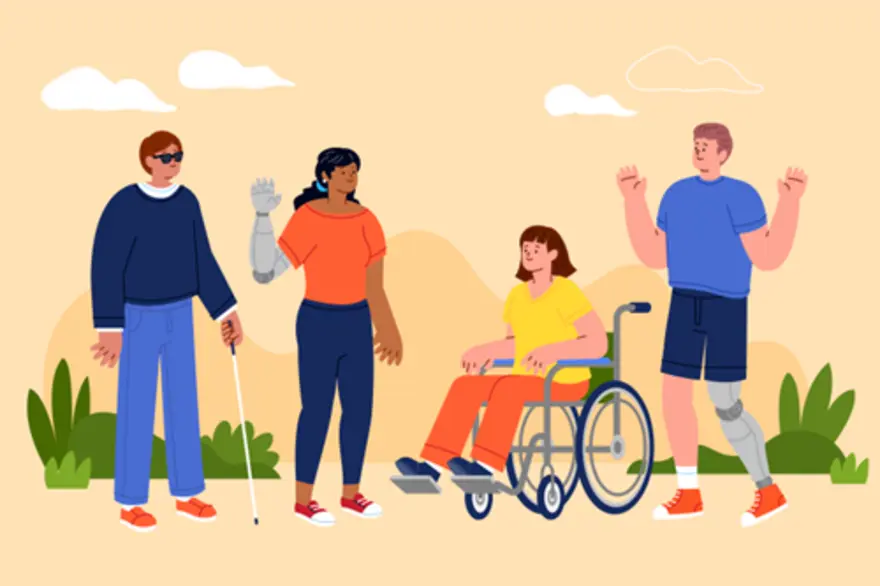
Table of Contents
- What is the International Day of Persons with Disabilities?
- Why is International Day of Persons with Disabilities Observed?
- Theme for International Day of Persons with Disabilities 2025
- History of International Day of Persons with Disabilities
- Understanding Disability: Types and Classification
- Challenges Faced by Persons with Disabilities in Daily Life
- Why Accessibility and Inclusion Matter in 2025
- Assistive Technology & Innovation Making Life Independent in 2025
- Rights and Legal Protections for Persons with Disabilities
- How to Participate in the International Day of Persons with Disabilities 2025
- Future Vision: A More Inclusive World Beyond 2025
- Conclusion
- FAQs
- References
What is the International Day of Persons with Disabilities?
The International Day of Persons with Disabilities is an annual United Nations observance held on December 3rd, dedicated to promoting the rights and well-being of persons with disabilities across all areas of society. This significant day focuses on increasing awareness about disability issues, fostering understanding, and mobilising support for the dignity, rights, and inclusion of persons with disabilities in political, social, economic, and cultural spheres.
The observance serves multiple purposes: breaking down barriers, challenging stereotypes, and encouraging communities to recognise the valuable contributions that persons with disabilities make to society. Through various activities and initiatives, the International Day of Persons with Disabilities creates opportunities for meaningful dialogue about creating more inclusive environments where everyone can participate fully.
Why is International Day of Persons with Disabilities Observed?
The International Day of Persons with Disabilities exists to address the ongoing challenges faced by persons with disabilities worldwide. Despite progress in recent decades, millions of people continue to experience disability discrimination in education, employment, healthcare, and social participation. This observance highlights these inequalities whilst promoting solutions that ensure equal opportunities for all.
The day also celebrates the achievements and contributions of persons with disabilities, showcasing their resilience, talents, and leadership. By raising awareness about accessibility empowerment, communities can better understand how inclusive design and supportive policies benefit everyone, not just those with disabilities. The observance encourages governments, businesses, and individuals to take concrete actions towards creating barrier-free societies.
Theme for International Day of Persons with Disabilities 2025
The International Day of Persons with Disabilities theme for 2025 is "Fostering disability inclusive societies for advancing social progress." This powerful theme emphasises the critical connection between disability inclusion and broader social development.
The year's International Day of Persons with Disabilities theme recognises that when societies embrace and support persons with disabilities, entire communities benefit from increased innovation, diversity, and social cohesion. The theme also challenges us to move beyond mere compliance with accessibility standards towards genuine cultural change that values diversity and promotes equal participation for all community members.
History of International Day of Persons with Disabilities
The International Day of Persons with Disabilities history traces back to 1981, when the United Nations declared the International Year of Disabled Persons. This landmark initiative sparked global conversations about disability rights and inclusion. The momentum continued with the United Nations Decade of Disabled Persons from 1983 to 1992, which focused on equalising opportunities, rehabilitation, and prevention of disabilities. In 1992, the UN General Assembly officially proclaimed December 3rd as the International Day of Persons with Disabilities.
Understanding Disability: Types and Classification
According to the CDC, disability is understood through three interconnected aspects: impairments (changes or difficulties in how the body or mind functions), limitations in everyday activities (challenges with moving, seeing, hearing, or carrying out routine tasks), and restrictions in participation.
Disabilities encompass many different conditions, including:
- Physical disabilities: Including mobility impairments, limb differences, and conditions affecting movement
- Sensory disabilities: Vision loss, hearing impairments, and deaf-blindness
- Intellectual disabilities: Affecting cognitive functioning and adaptive behaviour
- Mental health conditions: Depression, anxiety disorders, bipolar disorder, and other psychiatric conditions
- Neurological conditions: Autism spectrum disorders, cerebral palsy, epilepsy, and traumatic brain injuries
- Invisible disabilities: Chronic fatigue syndrome, fibromyalgia, autoimmune conditions, and learning disabilities
- Multiple disabilities: Combinations of different disability types affecting various aspects of functioning
Challenges Faced by Persons with Disabilities in Daily Life
- Physical barriers: Inaccessible buildings, transportation, and public spaces
- Communication barriers: Lack of sign language interpretation, audio descriptions, or accessible formats
- Attitudinal barriers: Stereotypes, prejudice, and assumptions about capabilities
- Employment discrimination: Limited job opportunities and workplace accommodations
- Educational exclusion: Inadequate special education services and inclusive learning environments
- Healthcare disparities: Reduced access to quality medical care and health information
- Technology gaps: Limited access to assistive technologies and digital accessibility features
Why Accessibility and Inclusion Matter in 2025
Accessibility, empowerment and inclusion are essential for a fair, productive society. The International Day of Persons with Disabilities 2025 highlights that inclusive environments support creativity, innovation, and better problem-solving for everyone. Removing barriers for people with disabilities improves usability for people of all ages and abilities.
Research shows that inclusive workplaces achieve higher productivity, employee satisfaction, and overall performance. Investments in accessibility also drive technological and design innovations—such as voice-enabled tools and universal mobility features—that enhance everyday life for wider populations.
Assistive Technology & Innovation Making Life Independent in 2025
- Smart home systems: Voice-controlled lighting, temperature, and security systems
- Navigation apps: GPS solutions with audio descriptions and obstacle detection
- Communication devices: Advanced speech-generating devices and eye-tracking systems
- Mobility innovations: Lightweight wheelchairs, exoskeletons, and adaptive vehicles
- Learning technologies: Text-to-speech software, digital magnifiers, and cognitive support apps
- Employment tools: Screen readers, voice recognition software, and ergonomic adaptations
Rights and Legal Protections for Persons with Disabilities
- UN Convention on the Rights of Persons with Disabilities: A comprehensive international treaty ensuring equal rights
- Education rights: Access to inclusive education and reasonable accommodations
- Employment protections: Anti-discrimination laws and workplace accommodation requirements
- Healthcare rights: Equal access to medical services and health information
- Legal capacity: Right to make decisions and access justice systems
- Independent living: Support services enabling community participation and autonomy
How to Participate in the International Day of Persons with Disabilities 2025
- Educate yourself: Learn about disability rights, accessibility, and inclusive practices
- Advocate locally: Support accessible infrastructure and inclusive policies in your community
- Challenge stereotypes: Speak up against disability discrimination and promote positive representation
- Support organisations: Volunteer with or donate to disability rights groups and service providers
- Practice inclusion: Ensure your workplace, school, or community events are accessible to all
- Use inclusive language: Adopt person-first language and respectful terminology
Future Vision: A More Inclusive World Beyond 2025
The International Day of Persons with Disabilities points towards a future where disability inclusion becomes the norm rather than the exception. This vision encompasses universal design principles in all new construction, fully accessible digital platforms, and employment practices that recognise diverse talents and contributions. As we move forward, the focus shifts from accommodation to genuine inclusion, where accessibility empowerment drives innovation and social progress for everyone.
Conclusion
WHO data indicates that nearly 1.3 billion people, representing 16% of the world’s population, live with major disabilities today. Creating truly inclusive communities requires commitment from healthcare providers, employers, educators, and individuals alike.
At Metropolis Healthcare, we understand that accessible healthcare is fundamental to dignity and well-being. Our comprehensive portfolio of over 4,000 tests ensures that diagnostic services meet diverse needs, whilst our network of 10,000+ touchpoints across India brings quality healthcare directly to your home.
FAQs
What is the theme for International Day of Persons with Disabilities 2025?
The International Day of Persons with Disabilities theme for 2025 is "Fostering disability inclusive societies for advancing social progress," emphasising how inclusion benefits entire communities.
Why do we observe International Day of Persons with Disabilities?
We observe this day to promote disability rights, raise awareness about challenges faced by persons with disabilities, and encourage inclusive practices that ensure equal participation for all.
How can I support disability inclusion in my community?
You can support inclusion by advocating for accessible infrastructure, using respectful language, challenging stereotypes, and ensuring your activities welcome people of all abilities.
What are examples of invisible disabilities?
Invisible disabilities include chronic fatigue syndrome, fibromyalgia, autoimmune conditions, mental health disorders, learning disabilities, and chronic pain conditions that aren't immediately apparent.
What are the rights of persons with disabilities at work?
Workers with disabilities have rights to reasonable accommodations, equal employment opportunities, non-discrimination, accessible workplaces, and equal pay for equal work.
What role does technology play in disability support?
Technology provides assistive devices, communication tools, mobility aids, learning support, and accessibility features that enhance independence and participation for persons with disabilities.
References
- https://www.un.org/en/observances/day-of-persons-with-disabilities
- https://www.who.int/news-room/fact-sheets/detail/disability-and-health
- https://www.cdc.gov/disability-and-health/about/index.html
- https://www.ohchr.org/en/instruments-mechanisms/instruments/convention-rights-persons-disabilities