Home Visit
 Upload






Preventive Healthcare
Pink Himalayan Salt Benefits: Is It Healthier Than Table Salt?
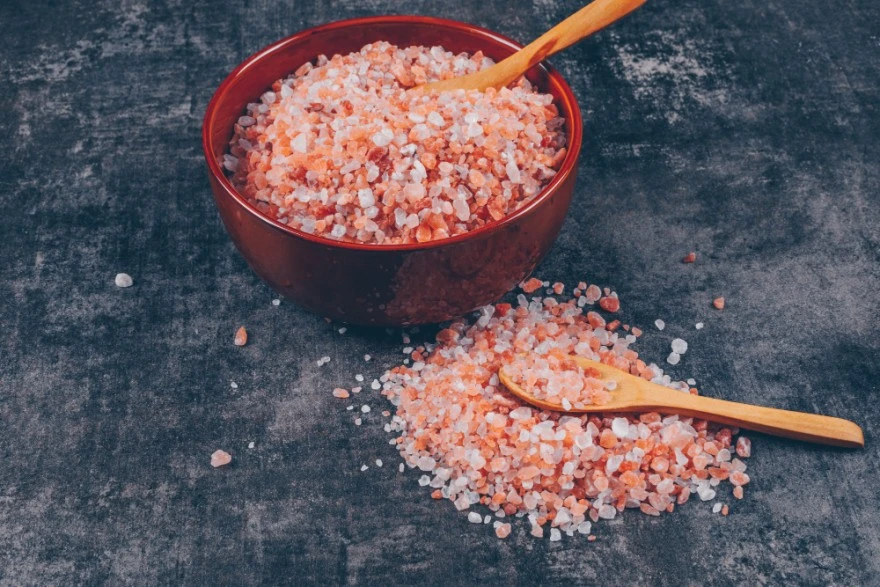
Table of Contents
What Is Pink Himalayan Salt?
Pink Himalayan salt is a natural mineral salt sourced from the ancient Khewra Salt Mine near the foothills of the Himalayas in Pakistan. Its distinctive pink hue comes from the presence of trace minerals, including iron, potassium, magnesium, and calcium. This salt was formed millions of years ago from prehistoric seas, making it one of the oldest and purest forms of salt in the world.
Unlike heavily processed table salt, pink salt undergoes minimal refinement and is often marketed for its unique flavour profile, mineral content, and visually appealing colour. Himalayan pink salt benefits have gained popularity in culinary applications, wellness products, and decorative items like salt lamps.
Pink Salt vs. Sea Salt – Which one is better?
Both Himalayan salt and sea salt are less processed than table salt and contain some trace minerals. The main differences lie in their sources and appearance.
|
Feature |
Pink Himalayan Salt |
Sea Salt |
|
Source |
Ancient sea beds in the Himalayan mountains |
Evaporated modern seawater |
|
Colour |
Pink |
White, grey, or pink, depending on minerals |
|
Texture |
Coarse |
Coarse or fine |
|
Processing |
Minimal, unrefined |
Minimal, sometimes refined |
|
Trace Minerals |
Iron, potassium, magnesium, calcium |
Varies based on source and pollution levels |
In terms of health impacts, the Himalayan pink salt benefits and sea salt benefits are nutritionally similar. Both consist mostly of sodium chloride. The trace minerals in Himalayan pink salt are not present in sufficient quantities to make a significant difference. Sea salt's mineral content depends on the water source and may have marine pollutants. Ultimately, both salts affect the body in the same way as regular salt.
Himalayan Salt vs Table Salt – Key differences you should know
The major distinction between Himalayan salt and table salt lies in their degree of processing. Table salt is typically mined from underground salt deposits and heavily refined to remove impurities and create fine crystals. Additives like iodine and anti-caking agents are then added.
In contrast, pink salt is minimally processed to yield coarser crystals that retain the natural pink colour from trace minerals. However, the mineral content is not enough to provide substantial pink salt benefits over table salt.
|
Feature |
Himalayan Pink Salt |
Table Salt |
|
Source |
The Himalayan mountains in Pakistan |
Underground salt mines |
|
Processing |
Minimal, unrefined |
Heavily refined, fortified with iodine |
|
Texture |
Coarse |
Fine |
|
Colour |
Pink |
White |
|
Minerals |
Trace amounts of iron, magnesium, potassium, and calcium |
Iodine added, trace minerals removed |
|
Uses |
Cooking, seasoning, decoration |
Cooking, seasoning, and food preservation |
While pink Himalayan salt is less artificial than table salt, both have the same basic nutritional value, as sodium chloride is the main component. The trace minerals in Himalayan salt, though often promoted as beneficial, are not present in high enough amounts to have a substantial health impact.
Essential Minerals Present in Pink Himalayan Salt
The main pink salt benefits are due to its mineral content, which gives the salt its pink colour. While Himalayan salt does contain more trace minerals than table salt, the amounts are very small.
Here is the mineral content per gram in pink Himalayan salt versus regular table salt:
|
Mineral |
Pink Himalayan Salt (mg) |
Table Salt (mg) |
|
Calcium |
1.6 |
0.4 |
|
Potassium |
2.8 |
0.9 |
|
Magnesium |
1.06 |
0.0139 |
|
Iron |
0.037 |
0.0101 |
|
Sodium |
368 |
381 |
While these trace minerals are indeed present in pink Himalayan salt, they exist in very small quantities. If you are concerned about your sodium intake, a sodium serum test can help monitor your blood sodium levels. As a result, they are unlikely to provide significant health benefits when the salt is consumed in typical dietary amounts.
Top 15 Health Benefits of Pink Himalayan Salt
Here are some of the Himalayan pink salt benefits:
1. Rich in minerals: Pink Himalayan salt contains small amounts of minerals such as calcium, magnesium, and potassium, which give it its pink colour. However, these minerals are present in such tiny amounts that they are unlikely to provide significant health benefits
2. Balances electrolytes: Its natural mineral content helps regulate fluid levels in the body, like all salts, himalayan pink salt contributes sodium, which is essential for hydration and nerve and muscle function. Its effect is the same as regular salt. It's especially beneficial for athletes or those who sweat heavily.
3. Improves hydration: Like all salts, pink salt provides sodium, which helps maintain fluid balance in the body. However, there is no evidence that pink salt hydrates better than plain water or other salts
4. Supports respiratory health: Inhaling salt air, through salt therapy or salt caves, can help clear mucus, reduce inflammation, and ease breathing difficulties associated with asthma, bronchitis, or allergies.
5. Aids digestion: Pink Himalayan salt stimulates digestive enzymes and stomach acid, aiding in food breakdown and nutrient absorption. It can also help reduce bloating and gas when consumed in small amounts.
6. Promotes pH balance: Some holistic practices claims that pink salt balances body pH are not supported by scientific evidence. The body regulates pH tightly through kidneys and lungs, not diet salt.
7. Detoxifies the body: Pink salt baths can help with relaxation and muscle soothing, but they do not detoxify the body. Detoxification is carried out by organs such as the liver and kidneys. This detox process can support better circulation and skin clarity over time.
8. Improves sleep quality: There is no reliable evidence that consuming pink Himalayan salt improves sleep. Adequate magnesium intake from food sources is more relevant for sleep regulation.
9.Supports healthy blood pressure: Excess sodium from any salt, including pink salt, can raise blood pressure. There is no evidence pink salt provides any benefit over table salt. Taken in moderation, it may help maintain more stable blood pressure levels without additives or chemicals.
10. Reduces muscle cramps: Its magnesium and potassium content help prevent muscle cramps by supporting proper muscle contraction and nerve function. Especially useful for those who experience night cramps or cramps during exercise.
11. Improves skin health: When used in scrubs or baths, pink salt can exfoliate and soothe skin. While it may improve dryness and texture, there is no strong evidence that it treats acne, psoriasis, or eczema.
12. Boosts respiratory function (halotherapy): Breathing in pink salt particles during halotherapy may reduce sinus congestion, inflammation, and lung irritation. This is often used in wellness spas for treating chronic respiratory issues naturally.
13. Natural air purifier (via salt lamps): Pink salt lamps are popular for ambience, but scientific evidence for air purification or health benefits is lacking, purifying the air by attracting dust and allergens.
14. May support hormonal balance: Pink salt does not contain enough iodine to support thyroid health. For thyroid support, iodized salt is recommended. This may assist in maintaining balanced energy, mood, and metabolism.
15. Promotes bone health: Calcium, magnesium, and other trace minerals in pink salt may contribute to maintaining strong, healthy bones. These minerals support bone density and joint function when part of a balanced diet.
Possible Side Effects of Himalayan Pink Salt
Excessive consumption of Himalayan salt can lead to health issues similar to those caused by other salts, due to its sodium content.
Potential side effects include:
- High blood pressure
- Increased risk of heart disease and stroke
- Fluid retention and bloating
- Kidney strain in individuals with impaired kidney function
- Worsening of certain medical conditions, such as congestive heart failure
It is crucial to use pink salt in moderation and consult with a doctor if you have concerns about your salt intake, especially if you have pre-existing health conditions.
Why Does Your Body Need Salt? Importance & Functions
Salt plays a vital role in various bodily functions, making it an essential nutrient when consumed in appropriate amounts.
Some of the key functions of salt include:
- Maintaining fluid balance and hydration
- Regulating blood pressure and volume
- Supporting nerve and muscle function
- Aiding in digestion and nutrient absorption
- Balancing electrolytes like sodium, potassium, and chloride
However, it is important to note that excessive salt intake can have detrimental effects on health, so moderation is key. The World Health Organisation recommends limiting daily sodium intake to less than 2 grams (equivalent to 5 grams of salt) for adults.
How to Use Pink Himalayan Salt for Cooking & Wellness
Pink Himalayan salt can be used in various ways for culinary and wellness purposes:
- As a cooking and finishing salt, it adds a visual appeal to dishes.
- In salt grinders for a coarser texture and adjustable grind size
- As an ingredient in homemade seasoning blends and rubs
- In salt blocks for grilling, searing, and serving food
- As a component in bath salts and body scrubs for relaxation and skin care
- In salt lamps and decorative items for ambient lighting and purported air purification
When using pink salt for cooking or wellness, it is essential to remember that it is still primarily composed of sodium chloride and should be used in moderation as part of a balanced lifestyle.
As a leading chain of diagnostic labs across India, Metropolis Healthcare is committed to providing accurate pathology testing and health check-up services to empower patients in prioritising their health. With a team of qualified blood collection technicians who make at-home visits and advanced diagnostic labs that process samples, Metropolis ensures reliable results and personalised care. Test reports are conveniently shared online via email and the user-friendly Metropolis TruHealth app, making it easy for you to take charge of your well-being.
FAQs
What makes Himalayan salt special?
The main difference between Himalayan salt and regular table salt is that pink salt is less processed and contains trace amounts of additional minerals, which give it a pink colour. However, these minerals are not present in high enough amounts to provide significant health benefits.
Who should avoid Himalayan salt?
People with high blood pressure, heart disease, kidney disease, or other conditions that require sodium restriction should limit their intake of all types of salt, including pink Himalayan salt. Always follow your doctor's recommendations for salt intake.
Is it safe to eat Himalayan salt daily?
Eating pink Himalayan salt daily is safe as long as you keep your total sodium intake within the recommended limit of 2,300 mg per day. However, there is no added health benefit to choosing Himalayan salt over other types of salt. Use it in moderation as you would regular salt.
Is Himalayan salt healthier than sea salt?
Pink Himalayan salt and sea salt have similar nutritional profiles and health effects. While Himalayan salt may contain slightly higher trace mineral amounts, the quantities are insignificant compared to the high sodium content. Sea salt's mineral content varies depending on the water source.
Which Is Healthier – Pink Salt or White Salt?
Both the pink and white salt are similar in sodium content and nutrition. Although the pink salt contains trace minerals, they are minimal. However, moderation matters more than type for maintaining heart and overall health.
References
• https://nutritionsource.hsph.harvard.edu/salt-and-sodium/
• https://health.clevelandclinic.org/do-sea-salt-kosher-salt-and-pink-salt-beat-table-salt
• https://newsnetwork.mayoclinic.org/discussion/mayo-clinic-minute-is-himalayan-sea-salt-a-healthy-alternative-video/