Home Visit
 Upload






Preventive Healthcare
Collarbone: Anatomy, Fracture Symptoms & Healing
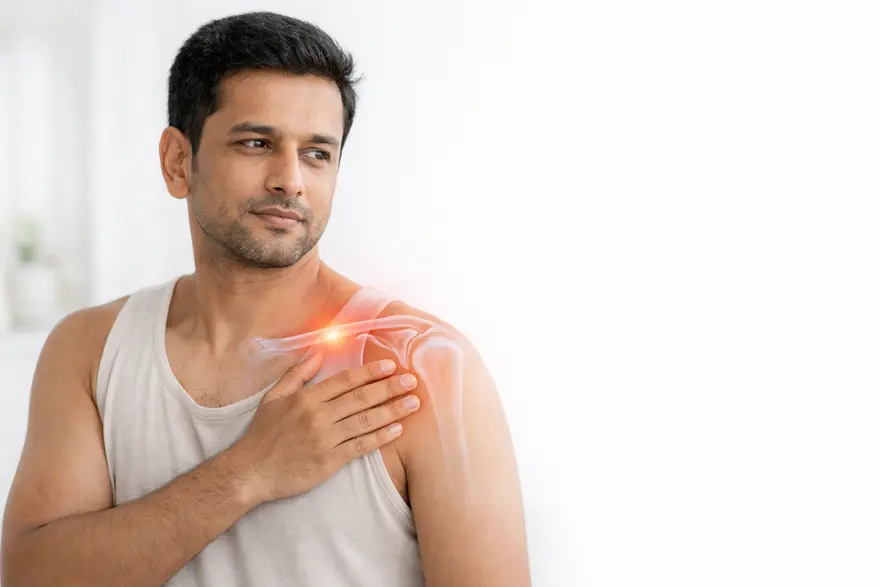
Table of Contents
- What Is The Collarbone?
- Where Is The Collarbone Located?
- Anatomy Of The Collarbone
- What Does The Collarbone Do?
- Common Collarbone Injuries And Conditions
- What Is A Collarbone Fracture?
- Treatment Options For Collarbone Fracture
- Healing Time For A Collarbone Fracture
- Recovery And Rehabilitation
- Possible Complications
- Can A Collarbone Fracture Heal Improperly?
- How To Prevent Collarbone Injuries
- When To See A Doctor
- Conclusion
- FAQs
- References
Your collarbone, also called the clavicle, is a small but important bone that helps your shoulder move smoothly and stay stable. You have one collarbone on each side of your upper chest. Even though it is slender, it plays a major role in how your arm connects to the rest of your body.
Because the collarbone sits close to the skin and takes force during falls or direct impact, it is also one of the bones most likely to get injured. A collarbone fracture can be painful and alarming, but with timely diagnosis and the right care, many people recover well.
What Is The Collarbone?
The collarbone is a long, slightly curved bone that connects your arm to your trunk. The medical term for it is the clavicle.
It forms part of the shoulder girdle and helps hold your shoulder in the right position. This support allows you to lift, reach, push, and pull with better control.
Where Is The Collarbone Located?
The collarbone sits at the base of your neck and runs across the top of your chest. It connects the breastbone in the centre of your chest to the shoulder blade on the outer side.
Because it lies just under the skin, you can usually feel it easily. In many people, it is also clearly visible.
Anatomy Of The Collarbone
The clavicle has a gentle S shape. It has three main parts:
- The inner end, which joins the breastbone
- The middle shaft, which is the long central part
- The outer end, which joins the shoulder blade
The inner end forms the sternoclavicular joint, and the outer end forms the acromioclavicular joint. Strong ligaments help keep these joints stable.
Several muscles also attach to the collarbone, including muscles that help move your shoulder, chest, and neck. This is why even a small injury in this area can affect how comfortably you move your arm.
What Does The Collarbone Do?
The collarbone function is more important than many people realise. It helps:
- Support your shoulder
- Keep your arm positioned away from your chest for better range of movement
- Transfer force from your arm to the rest of your skeleton
- Protect nerves and blood vessels that pass underneath it
In simple terms, the collarbone acts like a brace that helps your shoulder work efficiently.
Common Collarbone Injuries And Conditions
The most common problem affecting the collarbone is a fracture. This usually happens after trauma, such as a fall or a sports injury.
Other conditions can also affect the clavicle, including:
- Shoulder separation involving the acromioclavicular joint
- Osteoarthritis in nearby joints
- Overuse-related pain around the outer end of the clavicle
- Rarely, infection or bone tumours
For most readers, the main concern is usually a broken collarbone.
What Is A Collarbone Fracture?
A collarbone fracture means the bone has cracked or broken. The break may be small and stable, or the bone pieces may shift out of place.
Some fractures happen in one clean line, while others are more complex and involve multiple fragments. The exact pattern affects treatment and healing.
Causes Of Collarbone Fractures
Most collarbone fractures happen because of trauma. Common causes include:
- Falling directly onto the shoulder
- Falling onto an outstretched hand
- A direct blow during contact sports
- Road traffic accidents
- Less commonly, birth-related injury in newborns
The collarbone is designed to transmit force, so when a sudden impact travels through the shoulder, this bone may break.
Symptoms Of A Collarbone Fracture
Collarbone fracture symptoms usually appear quickly after the injury. Common signs include:
- Sudden pain over the collarbone
- Swelling and tenderness
- Bruising
- Difficulty moving the arm
- A grinding or clicking feeling
- A visible bump or deformity
- The shoulder looking lower or more forward than usual
These are common bone fracture symptoms that should not be ignored, especially after a fall or direct hit.
Types Of Collarbone Fractures
Doctors often describe collarbone fractures by where they happen:
- Middle third fractures: These occur in the central part of the bone and are the most common
- Lateral third fractures: These happen closer to the shoulder
- Medial third fractures: These occur near the breastbone and are less common
Fractures may also be called:
- Non-displaced: The bone is broken but still in line
- Displaced: The broken ends have moved out of alignment
- Comminuted: The bone has broken into more than two pieces
How A Collarbone Fracture Is Diagnosed
If you have pain, swelling, or deformity after an injury, a doctor will usually ask how the injury happened and examine your shoulder, arm, and collarbone.
Early diagnosis matters because it helps confirm the type of fracture and guides the best treatment plan. It also helps identify more serious injuries involving nearby nerves, blood vessels, or the skin.
Tests To Check For Clavicle Conditions
An X-ray is the most common test used to confirm a collarbone fracture. In more complex cases, your doctor may also request an MRI or a CT scan for a more detailed view.
These tests can also help assess other clavicle conditions if the problem is not a straightforward fracture.
Treatment Options For Collarbone Fracture
Treatment depends on where the bone is broken, how much it has moved, your age, your activity level, and whether nearby tissues are affected.
Many collarbone fractures can be treated without surgery. Non-surgical treatment may include:
- A sling to support the arm
- Rest and activity restriction
- Ice packs to reduce swelling
- Pain relief medicines
- Gentle exercises at the right stage of recovery
Surgery may be considered if the fracture is badly displaced, the skin is under pressure, the bone has pierced the skin, or the injury involves important nearby structures. In these cases, the bone may be fixed with plates, screws, or other devices.
Healing Time For A Collarbone Fracture
Healing time varies, but many adults recover in around 6 to 8 weeks. Children often heal faster.
Even when the bone starts healing within this period, returning to heavy lifting, contact sports, or intense upper body exercise may take longer. Your recovery time depends on the severity of the fracture and how well your rehabilitation progresses.
Recovery And Rehabilitation
Recovery does not end when the pain starts to settle. Once your doctor says it is safe, you may need to begin gentle movements to prevent stiffness and rebuild strength.
Recovery and rehabilitation may include:
- Gradual shoulder exercises
- Range of movement work
- Strengthening exercises later on
- Follow-up checks to make sure healing is progressing well
It is important not to rush back into strenuous activity too early. Doing too much too soon can delay recovery or worsen the injury.
Possible Complications
Most people heal well, but complications can happen in some cases. These may include:
- Delayed healing
- Bone healing in a poor position
- Ongoing pain
- Stiffness or weakness
- A noticeable lump at the fracture site
- Rarely, injury to nearby nerves or blood vessels
This does not mean complications are common, but it does mean proper follow-up is important.
Can A Collarbone Fracture Heal Improperly?
Yes, a collarbone fracture can sometimes heal improperly. If the bone heals in the wrong position, this is called malunion. If it does not heal fully, this is called nonunion.
This is more likely in some displaced fractures or when healing is disrupted. Signs that healing may not be progressing normally include ongoing pain, persistent weakness, or poor shoulder function after the expected recovery period.
How To Prevent Collarbone Injuries
You cannot prevent every accident, but you can reduce your risk with a few practical steps:
- Wear protective gear during contact sports
- Improve balance and home safety to help prevent falls
- Use proper technique during sport and exercise
- Maintain bone strength through regular activity and good nutrition
- Address issues such as vitamin D deficiency if your doctor identifies them
Healthy bones are better able to cope with stress and recover after injury.
When To See A Doctor
You should seek medical care if you have:
- Severe pain after a fall or blow to the shoulder
- Swelling or bruising over the collarbone
- A visible bump or deformity
- Difficulty moving your arm
- Tingling, numbness, or weakness in the arm or hand
- Skin stretched tightly over the bone
- Breathing difficulty or chest symptoms after trauma
A broken collarbone should be assessed promptly so that the injury is treated correctly from the start.
Conclusion
Your collarbone is a key part of shoulder movement and upper body support. It connects your shoulder to your chest, helps protect important structures underneath, and allows your arm to move more freely. Because of its position, it is also vulnerable to injury, especially fractures after falls or direct impact.
The good news is that many collarbone fractures heal well with the right diagnosis, support, and follow-up care. If you notice pain, swelling, a visible deformity, or trouble moving your arm after an injury, do not delay medical attention.
If your doctor advises blood tests as part of bone health assessment or recovery support, Metropolis Healthcare offers 4,000+ tests, expert-led diagnostics, convenient home sample collection, and easy booking through the website, app, call, or WhatsApp, making it easier for you to take the next step with confidence.
FAQs
How Long Does A Collarbone Fracture Take To Heal?
Many adults heal in around 6 to 8 weeks, while children often heal faster. Full recovery for sport or heavy lifting may take longer.
Can A Collarbone Fracture Heal Without Surgery?
Yes, many collarbone fractures heal without surgery. A sling, pain relief, rest, and guided exercises are often enough for stable fractures.
Is A Broken Collarbone Serious?
It can be serious depending on the type of break and whether nearby tissues are affected. Even when the injury is not severe, it still needs proper assessment and treatment.
Can You Move Your Arm With A Broken Collarbone?
You may still be able to move it a little, but movement is often painful and limited. Trying to use the arm too much can worsen discomfort.
Does A Collarbone Fracture Leave A Bump?
Yes, it can. A bump may appear where the bone heals. In many cases it becomes less noticeable over time, though some people continue to have a visible lump.
References
- Toogood P, Horst P, Samagh S, Feeley BT. Clavicle fractures: a review of the literature and update on treatment. Phys Sportsmed. 2011;39(3):142-150. PMID: 22030950.
- van der Meijden OA, Gaskill TR, Millett PJ. Treatment of clavicle fractures: current concepts review. J Shoulder Elbow Surg. 2012;21(3):423-429. PMID: 22063756.
- Ropars M, Thomazeau H, Huten D. Clavicle fractures. Orthop Traumatol Surg Res. 2017;103(1 Suppl):S53-S59. PMID: 28043849.
- Frima H, van Heijl M, Michelitsch C, van der Meijden O, Beeres FJP, Houwert RM. Clavicle fractures in adults; current concepts. Eur J Trauma Emerg Surg. 2020;46(3):519-529. PMID: 30944950.