Home Visit
 Upload






Preventive Healthcare
Blood: Components, Functions And Common Tests
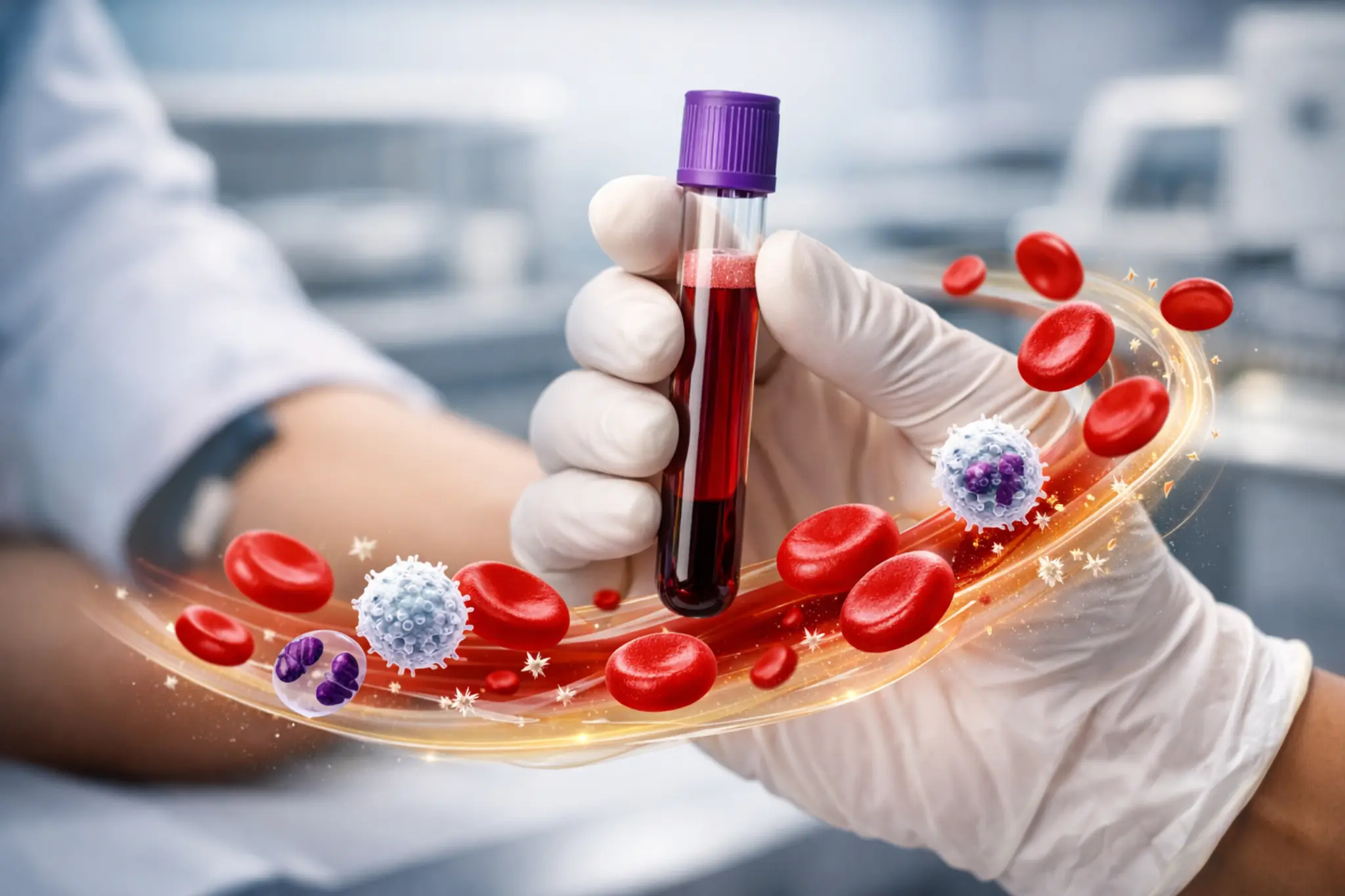
Table of Contents
- What Is Blood?
- Where Is Blood Found And How Does It Move In Your Body?
- What Is The Composition Of Blood?
- Components Of Blood
- Functions Of Blood
- How Blood Works In The Body
- Where Blood Cells Are Made
- Common Blood Tests And Their Functions
- Blood Type And Rh Factor
- Why Knowing Your Blood Type Matters
- Why Blood Donors Are Important
- What Happens During The Blood Donation Process?
- When Should You Get Your Blood Tested?
- FAQs
- The Bottom Line
Blood is vital to life. It moves through your body all day, carrying oxygen, nutrients, hormones, and many other substances your cells need to work properly. It also helps protect you from infection and prevents too much bleeding after an injury.
When you understand what blood is made of and what common blood tests show, it becomes easier to understand your health. It can also help you know when a simple blood test may be useful.
What Is Blood?
Blood is a specialised liquid connective tissue. It flows through your heart and blood vessels and supports almost every organ in your body.
The amount of blood in the human body varies from person to person, but in adults it usually makes up around 7% to 8% of body weight. On average, adults have about 4 to 5 litres of blood. Blood may look simple, but it has a complex role in keeping you well.
Where Is Blood Found And How Does It Move In Your Body?
Blood travels through your circulatory system. Your heart pumps it through arteries, veins, and tiny capillaries.
Arteries carry oxygen-rich blood away from your heart. Veins bring blood back towards your heart. Capillaries connect the two and allow oxygen, nutrients, and waste products to move between your blood and tissues.
This constant movement is what allows blood to link your lungs, digestive system, kidneys, liver, brain, muscles, and other organs.
What Is The Composition Of Blood?
The composition of blood includes a liquid part and a cellular part. Whole blood is made up of plasma and formed elements.
Plasma makes up about 55% of blood. The remaining 45% is made up mainly of blood cells and platelets. These include red blood cells, white blood cells, and platelets.
Understanding this basic composition of blood helps explain why one blood test can give clues about oxygen delivery, immunity, inflammation, clotting, and more.
Components Of Blood
Plasma
Plasma is the pale yellow liquid part of blood. It is mostly water, but it also carries proteins, salts, nutrients, hormones, antibodies, and waste products.
Its main job is transport. Plasma carries blood cells throughout your body and helps move substances to the organs that need them.
Red Blood Cells
A red blood cell carries oxygen from your lungs to the tissues in your body. It also helps carry carbon dioxide back to your lungs so you can breathe it out.
Red blood cells contain haemoglobin, an iron-rich protein that gives blood its red colour. A healthy red blood cell count helps your body make energy efficiently.
If your red blood cell count or haemoglobin level is too low, it may suggest anaemia. This is one reason a complete blood count is commonly advised when you feel tired or weak.
White Blood Cells
White blood cells help defend your body against infections and other threats. Some people also call them white cells.
These cells are part of your immune system. Different types of white blood cells have different jobs. Some attack bacteria, some help fight viruses, and others help control immune responses.
If your white cells are too high or too low, it can point towards infection, inflammation, or certain blood-related conditions.
Platelets
Platelets are tiny cell fragments that help your blood clot. When a blood vessel is damaged, platelets gather at the site and help form a plug.
This process helps stop bleeding and supports healing. If your platelet count is too low, you may bruise or bleed more easily. If it is too high, your doctor may want to check for conditions linked with abnormal clotting.
Functions Of Blood
The function of blood goes far beyond circulation alone. Blood has three broad roles in your body: transport, protection, and regulation.
It transports oxygen from your lungs to your tissues. It carries nutrients from your digestive system to your cells. It also moves waste products towards the kidneys, liver, and lungs so they can be removed.
Blood protects you by carrying white cells, antibodies, and clotting factors. It helps regulate body temperature, fluid balance, and acid-base balance. In simple terms, the function of blood is to keep your body supplied, protected, and balanced.
How Blood Works In The Body
Transporting Oxygen And Nutrients
Your lungs add oxygen to blood, and your digestive system adds nutrients. Blood then delivers both to your tissues.
Red blood cells are especially important here because they carry oxygen using haemoglobin. Without enough healthy red blood cells, your body may not get the oxygen it needs.
Blood’s Role In Immunity
Blood is central to your immune defence. White blood cells move through the bloodstream and tissues looking for germs, abnormal cells, and signs of inflammation.
This is why blood tests are often used when your doctor wants to look for infection or monitor how your immune system is responding.
Regulating Body Temperature And Balance
Blood helps move heat around your body, which supports temperature control. It also helps maintain fluid balance and carries substances that affect pH and many internal processes.
This steady regulation is part of what keeps your body functioning normally from moment to moment.
Where Blood Cells Are Made
Most blood cells are made in your bone marrow, which is the soft tissue inside certain bones. Bone marrow contains stem cells that develop into red blood cells, white blood cells, and platelets.
Your body keeps making new blood cells because older ones naturally wear out over time. This constant renewal is important for oxygen transport, clotting, and immune defence.
Common Blood Tests And Their Functions
Blood tests can reveal a great deal about your health. They may help your doctor assess your general health, check for infection or inflammation, look for anaemia, or monitor long-term conditions.
What Is A Complete Blood Count (CBC)?
A complete blood count, or CBC, is one of the most common blood tests. It measures different parts of your blood, including red blood cells, white blood cells, haemoglobin, haematocrit, and platelets.
A CBC may help detect anaemia, infection, inflammation, bleeding problems, and some bone marrow or blood disorders. It is often part of routine health checks and is also useful when you have fatigue, fever, weakness, bruising, or unexplained symptoms.
Blood Tests For Infection And Inflammation
Doctors may use blood tests to look for signs of infection and inflammation. A white blood cell count is one common example.
Other tests, such as CRP and ESR, may also be used when your doctor wants to see whether there is inflammation somewhere in your body. These tests do not always show the exact cause, but they can provide useful clues.
Blood Tests For Anaemia And Nutrient Deficiencies
If you have tiredness, breathlessness, weakness, pale skin, or poor concentration, your doctor may check for anaemia. A CBC is often the starting point.
Depending on the results, they may also advise iron studies, vitamin B12, or folate testing. These tests help identify common reasons for anaemia and guide the next steps.
Blood Tests For Clotting And Bleeding Problems
If you bleed easily, bruise often, or are taking medicines that affect clotting, your doctor may order clotting tests such as PT or INR.
These tests help show whether your blood is clotting at the expected rate. They can be useful in the evaluation of bleeding problems, clotting disorders, and treatment monitoring.
Blood Tests Used To Detect Or Monitor Blood Disorders
Some blood tests help detect or monitor inherited and acquired blood disorders. For example, doctors may use targeted tests when they suspect conditions such as Thalassemia or Sickle Cell Disease.
These conditions affect haemoglobin or red blood cells and may need specialised follow-up. In some cases, screening begins because of symptoms. In others, it may be advised because of family history, pregnancy planning, or abnormal routine blood results.
Blood Type And Rh Factor
Human blood is grouped into four main ABO types: A, B, AB, and O. Blood is also classified as Rh positive or Rh negative, depending on whether the Rh factor is present on red blood cells.
This matters because blood type compatibility is important during transfusions. It also matters in pregnancy, because Rh incompatibility can sometimes affect the baby if it is not recognised and managed properly.
Why Knowing Your Blood Type Matters
Knowing your blood type can be useful in emergencies, before surgery, during pregnancy, and if you ever need a transfusion.
It can also matter if you plan to donate blood. While hospitals and blood banks always test blood before transfusion, it is still useful for you to know your own blood group and Rh status.
Why Blood Donors Are Important
Blood donation saves lives. Donated blood may be needed in emergencies, major surgery, childbirth complications, cancer care, severe anaemia, and some long-term blood disorders.
It can also support people living with Thalassemia or Sickle Cell Disease, who may sometimes need repeated transfusions as part of their care. This is why regular blood donors remain so important to healthcare systems.
What Happens During The Blood Donation Process?
The blood donation process is usually simple. You first register and answer a few health questions. Your haemoglobin and basic health status are checked to make sure donation is safe for you.
After that, the blood is collected, and you are asked to rest briefly and have fluids. The actual donation usually takes only a short time, although the full visit may take longer.
When Should You Get Your Blood Tested?
A blood test may be useful during a routine check-up, but it can also be advised when you have symptoms or a known health concern.
Your doctor may recommend testing if you have:
- Fatigue or weakness
- Frequent infections
- Easy bruising or bleeding
- Pale skin
- Unexplained weight loss
- Ongoing fever
- Suspected anaemia
- A family history of blood disorders such as Thalassemia or Sickle Cell Disease
The right test depends on your symptoms and medical history.
FAQs
How Is Blood Type Determined?
Blood type is determined by checking whether certain markers, called antigens, are present on your red blood cells. This identifies your ABO group and your Rh status.
What Is The Rh Factor In Blood?
The Rh factor is a protein found on the surface of red blood cells in some people. If you have it, you are Rh positive. If you do not, you are Rh negative.
What Is The Normal Range For Red Blood Cell Count?
Normal ranges can vary slightly between laboratories. In general, common reference ranges are about 4.7 to 6.1 million cells per microlitre for adult males and 4.2 to 5.4 million cells per microlitre for adult females. Your doctor will interpret your result in the context of your age, sex, symptoms, and lab method.
How Does Blood Clotting Work?
When a blood vessel is injured, platelets collect at the site and begin forming a plug. Clotting proteins in your plasma then help stabilise that plug so bleeding can stop and healing can begin.
Why Do I Need To Fast Before A Blood Test?
Not every blood test requires fasting. A CBC usually does not. But some tests, such as fasting blood sugar or certain lipid tests, may require you not to eat or drink anything except water for several hours. Fasting helps reduce the effect of recent food intake on the result.
What Does A CBC Test Show?
A CBC shows the number and size of different blood cells and related measurements. It gives information about red blood cells, white blood cells, haemoglobin, haematocrit, and platelets.
Can Blood Tests Detect Anaemia Or Infection?
Yes, they often can. A CBC may suggest anaemia through low haemoglobin or low red blood cell levels. It may also show changes in white cells that suggest infection or inflammation. Your doctor may then advise additional tests if needed.
The Bottom Line
Blood supports every part of your body. It carries oxygen and nutrients, helps protect you from infection, regulates internal balance, and helps stop bleeding after injury. When something changes in your blood, even a simple test can offer useful clues about your health.
If your doctor advises a CBC or another blood test, it is worth taking seriously. Timely testing can help identify problems such as anaemia, infection, clotting issues, or inherited conditions like Thalassemia and Sickle Cell Disease.
For convenient diagnostic support, you can explore Metropolis Healthcare’s blood tests and health checkups. Metropolis offers 4,000+ tests, NABL and CAP-accredited quality systems, expert pathology support, and convenient booking through the website, app, phone, or WhatsApp, along with home sample collection through its wide network across India. You can also explore more health articles on the Metropolis website to stay informed and proactive about your well-being.