Home Visit
 Upload






Preventive Healthcare
Belly Fat Exercises: Effective Workouts to Reduce Abdominal Fat
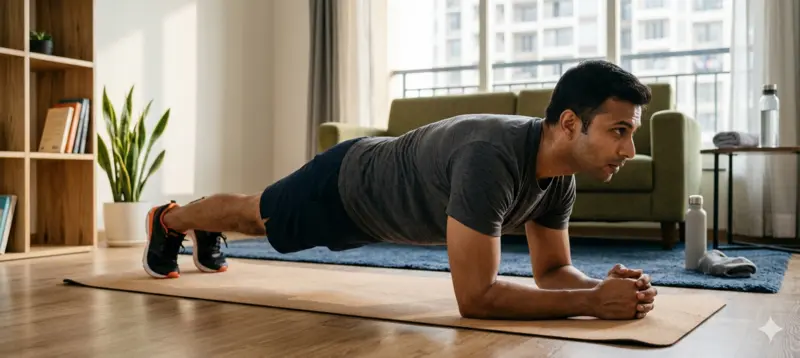
Table of Contents
- What Is Belly Fat and Why Is It Hard to Lose?
- Types of Belly Fat: Subcutaneous vs Visceral Fat
- Can Exercise Alone Reduce Belly Fat?
- How Exercise Helps Reduce Belly Fat
- Best Belly Fat Exercises for Beginners
- Standing Exercises to Lose Belly Fat at Home
- Core-Focused Exercises to Reduce Belly Fat
- Cardio Exercise to Reduce Belly Fat Faster
- Walking vs Running for Belly Fat Loss
- HIIT Workouts for Belly Fat Reduction
- How to Reduce Belly Fat by Exercise: Weekly Workout Plan
- Common Mistakes That Prevent Belly Fat Loss
- How Long Does It Take to Lose Belly Fat With Exercise?
- Safety Tips Before Starting Belly Fat Exercises
- Frequently Asked Questions
- Take Charge of Your Health With Metropolis Healthcare
Belly fat is one of the most common health concerns for people across all age groups. Whether it is the extra weight around your waist that appeared gradually over the years or weight that has resisted all your efforts to shift, you are not alone in this struggle. The good news is that with the right exercises, consistent effort, and a few lifestyle changes, you can make real progress.
This guide walks you through everything you need to know about belly fat exercises, from where to begin to how to build a sustainable weekly routine.
What Is Belly Fat and Why Is It Hard to Lose?
Belly fat is the accumulation of fat tissue around the abdominal region. It tends to increase with age, particularly as muscle mass declines and the metabolism slows down. Hormonal changes, a sedentary lifestyle, poor sleep, and a diet high in refined carbohydrates and sugar can all accelerate its buildup.
What makes belly fat especially stubborn is that it responds to a complex mix of hormonal signals, particularly cortisol, the stress hormone. When cortisol levels are chronically elevated due to stress, poor sleep, or overtraining, the body tends to store more fat in the abdominal area.
Understanding the type of belly fat you carry also helps set realistic expectations.
Types of Belly Fat: Subcutaneous vs Visceral Fat
- Subcutaneous fat sits just beneath the skin and is the soft, pinchable layer you can feel around your waist. It is less harmful from a metabolic standpoint but can still affect self-confidence and physical comfort.
- Visceral fat is the more concerning type. It lies deep inside the abdomen, surrounding your internal organs. Research consistently links high visceral fat to an increased risk of type 2 diabetes, high blood pressure, elevated cholesterol, heart disease, and metabolic syndrome.
- Intramuscular fat is found within the muscle fibres and, while less discussed, also contributes to metabolic dysfunction.
Even individuals with a normal body weight can carry excess visceral fat, which is why belly fat cannot always be judged by appearance or body mass index alone.
Can Exercise Alone Reduce Belly Fat?
The short answer is no, and it is important to be clear about this from the start. No exercise, however intense or targeted, can spot-reduce fat from a specific area of your body. This is a persistent myth that has led many people to do hundreds of crunches with little visible change.
When you exercise, your body draws on fat stores from across the entire body for energy. You do not get to choose which area that fat comes from. What you can do is create the right conditions for overall fat loss, which will eventually include the abdominal region.
How Exercise Helps Reduce Belly Fat
- Exercise creates a calorie deficit, helping your body burn more energy than it consumes.
- Cardio and HIIT workouts raise your heart rate and burn a significant number of calories during the session.
- Strength training builds lean muscle mass, which increases your resting metabolic rate so your body burns more calories even at rest.
- Regular physical activity helps regulate cortisol levels, reducing the hormonal drive to store fat around the belly.
- Exercise improves insulin sensitivity, which in turn helps the body manage blood sugar more effectively and store less fat.
- Combined with a healthy diet, regular exercise leads to gradual, sustainable fat loss across the body, including the abdomen.
Think of exercise as one essential pillar. Nutrition, sleep, and stress management are the others.
Best Belly Fat Exercises for Beginners
If you are new to exercise or returning after a long break, starting simple is the smartest move. These beginner-friendly exercises are low-impact, easy to perform at home, and effective when done consistently.
- Brisk walking: Aim for 30 minutes a day. It is gentle on the joints, easy to sustain, and a proven way to reduce visceral fat over time.
- Marching in place: A great way to raise your heart rate without any equipment. Lift your knees high and swing your arms.
- Standing knee raises: Stand upright and bring alternate knees up towards your chest. This activates your lower abdominals and improves coordination.
- Modified crunches: Lie on your back, knees bent, feet flat on the floor. Gently lift your shoulders off the ground using your abdominal muscles and lower back down slowly.
- Wall sit: Stand with your back against a wall and slide down until your thighs are parallel to the floor. Hold for 20 to 30 seconds. This builds core and lower body strength without any impact.
Belly fat exercises for women who are just starting out can begin with three of these movements done for two sets each, gradually building up over two to three weeks.
Standing Exercises to Lose Belly Fat at Home
Standing exercises are an excellent option because they engage multiple muscle groups simultaneously, work against gravity, and are easy to fit into a busy day. You do not need a gym or a yoga mat to do them effectively.
- High knees: Run on the spot, driving your knees as high as possible towards your chest. Keep your core engaged throughout. Do three sets of 30 to 45 seconds.
- Standing oblique crunches: Stand with feet hip-width apart. Place one hand behind your head. Bring your right knee up and your right elbow down to meet it, then repeat on the left. This targets the obliques on the sides of your abdomen.
- Jumping jacks: A classic full-body movement that gets your heart rate up quickly. Do three sets of 30 to 40 seconds. If jumping is uncomfortable, simply step side to side instead.
- Standing cross punches: Stand with feet shoulder-width apart. Twist your torso and punch diagonally across your body, alternating sides. Keep your core tight throughout.
- Standing side leg raises: Lift one leg out to the side while slightly twisting your torso in the opposite direction. This works the obliques and hip stabilisers simultaneously.
These standing belly fat exercises for men and women alike are easy to incorporate into a morning routine or a lunch break, making consistency much more achievable.
Core-Focused Exercises to Reduce Belly Fat
Core exercises do not burn belly fat directly, but they strengthen the muscles underneath the fat, improve posture, and contribute to a firmer, more defined midsection as overall body fat reduces.
- Plank: Begin in a push-up position, resting on your forearms. Keep your body in a straight line from head to heels. Engage your core and glutes. Hold for 30 seconds to one minute and gradually increase the duration.
- Bicycle crunches: Lie on your back, hands behind your head. Bring your right knee towards your chest while twisting your left elbow to meet it. Alternate sides in a fluid, cycling motion. This targets both the upper and lower abdominals and the obliques.
- Leg raises: Lie flat on your back with legs extended. Keeping your lower back pressed into the floor, raise both legs to a 90-degree angle and slowly lower them without letting your feet touch the ground. This isolates the lower abdominals.
- Russian twists: Sit with your knees bent, feet slightly lifted, and lean back at a 45-degree angle. Twist your torso from side to side, touching the floor beside your hips with both hands. Add a light weight to increase the challenge.
- Dead bug: Lie on your back with arms pointing up to the ceiling and knees bent at 90 degrees. Slowly lower your right arm and left leg towards the floor while keeping your lower back flat. Return and repeat on the opposite side. This builds deep core stability.
- Side plank: Lie on your side, elbow beneath your shoulder. Lift your hips to form a straight line from head to feet. Hold for 20 to 30 seconds per side. This is one of the most effective moves for targeting the obliques.
Cardio Exercise to Reduce Belly Fat Faster
Cardiovascular exercise is your most powerful tool for burning visceral fat. Research consistently shows that regular aerobic activity reduces fat in the abdominal region, particularly the deeper visceral fat that carries the most metabolic risk.
Aim for at least 150 minutes of moderate-intensity cardio per week, or 75 minutes of vigorous activity. Spread this across five days for the best results.
Effective cardio options include:
- Running or jogging: Burns a high number of calories and significantly reduces visceral fat with consistent practice.
- Cycling: A low-impact option that is joint-friendly and highly effective for calorie burn.
- Swimming: A full-body workout that engages the core throughout every stroke.
- Rowing: Combines cardio with upper body and core engagement, making it highly efficient.
- Group fitness classes: Zumba, aerobics, or dance-based sessions are effective and easier to stay consistent with because they are enjoyable.
- Skipping: A simple, equipment-minimal option that raises your heart rate rapidly and burns significant calories.
Belly fat exercises for men looking to see faster results often benefit from pairing 30 minutes of cardio with resistance training in the same session.
Walking vs Running for Belly Fat Loss
|
Factor |
Walking |
Running |
|
Calories burned (30 min) |
150 to 200 kcal |
300 to 400 kcal |
|
Joint impact |
Low |
Moderate to high |
|
Suitable for beginners |
Yes |
With gradual progression |
|
Visceral fat reduction |
Effective with consistency |
Faster results |
|
Injury risk |
Very low |
Moderate |
|
Sustainability |
High |
Moderate |
|
Equipment needed |
None |
Good footwear |
Both walking and running are effective. Walking is the better starting point for those with joint issues or low fitness levels. Running accelerates fat loss but requires proper footwear and a gradual build-up to avoid injury. The best choice is whichever one you will actually do regularly.
HIIT Workouts for Belly Fat Reduction
High-intensity interval training alternates between short bursts of intense effort and brief recovery periods. Studies show that HIIT is particularly effective at reducing visceral fat, often delivering superior results in less time compared to steady-state cardio.
A beginner HIIT session might look like this:
- Jumping jacks: 30 seconds of effort, 30 seconds of rest.
- High knees: 30 seconds of effort, 30 seconds of rest.
- Burpees: 30 seconds of effort, 30 seconds of rest.
- Mountain climbers: 30 seconds of effort, 30 seconds of rest.
- Jump squats: 30 seconds of effort, 30 seconds of rest.
Repeat the circuit two to three times. As your fitness improves, reduce the rest periods or increase the work periods.
Burpees deserve special mention here. They combine a squat, a plank, a push-up, and a jump into one continuous movement, engaging virtually every muscle in your body and producing an exceptional calorie burn.
How to Reduce Belly Fat by Exercise: Weekly Workout Plan
Consistency is the single most important factor in belly fat loss. This sample weekly plan combines cardio, HIIT, and core work for balanced, sustainable progress.
|
Day |
Workout Type |
Duration |
|
Monday |
Brisk walk or jog |
30 to 40 minutes |
|
Tuesday |
HIIT circuit (3 rounds) |
20 to 25 minutes |
|
Wednesday |
Core exercises (plank, bicycle crunches, leg raises) |
20 minutes |
|
Thursday |
Cycling, swimming, or aerobics |
30 to 40 minutes |
|
Friday |
Strength training (squats, lunges, deadlifts) |
30 minutes |
|
Saturday |
HIIT or standing exercise circuit |
20 to 25 minutes |
|
Sunday |
Rest or light walking |
20 minutes |
Adjust the intensity based on your current fitness level. Even three to four active days per week, done consistently over several months, will produce meaningful results.
Common Mistakes That Prevent Belly Fat Loss
Many people exercise regularly but still struggle to lose abdominal fat. Often, the reason lies in one or more of these common pitfalls.
- Doing only ab exercises: Hundreds of crunches will not burn belly fat if you are not also creating an overall calorie deficit through cardio and diet.
- Overtraining without recovery: Too much exercise without adequate rest elevates cortisol, which actually promotes fat storage in the abdomen. Rest days are not optional.
- Neglecting nutrition: Exercise cannot outwork a poor diet. Consuming excess sugar, refined carbohydrates, alcohol, and processed foods will undo even the most dedicated workout routine.
- Skipping sleep: Poor sleep disrupts hunger hormones such as ghrelin and leptin and raises cortisol, making fat loss significantly harder. Aim for seven to eight hours per night.
- Expecting rapid results: Belly fat, particularly visceral fat, responds gradually to lifestyle changes. Expecting visible results in days or weeks leads to frustration and abandonment of good habits.
- Ignoring hydration: Inadequate water intake impairs metabolism and can cause water retention around the abdomen, which is often mistaken for fat.
- Poor exercise form: Performing movements incorrectly reduces their effectiveness and increases the risk of injury. It is better to do fewer repetitions with proper form than many with poor technique.
How Long Does It Take to Lose Belly Fat With Exercise?
This is one of the most frequently asked questions, and the honest answer is that it varies considerably from person to person. Factors such as your starting point, age, genetics, diet quality, sleep, stress levels, and exercise consistency all play a role.
As a general guide, most people begin to notice changes in their body composition after six to twelve weeks of consistent exercise and dietary improvement. Meaningful reductions in visceral fat, which carry the most health benefit, often take three to six months of sustained lifestyle changes.
It is worth noting that visceral fat tends to respond relatively well to exercise and dietary modification compared to subcutaneous fat. You may notice improvements in your energy levels, blood pressure, and blood sugar markers even before visible changes appear around your waistline.
The most important thing is to remain consistent and measure progress not just by how your clothes fit, but also by how you feel, sleep, and perform in daily life.
Safety Tips Before Starting Belly Fat Exercises
Before beginning any new exercise programme, keep these precautions in mind.
- Consult your doctor first if you have any existing health conditions, particularly cardiovascular disease, diabetes, osteoarthritis, or a history of back or joint problems.
- Start gradually: Increase the duration and intensity of your workouts over two to four weeks rather than jumping into intense sessions immediately.
- Warm up before every session: Spend five to ten minutes doing light movement such as gentle walking or dynamic stretching to prepare your muscles and joints.
- Cool down after exercise: Slow walking and static stretching after a workout reduces the risk of muscle soreness and injury.
- Listen to your body: Sharp or persistent pain is a signal to stop. Mild muscle soreness is normal; joint pain is not.
- Stay hydrated: Drink water before, during, and after exercise.
- Do not skip rest days: Recovery is when your muscles repair and strengthen. Overtraining increases injury risk and cortisol levels.
- Wear appropriate footwear: Good quality, supportive shoes are essential for any weight-bearing exercise, particularly running or HIIT.
Frequently Asked Questions
Can I Lose Belly Fat by Exercise Alone?
Exercise is essential, but it works best in combination with a balanced diet. Creating a calorie deficit through exercise alone is difficult and often unsustainable. A nutritious diet, particularly one aligned with a well-structured diet chart for weight loss, combined with regular physical activity, is the most effective strategy. Sleep and stress management also play a meaningful role. Think of exercise as one powerful tool in a larger toolkit.
How Many Minutes of Exercise Reduce Belly Fat?
Aim for at least 150 minutes of moderate-intensity aerobic exercise per week, spread over five days. This works out to approximately 30 minutes per day. If you prefer higher-intensity activity such as HIIT, 75 minutes per week can produce comparable results. Strength training for two to three sessions per week adds further benefit by building muscle and boosting your resting metabolic rate.
Which Exercise Burns the Most Belly Fat at Home?
No single exercise burns belly fat in isolation. However, HIIT circuits combining burpees, mountain climbers, jump squats, and high knees are among the most calorie-intensive options you can do at home without equipment. Pairing these with core-strengthening moves such as planks and bicycle crunches gives you both the calorie burn and the muscle tone for the best overall results.
Is Walking Effective to Lose Belly Fat?
Yes, walking is genuinely effective, particularly for reducing visceral fat. Studies show that consistent brisk walking, when done daily for at least 30 minutes, leads to meaningful reductions in abdominal fat over time. It is low-impact, accessible, and easy to maintain. Combining your walking habit with an Indian diet chart for weight loss makes the approach even more effective.
Can Older Adults Do Belly Fat Exercises Safely?
Absolutely. Many belly fat exercises are suitable for older adults, particularly walking, swimming, cycling, standing exercises, and gentle core work such as planks and modified crunches. The key is to begin at a comfortable intensity, focus on form, and progress gradually. It is always a good idea for older adults to speak with their doctor before beginning a new exercise programme, especially if managing any chronic conditions.
Take Charge of Your Health With Metropolis Healthcare
Exercise, nutrition, and rest are the foundation of reducing belly fat and improving your long-term health. But understanding your body's internal markers is just as important. Excess visceral fat is closely linked to elevated blood sugar, high cholesterol, raised triglycerides, and increased inflammatory markers, many of which show no outward symptoms until they become significant health concerns.
Metropolis Healthcare offers over 4,000 tests, including comprehensive full body checkups and speciality panels that give you a clear picture of your metabolic health, cardiovascular risk, hormonal balance, and more. With accurate results, experienced pathologists, and a wide network for home sample collection, Metropolis makes preventive health screening simple and accessible.
You can book tests easily through the website, app, call, or WhatsApp, with over 10,000 home collection touchpoints available. Whether you are tracking your progress, checking in on your health proactively, or simply wanting a baseline before starting a new fitness journey, Metropolis is here to support you every step of the way.
Your effort in the gym deserves the clarity that comes from knowing what is happening inside your body too.
References
- Ismail I, Keating SE, Baker MK, Johnson NA. A systematic review and meta-analysis of the effect of aerobic vs resistance exercise training on visceral fat. Obes Rev. 2012;13(1):68-91. PMID: 21951360.
- Maillard F, Pereira B, Boisseau N. Effect of high-intensity interval training on total, abdominal and visceral fat mass: a meta-analysis. Sports Med. 2018;48(2):269-288. PMID: 28932797.
- Strasser B, Schobersberger W. Evidence for resistance training as a treatment therapy in obesity. J Obes. 2011;2011:482564. PMID: 20847892.
- Chaston TB, Dixon JB. Factors associated with percent change in visceral versus subcutaneous abdominal fat during weight loss. Int J Obes (Lond). 2008;32(4):619-628. PMID: 18180786.
- Wewege M, van den Berg R, Ward RE, Keech A. The effects of high-intensity interval training vs moderate-intensity continuous training on body composition in overweight and obese adults: a systematic review and meta-analysis. Obes Rev. 2017;18(6):635-646. PMID: 28401638.
- Taheri S, Lin L, Austin D, Young T, Mignot E. Short sleep duration is associated with reduced leptin, elevated ghrelin, and increased body mass index. PLoS Med. 2004;1(3):e62. PMID: 15602591.