Home Visit
 Upload






Preventive Healthcare
Rotator Cuff Muscles: Anatomy, Function & Common Injuries
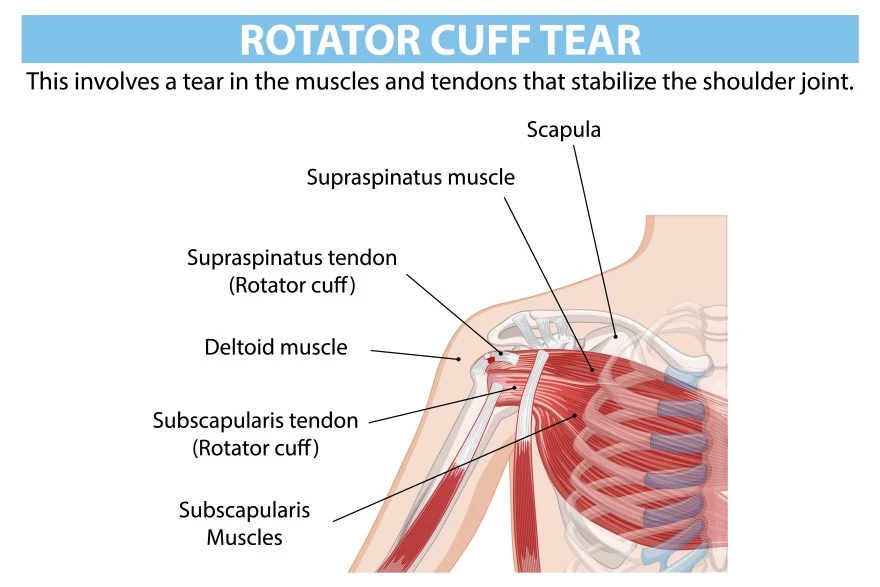
Table of Contents
- What Is the Rotator Cuff and Why Does it Matter?
- Anatomy of the Rotator Cuff Muscles (SITS)
- Primary Functions of the Rotator Cuff
- What Happens When the Rotator Cuff Fails
- Who Is at Risk for Rotator Cuff Problems?
- Types of Rotator Cuff Injuries
- Symptoms and Signs of a Rotator Cuff Injury
- How Rotator Cuff Tears are Diagnosed
- Conservative Treatment Options for Rotator Cuff Injuries
- When is Surgery Needed for a Rotator Cuff Tear?
- Rehabilitation and Recovery: Post-Treatment Exercises and Return to Activity
- Prevention Strategies for Maintaining a Healthy Rotator Cuff
- Rotator Cuff Injuries in Specific Populations
- Localised Advice: Adapting Rotator Cuff Care to Your Region
- Common Myths and Misconceptions about the Rotator Cuff
- When to Seek Professional Help For Your Shoulder/Cuff Pain
- Prognosis: What to Expect with Rotator Cuff Injuries
- Summary: Key Takeaways About the Rotator Cuff Muscles
- FAQs
What Is the Rotator Cuff and Why Does it Matter?
The rotator cuff is a group of four muscles and their tendons that encircle the glenohumeral (shoulder) joint, forming a dynamic cuff that stabilises and moves the shoulder. These muscles play a vital role in stabilising the ball-and-socket structure of your shoulder while allowing an extensive range of arm movements. Without a properly functioning rotator cuff, your shoulder would lack the stability needed for lifting, rotating, and reaching overhead activities.
Recent imaging studies indicate that asymptomatic rotator cuff tears are common in middle-aged and older adults, including in the Indian population, particularly those over 40 years of age. The rotator cuff matters because it's essential for maintaining shoulder strength and preventing the humeral head from dislocating during movement.
Anatomy of the Rotator Cuff Muscles (SITS)
The four rotator cuff muscles are easily remembered using the acronym "SITS":
- Supraspinatus: Originates from the supraspinous fossa of the scapula and initiates arm abduction (first 15 degrees) before the deltoid takes over (lifting your arm away from your body). It's the most commonly injured rotator cuff muscle due to its position under the bony arch.
- Infraspinatus: Positioned at the back of your shoulder blade, this muscle is responsible for external rotation of your arm, such as when you reach out to shake hands or wash your hair.
- Teres Minor: This smaller muscle also assists with external rotation and provides additional stability to the back of your shoulder joint during movement.
- Subscapularis: The largest and strongest of the rotator cuff muscles, located at the front of your shoulder blade. It handles internal rotation movements, like tucking in your shirt or reaching across your body.
How the Rotator Cuff Tendons Attach and Stabilise the Shoulder Joint
The rotator cuff tendons insert onto the greater and lesser tubercles of the humerus and fuse with the joint capsule, forming a continuous cuff that stabilises the humeral head, forming a musculotendinous collar around your shoulder. This arrangement creates a "cuff" that envelops the humeral head and compresses it into the shallow socket, preventing dislocation during dynamic movements. The tendons cover the front, top, and back aspects of your shoulder joint, working together to maintain stability whilst allowing remarkable mobility.
Blood Supply, Innervation and Biomechanics of the Rotator Cuff
Each rotator cuff muscle receives its nerve supply from specific branches of the brachial plexus. The suprascapular nerve controls the supraspinatus and infraspinatus muscles, whilst the axillary nerve innervates the teres minor, and the subscapular nerves control the subscapularis. Blood supply is derived mainly from the suprascapular, subscapular, and circumflex humeral arteries. Biomechanically, the rotator cuff functions synergistically with the deltoid and scapular stabilisers to maintain centralisation of the humeral head during motion while preventing abnormal joint translation.
Primary Functions of the Rotator Cuff
Your rotator cuff muscles serve three primary functions that are essential for normal shoulder operation.
First, they enable rotation of your arm both internally and externally, allowing you to perform activities like throwing a ball or combing your hair.
Second, they assist with elevation by initiating abduction and working with the deltoid muscle to lift your arm.
Third, and perhaps most importantly, they provide dynamic stability to your shoulder joint by maintaining proper positioning of the humeral head within the socket throughout all movements.
Common Movements Involving the Rotator Cuff
- Abduction: Lifting your arm out to the side, such as reaching for items on high shelves
- Internal rotation: Moving your arm toward your body, like fastening a seatbelt or reaching behind your back
- External rotation: Rotating your arm outward, as when preparing to throw or reaching to wash the opposite shoulder
- Overhead activities: Painting ceilings, serving in tennis, or placing items in overhead compartments
- Carrying and lifting: Supporting loads whilst maintaining shoulder stability
What Happens When the Rotator Cuff Fails
When your rotator cuff becomes weak, torn, or dysfunctional, several problems can develop. The humeral head may move abnormally within the socket, leading to instability and increasing your risk of subluxation or dislocation. This altered movement pattern can lead to subacromial impingement, where the supraspinatus tendon or subacromial bursa become compressed beneath the acromion of your shoulder, resulting in pain and inflammation.
Over time, these altered mechanics can lead to joint degeneration, reduced shoulder function, and compensatory problems in your neck and opposite shoulder. Chronic dysfunction may lead to subacromial bursitis or secondary adhesive capsulitis (frozen shoulder).
Who Is at Risk for Rotator Cuff Problems?
Several factors increase your risk of developing rotator cuff injuries:
- Age-related factors: Adults over 40 years experience natural tendon degeneration and reduced blood supply to rotator cuff tissues
- Occupational risks: Manual labourers, painters, carpenters, and others who perform repetitive overhead work
- Athletic activities: Overhead sports like tennis, swimming, baseball, and volleyball place significant stress on rotator cuff muscles
- Anatomical predispositions: Individuals with narrow shoulder arches or specific bone shapes may be more prone to impingement
Types of Rotator Cuff Injuries
- Rotator cuff tendinitis (acute tendinopathy): Inflammation and microtrauma of tendon fibres, typically due to overuse or repetitive overhead activity
- Tendinosis: Chronic degeneration of tendon fibres without significant inflammation, typically developing over time
- Partial rotator cuff tears: Incomplete splits in the tendon tissue that may progress if left untreated
- Full-thickness rotator cuff tear: Complete tear from the articular to the bursal surface, leading to marked weakness and limited range of motion
Symptoms and Signs of a Rotator Cuff Injury
Recognising rotator cuff injury symptoms early can prevent progression to more severe problems:
- Shoulder pain that worsens with overhead activities or at night, often disturbing sleep
- Weakness when lifting or rotating your arm, particularly noticeable during daily activities
- Limited range of motion in your shoulder joint, making it difficult to reach behind your back
- Crackling or popping sensations during shoulder movement
- Swelling or tenderness around the front and side of your shoulder
- Pain radiating down your arm, sometimes extending to your elbow
How Rotator Cuff Tears are Diagnosed
Diagnosing rotator cuff injuries typically begins with a thorough clinical examination, including your medical history and physical tests that assess range of motion, strength, and specific rotator cuff function.
Your healthcare provider may perform special tests like the rotator cuff injury test to evaluate individual muscle function. Imaging studies help confirm the diagnosis and assess injury severity.
A musculoskeletal ultrasound for the shoulder can visualise tendon tears and assess dynamic movement patterns. Shoulder X-rays can help identify acromial spurs, calcific deposits, or degenerative joint changes contributing to impingement that might contribute to your symptoms.
Conservative Treatment Options for Rotator Cuff Injuries
- Rest and activity modification to allow healing while avoiding aggravating movements
- Physical therapy focusing on strengthening weak rotator cuff muscles and improving flexibility
- Nonsteroidal anti-inflammatory drugs (NSAIDs) to manage pain and inflammation during the acute phase
- Corticosteroid injections into the subacromial space may be used short-term for pain control when conservative therapy fails
- Ice and heat application to manage pain and promote healing
- Supportive devices like slings during acute pain episodes to protect the healing tissue
When is Surgery Needed for a Rotator Cuff Tear?
Surgical repair is indicated for full-thickness or large partial-thickness tears causing functional loss or persistent pain unresponsive to ≥3–6 months of conservative care. Options include arthroscopic or open repair, while tendon transfers are reserved for chronic, irreparable tears. The choice depends on tear severity, age and functional demands.
Rehabilitation and Recovery: Post-Treatment Exercises and Return to Activity
- Passive range-of-motion (ROM) exercises are initiated early post-surgery or injury to prevent stiffness while protecting the repair
- Active-assisted movements as pain decreases and healing progresses
- Progressive strengthening of rotator cuff muscles and surrounding stabilisers
- Gradual return to overhead activities and sports-specific movements
- Functional training tailored to your work or recreational demands
- Regular monitoring to ensure proper healing and prevent re-injury
Prevention Strategies for Maintaining a Healthy Rotator Cuff
- Regular rotator cuff exercises to maintain strength and flexibility in all four muscles
- Proper warm-up before sports or demanding physical activities
- Ergonomic modifications at work to reduce repetitive overhead stress
- Gradual progression when increasing activity levels or starting new exercises
- Early intervention for shoulder pain or dysfunction before problems worsen
Rotator Cuff Injuries in Specific Populations
Different populations face unique challenges with rotator cuff health. Athletes performing overhead motions place high demand on the cuff and often need sport-specific rehabilitation. Older adults may recover more slowly due to degenerative changes. Manual workers benefit from ergonomic support and conditioning programmes.
Localised Advice: Adapting Rotator Cuff Care to Your Region
Effective rotator cuff care should consider regional factors that influence shoulder health. Workplace ergonomics programmes can help reduce injury rates in industries with high shoulder demands. Sports medicine approaches should account for popular local activities and training methods. Cultural factors, including traditional activities involving heavy lifting or overhead work, may require specific educational strategies for injury prevention and early intervention.
Common Myths and Misconceptions about the Rotator Cuff
- "Only athletes get rotator cuff injuries"
Fact: Anyone can develop these problems, especially with age
- "Rest alone will heal all problems"
Fact: Many conditions require active treatment and rehabilitation
- "Surgery is always necessary for tears"
Fact: Many tears respond well to conservative treatment
- "Pain always indicates serious damage"
Fact: Early symptoms may respond well to simple interventions
When to Seek Professional Help For Your Shoulder/Cuff Pain
- Persistent shoulder pain lasting more than a few weeks despite rest
- Sudden loss of shoulder strength or inability to lift your arm
- Night pain that regularly disrupts your sleep
- Progressive worsening of symptoms over time
- Inability to perform normal daily activities due to shoulder problems
- Signs of serious injury following trauma or sudden onset of severe pain
Prognosis: What to Expect with Rotator Cuff Injuries
The outlook for rotator cuff injuries varies depending on several factors, including your age, the extent of injury, and how quickly treatment begins. Most people with rotator cuff tendinitis, rotator cuff tendinopathy or impingement syndrome, or partial tears respond well to conservative treatment, with significant improvement within 3-6 months. Full-thickness tears may require longer recovery periods, particularly if surgery is needed.
Summary: Key Takeaways About the Rotator Cuff Muscles
The rotator cuff is vital for stability, strength and coordinated movement. Understanding its anatomy and recognising symptoms early helps prevent long-term problems. Whether dealing with rotator cuff tendinitis, degeneration or a tear, timely care and rehabilitation support lasting shoulder health.
At Metropolis Healthcare, we support your journey toward optimal shoulder health with comprehensive diagnostic services. Our network of over 220 laboratories and 4,600+ service centres ensures you have access to precise shoulder imaging and blood tests that help identify inflammatory markers.
FAQs
What is the rotator cuff, and what does it do?
The rotator cuff is a group of four muscles and tendons that stabilise the shoulder joint and allow lifting, rotation, and overhead movements.
How long does it take to recover from a rotator cuff tear?
Minor tears may heal in 6–12 weeks, partial tears in 3–6 months, and full-thickness tears in 6–12 months, especially if surgery and rehab are required.
What exercises strengthen the rotator cuff?
Key exercises include band-based external and internal rotations, scapular strengthening, wall slides, pendulum exercises, and light resistance training.
How can I prevent rotator cuff injuries in manual labour or overhead sports?
Strengthen the cuff regularly, warm up properly, use correct technique, avoid repetitive overhead strain, and address shoulder pain early.
When should I see a doctor for shoulder pain related to the rotator cuff?
Consult a doctor if pain lasts weeks, disturbs sleep, limits movement, or if you experience sudden weakness or difficulty lifting your arm.
References
• https://pubmed.ncbi.nlm.nih.gov/40511354/
• https://www.mayoclinic.org/diseases-conditions/rotator-cuff-injury/symptoms-causes/syc-20350225
• https://orthoinfo.aaos.org/en/diseases--conditions/rotator-cuff-tears/
• https://www.nhs.uk/conditions/shoulder-pain/