Home Visit
 Upload






Preventive Healthcare
Axial Skeleton: The Core Structure of the Human Body
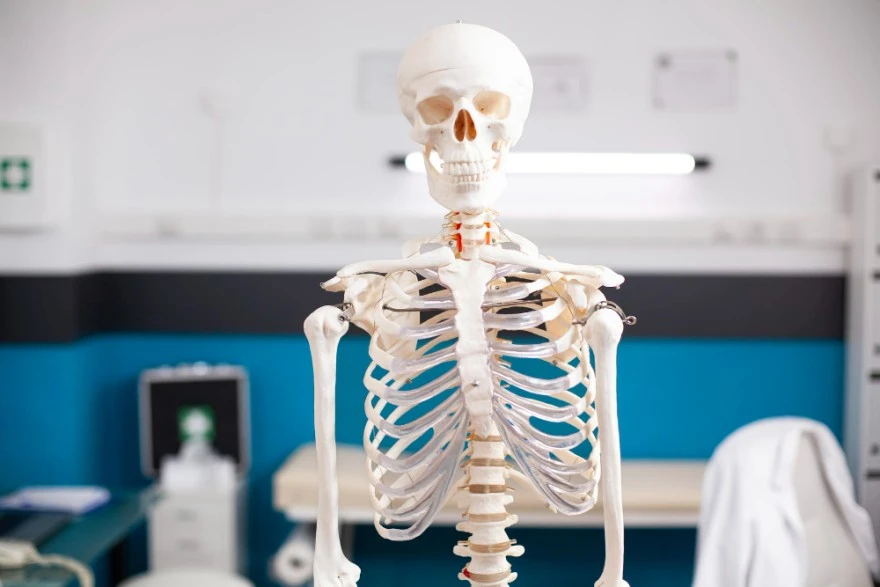
Table of Contents
What Is the Axial Skeleton?
The axial skeleton represents the central framework of the human skeleton. It is a remarkable structure consisting of 80 bones that forms the foundation for the head, neck, and trunk. This includes your skull, vertebral column, rib cage, and several smaller but equally important bones.
When you look at an axial skeleton diagram, you'll notice how these bones align perfectly to form your body's core support system. Unlike the appendicular skeleton, which comprises your limbs and their attachments, the axial skeleton focuses on protecting your central nervous system and vital organs. This distinction between the axial and appendicular skeletons becomes clear when you consider their different functions.
Components of the Axial Skeleton
The axial skeleton comprises several distinct groups of bones, each serving specific protective and supportive functions:
- Skull Components:
- 8 cranial bones (including frontal, parietal, temporal, and occipital bones)
- 14 facial bones (such as maxilla, mandible, and nasal bones)
- 6 auditory ossicles (tiny bones in the middle ear)
- Vertebral Column:
- 7 cervical vertebrae in your neck
- 12 thoracic vertebrae in your upper back
- 5 lumbar vertebrae in your lower back
- 1 sacrum (fused vertebrae)
- 1 coccyx (tailbone)
- Thoracic Cage Components:
- 24 ribs (12 pairs)
- 1 sternum (breastbone)
- Additional Structures:
- 1 hyoid bone in your neck
Function of the Axial Skeleton
Your axial skeleton bones work together as an integrated system, serving multiple essential functions that keep you healthy and mobile.
Primarily, it creates the central framework that supports your body weight against gravity, helping you maintain an upright posture throughout daily activities. This remarkable system distributes the weight of your head, neck, and trunk efficiently down to your lower limbs.
Your axial skeleton also provides critical protection for your most vital organs. The skull encases your brain and sensory organs, whilst the vertebral column surrounds your spinal cord, and the rib cage shields your heart and lungs. Without this protective framework, these delicate organs would be vulnerable to injury from even minor impacts.
Additionally, the axial skeleton serves as an attachment site for numerous muscles involved in posture, breathing, and movement. These muscle attachments enable you to maintain balance, breathe efficiently, and coordinate movements between your trunk and limbs.
How the Axial Skeleton Supports the Body
- Structural Support:
- Forms the central axis that gives your body its characteristic shape
- Bears and distributes weight from your head and trunk to your legs
- Maintains proper alignment of your spine and posture
- Movement Facilitation:
- Provides attachment points for core muscles that stabilise your trunk
- Enables flexible movement through vertebral joints
- Coordinates with the appendicular skeleton for complex movements
- Balance and Stability:
- Creates a stable platform for limb movements
- maintains the body’s centre of gravity over its base of support
- Adapts to changing positions and external forces
Protection by the Axial Skeleton
- Neurological Protection:
- Skull bones form a rigid helmet around your brain
- The vertebral column creates a bony tunnel protecting your spinal cord
- Prevents damage to your central nervous system from external impacts
- Cardiac and Respiratory Protection:
- The rib cage forms a flexible yet strong cage around your heart and lungs
- The sternum provides frontal protection for your chest cavity
- Enables breathing whilst maintaining organ protection
- Sensory Organ Protection:
- Skull bones protect your eyes, ears, and nasal passages
- Auditory ossicles safely transmit sound vibrations
- Facial bones provide structural support for sensory functions
Common Disorders of the Axial Skeleton
- Spinal Disorders:
- Scoliosis (abnormal sideways curvature of the spine)
- Herniated discs (bulging spinal discs pressing on nerves)
- Spinal stenosis (narrowing of the spinal canal)
- Bone Density Issues:
- osteoporosis (a condition that weakens bones, increasing fracture risk)
- Osteoarthritis affecting spinal joints
- Compression fractures in vertebrae
- Traumatic Injuries:
- Skull fractures from head injuries
- Rib fractures from falls or impacts
- Vertebral fractures affecting spinal stability
According to a National Institutes of Health (NIH) review, lifetime prevalence of back pain in adults is reported as high as 84%, often related to axial skeleton problems. Early recognition and treatment of these conditions can prevent progression and maintain quality of life.
How to Keep Your Axial Skeleton Healthy
- Maintain proper nutrition with adequate calcium (1000-1200mg daily) and vitamin D to support bone strength
- Engage in regular weight-bearing exercises such as walking, dancing, or resistance training to maintain bone density
- Practice good posture during sitting, standing, and sleeping to reduce stress on your vertebral column
- Avoid smoking and limit alcohol consumption, as both can weaken your axial skeleton bones
- Use protective equipment, such as helmets and seatbelts, during high-risk activities
- Get regular bone health screenings, especially after age 50 or if you have risk factors
- Address pain promptly by consulting healthcare providers for persistent back, neck, or chest discomfort
Conclusion
Your axial skeleton represents one of your body's most remarkable engineering achievements, providing the essential framework that keeps you upright, mobile, and protected. Understanding what the axial skeleton is and how it functions empowers you to make informed decisions about your health and take proactive steps to maintain this crucial system throughout your life.
At Metropolis Healthcare, we understand the importance of monitoring your bone health and overall wellness. Our comprehensive portfolio of more than 4,000 tests includes specialised assessments for bone density, nutritional markers, and inflammatory indicators that can help evaluate your axial skeleton health. With our convenient home sample collection service spanning over 10,000 touchpoints across India, you can access precise diagnostics designed to guide effective prevention and treatment strategies.
FAQs
What is the difference between the axial and appendicular skeletons?
The axial skeleton includes the skull, spine, and rib cage and provides core support and protection. The appendicular skeleton includes the limbs and their girdles and is responsible for movement.
How does the axial skeleton protect vital organs?
The skull shields the brain, the vertebrae protect the spinal cord, and the rib cage encloses the heart and lungs while allowing breathing.
What is the function of the spine in the axial skeleton?
The spine supports body weight, protects the spinal cord, maintains posture, and enables trunk movement and shock absorption.
Can I prevent damage to my axial skeleton?
Yes. Good nutrition, exercise, proper posture, safe habits, and regular check-ups help protect the axial skeleton.
What are the signs of axial skeleton disorders?
Key signs include back or neck pain, abnormal posture, frequent fractures, height loss, numbness, weakness, or breathing difficulties.
How does age affect the axial skeleton?
Ageing reduces bone density, wears down spinal discs and joints, and weakens supporting muscles, increasing the risk of pain and fractures.
References
• https://www.ncbi.nlm.nih.gov/books/NBK538173/
• https://training.seer.cancer.gov/anatomy/skeletal/divisions/axial.html
• https://www.britannica.com/science/axial-skeleton
• https://my.clevelandclinic.org/health/body/22344-axial-skeleton