Home Visit
 Upload






Preventive Healthcare
Elbow Joints: How They Work & Common Problems
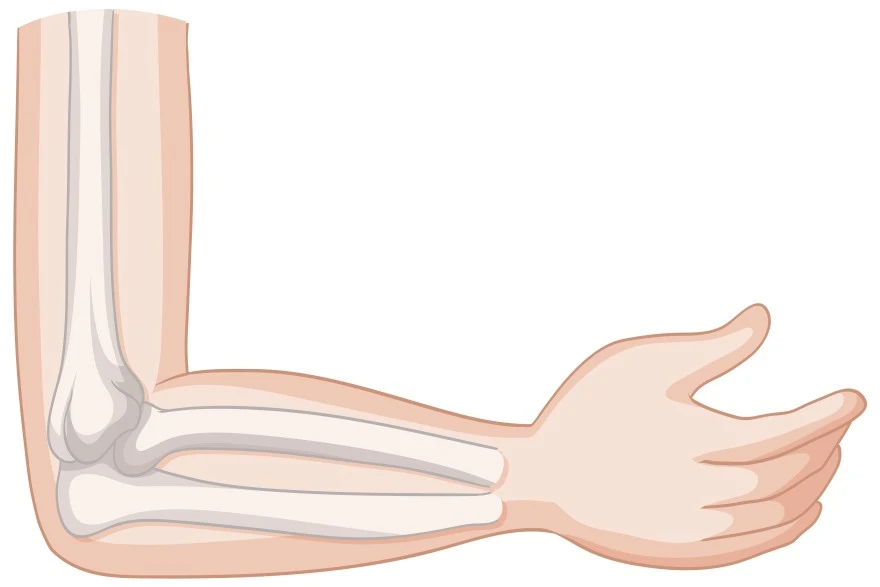
Table of Contents
What Is the Elbow Joint?
The elbow joint is a complex synovial hinge joint that connects the humerus (upper arm bone) to the two forearm bones, the radius and ulna. This remarkable joint provides both stability and mobility, allowing you to perform precise movements whilst protecting delicate nerves and blood vessels that pass through the area.
Unlike single-function hinge joints such as the knee or ball-and-socket joints like the hip, the elbow joint contains three separate articulations within a single joint capsule, making it uniquely complex. The elbow joint works in coordination with your shoulder joint to position your hand in space, enabling you to reach, grasp, and manipulate objects effectively throughout your day.
Anatomy of the Elbow Joint
Understanding the elbow joint's anatomy helps explain how this remarkable structure functions. The key components include:
- Three bones: The humerus (upper arm), radius (thumb side of forearm), and ulna (pinky side of forearm)
- Three articulations: Humeroulnar joint (main hinge), humeroradial joint (supports bending), and proximal radioulnar joint (enables rotation)
- Joint capsule: A strong, fibrous membrane that encloses and stabilises the elbow joint
- Cartilage: Smooth hyaline cartilage that lines bone surfaces for friction-free movement
- Synovial fluid: Natural lubricant that nourishes cartilage and reduces friction
The elbow joint ligaments provide crucial stability:
- Ulnar collateral ligament: Prevents excessive sideways movement on the inner side
- Radial collateral ligament: Stabilises the outer side of the joint
- Annular ligament: Encircles the radial head and keeps it aligned with the ulna during rotation
Several bursae (fluid-filled sacs) around the elbow joint reduce friction between moving parts, whilst muscles like the biceps, triceps, and forearm muscles control elbow joint movement with remarkable precision.
How the Elbow Joint Works
The elbow joint functions primarily as a hinge, allowing your forearm to bend (flexion) and straighten (extension) through approximately About 145–150 degrees of motion. Additionally, the proximal radioulnar joint within the elbow enables forearm rotation, turning the forearm so the palm faces upward (supination) or downward (pronation). This dual functionality makes elbow joint movement essential for activities like turning door handles, using screwdrivers, or stirring food whilst cooking.
The joint's stability comes from its unique bone architecture, where the ulna fits snugly into the humerus like a key in a lock, reinforced by strong elbow joint ligaments. Smooth cartilage surfaces and synovial fluid ensure effortless movement, whilst surrounding muscles provide the power and control needed for both delicate tasks and heavy lifting.
Common Elbow Joint Problems
Elbow Tendonitis (Tennis Elbow)
Tennis elbow, or lateral epicondylitis, represents one of the most common causes of elbow joint pain. This condition occurs when tendons on the outside of your elbow become inflamed due to repetitive gripping or lifting motions. Despite its name, tennis elbow affects many people who don't play tennis: painters, carpenters, and office workers who use computers extensively often develop this condition.
Symptoms include pain and tenderness on the outer elbow, weakness when gripping objects, and discomfort that worsens with wrist extension. According to findings summarised by the National Library of Medicine, healthcare professionals recommend rest, ice therapy, and anti-inflammatory medication as first-line treatment for elbow pain. Surgery is seldom required.
Elbow Arthritis
Elbow arthritis involves inflammation and degeneration within the joint, causing significant discomfort and functional limitations. Osteoarthritis, the most common type, results from wear and tear over time, whilst rheumatoid arthritis stems from autoimmune inflammation. Post-traumatic arthritis can develop following elbow injuries or fractures.
Symptoms include morning stiffness, swelling, reduced range of motion, and persistent joint pain that may interfere with sleep and daily activities. An elbow joint x-ray often reveals characteristic changes such as joint space narrowing, bone spurs, or cartilage loss that help confirm the diagnosis.
Elbow Fractures and Dislocations
Elbow fractures and dislocations are serious injuries that require prompt medical evaluation and treatment Fractures commonly involve the radial head, olecranon (elbow tip), or distal humerus, often resulting from falls onto an outstretched hand. Elbow dislocations occur when the joint bones are forced out of alignment, typically due to trauma or sports injuries.
These conditions cause severe elbow joint pain, visible swelling, inability to move the joint normally, and sometimes obvious deformity. Prompt treatment is essential to prevent permanent damage to the intricate elbow joint anatomy and surrounding structures.
Tests Used to Diagnose Elbow Joint Disorders
Healthcare providers use several diagnostic approaches to evaluate elbow problems:
- Physical examination: Assessing range of motion, stability, and pain patterns
- Elbow joint x-ray: Reveals fractures, dislocations, and arthritic changes
- MRI scans: Provide detailed images of soft tissues, including ligaments, tendons, and cartilage around the elbow
- Ultrasound: Detects tendon tears and inflammation
- CT scans: Offer additional detail for complex fractures
Elbow Joint Treatment Options
Effective elbow joint pain treatment varies depending on the specific condition and severity:
- Conservative management: Rest, ice, compression, elevation (RICE protocol)
- Medications: Anti-inflammatory drugs to reduce pain and swelling
- Physical therapy: Targeted exercises to restore strength and mobility
- Bracing or splinting: Supports healing and prevents further injury
- Corticosteroid injections: Reduce persistent inflammation and pain when conservative measures fail
- Activity modification: Adjusting daily tasks to reduce joint stress
Prevention of Elbow Injuries
- Use proper technique: Learn correct form for sports and repetitive activities
- Warm up thoroughly: Prepare muscles and joints before exercise
- Strengthen supporting muscles: Build forearm, bicep, and tricep strength
- Take regular breaks: Avoid prolonged repetitive motions
- Wear protective equipment: Use elbow pads during high-risk activities
Rehabilitation After an Elbow Injury
- Initial rest and protection: Allow acute inflammation to settle
- Gentle range-of-motion exercises: Maintain joint flexibility
- Progressive strengthening: Gradually rebuild muscle strength
- Functional training: Practice daily activities and sports-specific movements
- Return to full activity: Resume normal activities with proper precautions
Elbow Joint Surgery
Surgical intervention may be necessary when conservative treatment for elbow pain fails or for severe injuries. Procedures may include arthroscopic cleaning, fracture repair, ligament reconstruction, or joint replacement in advanced arthritis cases.
Modern surgical techniques often use minimally invasive approaches, reducing recovery time and improving outcomes. Post-surgical rehabilitation focuses on restoring elbow joint movement whilst protecting healing structures.
How to Improve Elbow Joint Mobility
Maintaining healthy elbow function requires consistent effort:
- Perform daily stretching: Gentle exercises maintain flexibility
- Strengthen regularly: Target all muscle groups around the joint
- Practice proper ergonomics: Adjust workstations to reduce strain
- Stay active: Regular movement prevents stiffness
- Listen to your body: Rest when you experience joint pain
Conclusion
Your elbow joint plays a vital role in daily function, and understanding its anatomy and common problems empowers you to maintain joint health. Whether you're experiencing joint pain or seeking prevention strategies, early intervention and proper care make a significant difference in outcomes.
At Metropolis Healthcare, we understand the importance of accurate diagnosis in managing elbow joint conditions. With our comprehensive portfolio of over 4,000 tests and profiles, including advanced imaging and inflammatory markers, we provide the precise diagnostics needed to guide effective treatment decisions.
FAQs
What are the most common elbow joint problems?
The most frequent issues include tennis elbow (lateral epicondylitis), golfer's elbow (medial epicondylitis), osteoarthritis, and acute injuries like fractures or dislocations.
How do I treat elbow pain at home?
Initial home treatment involves rest, ice application for 15-20 minutes several times daily, over-the-counter anti-inflammatory medications, and avoiding activities that worsen symptoms. Gentle stretching and strengthening exercises can help once acute pain subsides, but persistent symptoms require professional evaluation.
When should I see a doctor for elbow pain?
Seek medical attention if you experience severe pain, obvious deformity, inability to move your elbow, numbness or tingling in your hand, or if symptoms don't improve with home treatment within a few days.
What are the causes of elbow arthritis?
Elbow arthritis can result from normal wear and tear (osteoarthritis), autoimmune conditions (rheumatoid arthritis), previous injuries (post-traumatic arthritis), or genetic factors. Age, repetitive use, and previous elbow injuries increase your risk of developing arthritis.
Can elbow injuries lead to permanent damage?
Yes, untreated or improperly managed elbow injuries can result in permanent stiffness, weakness, chronic joint pain, or reduced function. Complex fractures, severe ligament tears, and advanced arthritis may cause lasting limitations, emphasising the importance of proper treatment and rehabilitation.
How long does it take to recover from an elbow injury?
Recovery time varies significantly depending on injury severity and type. Minor strains may heal within weeks, whilst fractures or surgical repairs can take several months to a year. Consistent rehabilitation and following medical advice are crucial for optimal recovery and preventing re-injury.
References
• https://www.ncbi.nlm.nih.gov/books/NBK431092/
• https://my.clevelandclinic.org/health/body/elbow-joint
• https://teachmeanatomy.info/upper-limb/joints/elbow-joint/
• https://www.mayoclinic.org/diseases-conditions/tennis-elbow/symptoms-causes/syc-20351987