Home Visit
 Upload






Preventive Healthcare
Smallest and Longest Bones in the Human Body: Bone Structure Explained
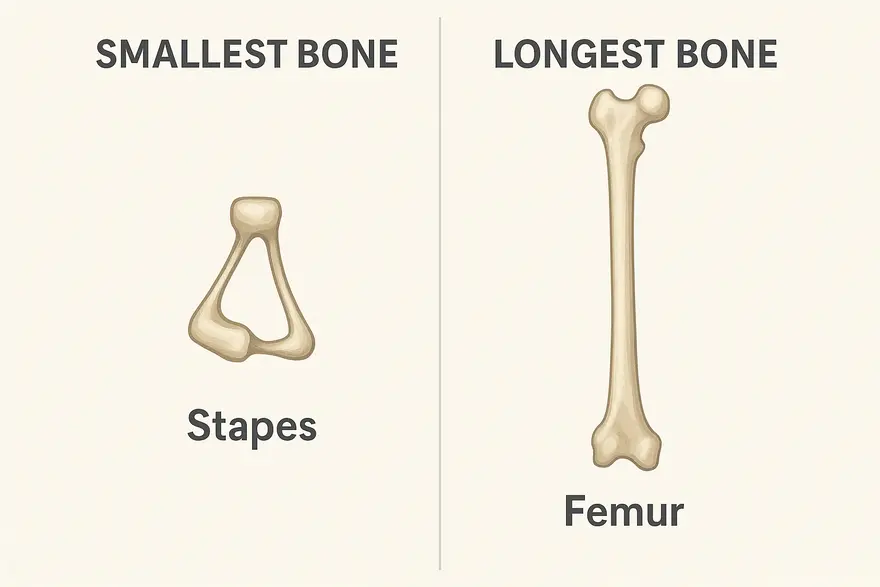
Table of Contents
- What Is the Smallest Bone in the Body?
- What Is the Longest Bone in the Body?
- Comparison of Bone Sizes: Smallest vs Longest
- Functions of the Smallest and Longest Bones
- Bone Structure and Composition
- Common Bone Disorders Related to Size and Shape
- Tips for Keeping Bones Healthy
- What Tests are Done for the Femur?
- What Are The Treatment Options For Stapes Recovery?
- FAQs
The human skeletal system is a remarkable framework comprising 206 bones, each with a unique structure and function. Among these bones, the stapes and the femur stand out as the smallest and longest bones in the body, respectively. Despite their vastly different sizes, both play crucial roles in maintaining our overall health and well-being. In this article, we'll explore the fascinating world of the stapes bone and the femur bone, comparing their sizes, functions, and common disorders related to their structure.
What Is the Smallest Bone in the Body?
The stapes, also known as the stirrup, holds the title of the smallest bone in the human body. Located in the middle ear, this tiny bone measures a mere 2.5 to 3.4 millimetres in length and weighs less than 5 milligrams. To put this into perspective, the stapes is about the size of a small grain of rice. Despite its diminutive size, the stapes plays a vital role in the process of hearing. As part of the auditory ossicles, along with the malleus and incus, the stapes transmits sound vibrations from the eardrum to the inner ear, enabling us to perceive and interpret sounds.
What Is the Longest Bone in the Body?
On the other end of the spectrum, the femur, or thigh bone, is the longest bone in the human body. In adults, the femur averages 19 to 20 inches (about 50 centimetres) in length. This substantial size is necessary to support the weight of the upper body and facilitate movement. The femur extends from the hip joint to the knee joint, providing a strong and stable foundation for walking, running, and other lower limb activities. Its robust structure also serves as an attachment point for powerful muscles, such as the quadriceps and hamstrings, which enable us to perform a wide range of movements.
Comparison of Bone Sizes: Smallest vs Longest
When comparing the stapes and the femur, the bone length comparison is striking:
- The stapes measures just 2.5–3.4 mm, while the femur averages 19–20 inches (50 cm).
- The femur is approximately 8,000 times longer than the stapes.
- The stapes is located in the ear, while the femur is found in the thigh.
- The femur is the strongest and heaviest bone, supporting body weight, while the stapes is extremely light, aiding in sound transmission.
Functions of the Smallest and Longest Bones
Despite their vastly different sizes, both the stapes bone and the femur bone play crucial roles in the body:
- Stapes:
- Transmits sound vibrations from the middle ear to the inner ear.
- Enables hearing by converting mechanical vibrations to nerve impulses.
- Femur:
- Bears and distributes body weight during movement and standing.
- Provides structural support for the lower limb and serves as a key attachment point for muscles.
- Facilitates locomotion (walking, running, jumping) and maintains balance.
Bone Structure and Composition
Despite their size differences, both the stapes and femur share the basic building blocks of bone:
- Bones primarily consist of collagen, a protein that provides flexibility, and calcium phosphate, a mineral that lends strength.
- The femur's structure includes a dense outer cortical layer and a spongy inner trabecular layer.
- The stapes is composed of compact bone tissue, ensuring rigidity for efficient sound transmission.
- Living cells, blood vessels, and nerves within the bones support growth, repair, and metabolic functions.
Common Bone Disorders Related to Size and Shape
Disorders affecting the smallest and longest bones can significantly impact hearing and mobility:
- Otosclerosis: Abnormal bone growth in the middle ear can affect the stapes, leading to hearing loss.
- Femoral fractures: Due to its size and role in bearing weight, fractures of the femur can be serious and require extensive treatment.
- Osteoporosis: This condition weakens bones, increasing the risk of fractures, especially in large bones like the femur.
- Congenital deformities: Abnormalities in bone development can affect the size, shape, or density of the stapes or femur, potentially impacting their function.
Tips for Keeping Bones Healthy
To keep your bones, including the stapes and femur, healthy and strong, consider the following tips:
- Ensure adequate calcium and vitamin D intake for bone strength.
- Engage in regular weight-bearing and muscle-strengthening exercises to maintain bone density.
- Avoid smoking and limit alcohol consumption, as both can weaken bones.
- Protect against falls to reduce fracture risk, especially in older adults.
- Have regular bone density screenings if at risk for osteoporosis.
- Use hearing protection to prevent ear damage that can affect the stapes.
Incorporating these habits into your daily routine can help maintain the health and function of your bones throughout your life.
What Tests are Done for the Femur?
If a femoral fracture or other condition affecting the femur bone is suspected, several diagnostic tests may be performed:
- X-ray: First-line imaging for suspected fractures or bone abnormalities in the femur.
- CT scan: Provides detailed images for complex fractures or planning surgery.
- MRI: Useful for detecting soft tissue injuries, bone tumours, or infection around the femur.
- Bone density scan (DEXA): Assesses bone mineral density to diagnose osteoporosis, especially in those at risk of femoral fractures.
Your doctor will determine the most appropriate tests based on your symptoms and medical history.
What Are The Treatment Options For Stapes Recovery?
Treatment for stapes-related issues depends on the specific condition and severity:
- Mild cases of otosclerosis may be monitored initially without intervention.
- Hearing aids can help amplify sound when stapes movement is impaired.
- Stapedectomy, a surgical procedure to replace the stapes with a prosthesis, may be recommended to restore hearing.
- A similar procedure called stapedotomy may be used where a small opening is created in the footplate of the stapes.
- In some cases, medications may be used to manage symptoms.
- Post-surgical rehabilitation can help optimise hearing outcomes.
If you have concerns about your bone health or are experiencing symptoms related to the stapes or femur, don't hesitate to consult with a doctor. Metropolis Healthcare, with its network of advanced diagnostic labs across India, offers comprehensive health assessments and convenient at-home sample collection services. By taking proactive steps to care for your bones, you can ensure that your skeleton continues to provide the support and mobility you need to live life to the fullest.
Also Read: Bone Diseases: Types, Causes and Treatment
FAQs
What is the name of the smallest bone in the human body?
The smallest bone in the human body is the stapes, located in the middle ear. It measures about 3 millimetres and plays a vital role in hearing by transmitting sound vibrations from the eardrum to the inner ear.
What is the largest bone of the human body?
The longest bone in human body is femur, or thigh bone. It extends from the hip to the knee and supports much of the body’s weight. Its size and strength are essential for walking, running, and maintaining upright posture.
Why is the femur considered the strongest bone?
The femur is considered the strongest bone because of its density and ability to withstand intense pressure and stress. It supports the entire upper body during movement, making it crucial for mobility, balance, and overall skeletal strength.
Where is the stapes bone located?
The stapes bone is located in the middle ear, within the temporal bone of the skull. As part of the auditory ossicles, it transmits sound vibrations from the incus to the oval window, facilitating hearing through mechanical energy transfer.
Can the size of bones affect mobility?
Yes, bone size can significantly affect mobility. Larger bones typically provide more strength and support, while smaller or underdeveloped bones may limit movement, reduce stability, and increase injury risk. Proper bone development is essential for physical function and mobility.