Home Visit
 Upload






Preventive Healthcare
Prawns vs Shrimp: 7 Key Differences and Which is Healthier?
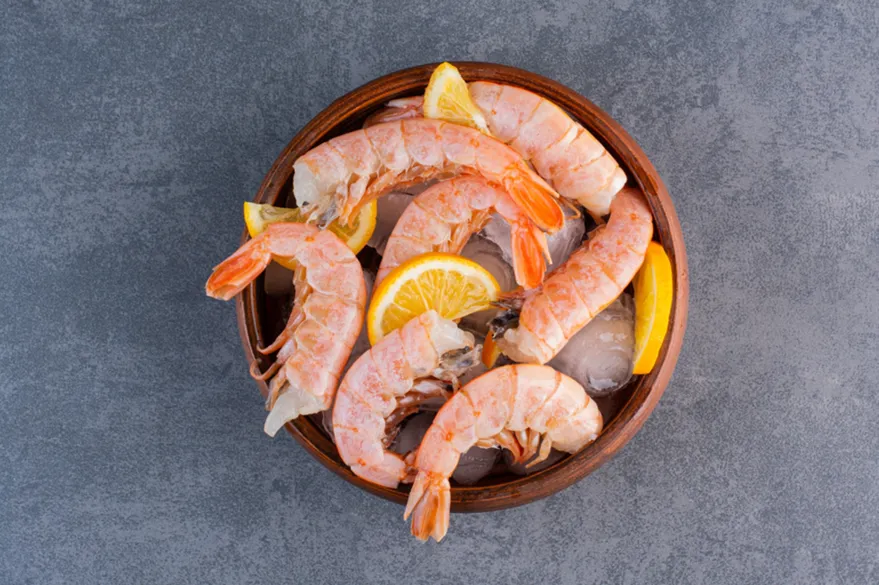
Table of Contents
- Prawns vs Shrimp: Quick Difference Summary
- What Are Prawns?
- What Are Shrimp?
- Biological & Anatomical Differences
- Size Differences
- Texture & Taste Differences
- Nutritional Comparison (Prawn vs Shrimp)
- Which Is Healthier: Prawn or Shrimp?
- Cost & Availability Differences
- Cooking Differences
- Allergies: Prawns vs Shrimp
- Environmental & Sustainability Differences
- How to Choose Between Prawn and Shrimp
- When to Avoid Eating Prawns or Shrimp
- Conclusion
- FAQs
- References
Prawns vs Shrimp: Quick Difference Summary
|
Feature |
Prawns |
Shrimp |
|
Scientific Classification |
Suborder Dendrobranchiata |
Suborder Pleocyemata |
|
Body Structure |
Straighter, less bendable |
More curved, flexible |
|
Claws |
Three pairs of claw-bearing legs |
One pair of claw-like legs |
|
Habitat |
Freshwater and calm coastal waters |
Mainly saltwater environments |
|
Size (Marketing) |
Often larger specimens |
Various sizes available |
|
Gills |
Branching structure |
Plate-like structure |
|
Reproduction |
Release eggs freely into the surrounding water |
Carry eggs under the body |
As per the National Institutes of Health (NIH), prawns are scientifically classified under the decapod suborder Dendrobranchiata, while shrimp belong mainly to Pleocyemata (especially Caridea). The NIH review notes that although these groups differ in body structure, gill type, and reproductive behavior, the terms are often used interchangeably in culinary and commercial settings.
What Are Prawns?
Prawns are large crustaceans belonging to the suborder Dendrobranchiata. They are commonly found in freshwater rivers, lakes, and estuaries, although some species live in marine environments. Prawns tend to have a straighter body shape and larger size, making them popular for grilling, curries, and celebratory dishes.
What Are Shrimp?
Shrimp belong to the suborder Pleocyemata and are primarily marine animals found in oceans and coastal waters. They have a curved body and are generally smaller than prawns. Shrimp are widely consumed globally due to their affordability, quick cooking time, and versatility in everyday meals.
Biological & Anatomical Differences
Understanding the biological distinctions helps clarify the shrimp vs prawn comparison:
Taxonomic Classification
- Shrimp: Suborder Pleocyemata (which also includes crabs and lobsters)
- Prawns: Suborder Dendrobranchiata (distinct evolutionary branch)
Body Segmentation Patterns
- Shrimp: Thorax overlaps head and abdomen, enabling greater body flexion
- Prawns: Sequential overlap (head → thorax → abdomen) creates a straighter appearance
Leg Structure
- Shrimp: Single pair of claw-like legs
- Prawns: Three pairs of claw-bearing legs, typically longer
Gill Architecture
- Shrimp: Plate-like gill structure
- Prawns: Branching gill configuration
Reproductive Methods
- Shrimp: Females carry fertilised eggs attached to their undersides
- Prawns: Release eggs freely into the surrounding water
Habitat Preferences
- Shrimp: Predominantly saltwater, often seafloor environments
- Prawns: Many species prefer freshwater or calm coastal areas
Size Differences
The prawn size vs shrimp comparison is one of the easiest ways to tell them apart. Prawns are typically larger and heavier, often served whole. Shrimp are smaller and sold by count per kilogram, making them ideal for stir-fries and quick sautés.
Texture & Taste Differences
Many culinary experts describe the taste differences between prawn and shrimp as subtle yet noticeable. Prawns often present a slightly sweeter, meatier texture, while shrimp tend toward more delicate, more tender flesh. However, scientific evidence suggests no consistent, inherent flavour difference exists strictly based on prawn versus shrimp classification.
Taste and texture depend on factors such as species, diet, habitat, freshness, and preparation methods. Wild-caught specimens often differ from farmed varieties, while freshwater and saltwater origins influence flavour profiles. This similarity explains why prawns and shrimp remain widely interchangeable in recipes.
Nutritional Comparison (Prawn vs Shrimp)
|
Nutrient (per 85g cooked) |
Prawns |
Shrimp |
|
Calories |
~85 kcal |
~85 kcal |
|
Protein |
~18 g |
~18 g |
|
Total Fat |
~1.5 g |
~1.5 g |
|
Omega-3 Fatty Acids |
~295 mg |
~295 mg |
|
Cholesterol |
~166 mg (moderate level) |
~166 mg (moderate level) |
|
Sodium |
~190 mg |
~190 mg |
|
Vitamin B12 |
approximately 1.4 µg |
approximately 1.4 µg |
|
Selenium |
~35 mcg |
~35 mcg |
Which Is Healthier: Prawn or Shrimp?
The truth about prawns vs shrimp nutrition reveals remarkable similarity. Both provide excellent lean protein sources with minimal calories and beneficial omega-3 fatty acidsk. Neither option clearly surpasses the other nutritionally, as their profiles remain virtually identical across key nutrients.
Both shellfish offer high-quality protein supporting muscle maintenance and growth. Their omega-3 content supports heart health and brain function. The cholesterol content, while relatively high, occurs alongside minimal saturated fat and beneficial nutrients, making both suitable for heart-healthy diets when consumed moderately.
Cost & Availability Differences
Prawns typically command higher prices due to size perception and regional preferences. In India, larger prawns often cost significantly more than equivalent-sized shrimp. Availability varies by region, with coastal areas offering fresher options year-round.
Frozen varieties provide consistent availability and often better value. Consider seasonal patterns, with monsoon months typically providing peak freshness for locally sourced options.
Cooking Differences
Both shellfish respond similarly to various cooking methods:
Preparation Similarities
- Both require similar cleaning and deveining
- Cooking times remain comparable for equal sizes
- Seasoning and marinades work equally well
Optimal Cooking Methods
- Grilling: Both develop excellent char and flavor
- Stir-frying: Quick cooking preserves texture
- Curries: Both absorb spices effectively
Temperature Guidelines
- Internal temperature: 63°C (145°F) for food safety
- Overcooking can make both tough and rubbery
Allergies: Prawns vs Shrimp
Shellfish allergies can be triggered by both prawns and shrimp, as they share similar allergenic proteins. The major allergen, tropomyosin, exists in both species. Cross-reactivity means those allergic to one usually react to both.
Symptoms can range from mild itching or hives to severe anaphylaxis. Anyone with suspected shellfish allergies should consult healthcare providers for proper testing and management strategies.
Environmental & Sustainability Differences
Sustainability depends more on farming and sourcing practices than on species type. Both prawns and shrimp face environmental challenges from intensive aquaculture. Look for certifications from sustainable sources when purchasing.
Wild-caught options often present better environmental profiles but may face overfishing concerns. Choose responsibly sourced options regardless of whether you prefer prawns or shrimp.
How to Choose Between Prawn and Shrimp
Consider these factors when making your selection:
Freshness Indicators
- Clear, bright eyes
- Firm, springy texture
- Mild, ocean-like smell
Size Requirements
- Larger specimens for grilling
- Smaller sizes for curries and stir-fries
Budget Considerations
- Compare prices per kilogram
- Consider frozen options for better value and year-round availability
When to Avoid Eating Prawns or Shrimp
Health Conditions Requiring Caution
- Known shellfish allergies or prior allergic reactions to crustaceans
- Severe kidney disease (due to higher sodium content)
- Gout flare-ups (moderate purine content)
Quality Concerns
- Strong fishy odours
- Slimy texture
- Discoloured flesh
Conclusion
Choosing between prawns and shrimp depends on your taste preferences, recipes, and health goals. Both are excellent lean protein sources, but moderation is key for those managing cholesterol, calories, or allergies.
With Metropolis Healthcare, you can proactively monitor your health through 4,000+ diagnostic tests, comprehensive full-body checkups, and advanced speciality testing. Metropolis offers home sample collection across 10,000 touchpoints, quick turnaround times, and highly accurate results, with easy booking via website, call, app, or WhatsApp—bringing accurate, trusted diagnostics right to your doorstep.
FAQs
What is the main difference between prawns and shrimp?
The key difference lies in their biological structure, habitat, and size.
Which is bigger: a prawn or a shrimp?
Prawns are generally larger than shrimp.
Which tastes better: prawn or shrimp?
Taste is subjective; prawns are firmer and sweeter; shrimp are tender and mildly briny.
Are prawns healthier than shrimp?
Both are healthy; shrimp are slightly lower in calories.
Is shrimp the same as prawn in India?
In India, the terms are often used interchangeably, though they are biologically different.
Why are prawns more expensive?
Larger size, farming costs, and higher demand increase prices.
Can you cook prawns and shrimp the same way?
Yes, but cooking times vary.
Do prawns and shrimp have the same allergies?
Yes, both cause shellfish allergies.
Which is better for weight loss?
Shrimp, due to its lower calorie density.
Is prawn a type of shrimp?
No, they are related but distinct crustaceans.
References
- https://pubmed.ncbi.nlm.nih.gov/31054672/
- https://pmc.ncbi.nlm.nih.gov/articles/PMC11844257/