Home Visit
 Upload






Preventive Healthcare
PR BPM In Oximeter: Meaning, Normal Range, And Why It Matters
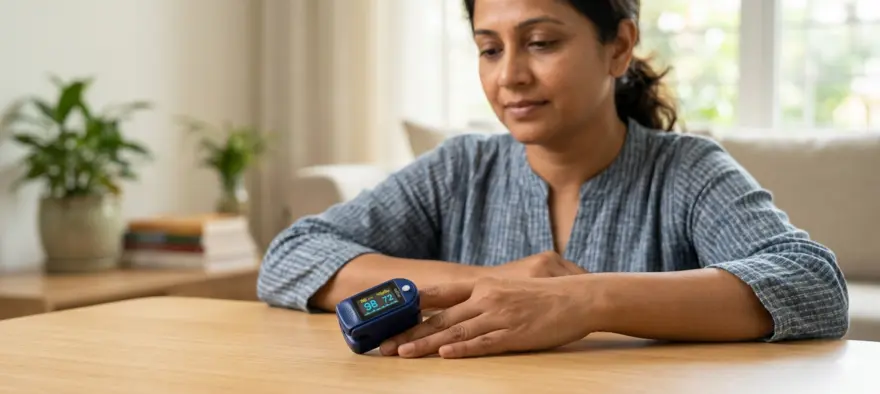
Table of Contents
- What Is PR BPM In Oximeter?
- Why Does A Pulse Oximeter Show PR BPM?
- How Does A Pulse Oximeter Measure PR BPM?
- PR BPM Vs Heart Rate
- What Is The Normal PR BPM Range?
- PR BPM Normal Range For Children And Adults
- What Does High Or Low PR BPM Mean?
- PR BPM And Oxygen Saturation: What Is The Relationship?
- What Affects PR BPM Accuracy In A Pulse Oximeter?
- How To Use A Pulse Oximeter Correctly To Check PR BPM
- PR BPM In Oximeter: Normal Vs Abnormal Readings
- Why PR BPM Matters For Your Heart And Overall Health
- The Importance Of Regular Monitoring
- When To Be Careful While Reading PR BPM At Home
- When Should You Seek Medical Advice?
- Conclusion
- FAQs
- References
If you have ever used a pulse oximeter at home, you may have noticed two readings on the screen: SpO2 and PR BPM. While most people are familiar with oxygen levels, the PR BPM reading often raises questions. What does it mean? Is your reading normal? Should you be concerned?
PR BPM is a simple but useful metric. Understanding it helps you monitor your health at home with greater confidence. This guide explains everything you need to know, in plain language, so you can make sense of what you see on your device.
What Is PR BPM In Oximeter?
PR BPM stands for Pulse Rate Beats Per Minute. It tells you how many times blood is pulsing through your arteries each minute, as detected by your pulse oximeter.
In other words, it is a measure of how fast your heart is pumping blood at that moment. A normal, healthy pulse means your heart is working efficiently to circulate oxygenated blood throughout your body.
This reading is displayed alongside your SpO2 (oxygen saturation) level on most fingertip pulse oximeters.
Why Does A Pulse Oximeter Show PR BPM?
A pulse oximeter is primarily designed to measure the oxygen saturation in your blood. However, to do this, the device detects blood flow through your finger using light sensors. Each time your heart beats, a small surge of blood passes through your fingertip. The oximeter counts these surges and converts them into a beats-per-minute reading.
This is why PR BPM appears on the display alongside SpO2. Both readings are captured from the same measurement process. Together, they give you a more complete picture of how your heart and lungs are functioning at any given moment.
How Does A Pulse Oximeter Measure PR BPM?
A pulse oximeter uses a method called photoplethysmography. The device shines two wavelengths of light through your fingertip. Oxygenated and deoxygenated blood absorb these light wavelengths differently.
As blood flows through your finger with each heartbeat, the amount of light reaching the sensor on the other side changes. The device detects these changes and counts them as individual pulses. Over one minute, this count becomes your PR BPM reading.
This is an optical method, not an electrical one. It is completely non-invasive and safe for everyday use.
PR BPM Vs Heart Rate
PR BPM and heart rate are often used interchangeably, but they are not exactly the same thing.
Heart rate is measured using the electrical activity of the heart, typically through an ECG. PR BPM, on the other hand, is measured by detecting blood flow at a peripheral site, such as your fingertip.
In most healthy individuals at rest, the two values are very close. However, in cases of poor circulation or certain heart rhythm irregularities, there may be a slight difference between the two. This does not automatically indicate a problem, especially when you are monitoring at home.
What Is The Normal PR BPM Range?
For most adults at rest, a PR BPM reading between 60 and 100 is considered within the normal range. However, what is normal for you can vary depending on several factors, including your age, fitness level, activity at the time of measurement, stress levels, and any underlying health conditions.
A single reading outside the typical range is not always a cause for concern. How the reading trends over time matters far more than any one isolated number.
Normal PR BPM Range In Adults
For a healthy resting adult, a PR BPM of 60 to 100 is generally considered normal. Well-conditioned individuals may naturally sit at the lower end of this range.
Normal PR BPM Range In Children
Children typically have a higher resting pulse rate than adults. This is normal and reflects the faster metabolic rate of a growing body. As children grow older, their pulse rate gradually moves closer to the adult range.
When A Lower PR BPM Can Be Normal
A resting PR BPM below 60 is not always a cause for worry. Trained athletes and individuals who exercise regularly often have a lower resting pulse. This is because their hearts have become more efficient at pumping blood with each beat. In such cases, a lower PR BPM is actually a sign of good cardiovascular health.
PR BPM Normal Range For Children And Adults
The table below gives a practical overview of typical resting PR BPM ranges across different age groups.
|
Age Group |
Typical Resting PR BPM Range |
|
Newborn (less than 1 month) |
70 to 190 |
|
Infant (1 to 11 months) |
80 to 160 |
|
Toddler (1 to 2 years) |
80 to 130 |
|
Young child (3 to 4 years) |
80 to 120 |
|
Child (5 to 6 years) |
75 to 115 |
|
Older child (7 to 9 years) |
70 to 110 |
|
Above 10 years |
60 to 100 |
|
Adults (18 years and above) |
60 to 100 |
|
Trained athletes |
40 to 60 |
These ranges are for resting measurements. Readings taken after physical activity, during stress, or when unwell will naturally differ.
What Does High Or Low PR BPM Mean?
High PR BPM
A PR BPM reading above 100 in a resting adult is referred to as tachycardia. This can happen for a wide range of reasons, and many of them are temporary and harmless.
Common causes of a higher PR BPM include fever, physical exertion, anxiety, stress, dehydration, caffeine intake, and certain medications. In some cases, persistently elevated pulse rates may be linked to thyroid disorders, infections, anaemia, or heart-related concerns such as arrhythmias or heart failure.
If your PR BPM is consistently elevated at rest, and you are not unwell or under stress, it is worth discussing with your doctor.
Low PR BPM
A PR BPM reading below 60 at rest is known as bradycardia. As mentioned earlier, this is often completely normal in athletes and active individuals.
However, a lower pulse rate accompanied by symptoms such as dizziness, fatigue, or fainting may indicate an underlying issue. Certain medications, thyroid disorders, and conditions affecting the heart's electrical system can also result in a lower pulse.
PR BPM And Oxygen Saturation: What Is The Relationship?
PR BPM and SpO2 are two separate readings, but they are closely related in terms of what they tell you about your health.
SpO2 measures how much oxygen your blood is carrying. PR BPM tells you how fast your heart is pumping. In a healthy state, both readings should be within normal limits.
When the body is under stress, fighting an infection, or experiencing breathing difficulties, both readings can shift. A rising pulse rate alongside a falling SpO2 level is a sign that your body may be struggling to maintain adequate oxygen delivery. According to health guidelines, an SpO2 level below 92 per cent, especially when combined with a rapidly rising pulse, warrants prompt medical attention.
Tracking both readings together gives you a more useful picture of your overall status than either reading alone.
What Affects PR BPM Accuracy In A Pulse Oximeter?
Pulse oximeters are reliable for home monitoring, but several factors can affect the accuracy of your PR BPM reading:
- Cold hands: Reduced blood flow to the fingertips makes it harder for the sensor to detect pulses accurately.
- Poor circulation: Conditions that affect peripheral blood flow can result in weaker or inconsistent readings.
- Finger movement: Even small movements during measurement can disrupt the sensor signal.
- Nail polish or artificial nails: Dark nail polish, gel nails, or acrylic nails can interfere with light absorption and alter the reading.
- Incorrect finger placement: The fingertip must fully cover the sensor window for accurate results.
- Low battery: A device with a weak battery may display less reliable readings.
- Weak signal quality: Some devices display a signal strength indicator. A weak signal means the reading may not be fully reliable.
Being aware of these factors helps you get more consistent and trustworthy readings each time you use your device.
How To Use A Pulse Oximeter Correctly To Check PR BPM
Getting an accurate PR BPM reading depends as much on how you use the device as on the device itself. Follow these steps for a reliable measurement:
- Sit quietly and rest for at least five minutes before taking a reading.
- Warm your hands if they feel cold. Rub them together or hold them under warm water briefly.
- Remove nail polish from the finger you plan to use, if possible.
- Place the device correctly on your fingertip, ensuring the finger fits snugly into the sensor.
- Keep your hand still and resting comfortably on a flat surface.
- Wait for the reading to settle. Most devices take a few seconds to stabilise.
- Note both PR BPM and SpO2 and record them if you are monitoring over time.
For the most consistent results, use the same finger and take readings at the same time of day.
PR BPM In Oximeter: Normal Vs Abnormal Readings
It is easy to feel anxious when a reading looks unusual. Here is a balanced way to interpret what you see:
A normal reading at rest typically shows a PR BPM between 60 and 100, along with an SpO2 of 95 per cent or above. This generally indicates that your heart and lungs are functioning well at that moment.
A temporarily unusual reading may occur if you have just finished exercising, are feeling anxious, have had caffeine, or if the measurement conditions were not ideal. One reading outside the normal range, on its own, is rarely cause for concern.
One reading alone should not be overinterpreted. A single high or low number does not confirm a health problem. Context and consistency matter.
Repeated trends matter more. If your PR BPM is consistently outside the normal range across multiple readings taken under good conditions, that is when you should speak to your doctor.
Why PR BPM Matters For Your Heart And Overall Health
Monitoring your PR BPM regularly offers useful insights into your overall wellbeing. Here is why it matters:
- General wellness monitoring: Your resting pulse rate can reflect how your body is managing day-to-day demands. An unexplained increase over several days may indicate that your body is under stress or fighting an illness.
- Recovery from illness: During a respiratory infection or post-hospitalisation recovery, tracking your PR BPM alongside SpO2 helps you notice whether your condition is improving or declining.
- Respiratory symptoms: Conditions that affect breathing, such as asthma or chronic lung disease, can influence your pulse. Monitoring PR BPM helps you recognise changes early.
- Tracking changes over time: Keeping a record of your daily readings gives your doctor useful information. If you develop arrhythmias, symptoms of heart failure, or signs of a thyroid disorder, a history of readings can aid diagnosis and treatment decisions.
- Knowing when to get checked: If your PR BPM consistently sits outside the healthy range, your body may be signalling that something needs attention. Routine monitoring helps you notice this before symptoms become serious.
The Importance Of Regular Monitoring
Checking your PR BPM regularly is a simple habit that supports your awareness of your own health. Here is why it is worth doing consistently:
- It helps you notice changes early, before they become significant.
- It is useful during recovery from illness, surgery, or a period of poor health.
- It is particularly helpful for older adults and their caregivers, as pulse rate can reflect general vitality and cardiovascular health.
- It supports better conversations with your doctor. When you bring recorded readings to an appointment, your doctor has more to work with.
- It works best when tracked consistently, rather than checked only when you feel unwell.
When To Be Careful While Reading PR BPM At Home
A pulse oximeter is a useful monitoring tool, but it is not a diagnostic device. Here are a few important things to keep in mind:
- A pulse oximeter can tell you what your reading is at a moment in time. It cannot tell you why.
- Always interpret your PR BPM reading in the context of how you feel. Symptoms matter as much as numbers.
- If the measurement conditions were not ideal (cold hands, movement, incorrect placement), repeat the reading before drawing conclusions.
- Seek medical advice if your readings are persistently abnormal, or if you experience any of the warning signs mentioned earlier in this article.
- Do not attempt to self-diagnose based on a pulse oximeter reading alone.
When Should You Seek Medical Advice?
You should speak to a doctor if you experience any of the following alongside an unusual PR BPM reading:
- Chest discomfort or tightness
- Shortness of breath
- Dizziness or lightheadedness
- Fainting or near-fainting episodes
- Persistent palpitations
- Unexplained fatigue
- Repeated abnormal readings over several days
Always pay attention to your symptoms and not just the number on your device.
Conclusion
PR BPM in a pulse oximeter gives you a quick, non-invasive snapshot of how fast your heart is pumping blood each minute. For most adults, a resting PR BPM between 60 and 100 is within the healthy range. Children tend to have naturally higher readings, while athletes may have lower ones.
What matters most is not a single reading, but the pattern over time. A pulse oximeter is a helpful tool for staying aware of your health, especially during illness or recovery. However, persistent or unexplained changes in your PR BPM are always worth discussing with your doctor.
Monitoring your pulse rate at home is one part of a broader commitment to your wellbeing. Pairing this habit with regular preventive health checks gives you an even clearer picture of your health. At Metropolis Healthcare, you can book a full body checkup, routine blood tests, or speciality tests from the comfort of your home. With home sample collection available across a wide network, quick turnaround times, and accurate results, taking a proactive approach to your health has never been simpler. Book easily through the Metropolis website, app, call, or WhatsApp.
FAQs
What Does PR BPM Mean In A Pulse Oximeter?
PR BPM stands for Pulse Rate Beats Per Minute. It tells you how many times blood is pulsing through your arteries each minute, as detected by the oximeter through your fingertip.
Is PR BPM The Same As Heart Rate?
They are closely related but not identical. Heart rate is measured using the heart's electrical activity (as in an ECG), while PR BPM is measured from blood flow at the fingertip using light sensors. In most healthy individuals at rest, the two values are very similar.
What Is A Normal PR BPM Reading For Adults?
For resting adults, a PR BPM of 60 to 100 is generally considered normal. Readings may vary based on age, fitness level, activity, and health status.
Can PR BPM Be Different In Children?
Yes. Children naturally have a higher resting pulse rate than adults. A newborn may have a PR BPM of up to 190, while a child above 10 years typically falls within the 60 to 100 range.
What Causes High PR BPM Readings?
A higher PR BPM at rest may be linked to fever, anxiety, stress, dehydration, caffeine, physical activity, certain medications, infections, thyroid disorders, or conditions such as arrhythmias or heart failure.
What Causes Low PR BPM Readings?
A lower PR BPM is common in trained athletes and physically active individuals. It can also result from certain medications, thyroid conditions, or issues affecting the heart's electrical system. If it is accompanied by dizziness, fatigue, or fainting, speak to your doctor.
How Accurate Is PR BPM In A Pulse Oximeter?
Most certified fingertip pulse oximeters provide reliable readings when used correctly under good conditions. Accuracy can be affected by cold hands, poor circulation, finger movement, nail polish, incorrect placement, or a low battery. Taking multiple readings under settled conditions improves reliability.
Can Nail Polish Affect Pulse Oximeter Readings?
Yes. Dark nail polish, gel nails, and acrylic nails can interfere with the light sensors in a pulse oximeter and may affect the accuracy of both SpO2 and PR BPM readings. Where possible, remove nail polish before measuring.
When Should You Worry About PR BPM?
Seek medical advice if your PR BPM is consistently outside the normal range at rest, or if it is accompanied by symptoms such as chest discomfort, shortness of breath, dizziness, palpitations, fainting, or unexplained fatigue. Do not rely on a single reading alone.
How Often Should You Check PR BPM At Home?
For general wellness monitoring, checking your PR BPM once a day at the same time, ideally in the morning after a few minutes of rest, is a reasonable habit. During illness or recovery, your doctor may advise more frequent monitoring. Consistency in timing and conditions makes your readings more meaningful over time.
References
- Jubran A. Pulse oximetry. Crit Care. 2015;19(1):272. PMID: 26179876.
- Nitzan M, Romem A, Koppel R. Pulse oximetry: fundamentals and technology update. Med Devices (Auckl). 2014;7:231-239. PMID: 25045289.
- Bhatt DL, Bhatt DL. Cardiovascular disease: a diagnostic guide. Heart. 2020.
- World Health Organization. Pulse Oximetry Training Manual. WHO Press; 2011.
- Fleming S, Thompson M, Stevens R, et al. Normal ranges of heart rate and respiratory rate in children from birth to 18 years: a systematic review of observational studies. Lancet. 2011;377(9770):1011-1018. PMID: 21411136.