Home Visit
 Upload






Preventive Healthcare
Metformin: Uses, Benefits, Side Effects, And How It Helps Diabetes
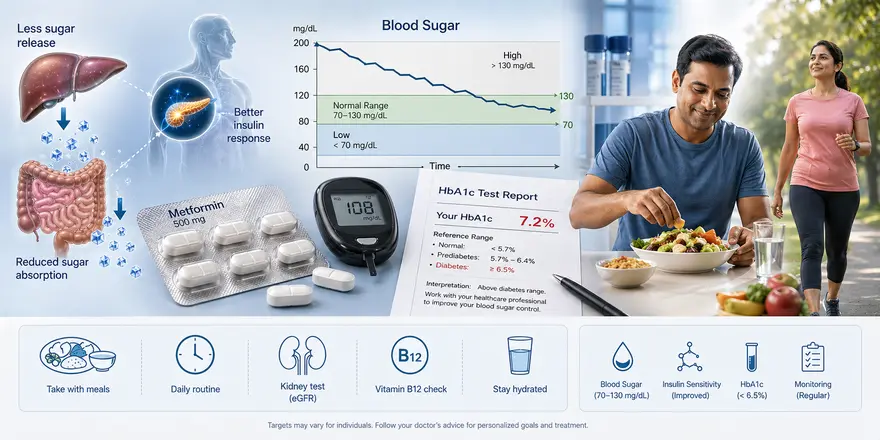
Table of Contents
- What Is Metformin And How Does It Work In The Body
- Metformin Quick Facts
- Metformin Tablet Uses
- How Metformin Helps Control Blood Sugar Levels
- Why Metformin Is Often A Starting Medicine
- Metformin 500 Tablet Uses And Dosage Basics
- Common Metformin Side Effects You Should Know
- Less Common But Important Risks
- Who Should Avoid Metformin Or Use It With Caution
- Metformin Drug Interactions And Extra Precautions
- Diagnostic Tests That Matter While You Are On Metformin
- How To Take Metformin Safely
- Lifestyle Changes That Improve Metformin Effectiveness
- When To Consult A Doctor About Metformin
- Warning Symptoms That Need Prompt Medical Care
- Frequently Asked Questions
- The Bottom Line
- References
If you have been prescribed Metformin, you may want to know what it does, how to take it, and what side effects to watch for. That is a sensible question. Starting any long term medicine can feel overwhelming at first.
Metformin is one of the most established medicines used to manage blood sugar. It is commonly prescribed for type 2 diabetes and is also used in some other situations, including PCOS. When taken correctly and monitored properly, it is effective, affordable, and familiar to doctors across many settings.
What Is Metformin And How Does It Work In The Body
Metformin is an oral medicine that helps lower blood sugar. It belongs to a group of medicines called biguanides.
It works in three main ways. It reduces the amount of sugar your liver makes. It helps your body respond better to insulin. It also reduces how much sugar your body absorbs from food. Together, these effects help bring blood sugar into a healthier range.
Metformin does not force your pancreas to release extra insulin. That is one reason it usually does not cause low blood sugar when taken on its own.
Metformin Quick Facts
- Metformin is a prescription medicine
- It is mainly used to treat type 2 diabetes
- It is available as a regular tablet and an extended release tablet
- A Metformin 500 tablet is a common starting strength
- It is usually taken with food to reduce stomach upset
- It may also be used in some people with PCOS, prediabetes, or gestational diabetes under medical advice
- It works best when paired with healthy food choices, movement, and regular follow up
- Kidney function should be checked before and during treatment
Metformin Tablet Uses
When people search for metformin tablet uses, they are usually asking one simple thing. What is this medicine actually for?
The main use of Metformin is to treat type 2 diabetes. It helps improve blood sugar control and can lower the risk of long term diabetes related complications when it is part of a full care plan.
Metformin uses can also go beyond diabetes in some cases. Doctors may prescribe it for PCOS, especially when insulin resistance is part of the picture. It may also be considered for some people with prediabetes who have a higher risk of progressing to diabetes. In pregnancy, metformin may sometimes be used for gestational diabetes, but only under the guidance of your treating doctor.
How Metformin Helps Control Blood Sugar Levels
Metformin helps in practical, measurable ways:
- It lowers sugar production in your liver
- It improves insulin sensitivity, so your cells can use sugar better
- It reduces sugar absorption from the gut
- It helps fasting blood sugar and long term markers such as HbA1c
- It usually does not cause weight gain
- It has a low risk of low blood sugar when used alone
These benefits explain why Metformin remains such an important medicine in diabetes care.
Why Metformin Is Often A Starting Medicine
Metformin is one of the most commonly prescribed starting medicines for type 2 diabetes because it is effective, widely studied, and relatively affordable. It also has a long safety record when used in the right people.
That said, treatment is now more personalised than before. Some people may need another medicine along with Metformin from the start, especially if they also have heart disease, kidney disease, or certain weight related concerns. So while Metformin is still a foundation treatment for many people, your doctor will choose what suits your health profile best.
Metformin 500 Tablet Uses And Dosage Basics
A Metformin 500 tablet is often used when your doctor wants to start low and increase slowly. This helps your body adjust and can reduce stomach side effects.
Many adults begin with 500 mg once or twice daily with meals, but the exact dose depends on the brand, the tablet type, your kidney function, and how your blood sugar responds. Some people take regular tablets in divided doses. Others take extended release tablets once daily, often with the evening meal.
You should not change the dose yourself. You should also not crush or chew extended release tablets unless your doctor or pharmacist tells you it is safe for your prescribed brand.
Common Metformin Side Effects You Should Know
Metformin side effects are most often related to the stomach and bowel, especially in the first few weeks.
Common side effects include:
- nausea
- diarrhea
- vomiting
- stomach discomfort
- bloating
- gas
- reduced appetite
- a metallic taste in the mouth
These side effects are unpleasant, but they often improve as your body gets used to the medicine. Taking Metformin with meals and increasing the dose gradually can help. If nausea or diarrhea does not settle, your doctor may switch you to an extended release version.
Less Common But Important Risks
Most people tolerate Metformin well, but there are a few important points to know.
Long term use can reduce vitamin B12 levels in some people. Over time, this may contribute to tiredness, numbness, tingling, pale skin, or anaemia. This is why B12 testing may be advised if you have symptoms or if you have been taking Metformin for a long time.
A rare but serious risk is lactic acidosis. This is uncommon, but it needs urgent medical care. The risk is higher if Metformin builds up in the body, especially in severe kidney problems, serious dehydration, severe infection, or poor oxygen states such as shock or acute heart failure.
Who Should Avoid Metformin Or Use It With Caution
Metformin is not suitable for everyone.
You may need to avoid it or use it only with close monitoring if you have:
- severe kidney disease
- severe liver disease
- diabetic ketoacidosis
- dehydration
- heavy alcohol use
- severe infection
- unstable heart failure
- a history of lactic acidosis
- planned surgery or imaging with contrast dye
- pregnancy or breastfeeding, unless your doctor advises it
Older adults may still use Metformin, but kidney function needs special attention.
Metformin Drug Interactions And Extra Precautions
Metformin can interact with other medicines or situations that affect kidney function or blood sugar balance.
Tell your doctor if you take:
- insulin or other diabetes medicines
- medicines that may affect kidney function
- steroids
- some water tablets
- medicines used before certain scans or procedures
- regular alcohol in large amounts
You should also tell your healthcare team that you are taking Metformin before a CT scan, angiography, or any test that uses iodinated contrast. In some people, Metformin needs to be paused and restarted only after kidney function is checked.
Diagnostic Tests That Matter While You Are On Metformin
Metformin itself does not distort most routine blood tests, but it does make some tests especially important.
Your doctor may check:
- HbA1c to see your average blood sugar over time
- fasting or random glucose to assess day to day control
- kidney function, including creatinine and eGFR
- vitamin B12 if you have symptoms or long term use
- liver function when clinically needed
If you are due to have a scan with contrast dye, your doctor may also review your kidney function before restarting the medicine.
How To Take Metformin Safely
These small habits can make a big difference:
- Take Metformin exactly as prescribed
- Take it with food unless your doctor advises otherwise
- Swallow extended release tablets whole
- Try to take it at the same time each day
- Do not double your dose if you miss one
- Stay well hydrated, especially during hot weather or illness
- Avoid excess alcohol
- Do not stop the medicine suddenly without medical advice
- Speak to your doctor if you cannot keep food or fluids down because vomiting or severe diarrhea can increase risk
Lifestyle Changes That Improve Metformin Effectiveness
Metformin works best when it is part of a larger plan, not when it is expected to do everything on its own.
Helpful lifestyle steps include:
- Eating balanced meals with portion control
- Reducing sugary drinks and refined foods
- Staying physically active most days of the week
- Sleeping well
- Managing stress
- Keeping follow up appointments
- Monitoring your blood sugar if your doctor recommends it
Even small changes can improve how well Metformin works for you.
When To Consult A Doctor About Metformin
You should speak to your doctor if your side effects are ongoing, your appetite is very poor, or your blood sugar is still not well controlled after following your treatment plan.
You should also ask for review if you notice symptoms that may suggest B12 deficiency, such as fatigue, tingling, numbness, or new weakness.
Warning Symptoms That Need Prompt Medical Care
Seek urgent medical help if you develop:
- severe weakness or unusual sleepiness
- fast or difficult breathing
- severe stomach pain
- persistent vomiting
- worsening dehydration
- confusion
- chest pain
- signs of very low or very high blood sugar
These symptoms do not always mean a dangerous reaction, but they should not be ignored.
Frequently Asked Questions
What Does Metformin Actually Do To Your Body?
Metformin lowers blood sugar by reducing sugar production in the liver, improving insulin sensitivity, and reducing sugar absorption from the gut. It helps your body use insulin more effectively.
What Happens If You Take Metformin Without Having Diabetes?
You should not take Metformin unless it has been prescribed for you. In some people, doctors use it for conditions such as PCOS or prediabetes, but that decision depends on your medical history. Taking it without advice may expose you to side effects such as nausea, diarrhea, or low appetite without any clear benefit.
How Long Does Metformin Take To Lower Blood Sugar?
Some improvement may begin within one to two weeks, but full effect often takes longer. Your doctor may review your blood sugar and HbA1c over several weeks to see how well it is working.
What Foods Should Be Avoided When Taking Metformin?
There is no single forbidden food, but it helps to limit sugary drinks, sweets, refined snacks, and excess alcohol. These can make blood sugar harder to control or worsen stomach side effects.
Can Metformin Damage Kidneys Or Liver?
Metformin does not usually damage healthy kidneys. The main issue is that the medicine is cleared by the kidneys, so reduced kidney function can make it unsafe if not monitored properly. That is why regular kidney tests matter. It is also used carefully in people with significant liver disease.
The Bottom Line
Metformin is a trusted medicine that helps many people manage blood sugar safely and effectively. It is mainly used for type 2 diabetes, and it may also be prescribed in selected cases of PCOS, prediabetes, or gestational diabetes. Like all medicines, it works best when it is taken correctly, reviewed regularly, and supported by healthy habits.
If you are taking Metformin, regular monitoring can help you stay one step ahead. Tracking HbA1c, blood glucose, kidney function, and vitamin B12 can give you and your doctor a clearer view of how well treatment is working. Metropolis Healthcare supports this kind of proactive care with 4,000+ tests, full body checkups, speciality testing, accurate reports, and convenient home sample collection across a strong network of 10,000 touchpoints. You can book easily through the website, app, call, or WhatsApp, making it easier to manage your health with confidence.
References
MedlinePlus. Metformin Drug Information. U.S. National Library of Medicine. Accessed April 24, 2026.
National Health Service. Metformin: A Medicine To Treat Type 2 Diabetes. Accessed April 24, 2026.
National Health Service. How And When To Take Metformin. Accessed April 24, 2026.
National Institute for Health and Care Excellence. Metformin Prescribing Information In Type 2 Diabetes. Accessed April 24, 2026.
American Diabetes Association Professional Practice Committee. Pharmacologic Approaches To Glycemic Treatment: Standards Of Care In Diabetes 2026. Diabetes Care. 2026;49(Suppl 1):S183-S215.
Medicines and Healthcare products Regulatory Agency. Metformin And Reduced Vitamin B12 Levels: New Advice For Monitoring Patients At Risk. Published June 20, 2022.
U.S. Food and Drug Administration. Metformin Hydrochloride Prescribing Information, Including Contrast Imaging Precautions. Accessed April 24, 2026.
Mayo Clinic. Metformin Oral Route: Description, Proper Use, And Dosage. Accessed April 24, 2026.