Home Visit
 Upload






Preventive Healthcare
15 Healthy Seeds To Eat Daily With Benefits And Uses
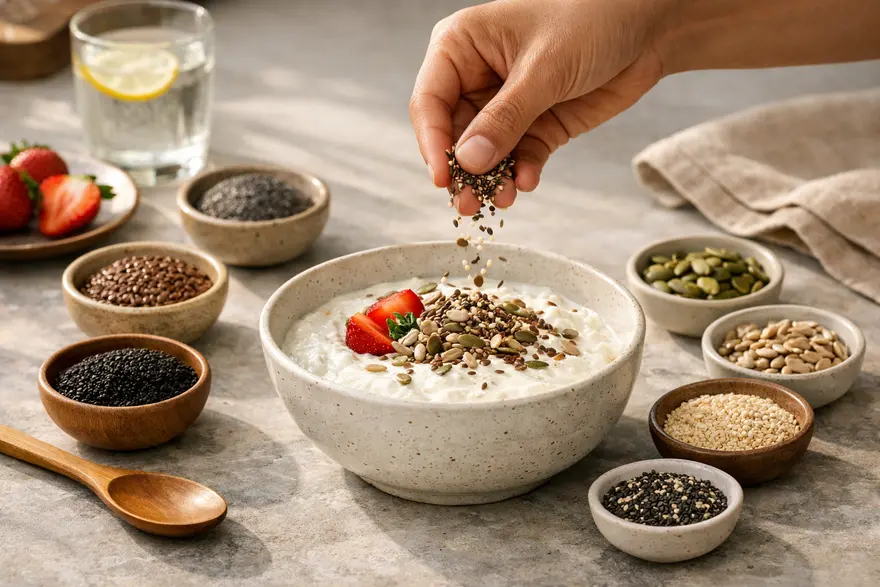
Table of Contents
- Introduction To Healthy Seeds
- Why You Should Eat Seeds Regularly
- 15 Healthy Seeds To Include In Your Diet
- Best Way To Incorporate Seeds Into Your Diet
- Whole, Ground, Soaked, Or Roasted: What Works Best?
- How Many Seeds Should You Eat Daily?
- Potential Side Effects Of Eating Seeds
- Who Should Be Careful With Certain Seeds?
- How To Choose And Store Seeds
- Conclusion
- Frequently Asked Questions
- References
Healthy seeds are small, but they can add a lot to your plate. They are rich in fibre, healthy fats, plant protein, and important vitamins and minerals. When you eat them in sensible portions, they can support heart health, digestion, satiety, and overall wellness.
The key is balance. You do not need to eat all 15 seeds every day. It is better to include a few regularly, rotate them through your meals, and use them in ways that suit your body and routine.
This guide will help you understand which seeds are worth adding to your diet, what they offer, and how to use them easily in everyday meals.
Introduction To Healthy Seeds
Healthy seeds are nutrient-dense plant foods that can fit into many eating patterns. Some, such as chia, flax, and sunflower, are commonly used in daily diets. Others, such as garden cress, basil seeds, and melon seeds, are less common but still nutritious.
Most seeds offer a useful mix of:
- Fibre
- Unsaturated fats
- Plant protein
- Antioxidants
- Minerals such as magnesium, zinc, iron, and calcium
No single seed does everything. What matters more is variety, moderation, and consistency.
Why You Should Eat Seeds Regularly
Eating seeds regularly can be a simple way to improve the nutritional quality of your meals.
Fibre-rich seeds can help support digestion and help you feel full for longer. Seeds with healthy fats may support heart health when used as part of a balanced diet. Some seeds also add plant protein, which can help with satiety and meal balance. Others bring in minerals such as magnesium, zinc, and iron.
Seeds are also versatile. You can add them to curd, smoothies, salads, soups, oats, rotis, laddoos, or trail mixes without changing your meals too much.
That said, seeds are not a magic fix. They work best as part of an overall healthy eating pattern.
15 Healthy Seeds To Include In Your Diet
1. Chia Seeds
Chia seeds are one of the most popular healthy seeds for eating. They are rich in fibre and omega-3 fats. When soaked, they form a gel-like texture, which can help with fullness and make them easy to add to puddings, smoothies, and overnight oats.
Best use: Soak and add to smoothies, porridge, or curd.
2. Flaxseeds
Flaxseeds are known for their fibre, lignans, and plant omega-3 fats. They are especially useful if you want to improve the nutritional quality of breakfast bowls, rotis, or smoothies.
Ground flaxseed is usually better than whole flaxseed because it is easier for your body to digest and absorb.
Best use: Use freshly ground flaxseed in atta, smoothies, or porridge.
3. Pumpkin Seeds
Pumpkin Seeds are rich in magnesium, zinc, healthy fats, and plant protein. They make a satisfying snack and can add crunch to salads and soups.
They are also easy to roast at home, but portion size still matters because they are energy-dense.
Best use: Eat roasted as a snack or sprinkle over salads and vegetables.
4. Sunflower Seeds
Sunflower seeds provide healthy fats, vitamin E, and useful minerals. They are easy to eat and work well as a topping for sandwiches, curd, salads, and homemade seed mixes.
Choose unsalted or lightly salted versions if you want to keep sodium intake under control.
Best use: Add to salads, curd bowls, or homemade granola.
5. Sesame Seeds
Sesame Seeds are tiny but nutrient-rich. They provide healthy fats, fibre, and minerals, and they are easy to use in Indian cooking. They work well in chutneys, laddoos, stir-fries, and salad toppings.
They are also one of the easiest seeds to include if you want a simple flavour and texture boost.
Best use: Sprinkle over sabzi, mix into chutney, or use in tahini-style spreads.
6. Hemp Seeds
Hemp seeds, often sold as hemp hearts, are a good plant-based source of protein and healthy fats. They also contain essential amino acids, which makes them especially useful if you are trying to improve protein intake in vegetarian meals.
They have a mild, nutty taste and blend easily into many dishes.
Best use: Add to smoothies, salads, curd, or soups.
7. Sabja Seed (Basil Seeds)
Sabja Seed, also called basil seed, is commonly soaked before use. Like chia, it absorbs water and swells, which gives drinks and desserts a thicker texture. It is often used in summer beverages and light desserts.
It is best to soak it properly before eating.
Best use: Soak and add to drinks, falooda, or fruit bowls.
8. Garden Cress Seeds
Garden cress seeds are small but nutrient-dense. They contain protein, essential fatty acids, and useful minerals. In Indian households, they are often added to laddoos or simple seed mixes.
They have a slightly peppery taste, so a little goes a long way.
Best use: Add to laddoos, porridges, or seed mixes in small amounts.
9. Watermelon Seeds
Watermelon seeds are often thrown away, but the edible kernels can be a useful source of protein, healthy fats, iron, and zinc. Roasted watermelon seeds make a convenient snack and can also be blended into seed mixes.
Best use: Roast and eat as a snack or add to trail mix.
10. Muskmelon Seeds
Muskmelon seeds are commonly used in Indian gravies, sweets, and seed mixes. They contain protein, fats, and fibre, and they can add creaminess when blended into recipes.
Best use: Use in gravies, kormas, sweets, or snack mixes.
11. Poppy Seeds
Poppy seeds are usually used in small amounts, but they can still add flavour, healthy fats, and texture. They work well in baking, curries, and traditional sweets.
Because they are usually used in small quantities, think of them as a supportive ingredient rather than a major nutrition source.
Best use: Add to curries, baked dishes, and traditional desserts.
12. Nigella Seeds
Nigella seeds, often called kalonji, are commonly used more for flavour than for volume. They contain healthy fats and plant compounds and can be a useful part of a varied diet.
You usually do not need much, as their taste is strong and distinctive.
Best use: Use in pickles, breads, or savoury dishes.
13. Lotus Seeds (Makhana)
Lotus seeds, or makhana, are technically not used in the same way as tiny sprinkle seeds, but they still belong in this list because they are seed-based, widely eaten, and nutritious. The benefits of makhana are hard to overlook - they offer protein, minerals, and a light crunch, especially when roasted.
They can be a better snack choice than many fried alternatives.
Best use: Dry roast for snacking or add to trail mixes and kheer.
14. Quinoa
Quinoa is technically a pseudocereal, but it is seed-like in its nutrition and use. It provides fibre, protein, and a useful range of micronutrients. It is easy to use in place of rice or in salads.
Best use: Use in grain bowls, khichdi-style meals, or salads.
15. Amaranth
Amaranth is another pseudocereal that works like a seed in many recipes. It offers protein, fibre, and minerals and can be used in porridges, laddoos, and snacks.
Popped amaranth is especially easy to add to homemade mixes.
Best use: Use in porridge, laddoos, or popped snack mixes.
Best Way To Incorporate Seeds Into Your Diet
The best way to eat seeds is the way you can follow regularly.
You can start by adding one or two types to meals you already eat. Sprinkle seeds over curd, smoothie bowls, salads, soups, oats, or poha. Mix ground flaxseed into atta. Add chia or basil seeds to drinks. Use pumpkin or sunflower seeds in snack mixes. Blend melon seeds into gravies for texture.
You do not need complex recipes. A simple daily habit is usually enough.
Whole, Ground, Soaked, Or Roasted: What Works Best?
Different seeds work better in different forms.
- Ground: Flaxseeds are often best eaten ground.
- Soaked: Chia and basil seeds are commonly soaked before use.
- Roasted: Pumpkin, sunflower, watermelon, and makhana can be roasted for snacking.
- Whole or sprinkled: Sesame, poppy, and nigella seeds are often used whole in cooking.
The right method can improve texture, digestibility, and ease of use.
How Many Seeds Should You Eat Daily?
You do not need large amounts.
A practical starting point for most adults is:
- 1 to 2 tablespoons of one or two seed varieties a day
- Smaller amounts for stronger-flavoured seeds such as nigella or poppy
- A small handful for snack-style seeds such as roasted pumpkin or sunflower seeds
- Rotation across the week rather than trying to eat everything daily
Start small if your diet is currently low in fibre. Increase gradually and drink enough water.
Potential Side Effects Of Eating Seeds
Seeds are healthy, but more is not always better.
Possible issues include:
- Bloating or gas if you increase fibre too quickly
- Digestive discomfort if you overeat them
- Extra calorie intake if portions are too large
- Allergic reactions in people with seed allergies
- Poor tolerance of certain seeds if you have a sensitive stomach
- Difficulty swallowing if dry seeds are eaten carelessly without enough fluid
This does not mean you should avoid seeds. It simply means portion size and preparation matter.
Who Should Be Careful With Certain Seeds?
You may need extra care if:
- You have a known seed allergy
- You have digestive sensitivity and do not tolerate high-fibre foods well
- You are choosing seeds for a small child and need to avoid choking risk
- Your doctor has advised a special diet because of a health condition
If you have an ongoing medical condition or symptoms such as severe bloating, abdominal pain, or food-related reactions, it is best to ask your doctor or dietitian before making major dietary changes.
How To Choose And Store Seeds
Choose plain, good-quality seeds with minimal added salt, sugar, or flavouring.
A few simple rules help:
- Buy from trusted brands
- Check expiry dates
- Prefer unsalted versions where possible
- Store seeds in an airtight container
- Keep ground flaxseed in the refrigerator
- Keep seeds away from heat, light, and moisture
Buying small amounts at a time can help you keep them fresh.
Conclusion
Seeds are one of the easiest ways to make your meals more nutritious. They can add fibre, healthy fats, plant protein, crunch, and flavour without much effort.
You do not need to eat all 15 every day. What helps more is using a few regularly, rotating them through the week, and choosing forms that are easy for your body to digest and enjoy.
If you are working on your overall health, weight management, cholesterol, or blood sugar goals, it is also important to look beyond single foods and focus on your full lifestyle. And if your doctor advises health tests as part of preventive care, Metropolis Healthcare offers a wide range of diagnostic services, convenient home sample collection, and easy booking options.
Frequently Asked Questions
What Are The Healthiest Seeds To Eat Daily?
Some of the most popular and nutrient-dense choices are chia, flax, pumpkin, sunflower, hemp, sesame, and basil seeds. You do not need all of them every day. Pick one or two and rotate them through the week.
Can Seeds Help With Weight Loss?
Seeds can support weight loss as part of a balanced diet because many are rich in fibre, protein, and healthy fats, which can help with fullness. But they still contain calories, so portion control matters.
How Can You Incorporate Seeds Into Daily Meals?
You can sprinkle them over curd, salads, oats, and soups, blend them into smoothies, mix ground seeds into atta, or eat roasted seeds as a snack. Start with simple additions you can repeat regularly.
Are There Any Health Risks With Eating Seeds?
Seeds are safe for most people when eaten in moderate amounts. Problems usually happen when portions are too large, fibre is increased too quickly, or a person has an allergy or digestive sensitivity.
Is It Better To Eat Seeds Raw, Roasted, Or Soaked?
That depends on the seed. Flaxseeds are usually better ground. Chia and basil seeds are commonly soaked. Pumpkin and sunflower seeds can be eaten raw or roasted. Sesame seeds are often sprinkled whole into dishes.
How Much Seed Mix Can You Eat In A Day?
For most adults, a small serving is enough. A practical amount is around 1 to 2 tablespoons of mixed seeds a day, or a small handful if you are eating larger snack-style seeds such as pumpkin or sunflower seeds.
References
- Mayo Clinic. Flaxseed: Is Ground Better Than Whole? Mayo Clinic.
- Cleveland Clinic. The 6 Best Seeds to Eat. Cleveland Clinic.
- Cleveland Clinic. The Many Health Benefits of Sunflower Seeds. Cleveland Clinic.
- Hrnčič MK, Ivanovski M, Cör D, Knez Ž. Chia Seeds (Salvia hispanica L.): An Overview—Phytochemical Profile, Isolation Methods, and Application. Molecules. 2020;25(1):11. PMID: 31861466.
- Bravo HC, Ccanto NRV, Zura-Bravo L, et al. Basil Seeds as a Novel Food, Source of Nutrients and Functional Ingredients with Beneficial Properties: A Review. Molecules. 2021;26(15):4597. PMID: 34202798.
- Melo D, Machado N, Matos C, et al. Nutritional and Chemical Characterization of Poppy Seeds, Cold-Pressed Oil, and Cake: Poppy Cake as a High-Fibre and High-Protein Ingredient for Novel Food Production. Foods. 2022;11(19). PMID: 36230103.
- Siddique R, Sahar A, Riaz A, et al. Lotus Seeds (Nelumbinis semen) as an Emerging Therapeutic Seed: A Comprehensive Review. Food Science & Nutrition. 2021.
- Tufail T, Shah MA, Arfat Y, et al. Garden Cress Seeds: A Review on Nutritional Composition, Therapeutic Potential, and Industrial Utilization. Food Science & Nutrition. 2024.
- Wei P, Meng Q, Liu R, et al. Sesame (Sesamum indicum L.): A Comprehensive Review of Nutritional Value, Phytochemical Composition, Health Benefits, Development of Food, and Industrial Applications. Nutrients. 2022.