Home Visit
 Upload






Preventive Healthcare
How to Identify Lice: Signs, Symptoms, and When to Seek Treatment
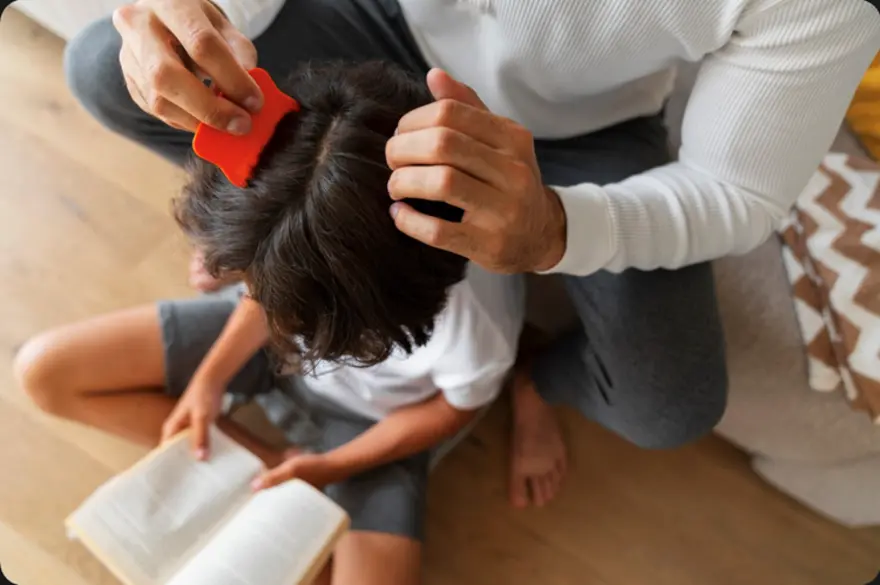
Table of Contents
What Are Lice?
Lice are small, wingless parasitic insects that live on human scalps. These creatures feed on blood from the scalp every few hours and cannot survive for more than 24–48 hours without their human host.
According to the CDC, adult lice appear grayish-white to tan in color and measure about 2-3 millimeters in length. They have six legs with claw-like hooks that help them grip hair strands tightly. Unlike fleas, lice cannot jump or fly; they can only crawl from one head to another through direct contact.
Female lice lay approximately 6-10 eggs daily, attaching them firmly to hair shafts close to the scalp, where warmth helps incubation. These eggs, called nits, hatch within 7-9 days, and the young lice mature into egg-laying adults within another 7-10 days. This rapid reproduction cycle explains why lice infestations can spread quickly through households and schools.
Common Signs and Symptoms of Lice
• Intense itching of the scalp: This occurs due to an allergic reaction to lice saliva when they bite the scalp to feed
• Tickling or crawling sensation: Many people report feeling movement in their hair, particularly noticeable during quiet moments
• Visible live lice: Adult lice move quickly and may be spotted crawling near the scalp, especially behind the ears and at the neckline
• Red bumps or sores: Scratching can create minor wounds that may become infected if left untreated
• Irritability and sleep disturbances: Lice are most active at night, causing discomfort that affects rest
• Small red or pink bumps: These appear on the scalp, neck, and shoulders from lice bites
How to Check for Lice
- Prepare the hair: Wet hair completely and apply generous amounts of regular conditioner to slow lice movement.
- Section the hair: Divide hair into small sections using clips, ensuring you can examine each area thoroughly.
- Use proper lighting: Position yourself near a bright window or under strong artificial light for clear visibility.
- Employ a fine-tooth nit comb: Use a specialized lice comb with closely spaced teeth, available from pharmacies.
- Comb systematically: Work through each section from scalp to hair ends, wiping the comb on white tissue after each stroke.
- Focus on preferred areas: Pay special attention to the back of the ears, the neckline, and the crown of the head, where lice congregate.
- Examine the comb: Look for moving lice or attached nits on the tissue after each combing stroke.
- Check all household members: Examine everyone who has had close contact with the affected person.
What Does Lice Look Like?
Adult lice have six legs with claws designed for gripping hair and move quickly when disturbed. They range in color from grayish-white to tan or brown, often matching the hair color of their host. Lice move surprisingly quickly when exposed to light, making them challenging to spot during casual observation.
Nymphs (young lice) are much smaller than adults and are nearly transparent, making identification particularly difficult. They grow through three stages before reaching maturity, becoming progressively larger and darker with each molt. Fresh lice bites appear as small red dots on the scalp, similar to mosquito bites but clustered around the hairline.
How to Identify Lice Eggs (Nits)?
• Shape and size: Nits are oval-shaped, roughly the size of a dandruff flake, but more uniform in appearance
• Color variation: Fresh nits appear yellowish or tan, while hatched shells look white or clear
• Attachment method: Nits are cemented firmly to hair shafts and cannot be easily brushed or shaken off
• Concentrated areas: Most numerous behind the ears and at the base of the neck, where lice prefer to lay eggs
When examining suspected nits, try gently sliding them along the hair shaft. Dandruff will move easily, while genuine nits remain firmly attached. This simple test helps differentiate between actual infestation and harmless scalp debris.
When to Seek Treatment for Lice?
Immediate lice treatment becomes necessary when you discover live lice crawling on the scalp or find nits on the scalp. Waiting for symptoms to worsen allows the infestation to spread to other family members and makes elimination more challenging.
Consider professional medical consultation if over-the-counter lice medicine fails after two properly administered treatments, if the affected person develops signs of bacterial infection from scratching, or if you're unsure about proper treatment application. Doctors can prescribe stronger lice medicine or recommend alternative approaches for persistent infestations. School-aged children should remain home until receiving appropriate lice treatment, as most educational institutions have strict no-nit policies to prevent classroom outbreaks.
Consider seeking medical advice for children under two years old, pregnant women, or individuals with compromised immune systems. These populations may require specialised lice medicine or modified treatment approaches.
Home Remedies for Lice
• Wet combing technique: Systematically combing wet, conditioned hair with a fine-toothed comb every 3-4 days for two weeks
• Essential oil applications: Tea tree, lavender, or eucalyptus oils mixed with carrier oils, though scientific evidence remains limited
• Suffocation methods: Coating hair with mayonnaise, olive oil, or petroleum jelly overnight, requiring plastic wrap coverage
• Heat treatment: Using hair dryers on high heat, though this method risks burns and isn't recommended for children
While these methods may provide some benefit, they shouldn't replace proven medical treatments.
Medical Treatments for Lice
• Permethrin-based shampoos: First-line treatment available without prescription, requiring a second application after 7-9 days
• Pyrethrin products: Natural insecticide derived from chrysanthemum flowers, effective against live lice
• Prescription medications: Malathion, ivermectin, or spinosad for resistant cases or treatment failures
• Benzyl alcohol lotion: Suffocates lice by blocking their breathing holes, requiring precise application timing
• Lindane shampoos: Reserved for severe cases due to potential neurological side effects
Remember that no lice treatment eliminates 100% of nits, making manual removal with fine-toothed combs essential for complete eradication. Most treatments require follow-up applications to kill newly hatched lice before they reach reproductive maturity.
Prevention of Lice
Preventing lice infestations requires understanding transmission patterns and implementing practical strategies:
• Avoid head-to-head contact: Discourage children from activities that bring heads close together during play or study
• Don't share personal items: Keep combs, brushes, hats, hair accessories, and towels separate from others
• Regular checking: Examine family members weekly during outbreak periods at schools or communities
• Clean shared spaces: Vacuum furniture, car seats, and areas where affected individuals have rested
• Wash personal items: Wash clothing, bedding, and hats used within 48 hours before treatment in hot water and dry them on high heat.
• Educate children: Teach kids about lice transmission without creating unnecessary fear or stigma
Can Lice Be Prevented?
Complete lice prevention is challenging, as these parasites spread easily through everyday childhood interactions. However, reducing risk factors significantly decreases the likelihood of infestation. Focus on minimizing direct head contact, maintaining separate personal items, and responding quickly to reported cases in schools or communities.
Regular monitoring during high-risk periods, such as the start of school terms, helps detect infestations early, when treatment is most effective. Remember that anyone can get lice regardless of precautions, so approach prevention practically without creating anxiety about normal social contact.
Conclusion: What to Do If You Find Lice
Discovering lice requires immediate, systematic action to prevent spreading and eliminate the infestation effectively. Begin by thoroughly examining all household members to determine the extent of the infestation. Choose an appropriate lice treatment based on the affected person's age, medical history, and severity of infestation.
Notify relevant contacts, including schools, daycare centers, and close friends whose children have had recent contact with the affected individual. Follow up with second treatments as recommended, typically 7-9 days after initial application, to eliminate newly hatched lice. With proper identification, appropriate lice medicine, and consistent follow-through, complete elimination normally occurs within 2-3 weeks.
At Metropolis Healthcare, we understand that health concerns extend beyond just infectious conditions, and comprehensive wellness monitoring supports your family's overall health journey. With our network of 4,600+ service centres and over 10,000 touchpoints across India, we bring advanced diagnostic capabilities directly to your home. Our qualified technicians ensure comfortable sample collection, while our comprehensive portfolio of 4,000+ tests helps identify underlying health conditions that might affect immune function and overall wellness.
FAQs
What are lice?
Lice are tiny parasitic insects that live on human scalps and feed on blood every few hours. These wingless creatures cannot survive for more than 1-2 days without their human host and spread primarily through direct head-to-head contact.
How do you know if you have lice?
The primary indicators include persistent scalp itching, visible crawling insects in the hair, small red bumps from bites, and difficulty sleeping due to nighttime lice activity. Systematic combing with proper lighting reveals live lice or attached nits.
Can lice be spread through sharing hair brushes?
Yes, though less commonly than direct contact. Lice can transfer via shared combs, brushes, hats, or hair accessories. However, head-to-head contact remains the primary mode of transmission, particularly among children during play.
Can lice survive without a host?
Lice survive only 24–48 hours away from human scalps because they require regular blood meals and specific temperature conditions. They cannot live on pets, furniture, or clothing for extended periods, making environmental transmission unlikely.
How long do lice live on bedding and furniture?
Lice rarely survive for more than 48 hours on bedding or furniture because they depend on human blood and scalp warmth. Focus cleaning efforts on recently used items rather than extensive environmental treatment.
Do lice bite or itch?
Lice bite the scalp to feed on blood, and these bites cause the characteristic itching sensation. The itching results from allergic reactions to lice saliva rather than the bites themselves, explaining why some people experience more discomfort than others.
References
- https://www.cdc.gov/lice/about/head-lice.html
- https://kidshealth.org/en/parents/head-lice.html
- https://www.nhs.uk/conditions/head-lice-and-nits/
- https://www.aad.org/public/diseases/a-z/head-lice-treatment
- https://www.ncbi.nlm.nih.gov/books/NBK279329/