Home Visit
 Upload






Preventive Healthcare
Female Reproductive System Explained: Anatomy, Hormones & Common Disorders
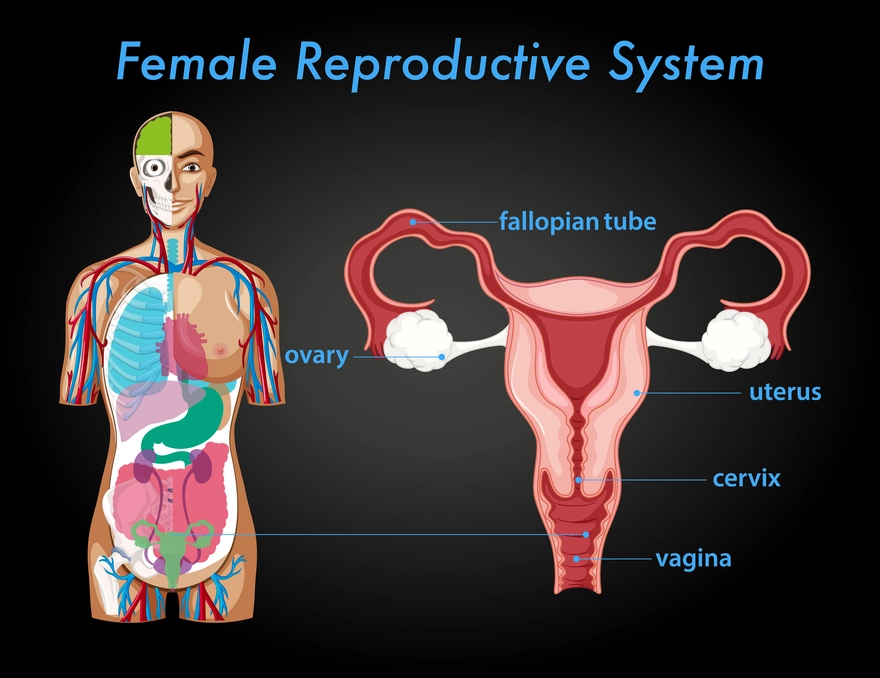
Table of Contents
- What is the Female Reproductive System?
- What Are The Parts Of The Female Reproductive System?
- What Are The Functions Of The Female Reproductive System?
- What Happens During the Menstrual Cycle (Period)?
- How You Feel At Different Stages of Your Menstrual Cycle
- What Happens in Pregnancy?
- How Many Eggs Does a Woman Have?
- How Does Reproduction Work?
- FAQs
What is the Female Reproductive System?
Female reproductive system is a complex network of organs involved in reproduction, hormonal balance, and childbirth. According to the definition of female reproductive system, it consists of both internal and external structures that function together to produce ova (eggs), enable fertilisation, and support foetal development. The components of female reproductive system include the ovaries, fallopian tubes, uterus, and vagina internally, while the female external sex organs—such as the labia, clitoris, and vaginal opening—make up the external female reproductive anatomy.
Each female reproductive part has a unique role; for example, the ovaries produce eggs and hormones, and the uterus provides a nurturing environment for a developing foetus. Understanding the anatomy of female reproductive system is vital for recognising how these parts function in harmony. A diagram of female reproductive anatomy is often used in biology and health education to illustrate the female reproductive parts and functions clearly and effectively.
What Are The Parts Of The Female Reproductive System?
The female reproductive system is made up of several distinct parts that can be categorised as either female external sex organs or internal reproductive organs.
External Parts
The external parts of the female reproductive system, also known as the external female reproductive organs or female external sex organs, include:
- Labia majora: The large, fleshy folds of skin that enclose and protect the other external reproductive organs.
- Labia minora: The smaller, inner skin folds that surround the openings to the vagina and urethra.
- Clitoris: A small, sensitive organ located at the top of the labia minora that plays a key role in sexual arousal and pleasure.
- Vaginal opening: The entrance to the vaginal canal, which leads to the uterus.
- Bartholin's glands: Small glands located on either side of the vaginal opening that produce lubrication during sexual arousal.
Understanding the external female reproductive anatomy is essential for maintaining hygiene, identifying potential issues, and embracing body positivity.
Internal Parts
The internal female reproductive parts and functions are:
- Ovaries: Two small, almond-shaped glands that produce eggs (ova) and female sex hormones like oestrogen and progesterone.
- Fallopian tubes: Narrow tubes that connect the ovaries to the uterus. Fertilisation of an egg by sperm usually occurs in the fallopian tubes.
- Uterus (womb): A hollow, pear-shaped organ where a fertilised egg implants and develops into a foetus during pregnancy. The uterine lining (endometrium) thickens each month in preparation for a potential pregnancy.
- Cervix: The lower, narrow part of the uterus that connects to the vagina. It produces mucus that helps sperm travel and protects the uterus from infection.
- Vagina: A muscular, elastic canal leading from the cervix to the outside of the body. It enables sexual intercourse and menstrual flow and serves as the birth canal during childbirth.
Familiarising yourself with the internal components of the female reproductive system can help you better understand your reproductive health and communicate effectively with doctors.
What Are The Functions Of The Female Reproductive System?
The female reproductive system performs several critical functions, including:
- Egg Production (Oogenesis): The ovaries produce and release mature eggs during the menstrual cycle.
- Hormone Secretion: The ovaries secrete oestrogen and progesterone, which regulate the menstrual cycle, sexual development, and pregnancy.
- Menstruation: The shedding of the uterine lining (endometrium) when fertilisation does not occur, resulting in monthly periods.
- Fertilisation: The fallopian tubes provide a conducive environment for the sperm to meet and fertilise the egg.
- Pregnancy Support: The uterus nurtures and protects the developing foetus throughout pregnancy.
- Childbirth: The vagina serves as the birth canal during labour and delivery.
Understanding the female reproductive parts and functions can help you appreciate the incredible capabilities of your body and make informed decisions about your reproductive health.
What Happens During the Menstrual Cycle (Period)?
The menstrual cycle is a monthly series of changes that occur in the female reproductive system, preparing the body for potential pregnancy. If fertilisation does not take place, the thickened uterine lining sheds, resulting in menstrual bleeding (period). Each cycle lasts around 28 days on average, though anywhere from 21 to 35 days is considered normal. Let's explore the three main phases of the menstrual cycle.
Follicular Phase of the Menstrual Cycle
The follicular phase begins on the first day of menstruation and typically lasts about 14 days. Here's what happens:
- The pituitary gland releases follicle-stimulating hormone (FSH), which stimulates the growth of several follicles in the ovaries, each containing an immature egg.
- One follicle becomes dominant and continues to mature, while the others degenerate.
- The developing follicle produces oestrogen, causing the uterine lining (endometrium) to thicken in preparation for a potential pregnancy.
- As oestrogen levels rise, the pituitary gland releases luteinizing hormone (LH), triggering ovulation.
Ovulatory Phase of the Menstrual Cycle
Ovulation occurs mid-cycle, usually around day 14 of a 28-day cycle. Key events include:
- A surge in LH causes the mature follicle to rupture and release the egg (ovulation).
- The egg is swept into the fallopian tube, where it can be fertilised by sperm within 12-24 hours.
- Oestrogen levels peak just before ovulation, and the cervical mucus becomes thin and slippery to facilitate sperm movement.
Luteal Phase of the Menstrual Cycle
The luteal phase lasts about 14 days after ovulation. Here's what occurs:
- The ruptured follicle closes after releasing the egg and forms a structure called the corpus luteum, which produces progesterone to keep the uterine lining thick and ready for implantation.
- If fertilisation does not occur, the corpus luteum breaks down, causing progesterone and oestrogen levels to drop. This signals the uterus to shed its lining as menstrual flow.
- If conception occurs, the corpus luteum continues producing hormones to maintain the uterine lining until the placenta develops enough to take over.
How You Feel At Different Stages of Your Menstrual Cycle
Hormonal fluctuations during the menstrual cycle can significantly impact how you feel physically and emotionally. Let's look at some common changes during each phase.
Follicular Phase
As oestrogen rises, you may experience:
- Increased energy, motivation, and mental clarity
- Improved mood and lessened anxiety
- Higher libido and sexual desire
- Fewer PMS symptoms like bloating or breast tenderness
Ovulatory Phase
When ovulation approaches, you may notice:
- A peak in sexual desire and fantasies due to high estrogen and testosterone
- Increased cervical mucus and vaginal lubrication
- Heightened senses of smell and taste
- Mild ovulation pain or light spotting
Luteal Phase
As progesterone rises and then falls, you might feel:
- Breast tenderness or enlargement
- Bloating, water retention, and digestive changes
- Mood swings, irritability, or increased anxiety
- Fatigue, food cravings, and sleep disturbances
- Headaches or muscle aches
- Skin breakouts or oiliness
Tracking your cycle and symptoms can help you better understand your body's unique patterns and anticipate these changes each month. If you experience severe mood or physical symptoms that disrupt your daily life, consult your doctor, as this may indicate an underlying hormonal imbalance or reproductive disorder.
What Happens in Pregnancy?
Pregnancy begins when a sperm fertilises an egg in the fallopian tube. The fertilised egg (zygote) then travels to the uterus, where it implants in the thickened uterine lining (endometrium). The placenta forms to nourish the developing embryo, which grows into a foetus. Pregnancy typically lasts 40 weeks and is divided into three trimesters. Throughout pregnancy, the female reproductive system undergoes significant changes to support the growing baby:
- The uterus expands to accommodate the developing foetus, amniotic fluid, and placenta.
- The placenta forms, serving as the interface between the mother's and baby's blood supply, providing oxygen and nutrients to the foetus and removing waste products.
- Hormonal changes, particularly increased levels of progesterone and oestrogen, support the pregnancy and prepare the body for childbirth and breastfeeding.
- The cervix remains closed and firm until late in pregnancy, when it begins to soften, thin, and dilate in preparation for labour and delivery.
How Many Eggs Does a Woman Have?
Women are born with all the eggs they will ever have, usually around 1-2 million. This number naturally declines with age, as eggs die off through a process called atresia. By puberty, a girl has about 300,000-400,000 eggs. With each menstrual cycle, about 1,000 eggs are lost, and only one mature egg is typically released during ovulation. This progressive loss of eggs contributes to decreased fertility in older women. By age 37, a woman may have only around 25,000 eggs, and by menopause, the ovaries have fewer than 1,000 eggs left.
How Does Reproduction Work?
Human reproduction involves the union of male and female gametes (sperm and egg) to create a new individual. Here's a simplified overview of the process:
- Ovulation: During the menstrual cycle, an egg is released from the ovary and travels down the fallopian tube.
- Fertilisation: If sexual intercourse occurs during the fertile window (usually a few days before and after ovulation), sperm can swim up through the cervix, uterus, and fallopian tubes to reach the egg. A single sperm penetrates the egg, and fertilisation occurs, resulting in a zygote.
- Implantation: The zygote divides and travels down the fallopian tube, reaching the uterus in about 3-5 days. It then implants in the uterine lining, marking the beginning of pregnancy.
- Embryonic and foetal development: The implanted zygote develops into an embryo and later a foetus, supported by the placenta and amniotic fluid.
- Childbirth: After approximately 40 weeks of gestation, the baby is born through the process of labour and delivery.
Understanding the basics of male female reproduction can help individuals make informed decisions about family planning, fertility, and sexual health.
At Metropolis Healthcare, we understand the importance of proactive reproductive health screenings and convenient diagnostic testing. Our expert team of phlebotomists provides at-home sample collection services, allowing you to access comprehensive health check-ups and fertility evaluations with ease. With our state-of-the-art labs and commitment to delivering reliable results, you can trust Metropolis to be your partner in preventive care. Visit our website to learn more about our wide range of women's health packages and book your at-home appointment today.
FAQs
What diseases affect the female reproductive system?
Some common disorders affecting the female reproductive system include endometriosis (abnormal growth of uterine tissue), uterine fibroids (noncancerous growths in the uterus), polycystic ovary syndrome (PCOS), and sexually transmitted infections (STIs) like chlamydia and gonorrhoea. Regular gynaecological checkups can help detect and manage these conditions.
What is the best age to have a baby?
While there's no perfect age to have a baby, a woman's fertility naturally declines with age, especially after 35. This is because the quantity and quality of eggs diminish over time. Experts suggest the optimal biological window for childbearing is between ages 20 and 35.
What happens if the female reproductive system is damaged?
Damage to the female reproductive system from injuries, infections, or medical conditions can lead to impaired fertility, pain during sex or menstruation, abnormal bleeding, and other complications. Treatment depends on the underlying cause and may include medication, surgery, or assisted reproductive technologies.
What is female sperm called?
There is no such thing as "female sperm." Females produce eggs, or ova, which are the
female reproductive cells. Unlike sperm, which are constantly produced in the testes, females are born with a finite number of eggs that are stored in the ovaries.
What is female fluid called?
Female fluid is commonly called vaginal discharge. It includes cervical mucus, lubrication, and other secretions that help cleanse, protect, and maintain the health of the female reproductive system.