Home Visit
 Upload






Preventive Healthcare
What is Arthrocentesis? Procedure, Benefits, and Recovery
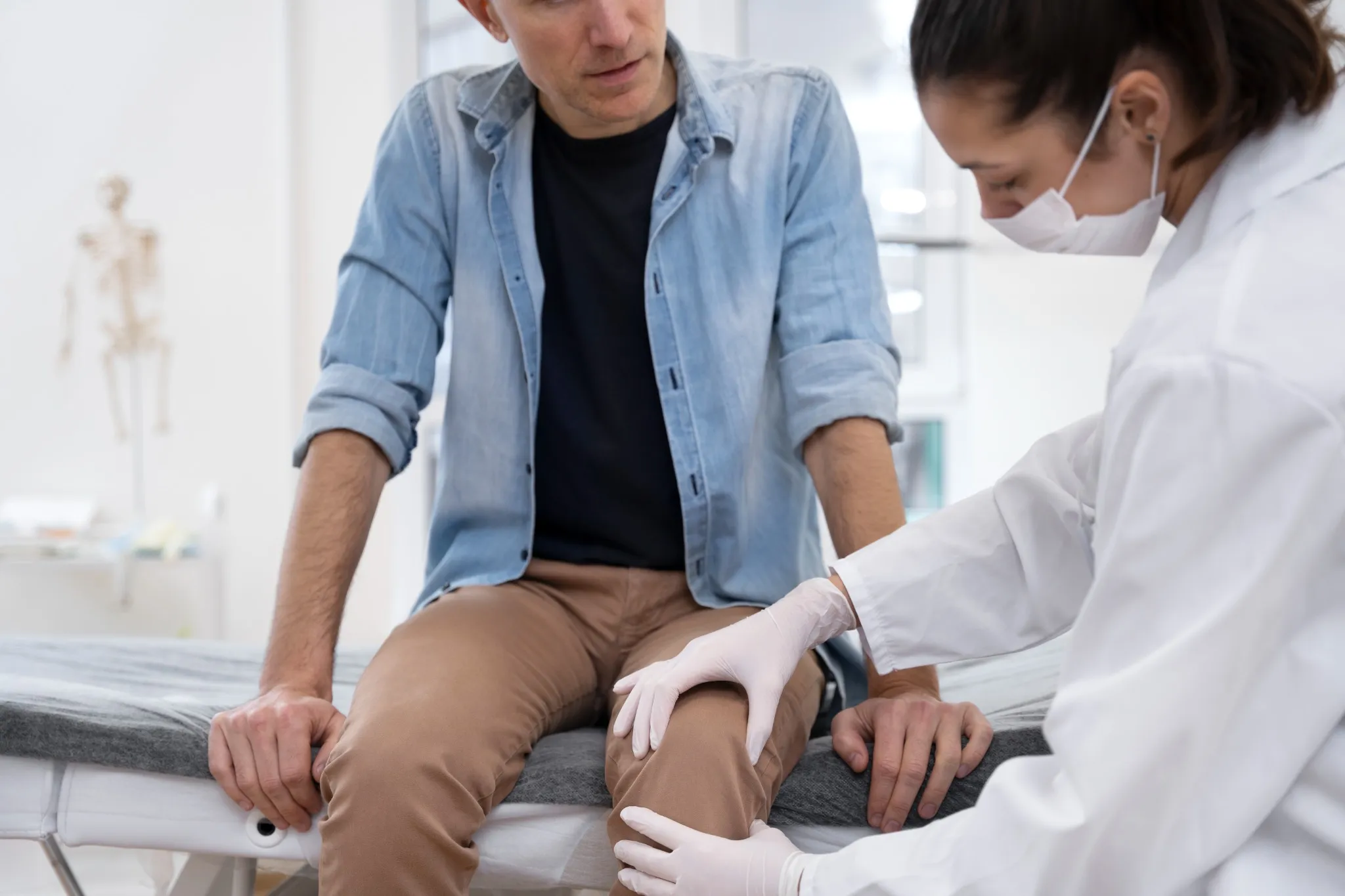
Table of Contents
- What Is Arthrocentesis?
- Why Arthrocentesis Is Done
- Conditions Diagnosed Using Arthrocentesis
- Arthrocentesis for Diagnosis vs Treatment
- Common Joints for Arthrocentesis
- How to Prepare for Arthrocentesis
- Arthrocentesis Procedure (Step-by-Step)
- Is Arthrocentesis Painful?
- Post-Procedure Care
- Recovery After Arthrocentesis
- Risks & Possible Complications
- When Arthrocentesis Should Be Avoided
- When to See a Doctor After Arthrocentesis
- Conclusion
- FAQs
- References
What Is Arthrocentesis?
Arthrocentesis is a medical procedure in which a healthcare provider inserts a sterile needle into a joint space to withdraw synovial fluid. This fluid naturally surrounds joints and plays a key role in lubrication, shock absorption, and nourishing joint cartilage.
The procedure has both diagnostic and therapeutic value. It can reduce pain and swelling by removing excess joint fluid, while also allowing doctors to collect a sample for laboratory testing. Arthrocentesis is usually performed in an outpatient setting under local anaesthesia and is considered quick and minimally invasive.
Synovial fluid analysis helps identify the cause of joint effusion by detecting signs of infection, inflammation, crystal deposits, or bleeding. According to a publication from the National Library of Medicine, Arthrocentesis (joint aspiration) is performed to collect synovial fluid for diagnostic and therapeutic purposes—commonly to evaluate infection or inflammation (e.g., septic arthritis, gout, arthritis) and to relieve painful joint swelling.
It is generally safe with few complications when done using strict aseptic technique; the only absolute contraindication is peri-articular infection (e.g., cellulitis) due to the risk of introducing bacteria into the joint.
Why Arthrocentesis Is Done
Healthcare providers recommend arthrocentesis for several important reasons:
• Diagnostic purposes - To identify the underlying cause of joint pain, swelling, or stiffness
• Symptom relief - To remove excess fluid causing discomfort and limited mobility
• Infection detection - To diagnose septic arthritis, which requires immediate treatment
• Crystal identification - To confirm gout or pseudogout through crystal analysis
• Treatment preparation - To clear space before injecting therapeutic medications
• Disease monitoring – To track the progression of inflammatory joint conditions such as rheumatoid arthritis
• Trauma evaluation - To assess bleeding into joints following injury
Conditions Diagnosed Using Arthrocentesis
Arthrocentesis helps identify numerous joint conditions through careful fluid analysis:
• Septic arthritis - Bacterial joint infections requiring urgent antibiotic treatment
• Gout - Uric acid crystal deposits causing severe inflammatory episodes
• Pseudogout - Calcium pyrophosphate crystal accumulation in cartilage
• Rheumatoid arthritis - Autoimmune inflammatory joint disease
• Osteoarthritis with effusion - Degenerative joint disease with fluid accumulation
• Traumatic hemarthrosis - Bleeding into joints following injury
• Reactive arthritis - Joint inflammation following systemic infections
• Lupus arthritis - Joint involvement in systemic lupus erythematosus
Arthrocentesis for Diagnosis vs Treatment
|
Aspect |
Diagnostic Arthrocentesis |
Therapeutic Arthrocentesis |
|
Primary Goal |
Identify underlying joint problems |
Relieve symptoms and improve function |
|
Fluid Volume |
Small sample for laboratory testing |
Larger volumes for symptom relief |
|
Laboratory Tests |
Cell count, culture, crystal analysis |
Optional, depending on known diagnosis |
|
Follow-up Actions |
Treatment planning based on results |
Possible medication injection |
|
Frequency |
Usually performed once for diagnosis |
May be repeated for ongoing management |
Common Joints for Arthrocentesis
Different joints require specific techniques and considerations:
• Knee - Most frequently aspirated due to accessibility and common effusions
• Shoulder - Often performed for rotator cuff problems and arthritis
• Hip - Requires imaging guidance due to deep location
• Ankle - Common site for gout and inflammatory arthritis
• Elbow - Frequently involved in rheumatoid arthritis
• Wrist - Important for diagnosing crystal arthropathies
How to Prepare for Arthrocentesis
Proper preparation ensures safe and successful arthrocentesis:
• Medication review - Inform your doctor about blood thinners, NSAIDs, and all supplements
• Allergy disclosure - Report any allergies to local anaesthetics or antiseptics
• Medical history - Discuss bleeding disorders, previous joint surgeries, and artificial implants
• Comfortable clothing - Wear loose garments allowing easy joint access
• Transportation - Arrange a ride home if sedation is planned
• Consent understanding - Ask questions about risks, benefits, and expectations
Arthrocentesis Procedure (Step-by-Step)
- Patient positioning - You'll be positioned for optimal joint access and comfort
- Skin preparation - The area is thoroughly cleaned with an antiseptic solution
- Local anesthesia – Numbing medication is injected to minimize discomfort
- Imaging guidance - Ultrasound or fluoroscopy may be used to guide needle placement
- Needle insertion - A sterile needle is carefully advanced into the joint space
- Fluid aspiration - Synovial fluid is slowly withdrawn using gentle suction
- Medication injection - If appropriate, therapeutic medications may be administered
- Needle removal - The needle is withdrawn, and pressure is applied to prevent bleeding
- Bandage application - A sterile dressing protects the puncture site
Is Arthrocentesis Painful?
Most patients feel only mild discomfort during arthrocentesis. The local anaesthetic may sting briefly, but the joint aspiration itself is often less painful, with some pressure or fullness as fluid is withdrawn.
One of the key arthrocentesis benefits is rapid relief, removing excess fluid can quickly reduce pain and improve joint movement. Any post-procedure soreness is usually mild and resolves within 24–48 hours.
Post-Procedure Care
Following arthrocentesis, proper care promotes healing and prevents complications:
• Rest the joint - Avoid strenuous activities for 24-48 hours
• Ice application - Apply cold packs for 15-20 minutes several times daily
• Wound care – Keep the puncture site clean and dry
• Pain management – Use over-the-counter pain relievers as recommended by your healthcare provider
• Activity modification - Gradually return to normal activities as tolerated
• Follow-up scheduling - Attend appointments to discuss results and treatment plans
Recovery After Arthrocentesis
Arthrocentesis recovery is usually quick and uncomplicated. Most people can return to normal activities within 24–48 hours, and many feel immediate relief as excess fluid is removed, reducing pressure and pain. The puncture site typically heals completely within about a week.
Recovery can vary based on the joint treated and the underlying cause. Knee aspiration often allows same-day walking, while hip arthrocentesis may require short-term activity limitation. Follow your provider’s aftercare instructions for the safest recovery.
Risks & Possible Complications
While arthrocentesis is generally safe, potential complications include:
• Infection - Rare but serious complication requiring immediate treatment
• Bleeding - Minor bleeding usually stops quickly with pressure
• Nerve injury - Uncommon when performed by experienced practitioners
• Allergic reactions - Possible sensitivity to anaesthetics or antiseptics
• Joint damage - Extremely rare with proper technique
• Temporary pain - Short-lived discomfort at the puncture site
When Arthrocentesis Should Be Avoided
Certain conditions make arthrocentesis inadvisable:
• Skin infection at the planned puncture site
• Severe bleeding disorders without proper management
• Artificial joint infections requiring surgical intervention
• Patient refusal or inability to provide informed consent
• Joint prosthesis in some cases, depending on type and timing
When to See a Doctor After Arthrocentesis
Contact your healthcare provider immediately if you experience:
• Fever or signs of systemic infection
• Increased joint pain beyond expected post-procedure discomfort
• Persistent bleeding from the puncture site
• Signs of infection, including redness, warmth, or discharge
• Severe allergic reactions, such as difficulty breathing or widespread rash
Conclusion
Arthrocentesis is a safe, effective, and widely used procedure for diagnosing and treating joint conditions. Whether identifying infections, confirming gout, or relieving painful swelling, joint aspiration plays a vital role in musculoskeletal care.
Accurate diagnosis depends on reliable laboratory testing. With access to 4,000+ specialised tests, full-body health checkups, and advanced synovial fluid analysis, Metropolis Healthcare provides precise results with quick turnaround times. Their strong home sample collection network spanning 10,000+ touchpoints, along with easy booking via website, app, call, or WhatsApp, makes quality diagnostics accessible and convenient—supporting faster treatment decisions and better joint health outcomes.
FAQs
What is the purpose of arthrocentesis?
The purpose of arthrocentesis is to remove excess synovial fluid for pain relief and to
analyze it to help diagnose joint diseases.
Is arthrocentesis the same as joint aspiration?
Yes. Arthrocentesis and joint aspiration refer to the same procedure.
How long does arthrocentesis take?
The procedure usually takes 10–15 minutes.
What does synovial fluid analysis show?
- Infection markers
- Presence of uric acid or calcium crystals
- Inflammatory cell count
- Blood in the joint
Is arthrocentesis painful?
It causes minimal discomfort due to local anaesthesia.
How long does recovery take?
Most people recover within 24–48 hours.
What are the risks of arthrocentesis?
Risks include infection, bleeding, and temporary pain, though complications are rare.
When is arthrocentesis necessary?
It is necessary when joint swelling, pain, or stiffness needs diagnosis or relief.
Can arthrocentesis drain blood from a joint?
Yes. It can remove blood in cases of hemarthrosis.
Can gout be diagnosed with arthrocentesis?
Yes. Gout is confirmed by detecting uric acid crystals in synovial fluid.
References
- https://www.ncbi.nlm.nih.gov/books/NBK557805/
- https://emedicine.medscape.com/article/80032-overview
- https://emedicine.medscape.com/article/79994-periprocedure
- https://www.sciencedirect.com/topics/medicine-and-dentistry/arthrocentesis