Home Visit
 Upload






Preventive Healthcare
Blood-Brain Barrier: What It Is And Why It Matters
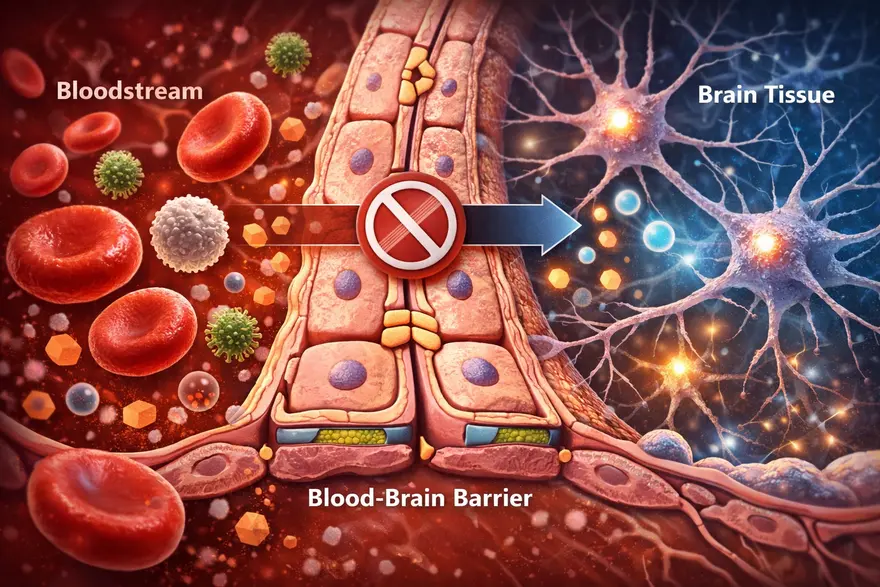
Table of Contents
- What Is The Blood-Brain Barrier?
- Why Is The Blood-Brain Barrier So Important?
- Blood-Brain Barrier Structure: What It’s Made Of
- How The Blood-Brain Barrier Works
- What Can Cross The Blood-Brain Barrier?
- What Usually Cannot Cross The Blood-Brain Barrier?
- What Happens When The Blood-Brain Barrier Is Disrupted?
- BBB And Neurodegenerative Diseases
- The Role Of The BBB In Cancer
- Does BBB Disruption Cause Symptoms On Its Own?
- When To Seek Urgent Medical Care
- How Doctors Evaluate Conditions Involving The BBB
- Why The BBB Matters For Medicines
- How The BBB Affects Mental Health
- Current Breakthroughs In BBB Research
- The Future Of BBB Treatments
- Can You Protect Your Blood-Brain Barrier?
- FAQs
Your brain needs constant fuel from your blood, like oxygen, glucose, and other nutrients. But it also needs protection from germs, toxins, and sudden chemical shifts that could disrupt delicate brain signalling. That is where the blood-brain barrier (BBB) comes in.
The BBB is a specialized “gatekeeper” built into the small blood vessels of the brain. It carefully controls what can enter and leave brain tissue, helping keep the brain’s internal environment stable.
In this article, you will learn what the blood-brain barrier is, how it works, what can (and cannot) cross it, what happens when it is disrupted, and why it matters for neurological conditions and medicines.
Medical note: This is educational information, not a substitute for medical advice.
What Is The Blood-Brain Barrier?
The blood-brain barrier is a highly selective filter formed by specialized cells lining the brain’s tiny blood vessels. It protects the brain by allowing essential nutrients in while blocking many harmful substances, germs, and toxins.
Blood-brain barrier in one sentence: It is the brain’s security system, a tight, selective lining of blood vessels that controls what reaches brain tissue.
Why Is The Blood-Brain Barrier So Important?
The brain is extremely sensitive to changes in its chemical environment. Even small shifts in salts (electrolytes), hormones, or inflammatory molecules can affect how neurons communicate. The BBB helps by:
- Protecting the brain from pathogens and circulating toxins
- Maintaining stability (brain “homeostasis”) so neurons can function normally
- Controlling immune access, limiting unnecessary inflammation in brain tissue
- Influencing treatment, because many medicines cannot easily cross it
In short, the BBB is one reason your brain can stay stable and functional even while your bloodstream changes with meals, exercise, stress, or illness.
Blood-Brain Barrier Structure: What It’s Made Of
The BBB is not one single wall. It is a set of structures working together in what scientists often call the neurovascular unit. The key components include:
Endothelial Cells With Tight Junctions (The “Sealed Lining”)
Brain capillaries are lined by endothelial cells that are packed unusually tight. The tight junctions between them act like sealant, preventing many substances from slipping between cells.
Basement Membrane (The Support Layer)
A thin structural layer supports the vessel wall and helps organize the barrier’s architecture.
Pericytes (Stability And Regulation)
Pericytes wrap around capillaries and help maintain vessel integrity, regulate permeability, and support repair.
Astrocyte End-Feet (Barrier Support And Signalling)
Astrocytes are support cells in the brain. Their “end-feet” surround blood vessels and help maintain BBB function through signalling and regulation.
How The Blood-Brain Barrier Works
Because the BBB is so selective, most substances cannot just drift into brain tissue. Entry is controlled mainly through specific routes:
Passive diffusion (limited)
Some small, non-charged, and fat-soluble (lipid-soluble) molecules can cross more easily by diffusion.
Carrier transport (nutrients get VIP access)
Essential molecules that the brain needs, but that are water-soluble, use transporters, such as:
- Glucose transporters (for the brain’s primary fuel)
- Amino acid transporters (for building blocks of proteins and neurotransmitters)
Receptor-mediated transport (selective “escorts”)
Certain larger molecules can cross via receptor-based mechanisms (think: a locked gate that opens for specific credentials).
Efflux pumps (active “bouncers”)
The BBB also has efflux transporters that pump certain substances out of brain tissue back into blood. This is a major reason many drugs struggle to reach effective levels in the brain.
What Can Cross The Blood-Brain Barrier?
A helpful way to think about BBB access is this: small + lipid-soluble + uncharged tends to cross more easily, while large + water-soluble + charged usually needs a transporter or cannot cross well.
Common examples that may cross the BBB to some degree include:
- Oxygen and carbon dioxide
- Some anaesthetic agents
- Some psychiatric and anti-seizure medications
- Alcohol and caffeine (both can affect the brain partly because they can cross)
Important note: Whether a specific medicine crosses the BBB depends on its chemical properties and how strongly it is pumped out by efflux transporters. This is why two drugs in the same category can behave differently.
What Usually Cannot Cross The Blood-Brain Barrier?
The BBB blocks many things that could harm the brain, including:
- Many bacteria and viruses (though some infections can still reach the brain through other mechanisms)
- Many toxins and large proteins
- Many antibiotics and chemotherapy agents (which is why treating brain infections and brain tumours can be challenging)
What Happens When The Blood-Brain Barrier Is Disrupted?
The BBB is strong, but it is not invincible. Inflammation, injury, reduced oxygen, and vascular damage can weaken barrier function. When that happens, substances that are usually kept out may leak into brain tissue, potentially triggering swelling, inflammation, and changes in brain signalling.
Conditions Linked With BBB Dysfunction (High Level)
BBB disruption has been associated with a range of conditions, including:
- Stroke (especially in the area around injured tissue)
- Traumatic brain injury (TBI) and concussion
- Meningitis and encephalitis (brain and brain-lining infections)
- Multiple sclerosis and other inflammatory conditions
- Some neurodegenerative diseases (research shows BBB changes may play a role in certain cases)
- Chronic metabolic and vascular stress (such as uncontrolled high blood pressure or high blood sugar, which can affect vessel health)
This does not mean BBB dysfunction is the only cause of these conditions. It is better understood as one piece of a complex puzzle.
BBB And Neurodegenerative Diseases
BBB changes are increasingly discussed in research on neurodegenerative diseases, meaning conditions that involve progressive changes in the brain over time. In some studies, BBB dysfunction has been linked with:
- Reduced clearance of waste proteins from the brain
- Increased inflammation signalling within brain tissue
- Greater vulnerability of neurons to metabolic and vascular stress
In practical terms, BBB dysfunction is considered a potential contributor in some cases, rather than a single “root cause.” Neurodegenerative diseases are complex, and most experts view BBB changes as one factor among genetics, immune activity, vascular health, and other brain processes.
The Role Of The BBB In Cancer
The BBB matters in cancer mainly because it influences how well treatments can reach brain tissue. This is relevant in two major situations:
- Primary brain tumours (tumours that start in the brain)
- Metastases (cancers that spread to the brain from elsewhere in the body)
Key points clinicians and researchers consider:
- Drug delivery is challenging: Many chemotherapy drugs and large targeted therapies struggle to cross an intact BBB in effective amounts.
- The barrier can be abnormal in tumour regions: Tumours can disrupt the BBB locally, but the disruption is often uneven. Some areas may be leaky while others remain protected, which can lead to patchy drug penetration.
- The “blood-tumour barrier” concept: In tumours, the barrier environment may differ from normal BBB. It can still block drugs even when it appears more permeable, which complicates treatment strategies.
This is why brain tumour treatment often requires carefully selected therapies and, in some cases, a combination of surgery, radiation, and drug approaches designed to improve access to the tumour.
Does BBB Disruption Cause Symptoms On Its Own?
Usually, BBB disruption is not something you can “feel” directly. Symptoms are more often caused by the underlying condition affecting the brain (like stroke, infection, or inflammation).
However, depending on the cause and the brain areas involved, symptoms might include:
- Headache, fever, neck stiffness (more typical with infections)
- Confusion, drowsiness, or altered alertness
- New neurological symptoms such as weakness, speech difficulty, seizures, or severe imbalance (more concerning for urgent causes)
When To Seek Urgent Medical Care
Seek emergency care if someone develops sudden neurological symptoms such as:
- Sudden one-sided weakness or numbness
- Facial drooping
- Trouble speaking or understanding speech
- New seizure
- Severe sudden headache
- Severe confusion, fainting, or reduced consciousness
- Sudden vision loss or major balance problems
These can indicate conditions like stroke, severe infection, or other time-sensitive emergencies.
How Doctors Evaluate Conditions Involving The BBB
Clinicians do not usually “test the BBB” as a standalone screening step. Instead, they evaluate the condition that may be affecting the brain and its vessels.
History And Neurological Exam
A clinician will focus on symptom timing (sudden vs gradual), triggers, fever or infection signs, medications, and risk factors (blood pressure, diabetes, immune conditions). A neurological exam checks strength, sensation, coordination, speech, eye movements, and reflexes.
Imaging (Often Essential)
Depending on symptoms, doctors may recommend:
- MRI brain: high-detail soft-tissue imaging; sometimes uses contrast to evaluate inflammation, tumours, or areas where the BBB may be more permeable
- CT head: often used in emergencies because it is fast, especially for bleeding concerns
Lab Tests (To Identify Contributors)
Blood tests depend on the clinical scenario. A clinician may recommend tests such as:
- Complete Blood Count (CBC)
- Electrolytes (sodium, potassium, calcium, magnesium)
- Blood glucose and or HbA1c
- Inflammation markers (for example, CRP, when relevant)
- Infection-related testing when clinically suspected
In certain cases (especially suspected infection or inflammation), clinicians may recommend cerebrospinal fluid (CSF) testing via lumbar puncture, because CSF can provide important clues about inflammation and infection in and around the brain.
Why The BBB Matters For Medicines
The BBB is a major reason some brain conditions are hard to treat: many drugs cannot reach the brain in sufficient amounts. This shapes how medications are designed and how treatment plans are chosen.
Researchers are exploring multiple strategies to improve brain drug delivery (for example, designing drugs that use existing transport systems or temporarily opening the barrier under controlled conditions). These approaches are active areas of medical research and are used only in specific settings under specialist care.
How The BBB Affects Mental Health
Mental health conditions are complex and involve brain circuits, neurotransmitters, hormones, immune signalling, life experience, and genetics. BBB research adds another layer: the barrier influences how inflammatory molecules, stress-related hormones, and certain signalling compounds interact with the brain.
High-level ways BBB function may be relevant include:
- Inflammation signalling: When the BBB is disrupted, inflammatory molecules from the bloodstream may have more influence on brain tissue, which can affect mood and cognition in some contexts.
- Stress pathways: Chronic stress can change hormone levels and immune activity. Some research explores how stress-related signalling may interact with BBB regulation.
- Treatment effects: Some psychiatric medicines are effective partly because they can cross the BBB. Drug design and dosing also consider BBB transport and efflux pumps.
Important note: BBB changes are not considered a standalone explanation for anxiety, depression, or other conditions. Instead, BBB research helps scientists explore why inflammation and systemic health can sometimes influence mood, sleep, and cognition.
Current Breakthroughs In BBB Research
BBB research is active and fast-moving. While many advances remain in specialist or research settings, several areas are shaping how scientists think about brain health and treatment:
- Better imaging of BBB permeability: Advanced MRI and other techniques are being used to study subtle BBB changes in living patients, helping researchers explore relationships with disease progression and symptoms.
- Targeted drug delivery systems: Work is ongoing on nanoparticles, engineered carriers, and “molecular Trojan horse” approaches that aim to transport medicines across the BBB more efficiently.
- Focus on transporters and efflux pumps: Researchers are studying how to use existing BBB transport mechanisms, or reduce drug “pumping out,” to improve medication effectiveness in the brain.
- Immune and vascular interactions: The neurovascular unit is being studied as a dynamic system, with attention to how immune signalling, vascular health, and BBB integrity influence brain outcomes.
These advances do not mean new treatments are broadly available yet, but they explain why BBB science is a major focus in neurology and drug development.
The Future Of BBB Treatments
Future BBB-related treatments generally aim to do one of two things: protect the barrier when it is at risk, or safely deliver therapies across it when treating brain disease.
Areas being explored include:
- Barrier protection strategies: Approaches that reduce inflammation, oxidative stress, or vascular injury to help preserve BBB integrity in conditions like stroke or chronic vascular disease.
- Controlled BBB opening: Techniques such as focused ultrasound with microbubbles are being studied to temporarily and locally open the BBB under controlled conditions to deliver medicines, especially in oncology and some neurodegenerative research contexts.
- Personalized drug selection: As knowledge grows about BBB transport and efflux activity, clinicians may increasingly use therapies chosen for their ability to reach brain tissue effectively.
- Combination approaches: In some conditions, the best results may come from combining systemic treatments, targeted delivery systems, and strategies that support vascular health.
These are evolving areas of research and, in many settings, remain limited to specialized centres and clinical trials.
Can You Protect Your Blood-Brain Barrier?
There is no guaranteed way to “strengthen” the BBB with a supplement or quick fix. But supporting overall vascular and metabolic health helps protect the brain’s blood vessels, which indirectly supports BBB function.
Practical habits include:
- Manage blood pressure, blood sugar, and cholesterol if your clinician advises
- Treat infections promptly (especially severe or spreading infections)
- Use helmets and seatbelts to reduce head injury risk
- Avoid substance misuse and follow medication guidance
- Prioritize sleep and recovery, since brain repair systems work best with consistent rest
FAQs
What Is The Blood-Brain Barrier In Simple Words?
It is a protective filter in the brain’s blood vessels that controls what can enter brain tissue from the bloodstream.
What Is The Main Function Of The BBB?
To protect the brain and keep its chemical environment stable by allowing needed nutrients in and blocking many harmful substances.
What Cells Make Up The Blood-Brain Barrier?
The BBB is built mainly from tightly sealed endothelial cells, supported by a basement membrane, pericytes, and astrocyte end-feet.
What Can Cross The Blood-Brain Barrier?
Small lipid-soluble molecules can cross more easily, while important nutrients like glucose use specialized transporters. Some medicines can cross, but many cannot.
What Prevents Toxins And Germs From Reaching The Brain?
Tight junctions limit leakage between cells, and transport systems plus efflux pumps control entry and actively remove certain compounds.
What Happens If The Blood-Brain Barrier Is Damaged?
It can become more permeable, allowing unwanted substances and inflammatory cells into brain tissue, which may worsen swelling or inflammation depending on the cause.
Is BBB Disruption Linked To Multiple Sclerosis?
BBB changes are associated with inflammatory activity in multiple sclerosis, and barrier dysfunction is considered part of the disease process in many cases.
Why Is The BBB A Challenge For Treating Brain Diseases?
Many drugs cannot cross the BBB effectively, making it harder to deliver treatment to brain tissue.
Can A Blood Test Diagnose BBB Leakage?
Not reliably as a simple screening test. Doctors usually rely on clinical evaluation, imaging, and condition-specific tests (and sometimes CSF studies) depending on symptoms.
How Do Doctors Check BBB-Related Problems?
They evaluate the underlying condition using history, neurological exam, imaging (CT or MRI), and targeted blood or CSF tests when indicated.