Home Visit
 Upload






Preventive Healthcare
Biophysical Profile Test During Pregnancy: What It Measures & Why It’s Done
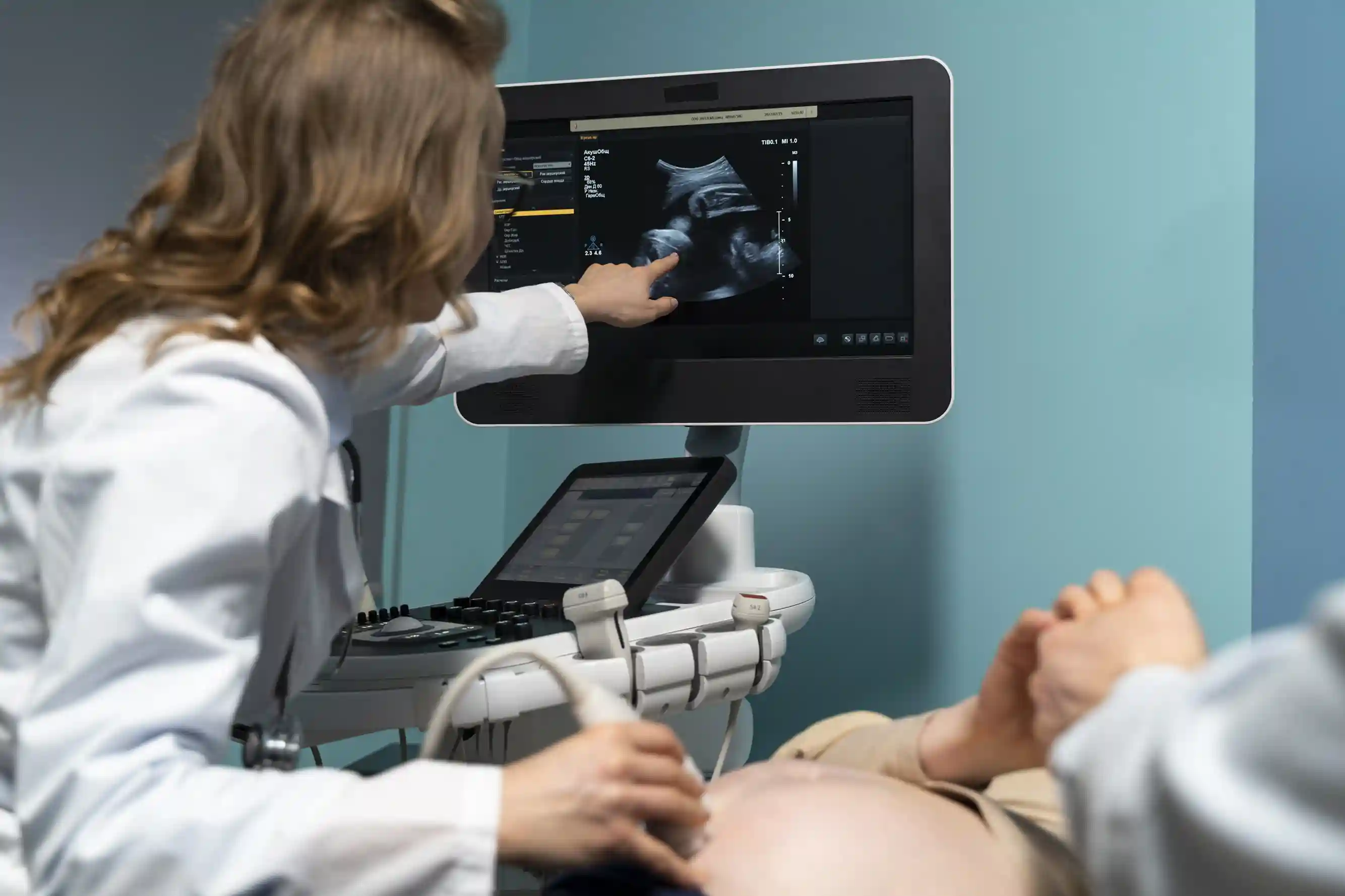
Table of Contents
- What Is A Biophysical Profile?
- What Is The Purpose Of A Biophysical Profile?
- How Is The Biophysical Profile Performed?
- What Are The Risks Of A Biophysical Profile?
- How Does Scoring Work For A Biophysical Profile?
- How Long Does It Take To Get Your Results?
- What Is A Good Biophysical Profile Score?
- What Are The Advantages And Disadvantages Of A Biophysical Profile?
- Conclusion
- FAQs
A biophysical profile (BPP) is a simple, safe test used during pregnancy to check your baby’s health. It combines an ultrasound with monitoring of your baby’s heart rate, looking at movements, breathing, muscle tone, and fluid levels. These checks help your healthcare team see how your baby is growing and coping in the womb.
Knowing what the BPP measures and why it’s done can give you clarity and peace of mind as you look forward to meeting your baby.
What Is A Biophysical Profile?
A biophysical profile is a prenatal test that helps your healthcare team check your baby’s overall health. It combines two assessments – an ultrasound and, in many cases, a nonstress test (NST) that checks the baby’s heart rate – to give a more complete picture of your baby’s wellbeing. This includes observing movements, breathing patterns, muscle tone, and the amount of amniotic fluid.
The results help determine whether your baby is developing as expected. A biophysical foetal profile is safe, non-invasive, and is often recommended when closer monitoring is needed later in pregnancy.
What Is The Purpose Of A Biophysical Profile?
The biophysical profile in pregnancy is designed to ensure your baby is safe and healthy in the womb. It can give you and your healthcare team important reassurance while identifying any potential concerns early.
The main purposes include:
- Checking oxygen supply – Ensures your baby is getting enough oxygen from the placenta.
- Monitoring foetal growth – Tracks if your baby is growing at a healthy rate.
- Assessing activity levels – Observes movements and muscle tone to confirm healthy development.
- Evaluating breathing patterns – Monitors the rhythmic breathing motions your baby makes in the womb.
- Measuring amniotic fluid – Ensures there is a safe amount for your baby’s protection and movement.
- Guiding care decisions – Results help your healthcare team decide if any further tests or interventions are needed before birth.
How Is The Biophysical Profile Performed?
A biophysical scan usually involves two main parts: a nonstress test and an ultrasound examination. Both are safe, painless, and done while you are lying comfortably. The process is straightforward, and your healthcare provider will guide you through each step.
Nonstress Test
The nonstress test measures your baby’s heart rate and how it responds to movements. You will have sensors placed on your abdomen that record these changes over a short period, usually about 20 to 40 minutes. A healthy baby’s heart rate increases with movements, which is a good sign of wellbeing.
You may be asked to press a button when you feel your baby move, helping the team track the timing. This part of the biophysical profile provides valuable information about oxygen flow and nervous system function.
BPP Ultrasound
The ultrasound portion looks at your baby’s movements, breathing motions, muscle tone, and amniotic fluid levels. A handheld device is moved gently over your abdomen, and the images appear on a screen. The sonographer records specific observations, such as arm and leg movements, opening and closing of hands, and the position of your baby.
This part of the biophysical foetal profile also measures the fluid around your baby, which helps cushion them and supports healthy development. It is completely painless and safe for both you and your baby.
After A BPP
Once the biophysical profile is complete, your results will be assessed and discussed with you. If your biophysical profile score shows everything is normal, no changes to your care are needed. If the score is lower than expected, your healthcare provider may suggest further monitoring or tests.
In some cases, an earlier delivery may be considered, depending on your baby’s condition and gestational age. Remember, most follow-up steps are precautionary and aim to keep both you and your baby safe.
What Are The Risks Of A Biophysical Profile?
A biophysical profile is considered a very safe and low-risk test. It does not expose you or your baby to radiation, and both the ultrasound and nonstress test are non-invasive. There are no known physical risks for you or your baby from having this test.
Possible considerations include:
- Time commitment – The test can take up to an hour, depending on your baby’s activity.
- Repeat testing – Sometimes results are unclear, and the test may need to be repeated.
- Temporary anxiety – Waiting for results can be stressful, even when everything is fine.
- False concerns – Rarely, the test may suggest an issue when your baby is actually healthy, leading to further investigations.
Overall, the benefits of checking your baby’s wellbeing through a biophysical profile usually far outweigh these minor drawbacks, and it is a trusted tool in prenatal care.
How Does Scoring Work For A Biophysical Profile?
Your biophysical profile score is based on five different checks – four from the ultrasound and one from the nonstress test. Each of the five areas is given a score of either 0 (not observed) or 2 (normal). A total out of 10 is calculated.
Scoring areas include:
- Foetal breathing movements – Your baby should show rhythmic breathing movements within the test period.
- Foetal movements – A certain number of body or limb movements are expected.
- Foetal muscle tone – Healthy babies show flexing and extending of arms and legs or opening and closing of hands.
- Amniotic fluid volume – A normal amount is reassuring for your baby’s comfort and health.
- Nonstress test results – A healthy heart rate pattern in response to movement scores well.
How Long Does It Take To Get Your Results?
In most cases, you will receive your biophysical profile results immediately after the test. Your healthcare provider will explain what the numbers mean and discuss any next steps if needed. The entire process – including both the nonstress test and ultrasound – usually takes between 30 and 60 minutes, depending on your baby’s movements.
If your baby is resting during the test, it may take a little longer to observe the required activity. Having your results straight away means you can leave with clear information about your baby’s health before going home.
What Is A Good Biophysical Profile Score?
A “good” biophysical profile score typically falls between 8 and 10, meaning all or nearly all areas checked are within healthy limits.
What the scores mean:
- 8–10: Reassuring, no further action is usually needed.
- 6: May require repeating the test within 24 hours to confirm.
- 4 or lower: Closer evaluation is recommended, as it may indicate your baby needs more support.
Your healthcare provider will interpret your score in the context of your overall pregnancy health and gestational age, ensuring the safest plan for you and your baby.
What Are The Advantages And Disadvantages Of A Biophysical Profile?
The biophysical profile offers many benefits, but like any test, it has some limitations.
Advantages:
- Comprehensive check – Assesses multiple aspects of your baby’s health in one session.
- Non-invasive and safe – No physical risks for you or your baby.
- Quick results – Often available immediately.
- Guides care – Helps healthcare providers make informed decisions for your pregnancy.
Disadvantages:
- Time needed – May take up to an hour.
- Possible repeats – Results can be affected by your baby’s sleep cycles.
- Occasional false concerns – May lead to extra tests even when your baby is fine.
Despite these small drawbacks, a biophysical profile is widely valued for its ability to give a clear, timely picture of your baby’s wellbeing.
Conclusion
A biophysical profile is a safe, effective way to monitor your baby’s health during pregnancy, helping you and your healthcare team make informed decisions. It offers reassurance and timely information about your baby’s wellbeing.
For accurate, reliable testing, you can trust Metropolis Healthcare, known for its advanced technology, experienced professionals, and commitment to delivering high-quality diagnostic services.
FAQs
Q1. How long does a biophysical profile take?
A biophysical profile usually takes 30–60 minutes, depending on your baby’s movements, with results often provided immediately after the test.
Q2. What is a normal BPS score?
A normal biophysical profile score is between 8 and 10, showing healthy results in all areas assessed, indicating your baby’s wellbeing in the womb.
Q3. What are the 5 components of the biophysical profile?
The five components include foetal breathing movements, foetal movements, foetal muscle tone, amniotic fluid volume, and a nonstress test assessing the baby’s heart rate response.
Q4. When to repeat BPP?
BPP may be repeated if the score is borderline, your healthcare provider needs confirmation, or there are ongoing concerns about your baby’s health.