Home Visit
 Upload






Medicine
Voglibose: Uses, Dosage, Side Effects And Benefits
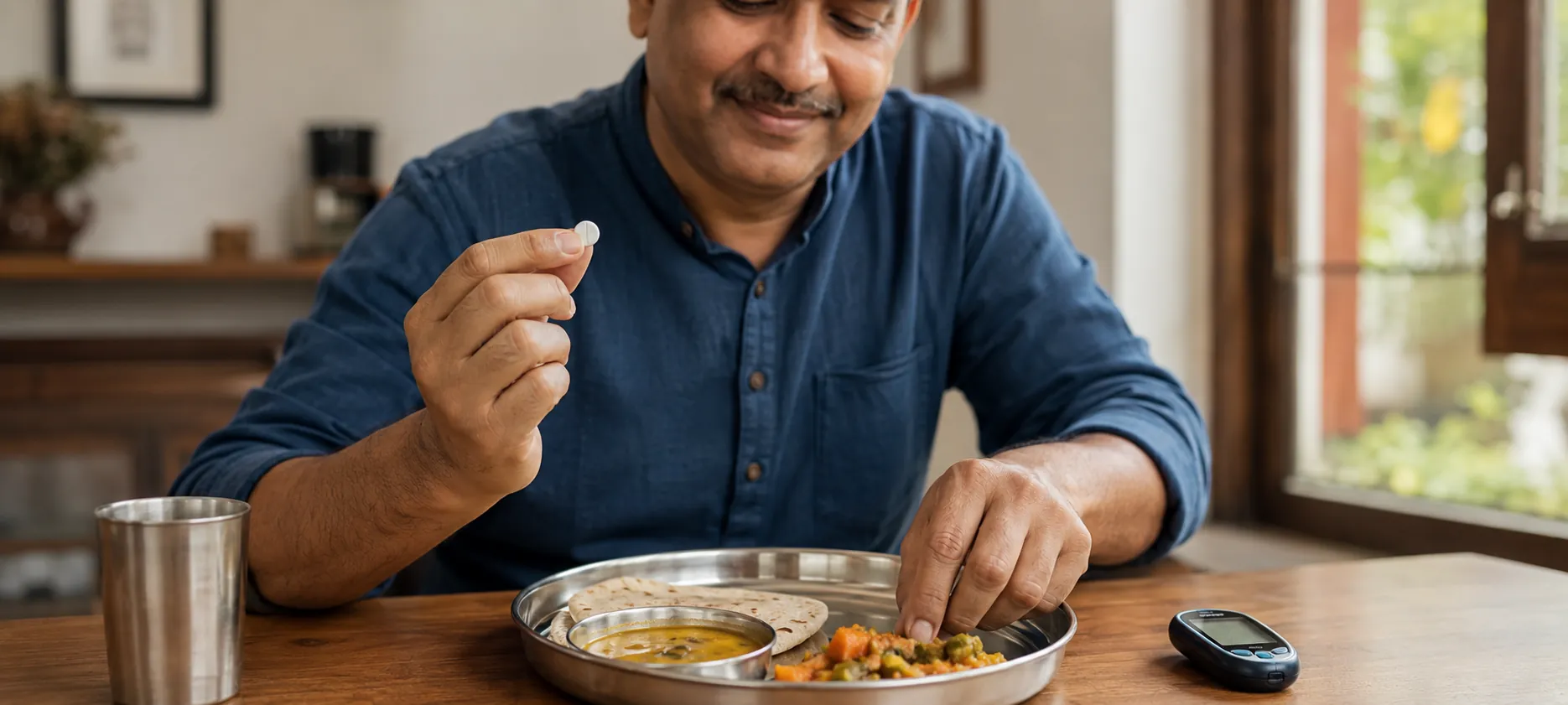
Table of Contents
- What Is Voglibose?
- How Voglibose Controls Blood Sugar
- Uses Of Voglibose Tablets
- Benefits Of Voglibose
- Voglibose Dosage And Best Time To Take It
- Side Effects Of Voglibose
- Managing Low Blood Sugar While On Voglibose
- Precautions And Drug Interactions
- Blood Sugar Tests To Monitor On Voglibose
- Frequently Asked Questions
- Conclusion
- References
Voglibose is an oral medicine used to manage high blood sugar, especially the rise that occurs after meals. Doctors may prescribe it for people with type 2 diabetes as part of a wider plan that includes balanced meals, physical activity and regular glucose monitoring.
If you have been prescribed a voglibose tablet, understanding how it works and when to take it can help you use it safely. Your dose must always be decided by your doctor because your glucose levels, meals, other medicines and overall health affect your treatment plan.
What Is Voglibose?
Voglibose belongs to a group of medicines called alpha-glucosidase inhibitors. It acts mainly inside your small intestine and slows the digestion of carbohydrates.
Unlike medicines that directly increase insulin release, it mainly targets post-meal glucose. This can be helpful when your fasting glucose is near target but your blood sugar rises sharply after eating.
It is a prescription medicine. Do not start, stop or change it without medical advice.
How Voglibose Controls Blood Sugar
Carbohydrates in foods such as rice, roti, bread, potatoes and sweets must be broken down into simple sugars before your body can absorb them. Enzymes in your intestine support this process.
The medicine temporarily blocks some of these enzymes. Carbohydrates are then broken down and absorbed more slowly, which helps reduce sudden post-meal glucose spikes.
The medicine does not replace a suitable meal plan. Regular meals, appropriate portions and physical activity remain essential.
Uses Of Voglibose Tablets
The main voglibose uses relate to controlling glucose after meals. Your doctor may prescribe it alone or with another diabetes medicine.
Type 2 Diabetes Management
Voglibose is commonly used in type 2 diabetes when diet and exercise alone do not provide adequate glucose control. It may be particularly useful when post-meal readings remain high.
It can be used with medicines such as metformin, sulfonylureas or insulin. Combination treatment needs careful monitoring because some combinations can increase your risk of low blood sugar.
Post-Meal Glucose Control
A key benefit is its targeted effect on postprandial glucose, which means blood sugar after eating. Reducing large glucose fluctuations can support better overall control, including your HbA1c level.
Blood tests and home glucose readings help your doctor assess whether treatment is working.
Role In Prediabetes
Research has examined voglibose in people with impaired glucose tolerance, a form of prediabetes. Evidence suggests that it may delay progression to type 2 diabetes in selected high-risk people.
This does not mean everyone with prediabetes needs medication. Weight management, regular exercise, adequate sleep and a balanced diet remain the foundation of prevention. Your doctor will consider treatment after reviewing your risk factors and applicable prescribing guidance.
Benefits Of Voglibose
When used correctly, voglibose may:
- Reduce sharp blood sugar rises after meals
- Act mainly in the intestine, with minimal absorption into the bloodstream
- Carry a low risk of low blood sugar when used alone
- Work alongside other diabetes medicines when needed
- Remain generally weight neutral
It is not a cure for diabetes and does not guarantee protection from complications. Consistent glucose control, blood pressure and cholesterol management, healthy habits and regular screening remain important.
Voglibose Dosage And Best Time To Take It
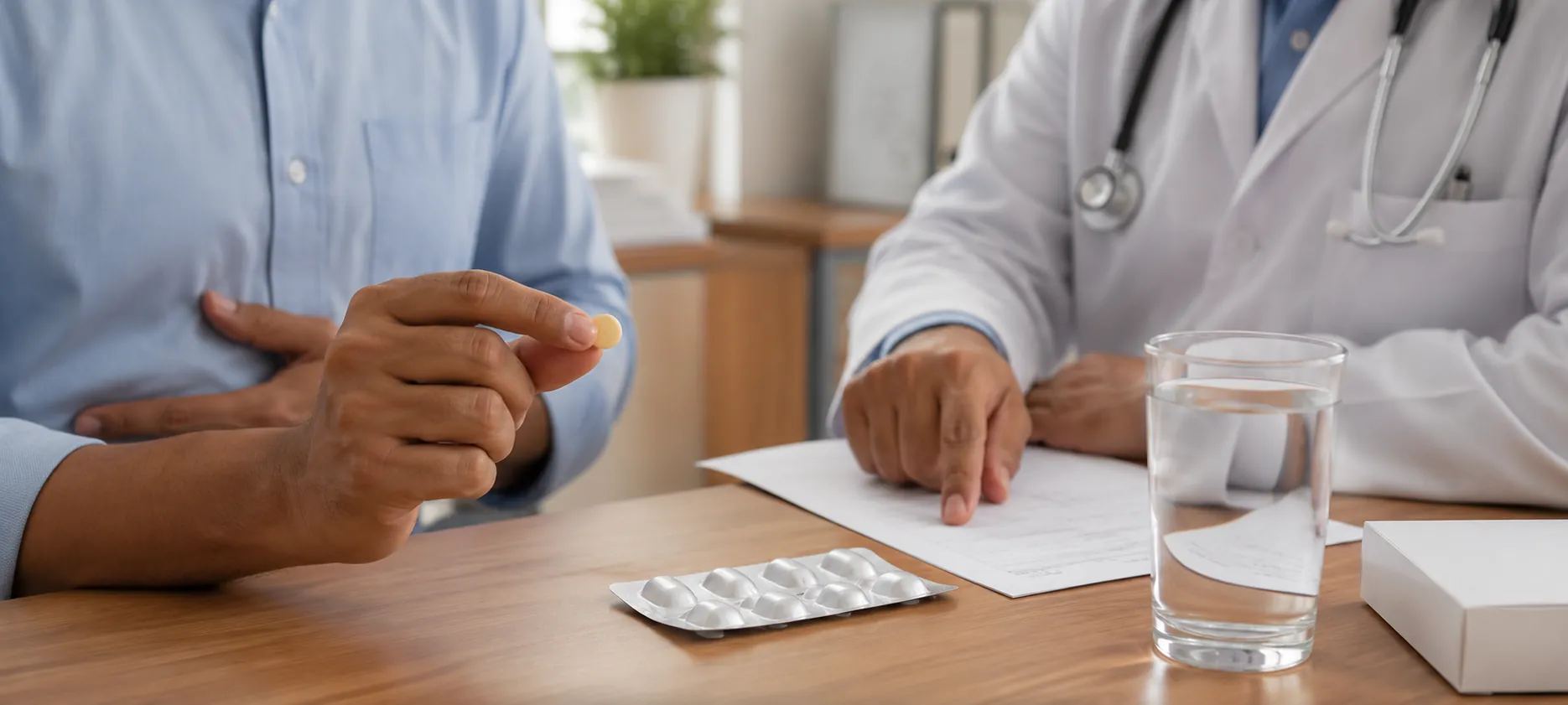
Your doctor will decide your voglibose dosage based on your glucose pattern, tolerance and other medicines. Common tablet strengths include 0.2 mg and 0.3 mg.
|
Aspect |
General Guidance |
|
Typical starting pattern |
Many adults are prescribed 0.2 mg with each main meal, but your prescription may differ |
|
Best time to take it |
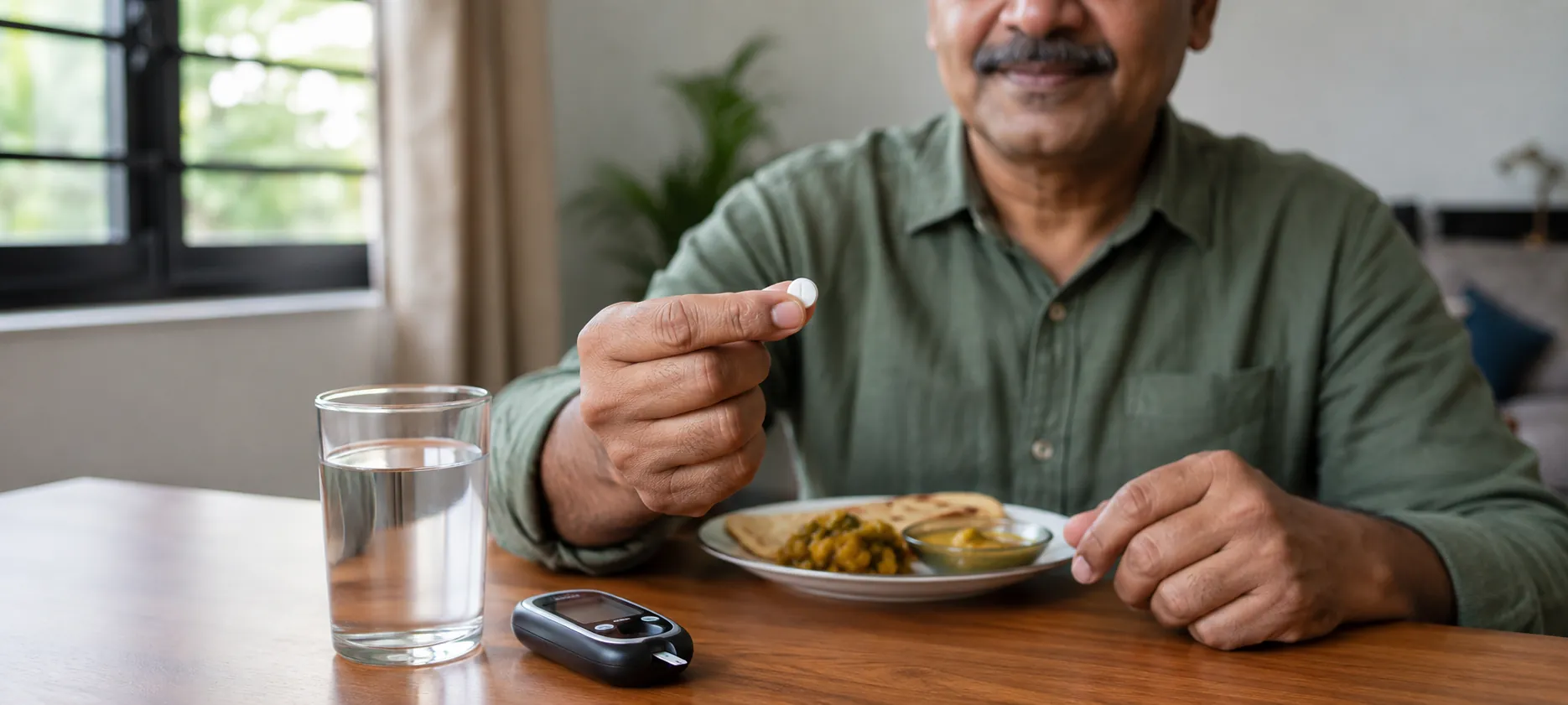
Immediately before a meal or as directed with the first bite |
|
Frequency |
Often three times a day with main meals |
|
If you skip a meal |
The corresponding dose is usually skipped |
|
If you forget a dose |
Do not double the next dose. Follow your doctor's missed-dose advice |
|
Dose adjustment |
Only your doctor should change or stop the medicine |
Timing matters because the medicine must be present in the intestine when carbohydrates reach it. Taking it long after a meal may reduce its intended effect.
Do not copy another person's dose, even if they also have type 2 diabetes.
Side Effects Of Voglibose
Most voglibose side effects affect digestion because some carbohydrates travel further through the intestine before being broken down.
Common effects include:
- Flatulence or increased gas
- Bloating or abdominal fullness
- Mild abdominal pain
- Diarrhoea or soft stools
- Nausea
These effects are often mild and may improve as your body adjusts. Large carbohydrate-heavy meals may make flatulence and bloating more noticeable.
Contact your doctor if symptoms persist, worsen or affect your ability to eat and drink.
When To Seek Prompt Medical Care
Get medical help if you develop severe abdominal pain, repeated vomiting, marked abdominal swelling, inability to pass stools or gas, yellowing of the eyes or skin, dark urine, breathing difficulty, facial swelling or a widespread rash.
These reactions are uncommon, but they need timely assessment.
Managing Low Blood Sugar While On Voglibose
Voglibose alone has a relatively low risk of causing low blood sugar because it does not directly force your pancreas to release insulin. The risk can rise when it is combined with insulin or medicines that stimulate insulin release.
Symptoms may include sweating, shaking, hunger, dizziness, weakness, confusion, palpitations or blurred vision.
If your care team has advised oral treatment, use glucose or dextrose rather than ordinary table sugar. The medicine delays the breakdown of sucrose, so table sugar may work more slowly. Follow your personal hypoglycaemia plan and recheck your glucose as advised.
Severe confusion, seizures or unconsciousness require emergency care. Do not give food or drink to an unconscious person.
Precautions And Drug Interactions
Tell your doctor about your full medical history before taking a voglibose tablet. Extra caution may be needed if you have:
- A bowel obstruction or increased risk of one
- Inflammatory bowel disease, intestinal ulcers or severe digestive problems
- Diabetic ketoacidosis
- Liver or kidney disease
- Pregnancy, plans for pregnancy or breastfeeding
- Poor nutrition or frequent low blood sugar
- An upcoming operation, infection or major change in food intake
Share all prescription medicines, non-prescription medicines and supplements you take. Other glucose-lowering medicines may require closer monitoring or dose adjustment.
Blood Sugar Tests To Monitor On Voglibose
Regular testing shows whether your plan is controlling both fasting and post-meal glucose.
|
Test |
What It Helps Assess |
|
Fasting plasma glucose |
Your glucose level after an overnight fast |
|
Postprandial blood glucose |
Your response around two hours after a meal |
|
Your average glucose control over the previous two to three months |
|
|
Liver health when clinically indicated or if symptoms develop |
|
|
Overall diabetes care and the safety of your wider treatment plan |
Your doctor may also recommend home glucose monitoring or a continuous glucose monitor. The frequency depends on your medicines, targets and risk of hypoglycaemia.
Frequently Asked Questions
Should Voglibose Be Taken Before Or With The First Bite Of Food?
Voglibose is generally taken immediately before a meal. Some prescriptions may instruct you to take it with the first bite. Follow your doctor's directions and the medicine label.
Can Voglibose Alone Control Diabetes?
It may be sufficient for some people with mild post-meal glucose elevation, but many need combination treatment. Diet, exercise, weight management and regular monitoring remain necessary.
Does Voglibose Cause Weight Gain?
It is generally considered weight neutral and does not usually cause weight gain. It is not a weight-loss medicine.
How Do You Treat Low Blood Sugar Caused By Voglibose?
Use glucose or dextrose according to your hypoglycaemia plan. Do not rely on table sugar because its breakdown may be delayed. Seek urgent help if symptoms are severe or do not improve.
Can Voglibose Be Taken Along With Metformin?
Yes. Doctors may prescribe voglibose with metformin because the medicines work differently. The combination must be personalised and monitored.
Conclusion
Voglibose can be a useful part of type 2 diabetes care, particularly when blood sugar rises after meals. Correct timing, an individualised dose, balanced meals and regular monitoring help you gain the most benefit while limiting digestive side effects.
Routine testing can show whether your glucose plan is working. Metropolis Healthcare supports preventive and ongoing health monitoring through 4,000+ tests, full body checkups, speciality testing and reliable reports. You can book through the website, app, call or WhatsApp, with home sample collection available through a network of 10,000 touchpoints.
References
- Kaku K. Efficacy of voglibose in type 2 diabetes. Expert Opin Pharmacother. 2014;15(8):1181-1190. PMID: 24798092.
- Kawamori R, Tajima N, Iwamoto Y, Kashiwagi A, Shimamoto K, Kaku K; Voglibose Ph-3 Study Group. Voglibose for prevention of type 2 diabetes mellitus: a randomised, double-blind trial in Japanese individuals with impaired glucose tolerance. Lancet. 2009;373(9675):1607-1614. PMID: 19395079.
- Dabhi AS, Bhatt NR, Shah MJ. Voglibose: an alpha glucosidase inhibitor. J Clin Diagn Res. 2013;7(12):3023-3027. PMID: 24551718.
- Derosa G, Maffioli P. Alpha-glucosidase inhibitors and their use in clinical practice. Arch Med Sci. 2012;8(5):899-906. PMID: 23185202.
- Moelands SVL, Lucassen PLBJ, Akkermans RP, De Grauw WJC, Van de Laar FA. Alpha-glucosidase inhibitors for prevention or delay of type 2 diabetes mellitus and its associated complications in people at increased risk of developing type 2 diabetes mellitus. Cochrane Database Syst Rev. 2018;12(12):CD005061. PMID: 30592787.