Home Visit
 Upload






Preventive Healthcare
10 Pear Benefits: Nutrition Facts And Evidence-Based Health Advantages Of Eating Pears
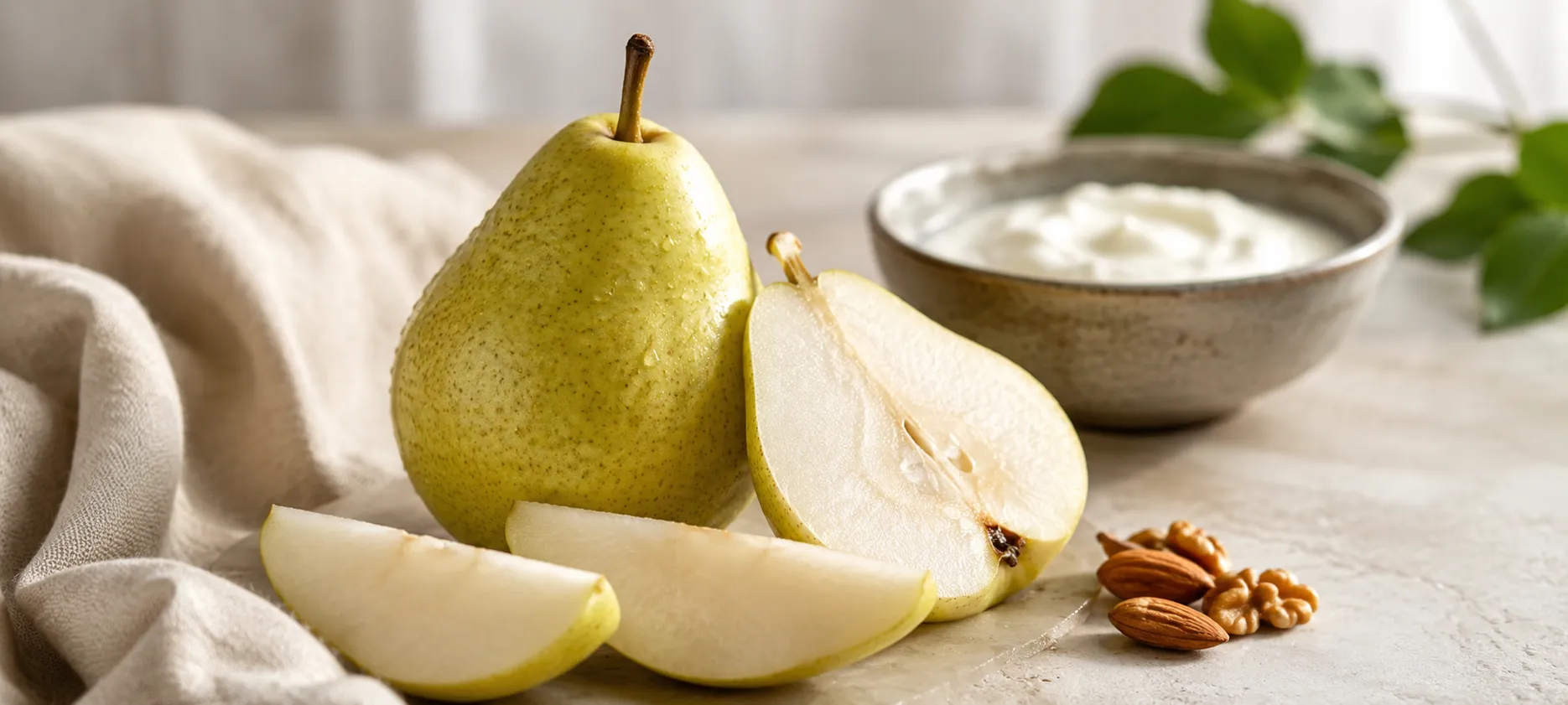
Table of Contents
Pear is a sweet, juicy, fibre-rich fruit that can easily fit into your daily diet. It is light, hydrating, and naturally satisfying. You can eat it as a snack, add it to salads, blend it into smoothies, or pair it with nuts for a balanced mini-meal.
Many pear benefits come from its fibre, water, vitamins, minerals, and plant compounds. A medium pear offers useful nutrition without too many calories. It can support digestion, heart health, weight management, hydration, and better blood sugar control when eaten as part of a balanced diet.
What Is A Pear?
A pear is a bell-shaped fruit that belongs to the Rosaceae family. It is usually sweet, mildly grainy in texture, and rich in water. Depending on the variety, a pear may be green, yellow, brown, or red.
Pear fruit can be crisp or soft. Some types are best eaten fresh, while others work well in cooked dishes. The skin contains fibre and many plant compounds, so it is best to eat a pear with the peel after washing it well.
Pear is also known as nashpati in many parts of India. It is a simple fruit, but its nutrition makes it a smart choice for everyday wellness.
Calories In Pears: How Many Calories Are In One Pear?
Pear calories depend on the size of the fruit. A medium pear is usually enough for one serving.
|
Serving Size |
Approximate Pear Calories |
Key Nutrition Notes |
|
100 g raw pear |
57 to 58 calories |
Contains water, fibre, carbohydrates, and small amounts of vitamins and minerals |
|
1 small pear |
80 to 85 calories |
Good light snack option |
|
1 medium pear |
Around 100 calories |
Provides about 5 to 6 g fibre |
|
1 large pear |
Around 120 calories |
More filling due to higher fibre and water content |
A medium pear also provides carbohydrates, vitamin C, vitamin K, potassium, copper, and beneficial polyphenols. Most of the fibre is found in or near the skin, so avoid peeling it unless needed.
10 Health Benefits Of Eating Pears
Here are 10 pear benefits that make this fruit worth adding to your routine.
Supports Better Digestion
Pear is rich in dietary fibre. It contains both soluble and insoluble fibre, which help support bowel regularity. This is one of the most well-known pear benefits, especially for people who often struggle with hard stools or irregular digestion.
Helps Prevent Constipation
The fibre and water in pear help add bulk and softness to stools. This may make bowel movements easier. Eating pear with the skin gives you more fibre than eating peeled pear.
May Support Gut Health
Pear contains pectin, a type of soluble fibre. Pectin acts as food for helpful gut bacteria. A healthy gut microbiome may support digestion, immunity, and overall wellness.
Supports Heart Health
Pear benefits heart health because of its fibre, potassium, and antioxidants. Fibre can support healthy cholesterol levels, while potassium helps maintain normal blood pressure. However, pear should support, not replace, a heart-healthy lifestyle or prescribed treatment.
May Help With Weight Management
Pear is high in water and fibre, which can help you feel full for longer. This may reduce the urge to snack between meals. Since pear calories are moderate, it can be a useful fruit for people trying to manage weight.
May Help Maintain Blood Sugar Balance
Although pear tastes sweet, its fibre slows digestion and sugar absorption. This may support steadier blood sugar levels. People with diabetes can usually include pear in moderation, but portion control is important.
Provides Antioxidants
Pear fruit contains polyphenols and flavonoids. These plant compounds help protect cells from oxidative stress. Red and green pear varieties may offer slightly different plant compounds, so variety can be useful.
Supports Hydration
Pear has a high water content. This makes it refreshing and hydrating, especially during hot weather. It can be a good snack for children, older adults, and anyone who struggles to drink enough water.
Supports Skin Wellness
Vitamin C and antioxidants in pear support collagen formation and help protect cells from oxidative damage. Pear will not replace skincare, sunscreen, or hydration, but it can support skin health as part of a nutrient-rich diet.
Easy To Add To A Balanced Diet
One of the practical pear benefits is convenience. Pear is portable, easy to eat, and does not need much preparation. This makes it easier to choose a healthy snack over packaged foods.
Types Of Pears And Their Health Benefits
There are many types of pears, and each can be part of a healthy diet. Common varieties include Bartlett, Bosc, Anjou, Comice, and Asian pear. Some are soft and juicy, while others are crisp and mildly sweet.
Green pears are often rich in fibre and plant compounds. Red pears may contain anthocyanins, which are antioxidant pigments. Asian pears are usually crisp, watery, and refreshing.
The health benefits are broadly similar across varieties. The best pear is the one you enjoy and can eat regularly as part of a balanced diet. Choose firm, fresh pears without deep bruises. Let them ripen at room temperature, then store them in the fridge if needed.
How To Incorporate Pears Into Your Diet
You can enjoy pear in many simple ways.
- Eat one fresh pear as a mid-morning or evening snack.
- Pair pear slices with nuts for better satiety.
- Add chopped pear to oats or porridge.
- Mix pear into curd or yoghurt.
- Add pear slices to salads with cucumber, lettuce, and seeds.
- Blend pear into a smoothie with milk or unsweetened curd.
- Use pear in homemade fruit chaat.
- Bake pear with cinnamon for a warm dessert.
- Add pear to wholegrain toast with nut butter.
- Choose whole pear over packaged pear juice.
Try to eat pear with the skin after washing it well. Avoid adding too much sugar, honey, syrup, or cream, as this can reduce its health value.
Conclusion
Pear is a simple, tasty, and nutrient-rich fruit with many everyday health advantages. Important pear benefits include better digestion, constipation relief, heart support, hydration, weight management support, and steady energy. It is best eaten whole, with the skin, and as part of a balanced diet.
Healthy eating is one part of preventive care. Regular health checkups can help you understand key health markers such as blood sugar, cholesterol, liver function, kidney function, vitamin levels, and inflammation.
Metropolis Healthcare supports proactive wellness with full body checkups, 4,000 plus tests, speciality testing, expert pathologists, accurate reports, quick turnaround time, and convenient home sample collection. You can book tests through the website, app, call, or WhatsApp, making routine health monitoring simple and reliable.
FAQs: Common Questions About Pear Benefits
Are Pears Good For You?
Yes, pears are good for you when eaten as part of a balanced diet. They provide fibre, water, vitamin C, potassium, copper, and antioxidants. The biggest pear benefits are linked to digestion, fullness, hydration, and heart-friendly nutrition.
Can Pears Help With Weight Loss?
Pear may support weight loss because it is filling, hydrating, and moderate in calories. The fibre in pear helps you feel satisfied for longer. However, no single fruit can cause weight loss on its own. You still need balanced meals, regular activity, good sleep, and portion control.
Can Eating Pears Improve Digestion?
Yes, pear can support digestion because it contains fibre and water. These help maintain bowel movement and reduce constipation in many people. If you suddenly increase fibre intake, do it slowly and drink enough water to avoid bloating.
How Many Pears Should I Eat A Day?
Most people can eat one medium pear a day as part of their fruit intake. If you eat more fruits in the day, balance your portions. People with diabetes, irritable bowel syndrome, or fructose intolerance may need personalised advice.
Are Pears Safe For People With Diabetes?
Pears can be included in a diabetes-friendly diet in moderate portions. Their fibre helps slow sugar absorption. However, it is best to eat whole pear instead of pear juice. If you monitor blood sugar, check how your body responds and follow your doctor or dietitian’s guidance.